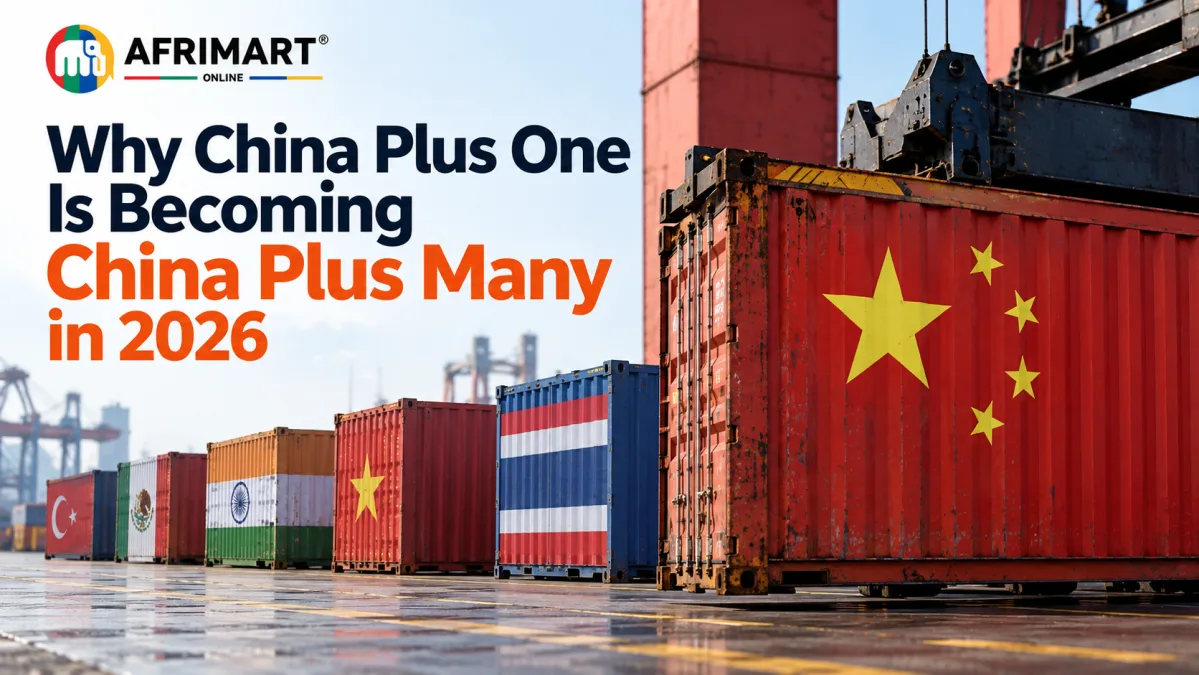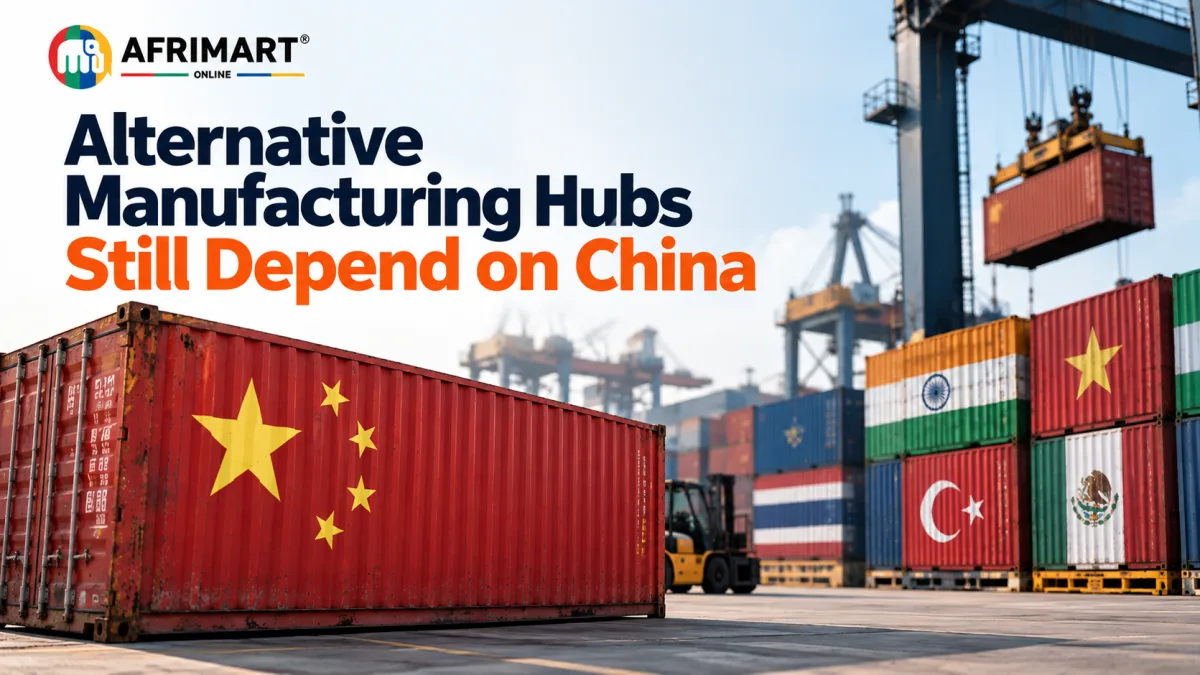
Alternative manufacturing hubs in Vietnam, India, Mexico and other emerging production centres are attracting investment as companies diversify beyond China. Yet relocating final assembly does not necessarily create an independent supply chain. Many factories in these markets continue to depend on Chinese machinery, components, tooling, materials and technical systems.
This does not mean that manufacturing diversification is artificial or ineffective. It means the process is more complex than changing the country printed on a product label.
A factory can create genuine local employment and manufacturing value while remaining connected to China at several upstream levels. Procurement teams must understand those connections before claiming that a product, supplier or production network has been fully diversified.
At a glance
Final assembly and supply-chain independence are not the same.
A product made outside China may contain Chinese components and materials.
Alternative factories may operate with Chinese production machinery and tooling.
Country of origin is a customs concept, not a complete map of operational dependence.
China’s exports to major Asian manufacturing economies continued growing in 2026.
Diversification can reduce one risk while introducing new dependencies.
Buyers should trace critical components to Tier 2 and Tier 3 suppliers.
Genuine resilience requires qualified alternatives, not merely additional factory locations.
African buyers must assess who will provide spare parts, installation and technical support.
Local and regional participation can strengthen imported equipment projects without duplicating the complete manufacturing chain.
What are alternative manufacturing hubs?
Alternative manufacturing hubs are countries or regions developed as additional production locations outside a company’s established supply base.
They may offer:
Lower labour costs
Access to new markets
Preferential trade arrangements
Proximity to major customers
Government incentives
Growing industrial infrastructure
Reduced exposure to a single country
Different tariff treatment
Additional production capacity
Prominent alternative locations include:
Vietnam
India
Mexico
Thailand
Indonesia
Malaysia
Bangladesh
Türkiye
Eastern European markets
Selected African manufacturing centres
Each location has different strengths.
Vietnam has developed significant electronics, textiles, footwear and assembly capacity. India offers a large domestic market and expanding capability across engineering, automotive, pharmaceuticals and electronics. Mexico provides geographic access to North American markets and has established automotive, aerospace and electronics industries.
These markets can provide genuine diversification. The mistake is assuming that moving final assembly automatically relocates every supporting production activity.
Why do alternative manufacturing hubs still rely on China?
Modern manufactured products are rarely created in one factory or country.
A final assembler may receive:
Motors from one supplier
Circuit boards from another
Steel fabrications from a third
Sensors from a specialist manufacturer
Plastic components from an injection-moulding factory
Packaging from a separate converter
Software from an external developer
Tooling from another industrial region
China has built dense supply networks across many of these categories. When production moves elsewhere, recreating every layer of that system can be expensive and slow.
An alternative factory may therefore import Chinese:
Production equipment
Machine tools
Moulds and dies
Electronic controls
Battery cells
Motors and drives
Pumps and compressors
Fabricated metal parts
Chemicals and resins
Packaging materials
Testing equipment
Replacement components
The final product may be substantially manufactured in the alternative country while still depending on these inputs.
This is common in global value chains. The OECD’s Trade in Value Added framework exists because conventional trade figures do not reveal where all the value inside an exported product was created. Goods and services sold by one country may embody inputs from several others.
What is the difference between final assembly and supply-chain independence?
Final assembly is the last stage at which components are combined into a finished product.
Supply-chain independence would require the factory or country to have alternative access to the machinery, materials, components, technical knowledge and services needed to sustain that production.
These are different levels of manufacturing participation.
| Production layer | What happens | Potential dependency |
|---|---|---|
| Raw materials | Metals, minerals, chemicals or agricultural materials are sourced | Overseas commodity or material supplier |
| Intermediate processing | Materials are converted into usable industrial inputs | Specialist processor |
| Components | Motors, controls, parts and subassemblies are produced | Tier 2 or Tier 3 manufacturer |
| Tooling | Moulds, dies, jigs and fixtures are manufactured | Specialist tooling supplier |
| Production equipment | Machinery used by the factory is installed | Equipment manufacturer |
| Final assembly | Components are combined into the finished product | Direct supplier |
| Testing | Safety, quality and performance are verified | Laboratory or equipment provider |
| After-sales support | Spare parts, software and repairs are provided | Original manufacturer or service network |
A buyer looking only at the final assembly location sees the direct supplier but may miss the dependencies below it.
This matters when a disruption affects a critical component rather than the final factory.
A supplier may have available labour, building space and assembly capacity but still be unable to complete production because a Chinese electronic control module or mould has not arrived.
How much does trade data reveal about these dependencies?
Trade data can show the scale of commercial relationships, but it does not automatically identify how imported goods are used.
During the first half of 2026, China’s exports to Vietnam reached approximately RMB811.1 billion, an increase of 21.5% from the same period a year earlier. Exports to Thailand increased by 25.3%, while China’s total exports to the Association of Southeast Asian Nations rose by 18.5%.
Earlier 2026 customs data also showed strong growth in Chinese exports to several Asian manufacturing economies, including India, Vietnam and Thailand.
These figures include consumer and non-industrial products, so they should not be presented as a direct measure of manufacturing dependence.
They do, however, demonstrate that the expansion of alternative manufacturing markets is occurring alongside substantial trade with China—not in isolation from it.
To understand the industrial relationship properly, buyers need more detailed information covering:
Product-level trade
Supplier invoices
Bills of materials
Factory equipment
Component origins
Tooling ownership
Spare-parts sources
Technical-service arrangements
Gross export figures identify the visible trading relationship. They do not reveal every upstream input embodied in the finished product.
Why country-of-origin labels can be misleading
Country of origin is determined by applicable customs rules. It is not based on a general impression of where most components appear to come from.
Depending on the jurisdiction and product, origin may be determined by:
Wholly obtained status
Substantial transformation
Change in tariff classification
Regional value-content requirements
Specific manufacturing processes
Product-specific trade-agreement rules
A product can legally qualify as originating from Vietnam or Mexico while containing Chinese components.
This does not make the origin declaration false. It means that customs origin answers a specific legal question:
Where did the product acquire its recognised origin under the applicable rule?
It does not necessarily answer:
Which country would disrupt production if its machinery, components or materials became unavailable?
Procurement teams should separate three ideas:
Customs origin
The country recognised for tariffs, marking and trade-agreement purposes.
Manufacturing location
The country where the principal production or assembly activity takes place.
Operational dependency
The countries and suppliers whose inputs are required to keep production running.
All three can be different.
Is diversification to Vietnam, India or Mexico merely cosmetic?
No. Describing all diversification as cosmetic would ignore substantial manufacturing investment and capability development in those countries.
Alternative hubs can deliver genuine benefits.
Vietnam
Vietnam has become an important location for electronics, garments, footwear, furniture and selected industrial assembly. Its integration into Asian supply chains gives manufacturers access to regional inputs and export infrastructure.
Its challenge is that much of its manufacturing model remains connected to imported machinery, materials and intermediate goods. The World Bank has noted that Vietnam’s export-led model has relied significantly on labour-intensive and relatively low-value-added trade, creating a need to move into higher-value activities.
India
India offers a large domestic market, extensive engineering talent and established capability in automotive products, pharmaceuticals, chemicals and information technology.
However, capability varies by industrial category. Some manufacturers may still rely on imported electronics, machinery, tooling or specialist materials.
Mexico
Mexico has deep automotive, electronics and aerospace supply chains supported by its proximity to the United States and access to the US-Mexico-Canada Agreement.
Its production can nevertheless incorporate imported inputs from Asia. A product assembled in Mexico may combine local labour, North American components and Chinese electronic or mechanical parts.
The correct conclusion is not that diversification has failed. It is that supply chains are becoming geographically distributed rather than nationally self-contained.
When does diversification create genuine resilience?
Diversification creates resilience when the alternative can continue operating during a disruption affecting the original source.
A second factory location is valuable when it has:
Approved production capability
Access to required materials
Independent or protected tooling
Qualified component sources
Sufficient capacity
Trained workers
Tested quality systems
Required certifications
Reliable logistics
Commercially sustainable pricing
A factory is not a functioning alternative if it cannot produce without receiving the same critical component from the disrupted source.
Procurement teams should test diversification against scenarios such as:
A Chinese component becomes export-controlled.
A major port closes temporarily.
A supplier loses access to a raw material.
An electronic module is discontinued.
A tariff changes the preferred production location.
A shipping corridor experiences a major delay.
A factory cannot obtain foreign exchange for imports.
A new compliance rule requires deeper origin evidence.
If both the primary and alternative suppliers fail under the same scenario, the business has added factory locations without removing the underlying concentration.
When can diversification make a supply chain more complicated?
Every additional location introduces management requirements.
These can include:
Separate supplier audits
Different technical capabilities
Multiple contractual systems
New tax and customs requirements
Additional tooling
Repeated product testing
Increased inventory
Longer communication chains
More complex intellectual-property controls
Different quality cultures
Additional logistics routes
Smaller order volumes per supplier
Spreading orders across too many factories can also reduce purchasing leverage. Each supplier may receive insufficient volume to justify priority production, custom engineering or favourable pricing.
Diversification should therefore be selective.
Critical products may justify two qualified sources. Standard components may be available from several interchangeable manufacturers. Highly specialised equipment may remain concentrated with one supplier while the buyer holds additional spare parts and technical documentation.
The objective is not to maximise the number of suppliers. It is to reduce the probability that one disruption will stop the entire operation.
What should procurement teams trace below the direct supplier?
The direct supplier is commonly known as Tier 1. Its suppliers are Tier 2, followed by further upstream companies at Tier 3 and beyond.
Not every minor supplier needs the same level of investigation. Procurement teams should prioritise components that are:
Essential to the product’s operation
Difficult to replace
Technically specialised
Subject to regulation
Available from few manufacturers
Associated with long lead times
Connected to compliance concerns
Expensive to redesign
Required for warranty support
A sub-tier review should identify:
| Area | Questions to ask |
|---|---|
| Component manufacturer | Who produces the critical part? |
| Manufacturing country | Where is it produced and assembled? |
| Material origin | Where do the key materials come from? |
| Alternative source | Is another approved manufacturer available? |
| Lead time | How long will replacement or replenishment take? |
| Tooling ownership | Who owns the moulds, dies or fixtures? |
| Substitution | Can the supplier change the component without approval? |
| Certification | Is approval linked to a specific component or facility? |
| Spare parts | Can the buyer purchase emergency stock? |
| Documentation | Can the supplier provide traceable evidence? |
The objective is not to collect paperwork without purpose. It is to identify dependencies that could affect cost, compliance or production continuity.
Why does tooling ownership matter?
Tooling can quietly lock a buyer into one supplier or country.
Moulds, dies, patterns, jigs and specialised fixtures may be:
Designed by the supplier
Paid for by the buyer
Shared across several customers
Stored at the factory
Technically compatible with only one production system
Restricted from transfer
Difficult to reproduce without original drawings
A buyer may believe that production can move to another factory, only to discover that the tooling cannot be transferred or operated on the alternative supplier’s equipment.
Before paying for custom tooling, the contract should establish:
Who owns it
Where it will be stored
Who may use it
Whether it can be transferred
How it will be maintained
What happens if the supplier closes
Whether technical drawings will be provided
How replacement tooling will be priced
Ownership on paper is useful only if the tooling can physically and technically be transferred.
How should machinery and software dependencies be assessed?
A factory may depend on Chinese production machinery even when its finished products contain no Chinese components.
That dependence can affect:
Replacement parts
Control software
Passwords and access rights
Firmware updates
Remote diagnostics
Specialist maintenance
Calibration
Production tooling
Operator training
Buyers assessing an alternative supplier should ask which machines perform the critical production stages and how those machines are supported.
If production depends on proprietary software or a unique control platform, access to the equipment manufacturer may be as important as access to physical components.
A machine can remain mechanically functional but commercially unusable if:
Software access expires
A control password is unavailable
The manufacturer no longer provides updates
A proprietary drive cannot be replaced
The factory lacks technical drawings
Remote support is inaccessible
Supply-chain mapping should therefore cover digital and technical dependencies, not only physical materials.
What does this mean for African manufacturers?
African businesses can benefit from the growth of several manufacturing hubs. More sourcing locations can create additional equipment options, commercial competition and technology partnerships.
However, African procurement teams should evaluate the complete support chain behind the selected machinery.
Important questions include:
Where is the main equipment manufactured?
Where do the motors, controls and critical components come from?
Are replacement parts available within Africa?
Can standard international brands be specified?
Who will install and commission the equipment?
Is remote technical support reliable?
Are manuals and drawings included?
Can local technicians be trained?
Does the machine match local voltage and frequency?
Which components should be stocked before production begins?
For an African production project, resilience may not require buying the same machine from several countries.
A more practical model may combine:
Main machinery from a qualified manufacturer
Internationally recognised critical components
Local civil and electrical work
Regional fabrication
Initial imported spare parts
Trained local operators
Documented maintenance procedures
An approved alternative-parts list
This creates operational resilience at the project level rather than diversification for its own sake.
How can African businesses participate more deeply in these value chains?
Africa should not view global supply-chain restructuring only as a choice between importing from China and importing from another country.
The larger opportunity is to identify stages that can be performed competitively within African markets.
These may include:
Final assembly
Packaging
Metal fabrication
Product finishing
Maintenance
Component refurbishment
Consumable production
Raw-material processing
Warehousing
Regional distribution
Operator training
After-sales services
The World Bank estimates that global value chains account for nearly half of global trade flows. Participation can allow countries to specialise in particular stages rather than developing an entire industry at once.
A company could, for example, import the core production machine while manufacturing non-critical frames or supporting structures locally. It could import specialised components while developing local capacity for installation, routine maintenance and consumables.
Local participation must still meet the required technical and quality standards. Replacing reliable parts with unsuitable alternatives would weaken rather than deepen industrial capacity.
A buyer’s checklist for evaluating alternative manufacturing hubs
Before approving an alternative manufacturing location, confirm the following.
Factory capability
Production experience
Available machinery
Workforce skills
Quality systems
Testing capability
Maximum capacity
Current customer concentration
Component supply
Critical component manufacturers
Countries of origin
Approved alternatives
Lead times
Minimum orders
Safety-stock policy
Materials
Local and imported material share
Regulated materials
Material certifications
Substitute availability
Price volatility
Tooling
Ownership
Location
Transfer rights
Maintenance
Replacement cost
Compatibility with alternative factories
Logistics
Export port
Shipping frequency
Transit route
Border requirements
Inland delivery
Emergency-freight options
Compliance
Country-of-origin rule
Tariff classification
Required certifications
Labour and ESG documentation
Traceability
Export controls
Technical support
Spare-parts availability
Software access
Remote assistance
Field-service capacity
Training
Documentation
Commercial sustainability
Complete delivered cost
Currency exposure
Minimum order
Payment terms
Contract duration
Capacity commitment
How Afrimart supports industrial supply-chain planning
Afrimart helps African businesses source industrial machinery through a request-for-quotation process based on the complete project requirement.
Buyers can submit information covering:
Industry and intended application
Required production capacity
Input materials
Finished-product specification
Preferred automation level
Destination country
Project location
Available utilities
Critical component preferences
Installation requirements
Training
Spare parts
OEM or ODM requirements
Target commissioning date
This allows the equipment configuration and supporting requirements to be evaluated together.
Afrimart can help buyers consider not only where the machine is manufactured, but also which components it uses, how it will be delivered, what is required for installation and how support will be managed after commissioning.
Submit your industrial equipment requirements to Afrimart, or email [email protected] with your project brief.
Frequently asked questions
What are alternative manufacturing hubs?
Alternative manufacturing hubs are countries or regions developed as additional production locations outside a company’s main supply base. Examples include Vietnam, India, Mexico, Thailand, Indonesia and selected African markets.
Does manufacturing outside China eliminate Chinese inputs?
No. A factory outside China may still use Chinese machinery, components, materials, moulds, electronics or technical systems. Buyers must examine the supply chain below the final assembler.
Is a product assembled in Vietnam considered Chinese?
Not automatically. The legal country of origin depends on applicable customs rules and the manufacturing processes performed in Vietnam. However, the product may still contain Chinese inputs or depend on Chinese production equipment.
Is manufacturing diversification outside China genuine?
Yes, substantial manufacturing investment is taking place outside China. However, the resulting supply chains are often distributed across several countries rather than independent of Chinese industrial inputs.
What is the difference between country of origin and operational dependency?
Country of origin determines how the product is treated for customs and trade purposes. Operational dependency identifies the suppliers and countries required to keep production running. They may not be the same.
What are Tier 2 and Tier 3 suppliers?
Tier 2 suppliers provide components or materials to the direct supplier, while Tier 3 suppliers operate further upstream. These companies may be invisible to the buyer but essential to production.
How can a buyer confirm that diversification is effective?
The buyer should determine whether the alternative factory has approved production capability, independent access to critical inputs, transferable tooling, suitable logistics and sufficient capacity to continue production during a disruption.
Should African businesses source machinery from several countries?
Not necessarily. Multiple sources may improve resilience, but they can also increase cost and technical complexity. African buyers should diversify critical dependencies while maintaining a coherent equipment and support system.
Sources
General Administration of Customs of China: 2026 trade statistics
General Administration of Customs of China: Trade by country and region, June 2026
World Bank: About global value chains
World Bank: Vietnam 2045—Trading Up in a Changing World
UNCTAD: Tracing value added in global value chainsAlternative Manufacturing Hubs Still Depend on China
Alternative manufacturing hubs in Vietnam, India, Mexico and other emerging production centres are attracting investment as companies diversify beyond China. Yet relocating final assembly does not necessarily create an independent supply chain. Many factories in these markets continue to depend on Chinese machinery, components, tooling, materials and technical systems.
This does not mean that manufacturing diversification is artificial or ineffective. It means the process is more complex than changing the country printed on a product label.
A factory can create genuine local employment and manufacturing value while remaining connected to China at several upstream levels. Procurement teams must understand those connections before claiming that a product, supplier or production network has been fully diversified.
At a glance
Final assembly and supply-chain independence are not the same.
A product made outside China may contain Chinese components and materials.
Alternative factories may operate with Chinese production machinery and tooling.
Country of origin is a customs concept, not a complete map of operational dependence.
China’s exports to major Asian manufacturing economies continued growing in 2026.
Diversification can reduce one risk while introducing new dependencies.
Buyers should trace critical components to Tier 2 and Tier 3 suppliers.
Genuine resilience requires qualified alternatives, not merely additional factory locations.
African buyers must assess who will provide spare parts, installation and technical support.
Local and regional participation can strengthen imported equipment projects without duplicating the complete manufacturing chain.
What are alternative manufacturing hubs?
Alternative manufacturing hubs are countries or regions developed as additional production locations outside a company’s established supply base.
They may offer:
Lower labour costs
Access to new markets
Preferential trade arrangements
Proximity to major customers
Government incentives
Growing industrial infrastructure
Reduced exposure to a single country
Different tariff treatment
Additional production capacity
Prominent alternative locations include:
Vietnam
India
Mexico
Thailand
Indonesia
Malaysia
Bangladesh
Türkiye
Eastern European markets
Selected African manufacturing centres
Each location has different strengths.
Vietnam has developed significant electronics, textiles, footwear and assembly capacity. India offers a large domestic market and expanding capability across engineering, automotive, pharmaceuticals and electronics. Mexico provides geographic access to North American markets and has established automotive, aerospace and electronics industries.
These markets can provide genuine diversification. The mistake is assuming that moving final assembly automatically relocates every supporting production activity.
Why do alternative manufacturing hubs still rely on China?
Modern manufactured products are rarely created in one factory or country.
A final assembler may receive:
Motors from one supplier
Circuit boards from another
Steel fabrications from a third
Sensors from a specialist manufacturer
Plastic components from an injection-moulding factory
Packaging from a separate converter
Software from an external developer
Tooling from another industrial region
China has built dense supply networks across many of these categories. When production moves elsewhere, recreating every layer of that system can be expensive and slow.
An alternative factory may therefore import Chinese:
Production equipment
Machine tools
Moulds and dies
Electronic controls
Battery cells
Motors and drives
Pumps and compressors
Fabricated metal parts
Chemicals and resins
Packaging materials
Testing equipment
Replacement components
The final product may be substantially manufactured in the alternative country while still depending on these inputs.
This is common in global value chains. The OECD’s Trade in Value Added framework exists because conventional trade figures do not reveal where all the value inside an exported product was created. Goods and services sold by one country may embody inputs from several others.
What is the difference between final assembly and supply-chain independence?
Final assembly is the last stage at which components are combined into a finished product.
Supply-chain independence would require the factory or country to have alternative access to the machinery, materials, components, technical knowledge and services needed to sustain that production.
These are different levels of manufacturing participation.
| Production layer | What happens | Potential dependency |
|---|---|---|
| Raw materials | Metals, minerals, chemicals or agricultural materials are sourced | Overseas commodity or material supplier |
| Intermediate processing | Materials are converted into usable industrial inputs | Specialist processor |
| Components | Motors, controls, parts and subassemblies are produced | Tier 2 or Tier 3 manufacturer |
| Tooling | Moulds, dies, jigs and fixtures are manufactured | Specialist tooling supplier |
| Production equipment | Machinery used by the factory is installed | Equipment manufacturer |
| Final assembly | Components are combined into the finished product | Direct supplier |
| Testing | Safety, quality and performance are verified | Laboratory or equipment provider |
| After-sales support | Spare parts, software and repairs are provided | Original manufacturer or service network |
A buyer looking only at the final assembly location sees the direct supplier but may miss the dependencies below it.
This matters when a disruption affects a critical component rather than the final factory.
A supplier may have available labour, building space and assembly capacity but still be unable to complete production because a Chinese electronic control module or mould has not arrived.
How much does trade data reveal about these dependencies?
Trade data can show the scale of commercial relationships, but it does not automatically identify how imported goods are used.
During the first half of 2026, China’s exports to Vietnam reached approximately RMB811.1 billion, an increase of 21.5% from the same period a year earlier. Exports to Thailand increased by 25.3%, while China’s total exports to the Association of Southeast Asian Nations rose by 18.5%.
Earlier 2026 customs data also showed strong growth in Chinese exports to several Asian manufacturing economies, including India, Vietnam and Thailand.
These figures include consumer and non-industrial products, so they should not be presented as a direct measure of manufacturing dependence.
They do, however, demonstrate that the expansion of alternative manufacturing markets is occurring alongside substantial trade with China—not in isolation from it.
To understand the industrial relationship properly, buyers need more detailed information covering:
Product-level trade
Supplier invoices
Bills of materials
Factory equipment
Component origins
Tooling ownership
Spare-parts sources
Technical-service arrangements
Gross export figures identify the visible trading relationship. They do not reveal every upstream input embodied in the finished product.
Why country-of-origin labels can be misleading
Country of origin is determined by applicable customs rules. It is not based on a general impression of where most components appear to come from.
Depending on the jurisdiction and product, origin may be determined by:
Wholly obtained status
Substantial transformation
Change in tariff classification
Regional value-content requirements
Specific manufacturing processes
Product-specific trade-agreement rules
A product can legally qualify as originating from Vietnam or Mexico while containing Chinese components.
This does not make the origin declaration false. It means that customs origin answers a specific legal question:
Where did the product acquire its recognised origin under the applicable rule?
It does not necessarily answer:
Which country would disrupt production if its machinery, components or materials became unavailable?
Procurement teams should separate three ideas:
Customs origin
The country recognised for tariffs, marking and trade-agreement purposes.
Manufacturing location
The country where the principal production or assembly activity takes place.
Operational dependency
The countries and suppliers whose inputs are required to keep production running.
All three can be different.
Is diversification to Vietnam, India or Mexico merely cosmetic?
No. Describing all diversification as cosmetic would ignore substantial manufacturing investment and capability development in those countries.
Alternative hubs can deliver genuine benefits.
Vietnam
Vietnam has become an important location for electronics, garments, footwear, furniture and selected industrial assembly. Its integration into Asian supply chains gives manufacturers access to regional inputs and export infrastructure.
Its challenge is that much of its manufacturing model remains connected to imported machinery, materials and intermediate goods. The World Bank has noted that Vietnam’s export-led model has relied significantly on labour-intensive and relatively low-value-added trade, creating a need to move into higher-value activities.
India
India offers a large domestic market, extensive engineering talent and established capability in automotive products, pharmaceuticals, chemicals and information technology.
However, capability varies by industrial category. Some manufacturers may still rely on imported electronics, machinery, tooling or specialist materials.
Mexico
Mexico has deep automotive, electronics and aerospace supply chains supported by its proximity to the United States and access to the US-Mexico-Canada Agreement.
Its production can nevertheless incorporate imported inputs from Asia. A product assembled in Mexico may combine local labour, North American components and Chinese electronic or mechanical parts.
The correct conclusion is not that diversification has failed. It is that supply chains are becoming geographically distributed rather than nationally self-contained.
When does diversification create genuine resilience?
Diversification creates resilience when the alternative can continue operating during a disruption affecting the original source.
A second factory location is valuable when it has:
Approved production capability
Access to required materials
Independent or protected tooling
Qualified component sources
Sufficient capacity
Trained workers
Tested quality systems
Required certifications
Reliable logistics
Commercially sustainable pricing
A factory is not a functioning alternative if it cannot produce without receiving the same critical component from the disrupted source.
Procurement teams should test diversification against scenarios such as:
A Chinese component becomes export-controlled.
A major port closes temporarily.
A supplier loses access to a raw material.
An electronic module is discontinued.
A tariff changes the preferred production location.
A shipping corridor experiences a major delay.
A factory cannot obtain foreign exchange for imports.
A new compliance rule requires deeper origin evidence.
If both the primary and alternative suppliers fail under the same scenario, the business has added factory locations without removing the underlying concentration.
When can diversification make a supply chain more complicated?
Every additional location introduces management requirements.
These can include:
Separate supplier audits
Different technical capabilities
Multiple contractual systems
New tax and customs requirements
Additional tooling
Repeated product testing
Increased inventory
Longer communication chains
More complex intellectual-property controls
Different quality cultures
Additional logistics routes
Smaller order volumes per supplier
Spreading orders across too many factories can also reduce purchasing leverage. Each supplier may receive insufficient volume to justify priority production, custom engineering or favourable pricing.
Diversification should therefore be selective.
Critical products may justify two qualified sources. Standard components may be available from several interchangeable manufacturers. Highly specialised equipment may remain concentrated with one supplier while the buyer holds additional spare parts and technical documentation.
The objective is not to maximise the number of suppliers. It is to reduce the probability that one disruption will stop the entire operation.
What should procurement teams trace below the direct supplier?
The direct supplier is commonly known as Tier 1. Its suppliers are Tier 2, followed by further upstream companies at Tier 3 and beyond.
Not every minor supplier needs the same level of investigation. Procurement teams should prioritise components that are:
Essential to the product’s operation
Difficult to replace
Technically specialised
Subject to regulation
Available from few manufacturers
Associated with long lead times
Connected to compliance concerns
Expensive to redesign
Required for warranty support
A sub-tier review should identify:
| Area | Questions to ask |
|---|---|
| Component manufacturer | Who produces the critical part? |
| Manufacturing country | Where is it produced and assembled? |
| Material origin | Where do the key materials come from? |
| Alternative source | Is another approved manufacturer available? |
| Lead time | How long will replacement or replenishment take? |
| Tooling ownership | Who owns the moulds, dies or fixtures? |
| Substitution | Can the supplier change the component without approval? |
| Certification | Is approval linked to a specific component or facility? |
| Spare parts | Can the buyer purchase emergency stock? |
| Documentation | Can the supplier provide traceable evidence? |
The objective is not to collect paperwork without purpose. It is to identify dependencies that could affect cost, compliance or production continuity.
Why does tooling ownership matter?
Tooling can quietly lock a buyer into one supplier or country.
Moulds, dies, patterns, jigs and specialised fixtures may be:
Designed by the supplier
Paid for by the buyer
Shared across several customers
Stored at the factory
Technically compatible with only one production system
Restricted from transfer
Difficult to reproduce without original drawings
A buyer may believe that production can move to another factory, only to discover that the tooling cannot be transferred or operated on the alternative supplier’s equipment.
Before paying for custom tooling, the contract should establish:
Who owns it
Where it will be stored
Who may use it
Whether it can be transferred
How it will be maintained
What happens if the supplier closes
Whether technical drawings will be provided
How replacement tooling will be priced
Ownership on paper is useful only if the tooling can physically and technically be transferred.
How should machinery and software dependencies be assessed?
A factory may depend on Chinese production machinery even when its finished products contain no Chinese components.
That dependence can affect:
Replacement parts
Control software
Passwords and access rights
Firmware updates
Remote diagnostics
Specialist maintenance
Calibration
Production tooling
Operator training
Buyers assessing an alternative supplier should ask which machines perform the critical production stages and how those machines are supported.
If production depends on proprietary software or a unique control platform, access to the equipment manufacturer may be as important as access to physical components.
A machine can remain mechanically functional but commercially unusable if:
Software access expires
A control password is unavailable
The manufacturer no longer provides updates
A proprietary drive cannot be replaced
The factory lacks technical drawings
Remote support is inaccessible
Supply-chain mapping should therefore cover digital and technical dependencies, not only physical materials.
What does this mean for African manufacturers?
African businesses can benefit from the growth of several manufacturing hubs. More sourcing locations can create additional equipment options, commercial competition and technology partnerships.
However, African procurement teams should evaluate the complete support chain behind the selected machinery.
Important questions include:
Where is the main equipment manufactured?
Where do the motors, controls and critical components come from?
Are replacement parts available within Africa?
Can standard international brands be specified?
Who will install and commission the equipment?
Is remote technical support reliable?
Are manuals and drawings included?
Can local technicians be trained?
Does the machine match local voltage and frequency?
Which components should be stocked before production begins?
For an African production project, resilience may not require buying the same machine from several countries.
A more practical model may combine:
Main machinery from a qualified manufacturer
Internationally recognised critical components
Local civil and electrical work
Regional fabrication
Initial imported spare parts
Trained local operators
Documented maintenance procedures
An approved alternative-parts list
This creates operational resilience at the project level rather than diversification for its own sake.
How can African businesses participate more deeply in these value chains?
Africa should not view global supply-chain restructuring only as a choice between importing from China and importing from another country.
The larger opportunity is to identify stages that can be performed competitively within African markets.
These may include:
Final assembly
Packaging
Metal fabrication
Product finishing
Maintenance
Component refurbishment
Consumable production
Raw-material processing
Warehousing
Regional distribution
Operator training
After-sales services
The World Bank estimates that global value chains account for nearly half of global trade flows. Participation can allow countries to specialise in particular stages rather than developing an entire industry at once.
A company could, for example, import the core production machine while manufacturing non-critical frames or supporting structures locally. It could import specialised components while developing local capacity for installation, routine maintenance and consumables.
Local participation must still meet the required technical and quality standards. Replacing reliable parts with unsuitable alternatives would weaken rather than deepen industrial capacity.
A buyer’s checklist for evaluating alternative manufacturing hubs
Before approving an alternative manufacturing location, confirm the following.
Factory capability
Production experience
Available machinery
Workforce skills
Quality systems
Testing capability
Maximum capacity
Current customer concentration
Component supply
Critical component manufacturers
Countries of origin
Approved alternatives
Lead times
Minimum orders
Safety-stock policy
Materials
Local and imported material share
Regulated materials
Material certifications
Substitute availability
Price volatility
Tooling
Ownership
Location
Transfer rights
Maintenance
Replacement cost
Compatibility with alternative factories
Logistics
Export port
Shipping frequency
Transit route
Border requirements
Inland delivery
Emergency-freight options
Compliance
Country-of-origin rule
Tariff classification
Required certifications
Labour and ESG documentation
Traceability
Export controls
Technical support
Spare-parts availability
Software access
Remote assistance
Field-service capacity
Training
Documentation
Commercial sustainability
Complete delivered cost
Currency exposure
Minimum order
Payment terms
Contract duration
Capacity commitment
How Afrimart supports industrial supply-chain planning
Afrimart helps African businesses source industrial machinery through a request-for-quotation process based on the complete project requirement.
Buyers can submit information covering:
Industry and intended application
Required production capacity
Input materials
Finished-product specification
Preferred automation level
Destination country
Project location
Available utilities
Critical component preferences
Installation requirements
Training
Spare parts
OEM or ODM requirements
Target commissioning date
This allows the equipment configuration and supporting requirements to be evaluated together.
Afrimart can help buyers consider not only where the machine is manufactured, but also which components it uses, how it will be delivered, what is required for installation and how support will be managed after commissioning.
Submit your industrial equipment requirements to Afrimart, or email [email protected] with your project brief.
Frequently asked questions
What are alternative manufacturing hubs?
Alternative manufacturing hubs are countries or regions developed as additional production locations outside a company’s main supply base. Examples include Vietnam, India, Mexico, Thailand, Indonesia and selected African markets.
Does manufacturing outside China eliminate Chinese inputs?
No. A factory outside China may still use Chinese machinery, components, materials, moulds, electronics or technical systems. Buyers must examine the supply chain below the final assembler.
Is a product assembled in Vietnam considered Chinese?
Not automatically. The legal country of origin depends on applicable customs rules and the manufacturing processes performed in Vietnam. However, the product may still contain Chinese inputs or depend on Chinese production equipment.
Is manufacturing diversification outside China genuine?
Yes, substantial manufacturing investment is taking place outside China. However, the resulting supply chains are often distributed across several countries rather than independent of Chinese industrial inputs.
What is the difference between country of origin and operational dependency?
Country of origin determines how the product is treated for customs and trade purposes. Operational dependency identifies the suppliers and countries required to keep production running. They may not be the same.
What are Tier 2 and Tier 3 suppliers?
Tier 2 suppliers provide components or materials to the direct supplier, while Tier 3 suppliers operate further upstream. These companies may be invisible to the buyer but essential to production.
How can a buyer confirm that diversification is effective?
The buyer should determine whether the alternative factory has approved production capability, independent access to critical inputs, transferable tooling, suitable logistics and sufficient capacity to continue production during a disruption.
Should African businesses source machinery from several countries?
Not necessarily. Multiple sources may improve resilience, but they can also increase cost and technical complexity. African buyers should diversify critical dependencies while maintaining a coherent equipment and support system.
Sources
General Administration of Customs of China: 2026 trade statistics
General Administration of Customs of China: Trade by country and region, June 2026
World Bank: About global value chains
World Bank: Vietnam 2045—Trading Up in a Changing World
UNCTAD: Tracing value added in global value chainsAlternative Manufacturing Hubs Still Depend on China
Alternative manufacturing hubs in Vietnam, India, Mexico and other emerging production centres are attracting investment as companies diversify beyond China. Yet relocating final assembly does not necessarily create an independent supply chain. Many factories in these markets continue to depend on Chinese machinery, components, tooling, materials and technical systems.
This does not mean that manufacturing diversification is artificial or ineffective. It means the process is more complex than changing the country printed on a product label.
A factory can create genuine local employment and manufacturing value while remaining connected to China at several upstream levels. Procurement teams must understand those connections before claiming that a product, supplier or production network has been fully diversified.
At a glance
Final assembly and supply-chain independence are not the same.
A product made outside China may contain Chinese components and materials.
Alternative factories may operate with Chinese production machinery and tooling.
Country of origin is a customs concept, not a complete map of operational dependence.
China’s exports to major Asian manufacturing economies continued growing in 2026.
Diversification can reduce one risk while introducing new dependencies.
Buyers should trace critical components to Tier 2 and Tier 3 suppliers.
Genuine resilience requires qualified alternatives, not merely additional factory locations.
African buyers must assess who will provide spare parts, installation and technical support.
Local and regional participation can strengthen imported equipment projects without duplicating the complete manufacturing chain.
What are alternative manufacturing hubs?
Alternative manufacturing hubs are countries or regions developed as additional production locations outside a company’s established supply base.
They may offer:
Lower labour costs
Access to new markets
Preferential trade arrangements
Proximity to major customers
Government incentives
Growing industrial infrastructure
Reduced exposure to a single country
Different tariff treatment
Additional production capacity
Prominent alternative locations include:
Vietnam
India
Mexico
Thailand
Indonesia
Malaysia
Bangladesh
Türkiye
Eastern European markets
Selected African manufacturing centres
Each location has different strengths.
Vietnam has developed significant electronics, textiles, footwear and assembly capacity. India offers a large domestic market and expanding capability across engineering, automotive, pharmaceuticals and electronics. Mexico provides geographic access to North American markets and has established automotive, aerospace and electronics industries.
These markets can provide genuine diversification. The mistake is assuming that moving final assembly automatically relocates every supporting production activity.
Why do alternative manufacturing hubs still rely on China?
Modern manufactured products are rarely created in one factory or country.
A final assembler may receive:
Motors from one supplier
Circuit boards from another
Steel fabrications from a third
Sensors from a specialist manufacturer
Plastic components from an injection-moulding factory
Packaging from a separate converter
Software from an external developer
Tooling from another industrial region
China has built dense supply networks across many of these categories. When production moves elsewhere, recreating every layer of that system can be expensive and slow.
An alternative factory may therefore import Chinese:
Production equipment
Machine tools
Moulds and dies
Electronic controls
Battery cells
Motors and drives
Pumps and compressors
Fabricated metal parts
Chemicals and resins
Packaging materials
Testing equipment
Replacement components
The final product may be substantially manufactured in the alternative country while still depending on these inputs.
This is common in global value chains. The OECD’s Trade in Value Added framework exists because conventional trade figures do not reveal where all the value inside an exported product was created. Goods and services sold by one country may embody inputs from several others.
What is the difference between final assembly and supply-chain independence?
Final assembly is the last stage at which components are combined into a finished product.
Supply-chain independence would require the factory or country to have alternative access to the machinery, materials, components, technical knowledge and services needed to sustain that production.
These are different levels of manufacturing participation.
| Production layer | What happens | Potential dependency |
|---|---|---|
| Raw materials | Metals, minerals, chemicals or agricultural materials are sourced | Overseas commodity or material supplier |
| Intermediate processing | Materials are converted into usable industrial inputs | Specialist processor |
| Components | Motors, controls, parts and subassemblies are produced | Tier 2 or Tier 3 manufacturer |
| Tooling | Moulds, dies, jigs and fixtures are manufactured | Specialist tooling supplier |
| Production equipment | Machinery used by the factory is installed | Equipment manufacturer |
| Final assembly | Components are combined into the finished product | Direct supplier |
| Testing | Safety, quality and performance are verified | Laboratory or equipment provider |
| After-sales support | Spare parts, software and repairs are provided | Original manufacturer or service network |
A buyer looking only at the final assembly location sees the direct supplier but may miss the dependencies below it.
This matters when a disruption affects a critical component rather than the final factory.
A supplier may have available labour, building space and assembly capacity but still be unable to complete production because a Chinese electronic control module or mould has not arrived.
How much does trade data reveal about these dependencies?
Trade data can show the scale of commercial relationships, but it does not automatically identify how imported goods are used.
During the first half of 2026, China’s exports to Vietnam reached approximately RMB811.1 billion, an increase of 21.5% from the same period a year earlier. Exports to Thailand increased by 25.3%, while China’s total exports to the Association of Southeast Asian Nations rose by 18.5%.
Earlier 2026 customs data also showed strong growth in Chinese exports to several Asian manufacturing economies, including India, Vietnam and Thailand.
These figures include consumer and non-industrial products, so they should not be presented as a direct measure of manufacturing dependence.
They do, however, demonstrate that the expansion of alternative manufacturing markets is occurring alongside substantial trade with China—not in isolation from it.
To understand the industrial relationship properly, buyers need more detailed information covering:
Product-level trade
Supplier invoices
Bills of materials
Factory equipment
Component origins
Tooling ownership
Spare-parts sources
Technical-service arrangements
Gross export figures identify the visible trading relationship. They do not reveal every upstream input embodied in the finished product.
Why country-of-origin labels can be misleading
Country of origin is determined by applicable customs rules. It is not based on a general impression of where most components appear to come from.
Depending on the jurisdiction and product, origin may be determined by:
Wholly obtained status
Substantial transformation
Change in tariff classification
Regional value-content requirements
Specific manufacturing processes
Product-specific trade-agreement rules
A product can legally qualify as originating from Vietnam or Mexico while containing Chinese components.
This does not make the origin declaration false. It means that customs origin answers a specific legal question:
Where did the product acquire its recognised origin under the applicable rule?
It does not necessarily answer:
Which country would disrupt production if its machinery, components or materials became unavailable?
Procurement teams should separate three ideas:
Customs origin
The country recognised for tariffs, marking and trade-agreement purposes.
Manufacturing location
The country where the principal production or assembly activity takes place.
Operational dependency
The countries and suppliers whose inputs are required to keep production running.
All three can be different.
Is diversification to Vietnam, India or Mexico merely cosmetic?
No. Describing all diversification as cosmetic would ignore substantial manufacturing investment and capability development in those countries.
Alternative hubs can deliver genuine benefits.
Vietnam
Vietnam has become an important location for electronics, garments, footwear, furniture and selected industrial assembly. Its integration into Asian supply chains gives manufacturers access to regional inputs and export infrastructure.
Its challenge is that much of its manufacturing model remains connected to imported machinery, materials and intermediate goods. The World Bank has noted that Vietnam’s export-led model has relied significantly on labour-intensive and relatively low-value-added trade, creating a need to move into higher-value activities.
India
India offers a large domestic market, extensive engineering talent and established capability in automotive products, pharmaceuticals, chemicals and information technology.
However, capability varies by industrial category. Some manufacturers may still rely on imported electronics, machinery, tooling or specialist materials.
Mexico
Mexico has deep automotive, electronics and aerospace supply chains supported by its proximity to the United States and access to the US-Mexico-Canada Agreement.
Its production can nevertheless incorporate imported inputs from Asia. A product assembled in Mexico may combine local labour, North American components and Chinese electronic or mechanical parts.
The correct conclusion is not that diversification has failed. It is that supply chains are becoming geographically distributed rather than nationally self-contained.
When does diversification create genuine resilience?
Diversification creates resilience when the alternative can continue operating during a disruption affecting the original source.
A second factory location is valuable when it has:
Approved production capability
Access to required materials
Independent or protected tooling
Qualified component sources
Sufficient capacity
Trained workers
Tested quality systems
Required certifications
Reliable logistics
Commercially sustainable pricing
A factory is not a functioning alternative if it cannot produce without receiving the same critical component from the disrupted source.
Procurement teams should test diversification against scenarios such as:
A Chinese component becomes export-controlled.
A major port closes temporarily.
A supplier loses access to a raw material.
An electronic module is discontinued.
A tariff changes the preferred production location.
A shipping corridor experiences a major delay.
A factory cannot obtain foreign exchange for imports.
A new compliance rule requires deeper origin evidence.
If both the primary and alternative suppliers fail under the same scenario, the business has added factory locations without removing the underlying concentration.
When can diversification make a supply chain more complicated?
Every additional location introduces management requirements.
These can include:
Separate supplier audits
Different technical capabilities
Multiple contractual systems
New tax and customs requirements
Additional tooling
Repeated product testing
Increased inventory
Longer communication chains
More complex intellectual-property controls
Different quality cultures
Additional logistics routes
Smaller order volumes per supplier
Spreading orders across too many factories can also reduce purchasing leverage. Each supplier may receive insufficient volume to justify priority production, custom engineering or favourable pricing.
Diversification should therefore be selective.
Critical products may justify two qualified sources. Standard components may be available from several interchangeable manufacturers. Highly specialised equipment may remain concentrated with one supplier while the buyer holds additional spare parts and technical documentation.
The objective is not to maximise the number of suppliers. It is to reduce the probability that one disruption will stop the entire operation.
What should procurement teams trace below the direct supplier?
The direct supplier is commonly known as Tier 1. Its suppliers are Tier 2, followed by further upstream companies at Tier 3 and beyond.
Not every minor supplier needs the same level of investigation. Procurement teams should prioritise components that are:
Essential to the product’s operation
Difficult to replace
Technically specialised
Subject to regulation
Available from few manufacturers
Associated with long lead times
Connected to compliance concerns
Expensive to redesign
Required for warranty support
A sub-tier review should identify:
| Area | Questions to ask |
|---|---|
| Component manufacturer | Who produces the critical part? |
| Manufacturing country | Where is it produced and assembled? |
| Material origin | Where do the key materials come from? |
| Alternative source | Is another approved manufacturer available? |
| Lead time | How long will replacement or replenishment take? |
| Tooling ownership | Who owns the moulds, dies or fixtures? |
| Substitution | Can the supplier change the component without approval? |
| Certification | Is approval linked to a specific component or facility? |
| Spare parts | Can the buyer purchase emergency stock? |
| Documentation | Can the supplier provide traceable evidence? |
The objective is not to collect paperwork without purpose. It is to identify dependencies that could affect cost, compliance or production continuity.
Why does tooling ownership matter?
Tooling can quietly lock a buyer into one supplier or country.
Moulds, dies, patterns, jigs and specialised fixtures may be:
Designed by the supplier
Paid for by the buyer
Shared across several customers
Stored at the factory
Technically compatible with only one production system
Restricted from transfer
Difficult to reproduce without original drawings
A buyer may believe that production can move to another factory, only to discover that the tooling cannot be transferred or operated on the alternative supplier’s equipment.
Before paying for custom tooling, the contract should establish:
Who owns it
Where it will be stored
Who may use it
Whether it can be transferred
How it will be maintained
What happens if the supplier closes
Whether technical drawings will be provided
How replacement tooling will be priced
Ownership on paper is useful only if the tooling can physically and technically be transferred.
How should machinery and software dependencies be assessed?
A factory may depend on Chinese production machinery even when its finished products contain no Chinese components.
That dependence can affect:
Replacement parts
Control software
Passwords and access rights
Firmware updates
Remote diagnostics
Specialist maintenance
Calibration
Production tooling
Operator training
Buyers assessing an alternative supplier should ask which machines perform the critical production stages and how those machines are supported.
If production depends on proprietary software or a unique control platform, access to the equipment manufacturer may be as important as access to physical components.
A machine can remain mechanically functional but commercially unusable if:
Software access expires
A control password is unavailable
The manufacturer no longer provides updates
A proprietary drive cannot be replaced
The factory lacks technical drawings
Remote support is inaccessible
Supply-chain mapping should therefore cover digital and technical dependencies, not only physical materials.
What does this mean for African manufacturers?
African businesses can benefit from the growth of several manufacturing hubs. More sourcing locations can create additional equipment options, commercial competition and technology partnerships.
However, African procurement teams should evaluate the complete support chain behind the selected machinery.
Important questions include:
Where is the main equipment manufactured?
Where do the motors, controls and critical components come from?
Are replacement parts available within Africa?
Can standard international brands be specified?
Who will install and commission the equipment?
Is remote technical support reliable?
Are manuals and drawings included?
Can local technicians be trained?
Does the machine match local voltage and frequency?
Which components should be stocked before production begins?
For an African production project, resilience may not require buying the same machine from several countries.
A more practical model may combine:
Main machinery from a qualified manufacturer
Internationally recognised critical components
Local civil and electrical work
Regional fabrication
Initial imported spare parts
Trained local operators
Documented maintenance procedures
An approved alternative-parts list
This creates operational resilience at the project level rather than diversification for its own sake.
How can African businesses participate more deeply in these value chains?
Africa should not view global supply-chain restructuring only as a choice between importing from China and importing from another country.
The larger opportunity is to identify stages that can be performed competitively within African markets.
These may include:
Final assembly
Packaging
Metal fabrication
Product finishing
Maintenance
Component refurbishment
Consumable production
Raw-material processing
Warehousing
Regional distribution
Operator training
After-sales services
The World Bank estimates that global value chains account for nearly half of global trade flows. Participation can allow countries to specialise in particular stages rather than developing an entire industry at once.
A company could, for example, import the core production machine while manufacturing non-critical frames or supporting structures locally. It could import specialised components while developing local capacity for installation, routine maintenance and consumables.
Local participation must still meet the required technical and quality standards. Replacing reliable parts with unsuitable alternatives would weaken rather than deepen industrial capacity.
A buyer’s checklist for evaluating alternative manufacturing hubs
Before approving an alternative manufacturing location, confirm the following.
Factory capability
Production experience
Available machinery
Workforce skills
Quality systems
Testing capability
Maximum capacity
Current customer concentration
Component supply
Critical component manufacturers
Countries of origin
Approved alternatives
Lead times
Minimum orders
Safety-stock policy
Materials
Local and imported material share
Regulated materials
Material certifications
Substitute availability
Price volatility
Tooling
Ownership
Location
Transfer rights
Maintenance
Replacement cost
Compatibility with alternative factories
Logistics
Export port
Shipping frequency
Transit route
Border requirements
Inland delivery
Emergency-freight options
Compliance
Country-of-origin rule
Tariff classification
Required certifications
Labour and ESG documentation
Traceability
Export controls
Technical support
Spare-parts availability
Software access
Remote assistance
Field-service capacity
Training
Documentation
Commercial sustainability
Complete delivered cost
Currency exposure
Minimum order
Payment terms
Contract duration
Capacity commitment
How Afrimart supports industrial supply-chain planning
Afrimart helps African businesses source industrial machinery through a request-for-quotation process based on the complete project requirement.
Buyers can submit information covering:
Industry and intended application
Required production capacity
Input materials
Finished-product specification
Preferred automation level
Destination country
Project location
Available utilities
Critical component preferences
Installation requirements
Training
Spare parts
OEM or ODM requirements
Target commissioning date
This allows the equipment configuration and supporting requirements to be evaluated together.
Afrimart can help buyers consider not only where the machine is manufactured, but also which components it uses, how it will be delivered, what is required for installation and how support will be managed after commissioning.
Submit your industrial equipment requirements to Afrimart, or email [email protected] with your project brief.
Frequently asked questions
What are alternative manufacturing hubs?
Alternative manufacturing hubs are countries or regions developed as additional production locations outside a company’s main supply base. Examples include Vietnam, India, Mexico, Thailand, Indonesia and selected African markets.
Does manufacturing outside China eliminate Chinese inputs?
No. A factory outside China may still use Chinese machinery, components, materials, moulds, electronics or technical systems. Buyers must examine the supply chain below the final assembler.
Is a product assembled in Vietnam considered Chinese?
Not automatically. The legal country of origin depends on applicable customs rules and the manufacturing processes performed in Vietnam. However, the product may still contain Chinese inputs or depend on Chinese production equipment.
Is manufacturing diversification outside China genuine?
Yes, substantial manufacturing investment is taking place outside China. However, the resulting supply chains are often distributed across several countries rather than independent of Chinese industrial inputs.
What is the difference between country of origin and operational dependency?
Country of origin determines how the product is treated for customs and trade purposes. Operational dependency identifies the suppliers and countries required to keep production running. They may not be the same.
What are Tier 2 and Tier 3 suppliers?
Tier 2 suppliers provide components or materials to the direct supplier, while Tier 3 suppliers operate further upstream. These companies may be invisible to the buyer but essential to production.
How can a buyer confirm that diversification is effective?
The buyer should determine whether the alternative factory has approved production capability, independent access to critical inputs, transferable tooling, suitable logistics and sufficient capacity to continue production during a disruption.
Should African businesses source machinery from several countries?
Not necessarily. Multiple sources may improve resilience, but they can also increase cost and technical complexity. African buyers should diversify critical dependencies while maintaining a coherent equipment and support system.
Sources
General Administration of Customs of China: 2026 trade statistics
General Administration of Customs of China: Trade by country and region, June 2026
World Bank: About global value chains