B21, China Town Mall, Midrand

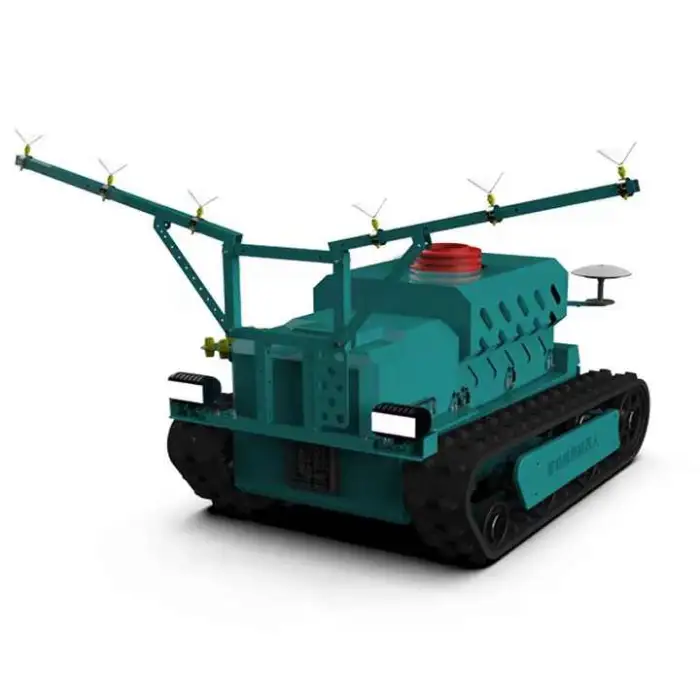
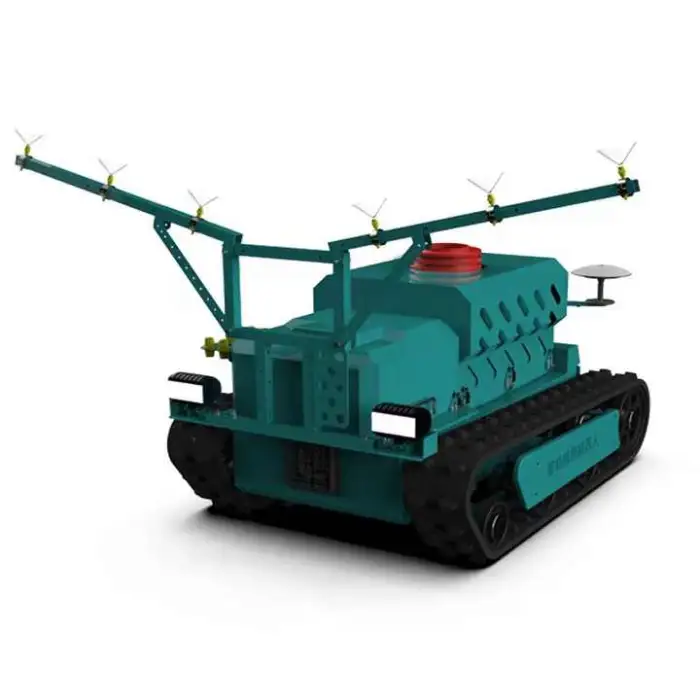
Remote-controlled Tracked Pesticide Applicator Orchard Greenhouse Spraying Robot Agricultural Spraying Robot
Asset finance available
Do you want funding for this equipment?
Afrimart can connect you with trusted funding partners who specialise in asset finance for businesses like yours. Compare options and apply in minutes — final approval is subject to provider review.
Check funding options
Secure & no obligation

- Section : Machinery
- Category : Agriculture Machinery
- SKU : 1601123406149

Remote-controlled Tracked Pesticide Applicator Orchard Greenhouse Spraying Robot Agricultural Spraying Robot
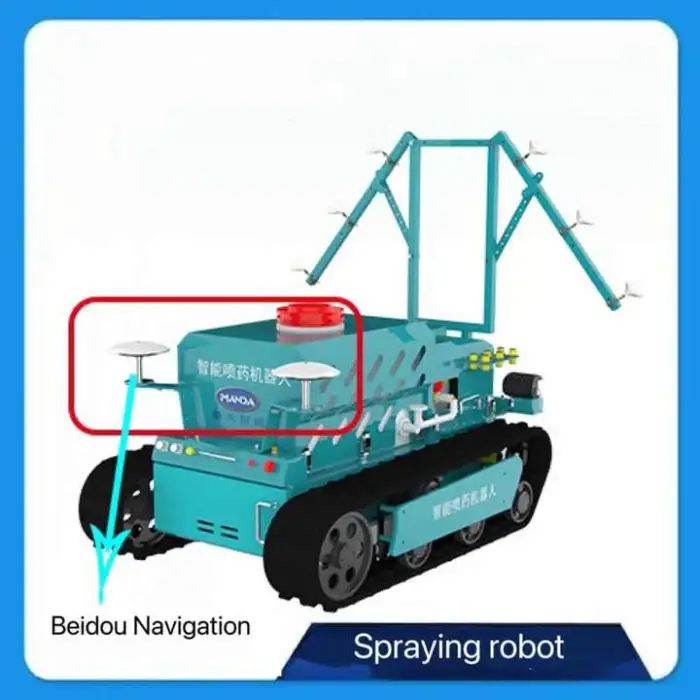
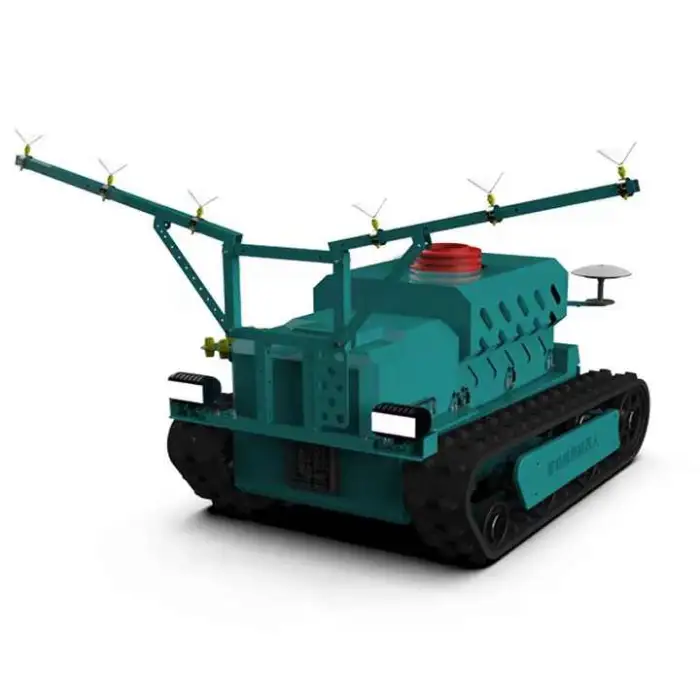
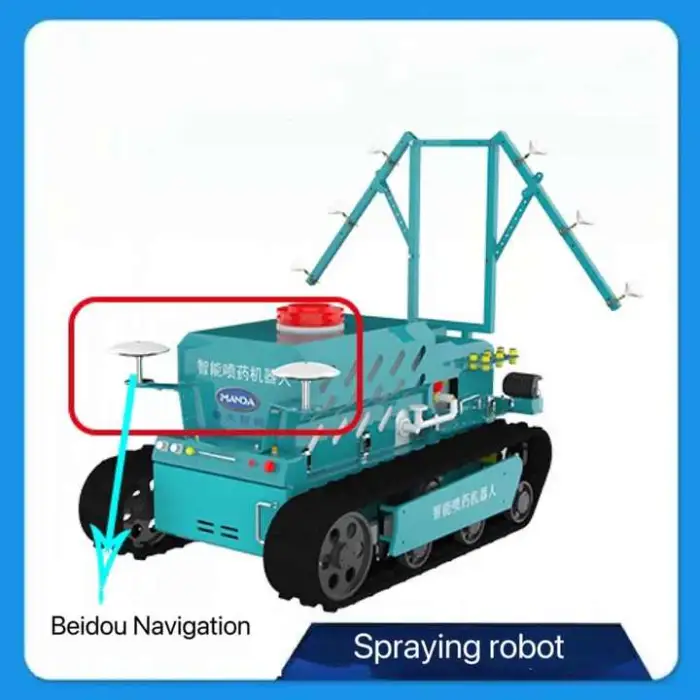
The Remote-controlled Tracked Pesticide Applicator is a smart and eco-friendly robot designed for effective spraying in orchards and greenhouses. This agricultural spraying robot helps farmers apply pesticides with ease and precision. With its remote control, you can operate it from a distance, making it simple to cover large areas with minimal effort.
Specifications
| Attribute | Details |
|---|---|
| Model Number | L1770 x W1070 x H1200mm |
| Power | 3.5 |
| Net Weight | < 520 |
| Selling Units | Single item |
| Single Package Size | 50X50X120 cm |
| Single Gross Weight | 80.000 KG |
Key Features
- Remote-controlled operation for easy handling.
- Designed for eco-friendly pesticide application.
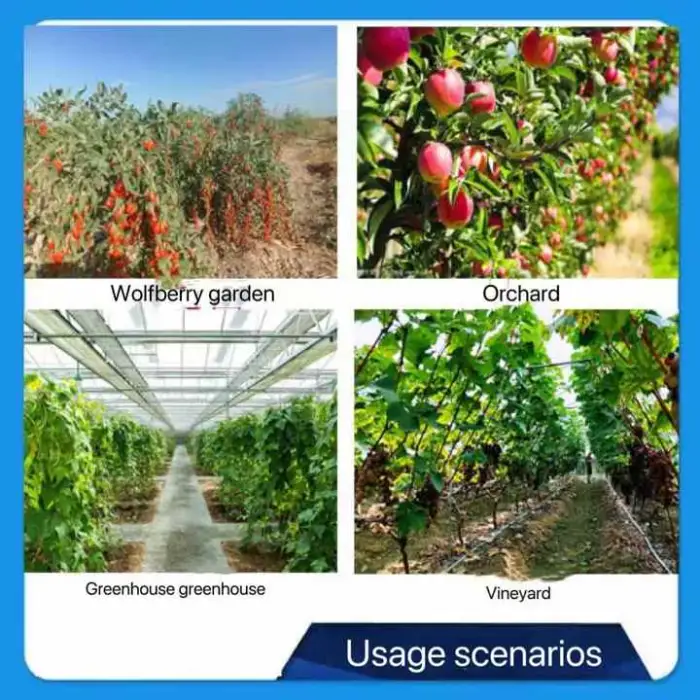
- Suitable for use in orchards and greenhouses.
- Compact size allows for maneuverability in tight spaces.
- Durable build for long-lasting performance.
Applications
- Spraying pesticides in orchards.
- Maintaining plant health in greenhouses.
- Automating agricultural spraying tasks.
- Reducing labor costs in farming.
- Improving efficiency in crop management.
Product Info Gallery
- Shipping Timeframes: All orders are processed within 2-5 business days (excluding weekends and holidays). After your order has been processed, the estimated delivery time is before 30 Nov, 2026, depending on customs, Please note that due to high demand, some items may experience longer shipping times, which will be communicated at order confirmation email.
- Order Processing Time: Please allow 2-5 business days for us to process your order before it is shipped . Orders placed after 16:00 on Fridays, or during weekends and public holidays, will begin processing on the next business day. Processing times may be extended during peak seasons or sales events.
- Manufacturing Time: Some products needs manufacturing time, the manufacturing process will take approximately 10-30 business days depending on the product. This timeframe may vary depending on the complexity of the product and current demand. but this will be communicated with you during order confirmation.
- Returns and Exchanges: We offer a 30-day return policy for most items. If you are not completely satisfied with your purchase, you may return it within 30 days of receipt for a refund or exchange. Items must be unused, in their original packaging, and accompanied by proof of purchase. Return shipping costs are the responsibility of the customer, unless the item was damaged or defective upon arrival.
1. What is the Remote-controlled Tracked Pesticide Applicator?
It is a remote-controlled tracked spraying robot designed for eco-friendly, precise pesticide application in orchards and greenhouses. The unit automates spraying tasks to improve efficiency, reduce labor, and enable operation in tight or uneven terrain.
2. What are the product dimensions and weight?
The specification lists dimensions as L1770 x W1070 x H1200 mm. Package size is 50 x 50 x 120 cm and single gross package weight is listed as 80.000 KG. A net weight field shows "< 520" — please confirm exact net weight and any packing discrepancies with the supplier before purchase.
3. What is the power rating and power source?
The spec shows a power value of "3.5" but the unit (kW, HP, or battery voltage) is not specified. Contact the seller for the exact power type and rating (electric motor, diesel, battery system) and any available power options.
4. What kind of remote control does it use and what is the operating range?
The product is described as remote-controlled, but the remote type (RF, Bluetooth, proprietary) and effective control range are not provided. Request the remote specification and maximum reliable range from the vendor before ordering.
5. What is the spray tank capacity and spray width/output?
Tank capacity, spray width, nozzle type, and flow rate are not listed in the provided specs. These are critical for planning coverage — please ask the supplier for detailed tank volume, pump flow rate, nozzle specifications, and recommended spray settings.
6. Can this robot be used inside greenhouses?
Yes — it is specified as suitable for greenhouse use. Its compact tracked design is intended for maneuverability in tighter spaces. When using indoors, ensure adequate ventilation and follow chemical safety practices to protect workers and plants.
7. Is it appropriate for orchard applications?
Yes — the robot is designed for orchard spraying. The tracked chassis helps with traction on uneven ground and rows between trees, but confirm clearance, row width compatibility, and fruit canopy access for your specific orchard layout.
8. Which pesticides and formulations can it apply?
Most agricultural spraying robots are compatible with water-based pesticides, miticides, and foliar fertilizers. Avoid solvents or highly corrosive chemicals unless the manufacturer confirms chemical compatibility. Always follow the pesticide label and consult the supplier about materials compatibility for seals, hoses, and pumps.
9. What are the recommended maintenance and cleaning procedures?
General maintenance: flush and rinse the tank and lines after each use, clean and inspect nozzles, check and tension tracks, inspect seals and hoses, charge/maintain batteries per manufacturer instructions, and keep electronics and connectors dry. Follow the vendor's maintenance schedule and replace wear parts as recommended.
10. What safety features and precautions should I follow?
Use appropriate PPE when mixing/loading chemicals. Confirm the robot has an emergency stop, remote shutoff, and any obstacle-detection or warning lights. Keep people and animals clear during operation, lock out power before servicing, and follow all pesticide label safety requirements.
11. What is the expected runtime and charging time?
Runtime and charging time depend on the battery system and are not specified in the provided data. Ask the supplier for typical continuous operating time under load, battery capacity, charging method, and whether spare batteries or quick-swap options are available.
12. Is there a warranty and are spare parts available?
Warranty length and spare parts availability are not listed. Ask the seller for warranty terms, what is covered, lead time for spare parts (nozzles, pumps, electronics, tracks), and availability of local service or authorized repair centers.
13. Can the robot be customized (tank size, nozzles, sensors, automation)?
Many manufacturers offer customization such as different tank sizes, nozzle packages, GPS/autonomy upgrades, cameras, or sensor integrations. Contact the supplier to discuss available options and any additional cost for customization or automation features.
14. How is the robot shipped and what should I consider for delivery?
The listed single package size is 50 x 50 x 120 cm with a gross weight of 80 kg, but product dimensions suggest the actual unit may be larger. Confirm packaging, crating, pallet requirements, freight class, and any import/export documentation with the seller to arrange appropriate transport.
15. How do I order a demo or get technical support/training?
Contact the supplier or dealer to request a product datasheet, live demo (on-site or video), operator training, and after-sales support options. Ask for references or case studies from other orchard/greenhouse users and clarify terms for installation, commissioning, and operator training.
Latest Order Arrivals
Discover our latest orders

12 Heads Embroidery Machine

Toilet Paper Machine Machine

Order Collection

Cross Border Clients

Order cros border countries Collected

Industrial Machine Cllection

Agriculture Processing Machines

Ready for collection

Water Pump Equipment

Packaging Machine and accessories

Fabrics Manufacturing Equipment

Mining Equipments

Food Processing Machine

Batch of Orders

Batch of Orders

Latest Orders Labelled

wheel alignment machines

new arrivals

Pre Orders Offloading

Latest Arrivals

Latest Arrivals

Latest Arrivals

Loading

Toilet paper making machine

Toilet paper making machine

Toilet paper Rewinding Machine

latest arrivals

offloading

order success

order collection

order offloading