





















































































































































































































































































































































































































Expanding a concrete products business requires equipment that fits the way the business operates. Customer specifications, production schedules, material availability and site capacity all influence whether a new machine will deliver useful additional output.
For business owners and procurement teams evaluating automatic block making machinery, the QT4-18 Full Automatic Block Machine Line is an option to investigate through Afrimart. The purchasing decision should connect the selected configuration to a clearly defined manufacturing requirement.
The QT4-18 is an automatic concrete product manufacturing line. Its suitability for your operation depends on the required product, mould configuration, production target and supporting site infrastructure. A detailed request for quotation helps establish those requirements before an order is placed.
This guide explains how to evaluate the equipment, prepare your site, assess production capacity and request a configuration suited to your business.
What Is the QT4-18 Full Automatic Block Machine Line?
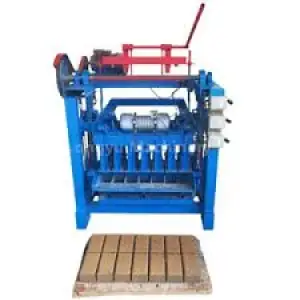
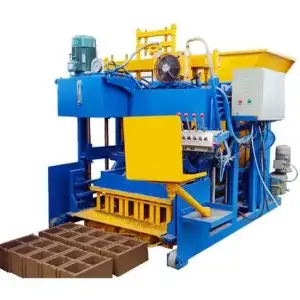
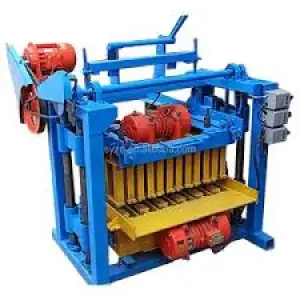
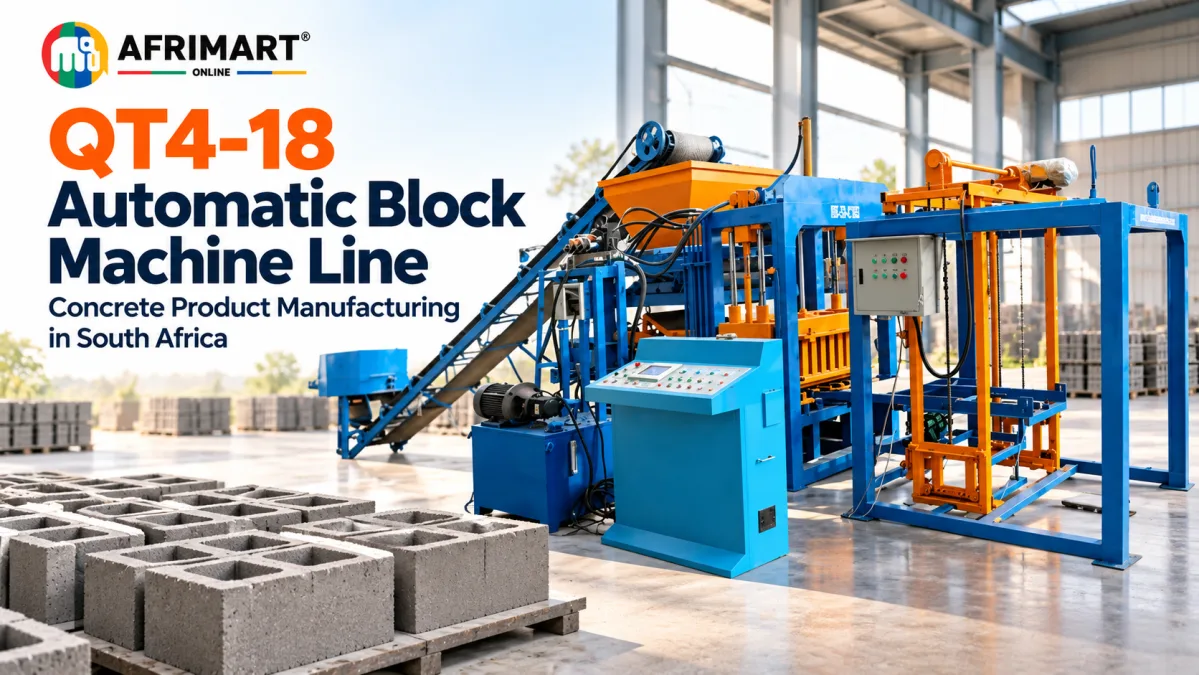
Afrimart lists the QT4-18 as an automated system for manufacturing concrete products. The product page describes the following features and operating requirements:
| Item | Published product information |
|---|---|
| Product applications | Hollow blocks, solid blocks, paving stones and curbstones |
| Main components | Block making machine, mixer, conveyor, pallet feeder and automatic controls |
| Indicative production | Approximately 4,000–5,000 blocks daily, depending on block size and mix |
| Electrical supply | Three-phase power, typically 380V |
| Configuration options | Different moulds and configurations for specific production needs |
Confirm these details against the exact configuration requested. Daily output needs a defined product, shift duration and operating conditions; the supply scope should identify every included component.
You can view the QT4-18 Full Automatic Block Machine Line on Afrimart and submit your production requirements for an RFQ.
Which Businesses Should Evaluate an Automatic Block Production Line?
An automatic line is worth evaluating when a business needs a more coordinated production process and has sufficient demand to support the investment.
Potential buyers include established block manufacturers, concrete product suppliers, contractors assessing internal production and businesses entering manufacturing with a developed operating plan.
For an existing producer, the question may be whether new equipment can remove a known restriction. Perhaps the current forming process cannot keep pace with orders, or manual handling creates inconsistent production schedules.
For a contractor, the assessment may involve comparing purchased masonry units with the responsibilities of manufacturing them internally.
For a new manufacturer, the first priority is establishing a credible market. Machinery selection should follow a clear understanding of customers, product specifications, delivery requirements and available resources.
Start With the Concrete Product Your Customers Need
A machine enquiry becomes more useful when it starts with the finished product.
Before requesting a quotation, identify the dimensions, geometry and intended application of each unit you plan to manufacture. Provide drawings, an approved sample or a detailed specification where available.
Customer requirements may also cover appearance, dimensional tolerances, strength, water absorption or other performance characteristics. Establish which requirements apply to each product and how acceptance will be assessed.
This matters when selling to construction companies, merchants or procurement teams working against project specifications. A product that looks suitable may still be unsuitable for the intended order.
Choose the initial product range carefully. Launching with a manageable selection gives operators time to establish repeatable production methods and allows the business to build reliable quality records.
Define What Automation Must Achieve
Automation should solve a specific operational problem.
For one business, that might be improving the repeatability of the forming process. For another, it could mean reducing manual transfers or coordinating material movement more effectively.
Write down the expected result before evaluating equipment. Useful objectives include:
Meeting an agreed daily production requirement.
Reducing interruptions between production stages.
Improving control over repeatable machine settings.
Supporting a predictable staffing arrangement.
Making production records easier to maintain.
Accommodating an approved range of moulds.
Then ask how the proposed configuration supports those objectives.
The description “fully automatic” should lead to a discussion about the complete workflow. Identify which tasks remain with operators, including material replenishment, inspections, cleaning, stock movement and maintenance.
Assess Output Under Your Operating Conditions
A production figure needs enough detail to become a useful planning input.
Ask the supplier to calculate output for your selected product dimensions and mould arrangement. The calculation should state the number of units per cycle, assumed cycle duration and scheduled operating hours.
It should also explain allowances for interruptions. Cleaning, material replenishment, adjustments and product changes can affect the working day.
For illustration, suppose a proposed process forms 600 units during an uninterrupted hour. At 75% productive operating time, that becomes 450 formed units. If 4% are rejected, 432 accepted units remain.
These are hypothetical figures, not QT4-18 specifications.
The distinction is useful: your business sells accepted products. Production planning should therefore connect machine activity to the quantity that can be released for sale.
Balance the Mixer and Material Feeding Process
A forming machine needs a dependable supply of suitable material.
When evaluating the line, ask how the proposed mixer and feeding arrangement support the target production rate. Discuss batch size, mixing time, discharge time and movement between stages.
Provide information about the aggregates and cement you intend to use. Where practical, arrange a representative material trial before final acceptance.
The layout should also allow materials to reach the mixer without unnecessary obstruction or repeated handling.
An existing business should include its current equipment in the assessment. A mixer that worked with an older machine may need to be reassessed when the forming stage changes.
Request a configuration drawing showing the relationship between material storage, mixing, conveying and moulding.
Confirm Every Included Component
An RFQ should produce a clear scope of supply.
Request a component schedule identifying what is included in the proposed line and what the buyer must provide separately.
This should cover the main equipment, moulds, production supports, controls, connections and accessories relevant to the configuration.
Ask for clarity on quantities. An item described as “pallets included” is less useful than a confirmed quantity, specification and explanation of how that quantity supports production.
Also identify equipment needed outside the supplied package. Loading equipment, stock handling machinery, electrical installation and civil works can materially affect readiness.
A complete scope helps the purchasing team compare offers accurately and gives the installation team a practical basis for preparing the site.
Select Moulds Around a Commercial Production Plan
Mould selection determines which products the business can manufacture.
Prepare a schedule showing the intended products, dimensions, anticipated demand and production frequency. Ask the supplier to confirm compatibility for each requested mould.
For every option, establish:
The units formed per cycle.
Required production supports.
Product changeover procedure.
Additional settings or accessories.
Handling requirements.
Replacement and wear part arrangements.
Consider scheduling as well as compatibility. Several small orders may create frequent changeovers that reduce productive time.
A focused initial range can make production easier to manage. Additional moulds can then be introduced when demand and operating experience justify them.
Keep drawings and approved specifications with the purchase documents so the ordered moulds can be checked on arrival.
Plan the Factory Layout Before Delivery
A production line occupies more space than its equipment footprint.
The site must accommodate incoming materials, operating access, fresh products, curing, finished stock and dispatch. Maintenance access also needs to remain available when the line is installed.
Ask for an equipment layout drawing and review it against the actual site dimensions.
Consider how people and vehicles move through the operation. Material deliveries should not routinely block finished product dispatch, and fresh units should not need to travel through congested loading areas.
Include drainage, weather exposure and access for cleaning in the layout discussion.
Before confirming delivery, establish how each major item will be unloaded, moved and positioned. Identify lifting responsibilities and make the necessary arrangements ahead of arrival.
Verify the Electrical Installation
Provide accurate information about the site’s electrical supply with your enquiry.
Request the complete electrical schedule for the proposed configuration, including the requirements of associated equipment. Ask for connection details, protective requirements and the relevant drawings.
Have a qualified electrical professional assess the planned installation. The assessment should cover the available supply, starting demands, cable routes, protection and safe isolation.
If a generator or another alternative supply is being considered, size it against the actual installation requirements.
Include electrical readiness in the project schedule. A delivered machine cannot be commissioned properly if the connection is incomplete or unsuitable.
Keep responsibility clear: identify which electrical work is supplied with the equipment and which must be completed locally.
Organise Materials and Production Records
A controlled manufacturing process starts before material enters the machine.
Establish how aggregates and cement will be received, stored and identified. Define who checks deliveries and records changes in material sources.
Develop a repeatable batching procedure with suitable technical support. Operators need clear instructions rather than relying on informal adjustments between shifts.
Production records should help the business understand what happened when an acceptable batch was made and investigate what changed when defects appeared.
Useful records include:
Material sources and batch identification.
Quantities used.
Water additions.
Production date and shift.
Relevant machine settings.
Accepted and rejected quantities.
Inspection and test results.
Keep the recording system practical enough for staff to use consistently throughout normal production.
Build Quality Checks Into the Workflow
Quality inspection should occur throughout production.
Agree on checks for raw materials, fresh units, cured products and dispatch. Assign responsibility for each stage and establish what happens when a result falls outside the agreed limits.
AfriSam’s concrete brick and block making guide identifies strength, dimensions and shrinkage as key quality considerations. It also explains why curing conditions matter to cement hydration and strength development.
For the proposed operation, establish a testing plan with competent technical support. Match the plan to the product and customer specification.
Separate suspect batches from approved stock. Clear identification prevents units awaiting a decision from entering a customer order and helps the business trace recurring defects.
Give Curing and Stock Handling Enough Capacity
The production plan must account for what happens after forming.
Fresh units need suitable handling and a defined curing process. The operation also needs space to hold products while they progress towards the agreed release criteria.
Calculate the stock expected between production and dispatch. For example, 3,000 units produced daily and retained across ten production days create 30,000 units requiring accommodation.
This is an illustrative inventory calculation, not a curing instruction.
Use the calculation to assess space, handling routes and identification methods. Include seasonal conditions and protection arrangements in the operating plan.
A business that expands forming capacity without preparing the downstream area may find the new machine waiting for space to become available.
Establish a Realistic Staffing Plan
Automatic equipment still needs an operating team.
Ask the supplier to describe the tasks required around the proposed line and the staffing assumptions behind the production estimate.
Your plan should assign responsibility for material supply, equipment operation, inspections, stock movement, cleaning and basic maintenance.
Include supervision and cover for breaks or absences. A production process that depends on one person performing several simultaneous tasks may struggle to maintain its target.
Training should address both normal operation and abnormal conditions. Operators need to recognise when to stop, who to notify and how to restart safely under the approved procedure.
Include production records and defect reporting in training so the team can support both output and quality.
Request a Maintenance and Spare Parts Plan
Maintenance planning belongs in the RFQ stage.
Ask for the recommended maintenance schedule, required consumables and list of critical wear parts. Identify the tools and skills needed for routine work.
Request manuals and relevant drawings in a form your maintenance team can use.
Clarify how technical support will be delivered, including the process for reporting faults and obtaining replacement parts. Confirm availability and expected supply arrangements for the delivery location.
Keep warranty terms separate from general support descriptions. The quotation should explain coverage, exclusions and the responsibilities of each party.
For an established manufacturer, involve maintenance personnel in equipment evaluation. Their questions can reveal practical requirements that a commercial comparison alone may miss.
Define Commissioning and Acceptance
Commissioning should establish that the installed equipment can operate under agreed conditions.
Before placing an order, document what the supplier and buyer will each provide. Include site readiness, materials, utilities, personnel and any testing arrangements.
Agree on an acceptance procedure for the selected configuration. It may address correct assembly, safety functions, operating sequences, mould checks and a representative production run.
Specify how results will be recorded and how unresolved items will be handled.
Avoid leaving acceptance to a general statement that the machine “works”. A documented procedure gives both parties a clearer understanding of completion.
Also establish what training accompanies commissioning and which operating documents must be handed over.
Plan Delivery Around Operational Readiness
A production start date depends on more than transport.
Request a schedule that distinguishes configuration approval, manufacturing where applicable, dispatch, transport, delivery, installation and commissioning.
Ask which dates are estimates and what must happen before each stage can proceed.
For buyers outside South Africa, provide the destination and proposed delivery point early. Confirm the responsibilities for transport coordination, documentation, unloading and onsite work.
Build the internal project schedule around readiness milestones. Civil works, electrical installation and material procurement should be completed in time for commissioning.
Confirm current lead times through the RFQ rather than using a general website delivery estimate as a commitment for your project.
Evaluate the Business Case Using Accepted Output
The commercial assessment should connect the production system to the market it will serve.
Estimate realistic sales volumes by product, then compare them with achievable accepted output. Include the effect of changeovers, maintenance and seasonal demand.
Build operating estimates using your own material quotations, staffing plan, energy requirements, handling arrangements and delivery model.
Assess working capital separately. Materials, wages and stock can require funding before customer payments arrive.
Run more than one scenario. Test lower sales, reduced utilisation and higher rejection levels alongside the expected case.
The purpose is to understand how the business performs under different conditions and identify which assumptions need stronger evidence before procurement approval.
What Should Your QT4-18 RFQ Include?
A detailed request allows the supplier to recommend equipment against a defined requirement.
| RFQ information | Details to provide |
|---|---|
| Business and location | Company name, contact person, country and delivery address |
| Intended products | Unit types, dimensions, drawings and samples where available |
| Production requirement | Target accepted output and planned shift pattern |
| Materials | Proposed cement and aggregate sources |
| Existing equipment | Mixers, loaders and handling equipment already available |
| Site | Dimensions, access, surfaces and utility information |
| Mould requirements | Initial products and potential future additions |
| Services | Installation, commissioning, training and support requirements |
| Project timing | Preferred schedule and readiness constraints |
Ask for a written response identifying the proposed configuration, inclusions, exclusions, assumptions and technical documents.
Frequently Asked Questions About the QT4-18
Is the QT4-18 suitable for my block manufacturing business?
Suitability depends on the products you need, expected demand and the site’s ability to support production. Submit product drawings, daily output requirements and site information so the proposed configuration can be assessed against your operation.
Can I request different moulds?
Include every required product and dimension in your RFQ. Ask for written confirmation of mould compatibility, changeover requirements and any additional equipment needed. Keep future product ideas separate from the initial approved production scope.
What daily output should I use in my business plan?
Use an output estimate developed for your chosen product, configuration and shift pattern. Allow for interruptions and rejected units. Ask the supplier to explain the calculation and identify which assumptions need confirmation through a demonstration or trial.
Does an automatic line remove the need for operators?
No. Plan for supervision, material replenishment, inspections, cleaning, maintenance and stock handling. Ask for a task breakdown for the quoted configuration so staffing can be assessed realistically.
Can the equipment be requested for a SADC destination?
Provide the country, delivery address and site details in your enquiry. Request confirmation of delivery arrangements, documentation, installation responsibilities and support availability for that location.
What should be ready before commissioning?
Complete the agreed site works, utilities and access arrangements. Have the required materials and personnel available, and use a written readiness checklist agreed with the supplier. Confirm the acceptance and training arrangements before the commissioning visit.
Request Your QT4-18 Configuration From Afrimart
A productive block manufacturing operation begins with a clear specification and a workable production plan.
Define your finished products, required output, available site and supporting equipment. Then request a configuration that connects those requirements to the complete manufacturing process.
Submit an RFQ for the QT4-18 Full Automatic Block Machine Line through Afrimart. Include your product dimensions, delivery location and production target so the enquiry can focus on equipment suited to your business.