





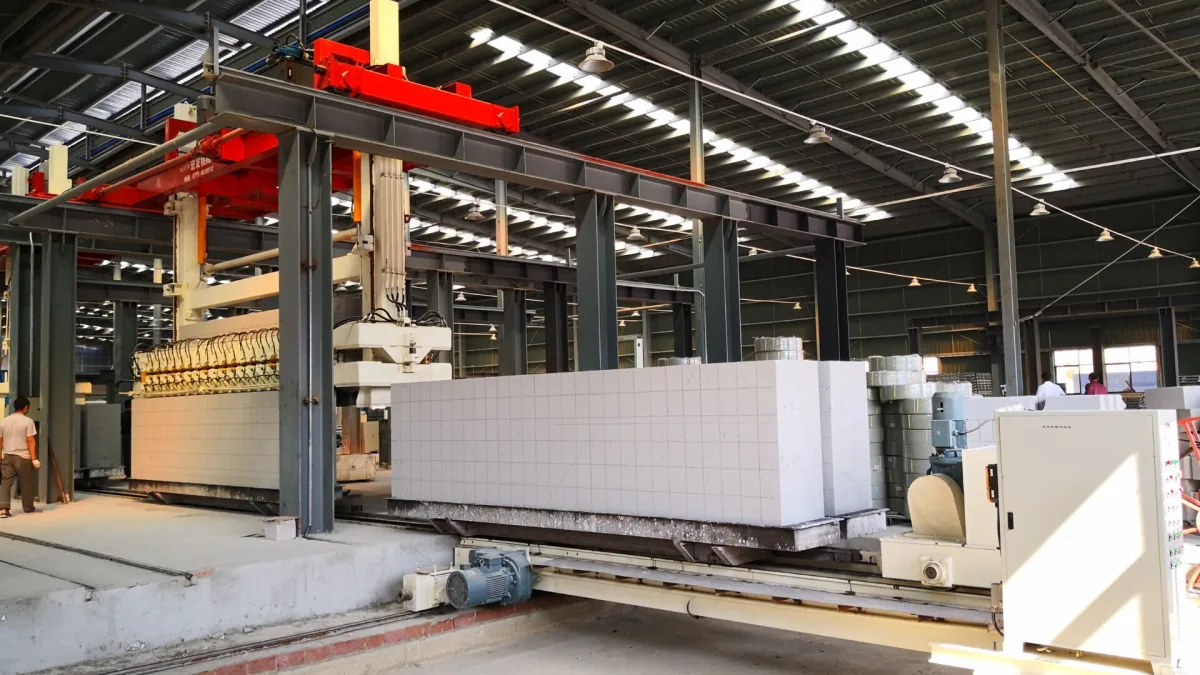
Buying a brick making machine is a decision about production capacity, product quality and the cost of supplying your market. The machine’s purchase price is only one part of that decision.
For a business owner, the right equipment must turn available materials into products customers will buy. For a procurement team, it must also meet technical requirements, fit the operating site and deliver a commercially workable production process.
The best brick making machine for your business is the one that produces your required brick or block consistently, at a sustainable cost, within your site’s operating conditions. Choosing it requires a clear view of demand, moulds, realistic output, labour, power, curing space and maintenance.
This guide explains how to compare brick making machinery in South Africa, assess the complete investment and prepare a useful quotation request. It also introduces selected equipment listed in Afrimart’s brick making machinery range.
What Is a Brick Making Machine?
A brick making machine forms building units from a prepared material mixture. Depending on its design, it may use manual pressure, mechanical vibration, hydraulic compression or extrusion.
The term covers several different production processes. Concrete brick and block machines generally form units from cement, aggregates and water. Clay brick equipment processes clay through a different manufacturing route, which may include drying and firing. Soil block presses require their own material preparation and production controls.
These categories are not interchangeable. A machine suitable for concrete hollow blocks should not be assumed to manufacture fired clay bricks.
Before comparing models, define the finished product: its material, dimensions, shape, intended application and required performance. That specification gives the supplier something concrete to recommend against.
Which Brick Making Machine Is Best for Your Business?
The right machine depends on how much saleable output you need and how your operation will support it.
| Business requirement | Equipment category to assess | Main procurement question |
|---|---|---|
| Limited initial demand | Manual or smaller powered equipment | Can labour and output meet the business plan? |
| Growing local block sales | Semi-automatic machinery | What restricts production across a full shift? |
| Recurring commercial orders | Automatic block machinery | Can mixing, curing and handling support the press? |
| Production across different sites | Mobile block machinery | What surface and movement arrangements are required? |
| Clay brick manufacturing | Clay preparation and forming equipment | What drying and firing equipment completes the process? |
| Multiple concrete products | Machinery with compatible mould options | What does each product changeover require? |
A larger machine can create additional capacity, but it also increases the demands on materials supply, handling, maintenance and working capital.
Start with dependable customer demand, then select a production system that can serve it.
Understand the Main Types of Brick Making Machinery
Manual brick making machines
Manual equipment can suit businesses testing a market or operating at a modest production scale. Buyers should assess the physical work involved, the number of operators required and the consistency achievable throughout a shift.
A low entry price is useful only when the business can produce enough acceptable units to cover its operating costs.
Check how material is loaded, how compaction occurs and how newly formed units are removed. Ask for a demonstration covering the complete work sequence.
Semi-automatic brick and block machines
Semi-automatic equipment combines powered functions with tasks completed by operators. The exact division varies between machines.
One model may automate vibration while retaining manual feeding. Another may include powered material distribution but require manual handling elsewhere.
Request a description of every production stage. This makes labour requirements clearer and prevents comparisons based solely on the phrase “semi-automatic”.
Fully automatic block production equipment
Automatic equipment may suit businesses with established demand and the resources to operate a coordinated production line.
However, automation has boundaries. Batching, mixing, conveying, moulding, pallet movement and stacking may be included in different combinations.
Ask the supplier to mark exactly where automation starts and ends. The quotation should identify the equipment and staffing needed outside those boundaries.
Mobile and egg-layer machines
Mobile machines move between production positions, with some designs depositing freshly formed blocks onto a prepared surface.
For these systems, the production floor becomes part of the manufacturing process. Its condition, usable area and layout affect how efficiently the machine can operate.
Confirm the surface specification, movement pattern and arrangements for protecting and collecting fresh blocks.
Hydraulic presses
Hydraulic describes a machine’s pressure system. It does not, by itself, define the level of automation, finished product range or production capacity.
Evaluate hydraulic equipment through its complete specification: pressure controls, mould arrangement, cycle sequence, maintenance requirements and demonstrated product results.
Clay brick equipment
Clay forming equipment needs to be assessed as part of a complete clay production process.
Ask what material preparation is required, how moisture is controlled and what happens after forming. Drying, firing and handling requirements can materially change the project’s scope.
Compare clay machinery with equipment intended for the same manufacturing route.
How Much Do Brick Making Machines Cost in South Africa?
Prices vary with the machine type, configuration, moulds and equipment included.
As a dated reference, Afrimart’s category page displayed the following prices on 15 October 2026:
| Listed equipment | Displayed price |
|---|---|
| JZ-1 Manual Clay Interlocking Brick Machine | R53,199 |
| EB4-35A Semi-Automatic Block Molding Machine | R108,200 |
| QM4-45 Diesel Mobile Block Machine 2 Molds | R160,900 |
| QT4-40 Brick Making Machine | R286,950 |
| QT4-18 Full Automatic Block Machine Line | R1,009,999 |
These are website listing prices, rather than complete project quotations. Confirm the current price, configuration, availability, VAT treatment, delivery and installation scope for the selected equipment.
The table also illustrates why a single “brick machine price” can be misleading. A manual clay press and an automatic concrete block line serve different production requirements.
For a meaningful comparison, ask suppliers to quote against the same finished product, output target and scope of supply.
Calculate the Complete Setup Cost
A production business needs more than a forming machine.
Prepare a project budget that identifies what is included, what must be bought separately and what the site must provide.
Typical cost headings include:
The machine and required moulds.
Mixing and material feeding equipment.
Pallets, boards or other production supports.
Electrical installation or the specified power arrangement.
Production surfaces, foundations and drainage.
Water storage and distribution.
Curing and finished stock areas.
Material handling equipment.
Delivery, unloading and positioning.
Commissioning, training and initial spare parts.
Then add working capital for materials, wages, fuel or electricity, maintenance and customer payment terms.
A business can own suitable machinery and still struggle because too much money was committed before production started. Preserve enough cash to operate through commissioning, early rejects and the first sales cycle.
Define the Product Before Requesting a Quote
A useful quotation begins with a product specification.
“Bricks for construction” leaves too much open. Provide a drawing, dimensions or a clearly identified sample wherever possible.
For each intended product, state:
Whether it is a concrete brick, hollow block, paver or another unit.
Its dimensions and geometry.
Its intended use.
Its required performance and acceptance criteria.
Its expected monthly sales volume.
Whether colour or surface appearance matters.
For procurement teams, involve the people who will approve the finished units. A production manager may prioritise repeatability, while a project team may require specific dimensions or documented test results.
Resolve those requirements before choosing moulds. Changes made after ordering can affect cost, delivery and production planning.
Compare Real Output Rather Than Headline Capacity
A machine’s stated output needs context.
Ask which product was used for the calculation, how many units were formed per cycle and what production conditions were assumed. Confirm whether the figure represents continuous moulding time or a full working shift.
For illustration, assume a machine forms four blocks every 30 seconds. Its theoretical output is 480 blocks per hour.
If productive operating time averages 70% of the scheduled hour, that becomes 336 blocks. If 3% are rejected, approximately 326 saleable blocks remain.
These are hypothetical planning assumptions, not specifications for an Afrimart machine.
The exercise shows why procurement should distinguish between theoretical output, actual production and saleable output. Ask suppliers to explain how feeding, cleaning, changeovers and material movement affect the proposed daily figure.
Find the Bottleneck Across the Production Line
The press cannot produce continuously if the mixer cannot supply it.
Likewise, a productive machine can spend time waiting for pallets, operators, stock removal or space in the curing area.
Map the complete sequence:
Material storage → batching → mixing → feeding → forming → initial handling → curing → storage → dispatch.
At each stage, ask how much material or how many units can move through it during a normal shift.
This is particularly important when upgrading an existing operation. Replacing the press may increase its available capacity while leaving the business constrained by an undersized mixer or slow handling process.
Ask the supplier to recommend a balanced configuration and explain the assumptions behind it. Include your existing equipment in that discussion.
Check Mould Compatibility and Changeover Requirements
The mould determines the geometry of the finished product. It is therefore a central part of the purchase specification.
Confirm the exact mould included with the machine, its dimensions and the number of units produced per cycle.
If the business plans to manufacture several products, request a separate price and specification for each mould. Ask what additional parts, settings or handling arrangements are needed.
Changeover time matters commercially. A machine producing multiple products may lose useful production time between short orders.
A practical approach is to identify one dependable core product for the initial production plan. Add further products when customer demand, operator experience and production scheduling support them.
Assess Power, Water and Site Readiness
Give the supplier accurate information about the installation site.
For electrically powered equipment, obtain the specified voltage, phase, frequency, connected load and starting requirements. Have a qualified electrical professional assess the proposed connection and protective arrangements.
Where alternative power is being considered, size it against the actual equipment requirements. A machine’s motor rating alone may not describe the demands of the complete installation.
Water planning should include mixing, cleaning and the chosen curing process.
The site layout also needs room for incoming materials, production, fresh units, curing, finished stock and vehicle movement. Check delivery access before ordering: unloading a heavy machine and positioning it safely may require equipment that is not included in the delivery service.
Protect Product Quality Through Materials and Process Control
Buying machinery does not remove the need to control raw materials and production methods.
Set a repeatable procedure for receiving materials, batching, mixing, forming and handling. Keep records that make it possible to trace a quality problem back to a batch.
Useful operating records can include material quantities, water additions, production time, machine settings, rejected units and test results.
AfriSam’s brick and block making guide identifies strength, dimensions and shrinkage as important quality control considerations. It also explains the role of curing in maintaining conditions for cement hydration and strength development.
For a commercial operation, agree on a testing plan before regular dispatch begins. Use competent technical support to establish product acceptance criteria and suitable production controls for the intended application.
Plan Curing Capacity Before Expanding Production
Freshly formed concrete units need a controlled process after leaving the machine.
Curing requirements should influence the layout, handling method and quantity of production supports available. A machine capable of forming more units creates an immediate demand for space downstream.
As a simple stock planning example, producing 4,000 units per day while holding seven days of output creates an inventory of 28,000 units. That calculation illustrates space demand; it does not prescribe a release age or stacking method.
AfriSam’s guide recommends curing concrete blocks for at least seven days. The appropriate handling and release arrangements still need to suit the product, materials, conditions and acceptance requirements.
Plan protected areas, access routes and stock identification before increasing the production target.
Evaluate Cost per Saleable Unit
The purchase price tells you what the equipment costs to acquire. Cost per saleable unit helps you assess the production process.
For an internal comparison, divide the relevant production costs by the number of accepted units:
Production cost per saleable unit = relevant production costs ÷ accepted units produced.
Use consistent cost categories when comparing options. These may include materials, direct labour, energy, routine maintenance, consumables, handling and an allocation of operating overheads.
For example, hypothetical daily costs of R12,000 divided by 3,000 accepted units give a cost of R4 per unit.
Keep this calculation separate from selling price and profit. Delivery, finance, sales expenses, tax and customer credit arrangements may require additional treatment.
Test several scenarios. Lower utilisation, higher material prices and increased rejects can change the economics substantially.
Review Maintenance and After Sales Support
Support should be specific enough to influence the purchase decision.
Ask which spare parts are recommended for the first year, where they are supplied from and what lead times apply. Request the maintenance schedule and identify the skills required to perform it.
For control systems, confirm access to manuals, electrical drawings, settings and troubleshooting information.
Warranty terms should explain coverage, exclusions, claim procedures and responsibility for labour, travel and replacement parts. Establish whether technical support is remote, onsite or provided through another arrangement.
For buyers outside South Africa, confirm the service arrangements for the actual destination. A support statement should describe what the supplier can deliver to your operation, including the practical steps when production stops.
Verify Certification Against the Exact Machine
Certification claims need to be matched to the equipment being purchased.
Request the relevant documents and check the manufacturer, model, scope and issuing details. Determine what each document actually establishes.
A quality management certificate relates to the stated management system and scope. It does not establish that every brick produced by a machine meets your customer’s requirements.
Similarly, documentation concerning machinery should be assessed separately from finished product testing.
For procurement approval, keep the purchase specification, equipment documents, inspection records and product acceptance criteria together. This helps engineering, operations and purchasing teams assess the same configuration.
Ask questions early when a certificate refers to a different model or an unclear product description.
Use a Representative Demonstration
A short video can show that a machine operates. A representative demonstration should help establish whether the proposed process meets your requirements.
Ask to see the relevant mould and finished product, along with the material preparation, feeding, forming and removal stages.
Observe the staffing level, interruptions and handling work. Record how the output figure is measured.
One useful procurement question is: “Please show us how the operator identifies, removes and records an unacceptable unit.”
That reveals how quality problems are managed during production. It can also expose whether rejected material disrupts the workflow.
For a larger investment, agree on acceptance conditions before placing the order. Define the product, demonstration duration, checks and responsibilities in writing.
Compare Quotations on the Same Basis
Prepare a comparison sheet using your own requirements.
Record the machine configuration, moulds, mixer, feeding equipment, handling accessories, power requirements, staffing assumptions, delivery scope and commissioning arrangements.
Separate confirmed information from unanswered questions. A missing item should remain visible until the supplier clarifies it.
Then compare the commercial terms: payment stages, delivery assumptions, warranty, spare parts and responsibility for installation.
For major purchases, involve operations and technical staff before selecting a supplier. The person approving the price may not be the person responsible for operating or maintaining the equipment.
A quotation becomes useful when it describes a complete, workable scope that the business can evaluate and accept.
Explore Brick Making Machinery Through Afrimart
Afrimart’s machinery category provides a starting point for identifying equipment to investigate further.
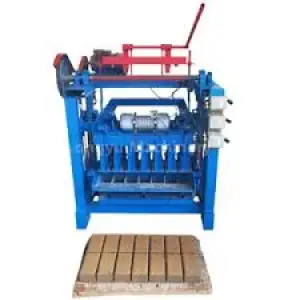
For buyers considering semi-automatic concrete production, the QT4-40 Brick Making Machine is described on its product page as a semi-automatic machine. Confirm the selected mould, included equipment and operating requirements against your intended product.
The most useful enquiry goes beyond a model name. Tell Afrimart where the machine will operate, what you intend to manufacture and the accepted output your business needs.
Request a written scope that connects the machine recommendation to those requirements. This gives your team a clearer basis for comparing equipment and planning the installation.
Frequently Asked Questions About Brick Making Machines
What is the best brick making machine for a growing business?
Choose equipment that can meet dependable demand with consistent quality and manageable operating costs. Assess the complete process, including mixing, staffing, curing and handling. A machine’s headline capacity is only one part of the decision.
How much does a brick making machine cost in South Africa?
The price depends on the equipment type, configuration and scope supplied. Obtain a current quotation for the exact machine and moulds, then budget separately for any required site work, supporting equipment, delivery, commissioning and working capital.
Can one machine make bricks, blocks and pavers?
Some machines can manufacture several products using compatible moulds. Confirm each product’s dimensions, mould cost, cycle assumptions and changeover requirements. Do not assume every machine supports every product shown elsewhere in a supplier’s range.
Do I need three phase electricity?
That depends on the selected equipment. Request the complete electrical specification and have the site assessed by a qualified professional. Include mixers, conveyors and other equipment when planning the connection or alternative power supply.
How many bricks can a machine produce daily?
Daily production depends on the product, mould capacity, cycle time, operating hours and supporting workflow. Ask for a calculation showing the assumptions and distinguish total formed units from accepted units available for sale.
Is a brick making business profitable?
Profitability depends on local demand, selling prices, production costs, rejects, delivery and capacity utilisation. Build a conservative business model using your own market information and quotations. Test whether the business remains viable when sales or production fall below expectations.
Request a Machine Recommendation for Your Production Requirements
Before requesting a quotation, prepare your product dimensions, target daily output, delivery location, available power, site information and equipment budget.
Include the supporting machinery you already own and identify the services you need, such as commissioning, training or technical assistance.
Then explore Afrimart’s brick making machinery range and request a configuration matched to your operation.
A well specified purchase gives your business a stronger foundation for consistent production, controlled costs and dependable customer supply.