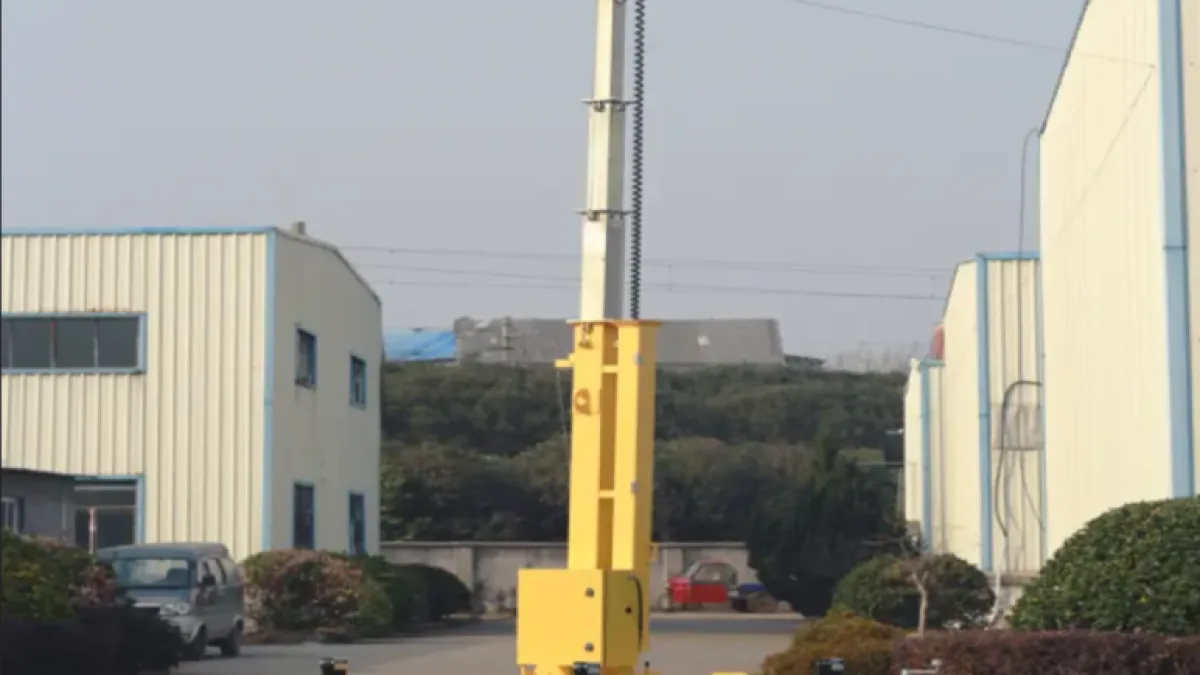
The AC 110V 220V LED Light Tower Trailer provides portable illumination for construction sites, outdoor events, emergency operations and temporary work areas. Its trailer configuration supports relocation between work zones, while the adjustable mast raises the lamps to distribute light across a wider area. Buyers should confirm the selected voltage, lamp output, mast design and trailer specification.
AC 110V 220V LED Light Tower Trailer Overview
The Afrimart AC 110V 220V LED Light Tower Trailer is designed to provide temporary lighting where fixed infrastructure is unavailable or insufficient.
The published product information identifies:
- AC electrical operation
- 110 V or 220 V power options
- LED lighting
- Adjustable mast height
- Trailer-mounted portability
- Outdoor-use construction
- Overload protection
- A stable deployment base
- Maximum stated height of approximately 15 feet
- Suitability for generator connection when voltage requirements are met
These details describe the equipment’s intended function, but the product page does not publish several important engineering specifications, including exact lamp wattage, total lumens, mast construction, wind rating, trailer mass and road-towing approval.
Those details should be confirmed for the selected configuration before ordering. A light tower is a complete working system rather than simply a set of lamps: electrical compatibility, mast stability, site conditions and towing arrangements all affect its safe performance.
What Is a Mobile LED Light Tower?
A mobile light tower combines high-output lamps with an elevated mast, supporting structure and portable chassis. Raising the light source helps distribute illumination over a wider area than lamps positioned close to ground level.
A typical trailer light tower includes:
- LED floodlights
- Adjustable lamp brackets
- Telescopic or sectional mast
- Manual or powered mast-raising mechanism
- Trailer or towable chassis
- Outriggers or stabilising legs
- Electrical distribution panel
- Input cable and connector
- Circuit protection
- Earthing connection
- Parking or positioning system
- Road lights and reflectors on road-approved models
Some mobile light towers include an integrated diesel generator. Others, including an AC-powered arrangement, depend on a separate electrical source such as mains power or a compatible generator.
The selected configuration should therefore be classified clearly as one of the following:
- Externally powered AC light tower
- Generator-integrated light tower
- Hybrid light tower
- Battery-powered light tower
- Solar-assisted light tower
This distinction affects runtime, maintenance, noise, fuel use, deployment and electrical safety.
How Does the LED Light Tower Work?
The light tower receives electricity from a suitable supply and distributes it through protected circuits to the LED floodlights.
A typical operating sequence includes:
- Inspect the location. Check the ground, overhead services, vehicle routes, wind exposure and distance from the work area.
- Position the trailer. Move the tower to the intended location while the mast is fully lowered and secured.
- Stabilise the chassis. Apply the parking system, chock the wheels and deploy all specified stabilisers or outriggers.
- Inspect the electrical system. Check cables, plugs, lamp housings, controls and protective devices for visible damage.
- Connect the correct power supply. Verify voltage, frequency, earthing and circuit capacity before energising the tower.
- Aim the lamps. Set the floodlight angles while the mast is lowered whenever the design permits.
- Raise the mast. Extend it using the approved manual, winch, hydraulic or pneumatic system.
- Rotate or position the light assembly. Direct illumination towards the work area without creating excessive glare.
- Switch on the lamps. Energise the lighting circuits and confirm that every lamp operates correctly.
- Check the illuminated area. Look for dark zones, harsh shadows, reflected glare and interference with traffic or neighbouring properties.
- Lower the mast after use. Switch off, allow components to cool where necessary, isolate the power and lower the mast before relocation.
The tower should never be moved with its mast extended unless its operating instructions explicitly permit a specialised repositioning procedure.
Published Specifications and Buyer Confirmations
The available product information is limited. The table below separates the published characteristics from the specifications that must be confirmed.
| Specification | Available or required detail |
|---|---|
| Product type | Trailer-mounted LED light tower |
| Electrical supply | AC power |
| Published voltage options | 110 V or 220 V |
| Lighting technology | LED |
| Mast arrangement | Adjustable-height tower |
| Published maximum height | Approximately 15 ft, equivalent to about 4.57 m |
| Intended environment | Temporary outdoor lighting |
| Published applications | Construction, outdoor events and emergency lighting |
| Power-source compatibility | External mains or compatible generator |
| Published protection feature | Overload-protection circuit |
| Lamp wattage | Confirm for selected configuration |
| Number of LED lamps | Confirm for selected configuration |
| Total luminous flux | Confirm in lumens |
| Beam pattern | Confirm flood angle and photometric distribution |
| Ingress-protection rating | Confirm for lamps, plugs and control enclosure |
| Electrical frequency | Confirm 50 Hz or 60 Hz compatibility |
| Plug and connector type | Confirm against site electrical system |
| Mast-raising mechanism | Confirm manual, winch-assisted, hydraulic or pneumatic |
| Wind-speed rating | Confirm for fully deployed configuration |
| Trailer mass | Confirm net and gross mass |
| Towing approval | Confirm for intended country and road use |
| Stabilising system | Confirm quantity and type of outriggers or legs |
| Warranty | Confirm duration and coverage in the quotation |
No placeholder data should be inserted for specifications that have not been published. These items should instead become written confirmation points during technical review.
Choosing Between 110 V and 220 V
The voltage option must match the available supply and the electrical standards applying at the work site.
A 110 V arrangement may be used on sites where reduced-voltage temporary equipment is part of the electrical-safety system. A 220 V configuration may be more compatible with common single-phase supplies in South Africa and several other African markets.
Voltage selection should not be based on convenience alone. Confirm:
- Nominal voltage
- Permitted voltage range
- Electrical frequency
- Full-load current
- Maximum input power
- Plug and socket standard
- Cable conductor size
- Cable length
- Protective-earth arrangement
- Residual-current protection
- Generator compatibility
A machine designed only for 110 V must not be connected directly to a 220 V supply. Likewise, labelling a unit “110 V/220 V” does not necessarily mean that it switches automatically between the two. Different configurations or manual reconnection may be involved.
The approved quotation and machine nameplate should identify the exact electrical version.
LED Power, Lumens and Lighting Coverage
Lamp wattage measures electrical power consumption, while lumens indicate the total visible-light output. Neither value alone defines the quality of illumination on the ground.
Lighting performance depends on:
- Total lumens
- Beam angle
- Lamp efficiency
- Mast height
- Lamp orientation
- Distance from the work surface
- Overlap between beams
- Surface reflectance
- Dust, mist or rain
- Surrounding structures
Lux measures illumination reaching a surface. The required lux level varies according to the task. General movement routes, detailed mechanical work, excavation, inspection and emergency escape can require different lighting arrangements.
A tower may illuminate a wide area while failing to provide enough light for detailed work. Conversely, a narrow high-intensity beam can produce bright spots surrounded by dark areas.
Buyers should request:
- Individual lamp wattage
- Number of lamps
- Total rated lumens
- Beam angle
- Photometric diagram
- Recommended coverage at full mast height
- Colour temperature
- Colour-rendering index
- Expected LED service life
The Afrimart product page refers to an LED life of up to 50,000 hours. Actual service life depends on operating temperature, driver quality, electrical stability, enclosure protection and maintenance.
Mast Height, Stability and Wind Conditions
The product page states an adjustable height of up to approximately 15 feet. This is about 4.57 metres, subject to confirmation for the supplied configuration.
Higher mast positions can expand coverage, but they also increase wind loading and the overturning moment acting on the chassis.
Safe deployment depends on:
- Ground firmness
- Surface level
- Outrigger position
- Wheel chocks
- Trailer orientation
- Mast height
- Lamp angle
- Wind speed
- Nearby buildings
- Excavations or unsupported edges
- Passing vehicles and equipment
The tower should not be placed on soft backfill, loose sand, steep slopes or surfaces that may subside under the stabilisers. Suitable pads may be required to distribute outrigger loads.
The maximum permitted wind speed must be obtained for the actual mast and lamp configuration. If the limit is reached or severe weather approaches, the mast should be lowered according to the operating procedure.
Operators should never attach banners, cables, tarpaulins or other objects to the mast unless the design specifically permits them. Additional surface area can substantially increase wind loading.
Trailer Mobility and Towing Requirements
A trailer configuration makes the light tower easier to move around large sites, mines, farms and event grounds. Road towing requires more than fitting the unit to a tow vehicle.
Confirm whether the trailer is designed for:
- On-site movement only
- Low-speed private-road towing
- Public-road towing
- A defined maximum towing speed
For road transport, buyers may need to verify:
- Coupling type and rating
- Safety chains or breakaway system
- Axle rating
- Tyre specifications
- Wheel-bearing capacity
- Brakes
- Mudguards
- Road lights
- Reflectors
- Licence and registration requirements
- Overall width and height
- Maximum permissible mass
The tow vehicle must have sufficient rated towing capacity. The coupling height and nose load should also fall within the required range.
Before movement, lower and mechanically secure the mast, lock the lamps, retract stabilisers, disconnect power and remove loose accessories. Tyres, wheel nuts, coupling and safety devices should be inspected before departure.
Generator Selection for the Light Tower
The product page states that the light tower can be connected to a generator when the generator meets the voltage requirements. Correct generator selection also depends on power, frequency, regulation and protective arrangements.
The required calculation should include:
- Total LED lamp wattage
- Driver and control losses
- Mast-system loads, if electrically operated
- Auxiliary outlets
- Starting or inrush current
- Required spare capacity
- Generator derating for altitude and temperature
LED drivers can introduce inrush current even though their running wattage is relatively low. Generator and protective-device selection should account for this characteristic.
The generator should provide stable voltage and frequency. Earthing and neutral arrangements require competent electrical assessment because they can differ between generator systems and mains supplies.
Where a separate diesel generator is used, position its exhaust away from workers, enclosed spaces and the light tower’s controls. Carbon monoxide can accumulate in poorly ventilated areas.
Applications for a Trailer-Mounted LED Light Tower
Construction sites
The tower can illuminate earthworks, concrete activities, road construction, building work and material-handling zones after dark.
Mining and quarrying
Mobile lighting can support temporary work areas, maintenance zones and traffic routes. Mine-specific equipment and safety requirements must still be followed.
Outdoor events
Lighting can support setup, backstage areas, temporary parking, pedestrian routes and breakdown operations. Beam direction should minimise glare affecting audiences, performers and surrounding properties.
Emergency response
A portable tower may assist rescue, recovery, infrastructure repair and temporary command areas. Emergency teams should maintain independent escape lighting in case the primary supply fails.
Agriculture
Farm operations may use mobile lighting during harvesting, livestock work, irrigation repairs or equipment maintenance. The tower should remain clear of combustible crop materials.
Industrial maintenance
Factories and utilities may use a light tower during shutdowns, outdoor repairs or temporary projects where permanent lighting is inadequate.
Security and temporary facilities
The tower can improve visibility around storage yards, temporary compounds and access points, but lighting should complement rather than replace physical security and surveillance.
Benefits of the AC 110V 220V LED Light Tower Trailer
Portable illumination
The trailer format allows the lighting system to be repositioned as work areas change.
Elevated lighting coverage
An adjustable mast raises the lamps above many obstructions and can distribute light across a larger area.
Voltage options
Availability in 110 V and 220 V configurations supports different temporary-power arrangements, provided the correct version is selected.
LED efficiency
LED lamps generally produce useful illumination with lower electrical consumption than many traditional high-intensity lighting technologies.
Rapid deployment
A suitable site can be illuminated without installing permanent poles, underground cables or fixed luminaires.
Directional control
Adjustable lamp heads allow operators to aim light towards work zones and reduce wasted illumination.
Reduced lamp-maintenance frequency
Long-life LED modules can reduce the frequency of lamp replacement, although drivers, connectors and enclosures still require inspection.
Versatile applications
The unit can support construction, events, emergency operations, agriculture and industrial maintenance.
Site-Lighting Plan and Tower Positioning
A single light tower should not automatically be expected to illuminate an entire project. The site should be divided into work zones, traffic routes, pedestrian areas, storage locations and emergency routes.
The UK Health and Safety Executive’s site-lighting guidance notes that artificial lighting should be provided where natural light is inadequate. It also warns that shadows can hide hazards and that lighting should not distort the appearance of safety signs.
When positioning the tower:
- Avoid directing lamps into operators’ eyes.
- Prevent glare for approaching drivers.
- Illuminate both sides of significant hazards.
- Reduce deep shadows around excavations and equipment.
- Keep emergency signs visible.
- Avoid obscuring hand signals.
- Protect cables from vehicles.
- Position the tower outside crane and lifting zones.
- Maintain safe clearance from overhead lines.
- Consider neighbours and sensitive environments.
- Provide backup lighting for escape routes where required.
Several lower-intensity towers positioned strategically may provide better visibility than one extremely bright source that creates harsh shadows.
Electrical and Operational Safety
Outdoor electrical equipment can expose workers to shock, burns, fire and trip hazards. Wet conditions increase the consequences of damaged cables or unsuitable connectors.
The International Labour Organization’s electrical-safety guidance recommends assessing electrical hazards, using equipment suited to its environment and maintaining cables, plugs, sockets and protective devices.
Important controls include:
- Correct voltage selection
- Suitable circuit protection
- Effective earthing
- Residual-current protection where required
- Weather-resistant connectors
- Protected cable routes
- Accessible isolation
- Pre-use inspections
- Competent electrical repairs
- Lockout during maintenance
- Stable deployment
- Safe clearance from power lines
Do not use cables with exposed conductors, crushed sections, burn marks or insecure repairs. Connections should be raised or otherwise protected from standing water where the approved system permits.
The mast can approach overhead electrical lines as it rises. Electricity can arc across a gap, so physical contact is not required for a fatal incident. The deployment area must be checked before raising the mast.
Maintenance and Inspection
A planned maintenance programme should cover the lighting, mast, chassis and electrical systems.
Before each use
Check:
- Lamp lenses and housings
- Electrical cables and plugs
- Control switches
- Emergency isolation
- Mast sections
- Winch, cable or hydraulic system
- Stabilising legs
- Coupling and safety chains
- Tyres and wheel nuts
- Trailer lights and reflectors
- Evidence of corrosion or structural damage
At scheduled intervals
Maintenance may include:
- Cleaning lamp lenses
- Tightening electrical terminals
- Inspecting LED drivers
- Lubricating mast mechanisms
- Checking winch cables
- Inspecting hydraulic hoses
- Servicing wheel bearings
- Checking tyre condition
- Testing protective devices
- Checking chassis fasteners
- Repairing damaged coatings
- Verifying mast alignment
Lamp lenses should be kept clean because dust and dirt reduce usable light output. Cleaning must only take place after the system has been isolated.
Any damaged mast cable, structural member, stabiliser or coupling should be assessed before further use. Makeshift repairs can compromise stability.
Buyer Checklist for an LED Light Tower Trailer
Use this checklist before requesting a quotation:
- Confirm the exact product configuration.
- Choose either 110 V or 220 V.
- Confirm electrical frequency.
- Obtain the total input power.
- Confirm the number of LED lamps.
- Obtain the wattage per lamp.
- Request total rated lumens.
- Request the photometric distribution.
- Confirm colour temperature.
- Confirm the ingress-protection rating.
- Verify maximum mast height.
- Identify the mast-raising mechanism.
- Request the maximum deployed wind rating.
- Confirm the stabiliser arrangement.
- Obtain the trailer’s net and gross mass.
- Confirm road or site-only towing status.
- Check coupling type and towing speed.
- Verify tyre, axle and brake specifications.
- Confirm road-lighting equipment.
- Check generator compatibility.
- Confirm earthing requirements.
- Identify included cables and connectors.
- Request operating and maintenance manuals.
- Confirm assembly and commissioning needs.
- Request a recommended spare-parts list.
- Verify the warranty terms.
- Assess local trailer-registration requirements.
- Plan safe cable routes.
- Confirm maintenance access.
- Obtain written confirmation of all specifications.
How to Request the LED Light Tower Through Afrimart
The product can be reviewed on the Afrimart AC 110V 220V LED Light Tower Trailer page.
A useful enquiry should state:
- Country and project location
- Primary application
- Required voltage
- Available power source
- Required illuminated area
- Expected working hours
- Preferred mast height
- On-site or public-road towing
- Typical wind and weather conditions
- Required cables and connectors
- Generator requirement
- Planned number of units
Ask for a complete technical data sheet and general-arrangement drawing before ordering. The product page describes the equipment’s main purpose but does not provide enough information to complete a site-specific engineering assessment.
Frequently Asked Questions
Does the light tower operate on both 110 V and 220 V?
The product is presented with 110 V and 220 V options. Buyers should confirm whether these are separate configurations or a switchable dual-voltage system.
Does the trailer include a generator?
The page states that the tower can be connected to a compatible generator, but it does not confirm that a generator is integrated or included. This should be clarified in the quotation.
How high can the mast extend?
The published product information refers to a maximum height of approximately 15 feet, or 4.57 metres. Confirm the exact deployed and transport heights.
How many LED lamps are included?
The product page does not publish the lamp quantity or individual wattage. Request these details together with total lumens and beam-distribution information.
Can the light tower be towed on public roads?
Trailer mounting does not automatically mean the unit is road approved. Confirm brakes, lights, coupling, mass, registration requirements and permitted towing speed.
Can it be used in rain?
The page describes outdoor suitability, but the ingress-protection ratings for the lamps, controls and connectors are not published. Confirm these ratings before use in exposed conditions.
What generator size is required?
Generator capacity depends on total lamp wattage, driver inrush, auxiliary loads, operating voltage, altitude and temperature. Use the confirmed electrical data to complete a proper load calculation.
Sources and Technical Review
This guide was prepared using the Afrimart AC 110V 220V LED Light Tower Trailer listing, the HSE’s construction-site lighting guidance, and the International Labour Organization’s electrical-safety guidance.
The Afrimart listing does not publish a complete technical specification table. Lamp wattage, lumen output, electrical frequency, ingress protection, mast wind rating, trailer mass and roadworthiness should be confirmed in writing for the selected configuration before purchase or deployment.