Industrial machinery in Africa supports construction, agriculture, manufacturing, food processing, packaging, apparel production, material handling and environmental services. Afrimart’s machinery category covers equipment ranging from compact workshop machines to complete production lines. Buyers should compare output, input materials, utilities, safety, installation, maintenance and local operating conditions before selecting a machine.
Industrial machinery in Africa at a glance
Main categories: Agriculture, apparel, chemical, construction, food, packaging and industrial machinery
Additional equipment: Cleaning, environmental, machine-tool and material-handling systems
Scale: Individual workshop machines through to automatic production lines
Operating modes: Manual, semi-automatic, automatic and computer-controlled
Typical users: Manufacturers, contractors, processors, farms, workshops and project developers
Key inputs: Raw materials, electricity, fuel, water, compressed air or process heat
Selection priorities: Application, rated capacity, utilities, site conditions, safety and support
Procurement method: Model-specific quotation based on the buyer’s project requirements
The Afrimart machinery category brings together equipment for processing raw materials, producing finished goods, handling loads, packaging products and supporting commercial or industrial operations.
The available range includes paper cutters, cleaning machines, laser equipment, generators, block-making machines, embroidery machines, crushers, welding equipment, forklifts, pallet trucks and other machinery.
Because these products serve very different purposes, this guide does not apply one specification to the entire category. It provides a structured way to identify the correct equipment and verify its project requirements.
What does the Afrimart machinery category include?
The machinery category is organised into application-based sections. Each section serves a different part of the industrial value chain.
Agriculture machinery
Agricultural equipment supports land preparation, planting, irrigation, crop maintenance, harvesting and post-harvest processing.
Typical categories can include:
Tractors
Cultivators and ploughs
Sprayers
Harvesters
Balers
Irrigation systems
Feed-processing machines
Crop-processing equipment
Selection should reflect farm size, soil, crop, field conditions, implements and available maintenance capability.
Apparel machinery
Apparel machinery converts fabric, thread and related inputs into garments, embroidery and textile products.
The Afrimart machinery category includes computerised embroidery equipment with different head and needle configurations. Buyers should compare:
Number of heads
Needle count
Sewing field
Maximum speed
Control system
File formats
Frame sizes
Included accessories
A single-head embroidery machine suits a different production model from a six-head system intended to repeat one design across several garments simultaneously.
Chemical machinery
Chemical machinery may be used for mixing, reacting, filling, processing or packaging chemical products.
Product compatibility is especially important. Buyers must define chemical composition, temperature, viscosity, pressure, corrosion risk and hazardous-area requirements.
Cleaning equipment
Commercial and industrial cleaning machines include floor scrubbers, sweepers, road-cleaning equipment and specialised sanitation systems.
The category includes compact floor machines and ride-on sweepers. Buyers should distinguish between:
Sweeping
Scrubbing
Vacuum collection
Washing
Polishing
Outdoor road cleaning
A machine designed for indoor tiled floors is not automatically suitable for outdoor roads, industrial dust or hazardous material.
Construction machinery
Construction machinery supports concrete preparation, block production, earthmoving, lifting, drilling and related project activities.
Afrimart listings include manual and automatic brick or block-making equipment. Buyers should specify the required block dimensions, material recipe, hourly output, curing method and local construction standard.
Environmental machinery
Environmental machinery may support recycling, waste processing, water treatment, emissions control or resource recovery.
The term covers widely different processes. A project should define its incoming waste or material, contamination, required output and environmental approvals before equipment is selected.
Food and beverage machinery
This category covers processing, cooking, filling, packaging, freezing and other equipment used in food production.
Food machinery requires additional attention to:
Hygienic design
Food-contact materials
Cleaning
Temperature control
Allergen management
Product safety
Local food regulations
Industrial machinery
General industrial equipment includes machines for manufacturing, fabrication, welding, cutting, forming, crushing and other production tasks.
The category contains both standalone machines and equipment intended for integration into larger plants.
Machine-tool equipment
Machine tools cut, drill, mill, turn, grind or shape metal and other engineering materials.
Selection requires accurate information about:
Workpiece material
Maximum dimensions
Tolerances
Surface finish
Tooling
Spindle performance
Axis travel
Control type
Material handling
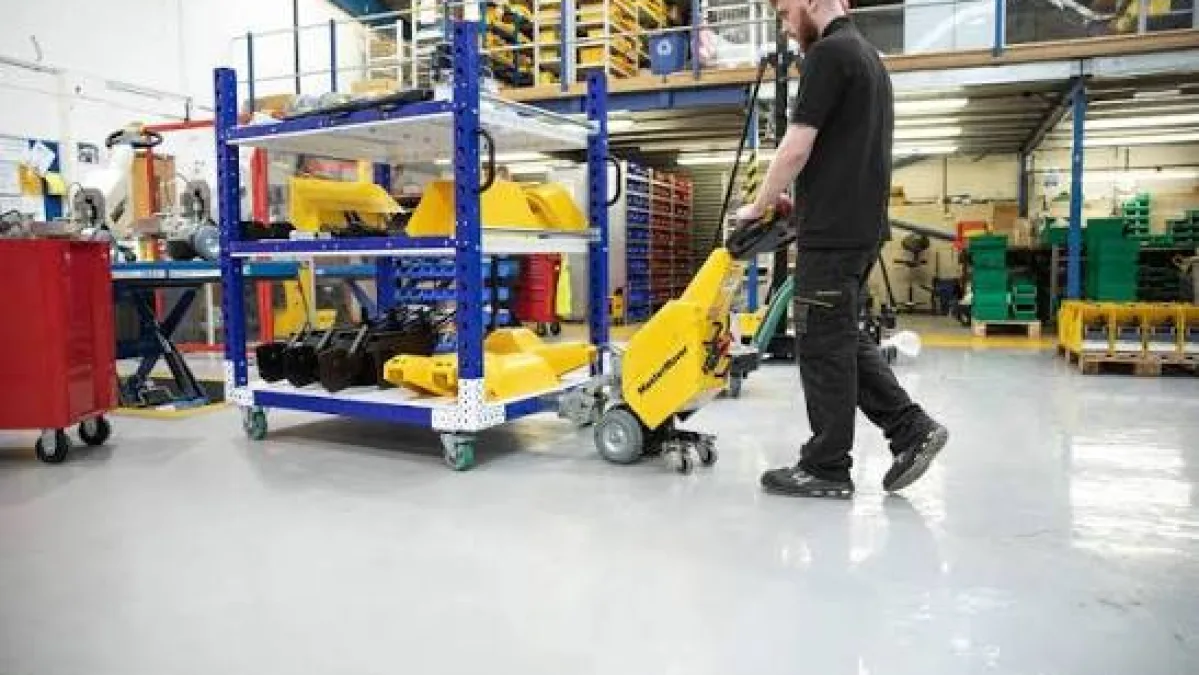
Material-handling equipment moves, lifts, stacks or positions goods. Examples include forklifts, pallet trucks, stackers, lift tables, hoists and vacuum lifters.
Load capacity alone is not sufficient. Buyers must also assess load centre, lift height, aisle width, floor condition, duty cycle and operator requirements.
Packaging machinery
Packaging equipment fills, seals, labels, codes, wraps or packs finished goods.
Machine selection depends on the product, package material, pack dimensions, speed, sealing method and required quality controls.
How should a business select industrial machinery?
A machinery project should begin with the required output, not with a machine name.
A useful selection process follows seven stages.
Define the product or task
State exactly what the machine must do. For production equipment, identify the raw material and finished product. For handling equipment, define the load and movement.
Set the required capacity
Calculate realistic hourly, daily and annual output. Include cleaning, setup, product changes, maintenance and expected downtime.
Characterise the input
Record dimensions, weight, composition, moisture, temperature, hardness, viscosity or other properties relevant to the process.
Define the quality requirement
Establish acceptable dimensions, accuracy, surface finish, density, strength, weight or other measurable characteristics.
Assess the installation site
Document the available space, floor, access, power, water, compressed air, drainage, ventilation and environmental conditions.
Compare complete configurations
Examine every included and excluded component. Determine whether additional conveyors, tooling, moulds, compressors, generators or packaging machines are required.
Validate before purchase
Request sample processing, drawings, videos, test data or factory acceptance procedures appropriate to the equipment.
This process reduces the risk of buying a machine that appears powerful but cannot process the actual material, fit inside the facility or connect to the available utilities.
Machinery category comparison
The following table summarises the technical information that buyers should request for each principal Afrimart machinery category.
| Machinery category | Typical purpose | Essential specifications to confirm |
|---|---|---|
| Agriculture machinery | Field operations and crop processing | Working width, engine power, capacity, terrain, attachments and fuel |
| Apparel machinery | Sewing, embroidery and textile production | Heads, needles, speed, working area, file formats and voltage |
| Chemical machinery | Mixing, processing and filling chemicals | Materials, volume, pressure, temperature, seals and hazardous-area rating |
| Cleaning equipment | Sweeping, scrubbing and surface cleaning | Cleaning width, tank size, battery or fuel, productivity and floor type |
| Construction machinery | Blocks, concrete, drilling and site operations | Output, material recipe, moulds, force, engine or motor and dimensions |
| Environmental machinery | Recycling and waste treatment | Feed material, contamination, throughput, separation and final output |
| Food and beverage machinery | Food preparation, processing and packaging | Food-contact materials, capacity, temperature, hygiene and cleaning |
| Industrial machinery | General manufacturing and fabrication | Process, tolerance, power, duty cycle, tooling and controls |
| Machine tools | Cutting, shaping and machining | Work envelope, spindle, axes, precision, tooling and controller |
| Material handling | Lifting, stacking and transporting loads | Rated load, load centre, lift height, aisle width and floor conditions |
| Packaging machinery | Filling, sealing, coding and wrapping | Product, package, speed, accuracy, film or container and utilities |
| Machinery accessories | Tooling, spares and supporting equipment | Compatibility, dimensions, material, part number and service life |
Every category contains different models and configurations. Capacity, power, voltage, dimensions, weight, safety equipment and included accessories must be confirmed in Afrimart’s current written quotation.
How should machine capacity be evaluated?
Rated capacity is the amount a machine is designed to process under stated conditions. Actual output may be lower when the raw material, operator practice or supporting equipment differs from the test conditions.
A credible capacity assessment should define:
Output per hour
Operating hours per shift
Number of shifts
Setup time
Cleaning time
Product-change time
Maintenance
Expected utilisation
Reject rate
Material yield
Future growth
For example, a block machine’s hourly cycle count does not automatically equal saleable blocks. The plant must also prepare material, feed the machine, remove products and provide adequate curing.
Similarly, a high-speed packaging machine cannot achieve its target if products arrive irregularly or operators replenish packaging materials too slowly.
Buyers should ask whether a published capacity represents:
Nominal capacity
Rated continuous output
Maximum short-term output
Input capacity
Finished-product output
A laboratory result
A production result
The operating conditions behind the figure should be included in the quotation.
Where possible, complete a test using representative input material. The test should record throughput, product quality, energy consumption, waste and operator requirements.
What are the main operational benefits?
Correctly selected machinery can provide several practical benefits.
Increased repeatable output
Mechanised operations can process or manufacture more units than manual methods. The actual gain depends on machine utilisation and the balance of the complete production line.
More consistent product quality
Controlled tools, moulds, settings and automation may reduce variation. Consistency must be demonstrated against defined acceptance criteria.
Reduced repetitive manual work
Machines can perform lifting, cutting, mixing, forming or packaging tasks that otherwise require substantial manual effort. Workers remain necessary for operation, inspection, material handling and maintenance.
Improved process control
Sensors, programmable logic controllers and human-machine interfaces can help operators monitor settings, alarms and production data.
Support for local processing
Machinery can enable businesses to process agricultural, mineral, textile or recycled inputs closer to their source. This may support local value addition when reliable raw materials, skills and markets are available.
Integration between production stages
Conveyors and automatic controls can connect processing, inspection and packaging. Integration is effective only when all stages have compatible capacities and interfaces.
Potential for product diversification
Changeable moulds, tooling or settings may allow one machine to produce several formats. Buyers must confirm the supported product range rather than assuming unlimited flexibility.
Improved material handling
Forklifts, stackers and lifting systems can move loads in a controlled manner when selected for the correct weight, load centre and working environment.
These benefits are not guaranteed by equipment purchase alone. Installation quality, training, maintenance, utilities and production management determine the final outcome.
What utilities and infrastructure does machinery require?
Machine installation may require electricity, fuel, compressed air, water, steam, ventilation, drainage or process cooling.
Electrical power
The buyer should confirm:
Voltage
Frequency
Phase
Installed power
Running power
Maximum current
Starting current
Power factor
Earthing
Circuit protection
Three-phase industrial machines may not be compatible with a site that only has single-phase power.
Where electricity is unstable, the project may require a generator, voltage regulator, uninterruptible power supply or other protection. Backup equipment must be sized for motor starting and total simultaneous demand.
Compressed air
Pneumatic cylinders, valves and controls may require compressed air. Obtain the specified pressure, flow and air-quality class.
The compressor, receiver, dryer and filters should be sized for total plant demand rather than one machine in isolation.
Water and drainage
Food, cleaning, concrete, cooling and environmental equipment may require process water. Buyers should confirm:
Water quality
Flow rate
Pressure
Temperature
Storage
Treatment
Drainage
Effluent characteristics
Ventilation and extraction
Welding, laser cutting, chemical processing, food cooking and dusty production may require local exhaust ventilation.
The machine quotation should distinguish between built-in extraction and external facility requirements.
Foundations and floor loading
Heavy or vibrating equipment may require reinforced foundations, anchor bolts, levelling and vibration control.
Forklifts and stackers need floors capable of carrying the combined machine and load weight.
Access and lifting
The delivery route must accommodate the packed machine. Check:
Door and gate width
Roof height
Turning space
Road access
Crane or forklift requirements
Loading-bay capacity
Floor obstacles
These checks should be completed before dispatch, not after the machine arrives.
Machinery safety and risk assessment
Every machine should be evaluated for mechanical, electrical, thermal, pressure, noise, chemical and ergonomic hazards.
The International Labour Organization’s code of practice on safety and health in the use of machinery addresses control systems, machine guarding, mechanical hazards, information and employer responsibilities. It recommends that machinery be fit for its intended purpose and suitable for the working environment.
A buyer should verify:
Fixed and interlocked guards
Emergency-stop controls
Start and stop controls
Prevention of unexpected restart
Electrical protection
Overload protection
Warning labels
Safe access
Noise information
Heat protection
Pressure relief
Operator documentation
The project team should complete a site-specific risk assessment covering:
Normal production
Setup
Tooling changes
Material loading
Blockage removal
Cleaning
Maintenance
Fault diagnosis
Emergency response
Operators should never bypass a guard or sensor to increase speed. Any machine with missing or damaged protective equipment should be removed from service until the condition is corrected.
Maintenance requiring access to hazardous components needs an isolation procedure. Electrical, pneumatic, hydraulic, thermal and stored mechanical energy must all be considered.
Local occupational-safety, electrical, pressure-equipment, environmental and building regulations must be verified in the destination country.
Installation, commissioning and acceptance testing
Installation converts purchased equipment into a working production asset.
The responsibilities of the buyer, installer and equipment provider should be documented before delivery.
A typical installation scope may include:
Unloading
Internal positioning
Foundation preparation
Mechanical assembly
Electrical connection
Pneumatic connection
Water or drainage connection
Lubrication
Alignment
Guard installation
Initial startup
Commissioning then tests the machine’s functions under controlled conditions. The team should verify controls, sensors, safety systems and utilities before full production.
An acceptance test should define measurable results such as:
Output capacity
Product dimensions
Accuracy
Reject rate
Energy consumption
Operating speed
Safety-system performance
Noise
Changeover time
A machine should not be accepted simply because its motor runs. It must demonstrate the agreed process using representative material where practicable.
Handover documentation should include:
Model and serial numbers
Operating manual
Electrical drawings
Mechanical drawings
Foundation plan
Maintenance schedule
Lubrication chart
Parts manual
Software backup
Training records
Acceptance-test results
Maintenance, spare parts and technical skills
Machinery availability depends on preventive maintenance and access to correctly matched parts.
A maintenance plan may include:
Daily inspections
Lubrication
Cleaning
Filter changes
Belt and chain checks
Bearing inspection
Alignment
Calibration
Electrical inspection
Safety-system testing
The exact intervals must follow the machine’s technical documentation and actual duty.
Buyers should request a recommended spare-parts package covering startup and planned operation. Depending on the machine, this could include:
Bearings
Belts
Chains
Sensors
Switches
Seals
Filters
Cutting tools
Heating elements
Contactors
Fuses
Valves
Hydraulic components
Part numbers and drawings should be provided so replacements can be identified accurately.
Technical training should cover operators, maintenance personnel and supervisors. Operator training alone may not prepare technicians to diagnose control, mechanical or process faults.
A structured maintenance record should capture operating hours, inspections, faults, parts replaced and downtime. This information supports reliability improvement and warranty administration.
Total project cost beyond the machine
The machine itself may represent only part of the project investment.
Buyers should account for:
Freight
Insurance
Customs and taxes
Unloading
Foundations
Building modifications
Electrical installation
Water and drainage
Compressed air
Ventilation
Auxiliary equipment
Tooling and moulds
Raw-material testing
Installation
Commissioning
Training
Initial spare parts
Consumables
Maintenance
Labour
Waste handling
A lower equipment cost can be offset by high utility demand, difficult maintenance or missing auxiliary equipment. Procurement teams should compare technically equivalent scopes.
The strongest comparison separates costs into:
Main machine
Included accessories
Required auxiliary equipment
Installation
Utilities
Training
Spare parts
Operating consumables
Maintenance
Expected production life
Return-on-investment estimates should use conservative output, saleable yield, verified costs and expected utilisation. Maximum machine speed is rarely an appropriate basis for financial planning.
What should machinery buyers confirm before ordering?
Use this machinery procurement checklist:
Define the exact application.
Identify the input material.
Define the required finished output.
Specify capacity per hour and per shift.
State required quality and tolerances.
Provide material samples where appropriate.
Request a model-specific technical datasheet.
Confirm rated and maximum capacity.
Obtain voltage, frequency and phase.
Confirm installed and running power.
Identify compressed-air requirements.
Confirm water and drainage requirements.
Establish ventilation or extraction needs.
Verify operating dimensions and weight.
Obtain packaging dimensions and gross weight separately.
Confirm foundation and anchoring requirements.
Check the full delivery route.
Request an itemised scope of supply.
Identify every excluded auxiliary machine.
Confirm tooling, moulds and change parts.
Verify guards and emergency controls.
Request applicable conformity documentation.
Review local regulatory requirements.
Define installation responsibilities.
Define commissioning and acceptance tests.
Include operator and maintenance training.
Obtain manuals and technical drawings.
Request software and programme backups.
Confirm consumables and wear parts.
Obtain a recommended spare-parts package.
Confirm warranty coverage and exclusions.
Establish the technical-support procedure.
Provide the destination country and site.
State the target production date.
Plan for future capacity where justified.
How to source industrial machinery through Afrimart
Afrimart can help buyers identify equipment and request a project-specific configuration.
A useful enquiry should include:
Industry and application
Raw material
Finished product
Required capacity
Quality requirements
Operating hours
Available utilities
Site dimensions
Environmental conditions
Project country
Required automation
Installation scope
Training requirements
Target operating date
Ask for a written quotation identifying the model, capacity, utilities, dimensions, weight, controls, safety equipment, auxiliary machinery, accessories, documentation, installation, training, spare parts and warranty.
Explore industrial machinery and request a quotation through Afrimart.
Frequently asked questions
What types of machinery are available through Afrimart?
The category includes agriculture, apparel, chemical, cleaning, construction, environmental, food, industrial, machine-tool, material-handling and packaging equipment. Buyers can evaluate individual machines or project configurations according to their raw material, application, capacity and site.
How do I choose the correct machine capacity?
Start with required saleable output per hour and per shift. Include setup, cleaning, changeovers, maintenance and realistic utilisation. Ask for capacity under defined material and operating conditions rather than relying only on a maximum headline figure.
What utilities should be confirmed?
Confirm electricity, fuel, compressed air, water, drainage, steam, cooling and ventilation as applicable. Obtain pressure, flow, voltage, phase and consumption values for the complete configuration, including auxiliary equipment.
Is installation included with industrial machinery?
Installation should not be assumed. The quotation must define unloading, positioning, assembly, foundations, electrical work, commissioning, testing and training. Responsibilities should be divided clearly between Afrimart, the installer and the buyer.
What safety information should a buyer request?
Request guarding details, emergency-stop functions, electrical protection, hazard labels, noise information and safe operating procedures. The buyer should also complete a site-specific risk assessment and verify the destination country’s machinery and workplace requirements.
Why are spare parts important when buying machinery?
Wear components and unexpected failures can stop production. A model-specific spare-parts package, illustrated parts manual and technical-support plan help the business prepare for routine replacement and reduce avoidable delays.
What information is required for an Afrimart quotation?
Provide the application, raw material, finished output, capacity, accuracy, utilities, site conditions, location, automation level, installation needs and project schedule. Samples, drawings and photographs can improve the technical evaluation when the process is specialised.