Food filling machines measure and dispense liquids, sauces, pastes, powders or granules into bottles, jars, cans, sachets and other containers. Available in manual, semi-automatic and fully automatic configurations, these machines help food processors improve portion consistency, hygiene and production control. Selecting the correct system requires matching the filling method to the product, container and required output.
Food filling machines at a glance
- Products handled: Free-flowing liquids, viscous sauces, pastes, oils, powders, grains, nuts and snacks
- Container formats: Bottles, jars, cans, sachets, pouches, tubs and selected tubes
- Operating levels: Manual, semi-automatic and fully automatic
- Common filling methods: Gravity, piston, pump, volumetric and weight-based filling
- Typical users: Food processors, beverage producers, commercial kitchens, packaging businesses and agro-processing enterprises
- Line options: Standalone fillers or integrated filling, capping, sealing, coding and labelling systems
- Selection priority: Product behaviour, container type, fill quantity, output target and cleaning requirements
The Afrimart food filling machines category includes equipment for products ranging from water and edible oil to honey, tomato sauce, peanut butter, jam, nuts and snack foods.
Because these products behave differently during filling, there is no single machine that is automatically suitable for every food. A filler designed for a free-flowing beverage may perform poorly with peanut butter, while equipment intended for granular products cannot be assumed to handle liquids.
What are food filling machines?
Food filling machines are packaging systems that transfer a controlled quantity of food or beverage into a receiving container. Depending on the model, the machine may measure the product by volume, weight, time, piston displacement or pump movement.
The filling stage usually takes place after the product has been prepared, mixed, cooked, filtered or otherwise processed. It normally comes before capping, sealing, labelling and secondary packaging.
A basic filling operation consists of four elements:
- A vessel or feed system that supplies the food
- A measuring mechanism that determines the required quantity
- A nozzle or outlet that deposits the product
- A container-positioning method that keeps the package correctly aligned
More advanced systems may incorporate:
- Container conveyors
- Bottle sensors
- Programmable logic controllers
- Human-machine interfaces
- Automatic nozzle movement
- Multiple filling heads
- Capping stations
- Heat-sealing equipment
- Date coders
- Label applicators
- Inspection and rejection systems
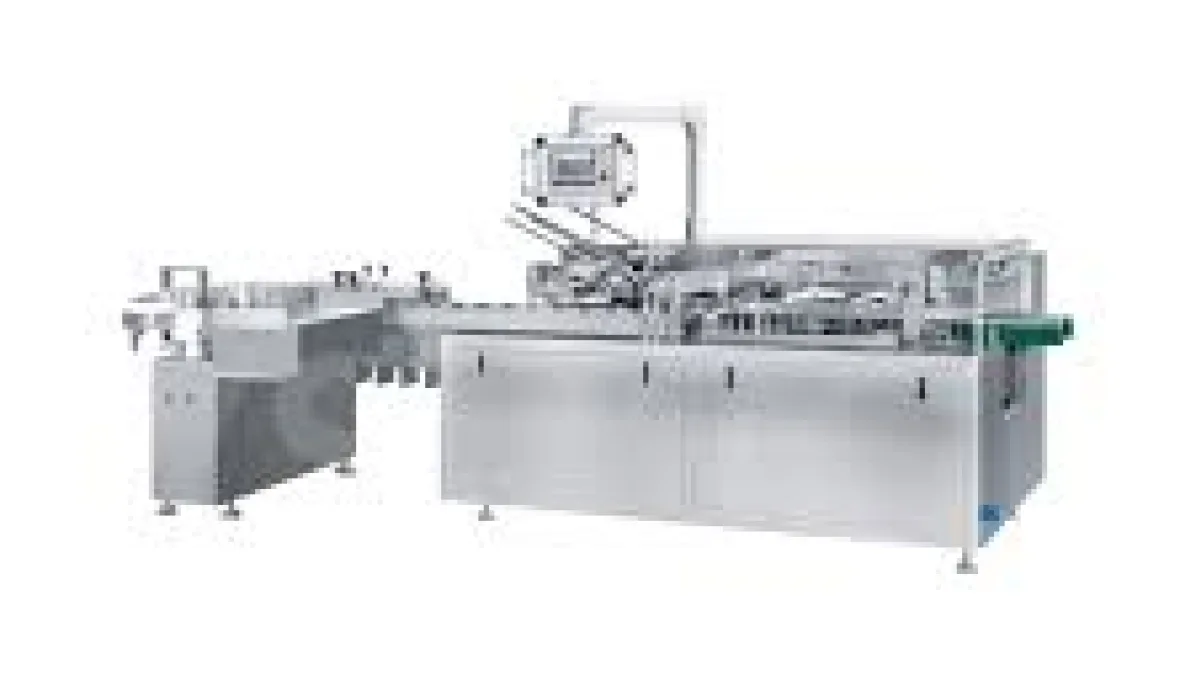
A standalone filler can suit a small processor that caps and labels containers separately. A higher-volume producer may require an integrated packaging line in which containers move automatically through filling, closing, coding and labelling.
The correct level of automation depends on actual production requirements. Automation can increase repeatability and reduce manual handling, but it also introduces controls, sensors, conveyors and other components that require skilled maintenance.
Which food filling machine is suitable for each product?
The first selection question is not how many containers the business wants to fill. It is what the food is like when it reaches the filling machine.
Free-flowing liquids
Water, thin beverages and other low-viscosity products move readily through pipes and nozzles. Depending on the product and container, they may be filled using gravity, timed-flow or pump-based systems.
Selection considerations include:
- Foaming
- Dripping
- Product temperature
- Required accuracy
- Container-neck diameter
- Whether the product contains pulp or particles
- Cleaning and sanitation requirements
A product that foams during filling may require a nozzle that enters the container or a controlled filling profile that reduces turbulence.
Oils
Edible oils flow differently depending on type and temperature. Gear-pump, flow-meter or other volumetric systems may be considered, but all food-contact components must be compatible with the oil and cleaning process.
The buyer should confirm whether the product can drip after the fill cycle and whether an anti-drip nozzle is required.
Sauces and semi-viscous foods
Tomato sauce, ketchup, dressings and similar products require equipment capable of moving thicker food without creating excessive splashing or inconsistent deposits.
The correct system depends on:
- Viscosity
- Product temperature
- Particle size
- Required portion
- Container opening
- Sensitivity to shear
- Cleaning procedure
High-viscosity pastes
Honey, jam, peanut butter, tahini, condensed milk and thick creams may require piston or suitable pump filling. Product temperature can significantly affect flow behaviour.
A machine that fills warm jam successfully may not deliver the same output after the product cools. The quotation should therefore specify the viscosity or processing temperature used for sizing.
Granules and free-flowing solids
Rice, grains, seeds, nuts, sugar and similar products are commonly filled by weight or volume. A weighing system measures the target quantity before discharging it into the container or sachet.
Product density, particle size, breakage sensitivity and natural variation can influence filling accuracy and speed.
Snacks and irregular pieces
Chips, coated snacks, dried foods and irregularly shaped pieces may require multihead weighing or other equipment designed to combine portions accurately while limiting breakage.
The handling system must suit the product’s fragility. A rapid drop that is acceptable for grain may damage brittle snacks.
Powders
Flour, spices, powdered milk and other powders often require auger or specialised dosing systems. Powder flow can be affected by moisture, aeration, compaction and static electricity.
The Afrimart category contains different food fillers, but buyers should confirm that the selected machine is expressly configured for powder if powder filling is required.
How do food filling machines work?
The exact sequence depends on the machine, but a typical automated process follows six stages.
Product preparation and supply
The food is prepared to the required temperature, viscosity and consistency. It is transferred to the filler’s hopper, tank or supply connection.
Container feeding
Empty bottles, jars, cans or pouches are positioned manually or delivered by conveyor. Guides and sensors align each container beneath the filling nozzle.
Quantity measurement
The machine measures the required amount using its selected dosing principle. This may be piston displacement, pump rotation, gravity flow, time, volume or weight.
Product dispensing
The nozzle opens and deposits the measured product. Some systems lower the nozzle into the container or raise it progressively during filling to control foaming and splashing.
Container discharge
The filled package moves to the next operation. Depending on the line, this may be capping, sealing, coding, labelling or manual collection.
Inspection and process control
Operators inspect fill level, package cleanliness, seal integrity and other quality requirements. Automated lines may include checkweighers, sensors or rejection systems.
The output of the machine is determined by the slowest step in the complete line. A high-speed filler cannot achieve its rated production if bottles arrive slowly, caps are applied manually or labels regularly interrupt the conveyor.
What types of food filling machines are available?
Food fillers can be classified by both automation level and dosing method.
Manual filling machines
Manual fillers require the operator to position the container and activate or control each filling cycle. They can suit product development, very small businesses and low-volume speciality production.
Their advantages include simpler operation and lower utility requirements. However, output and consistency may depend heavily on the operator.
Semi-automatic filling machines
A semi-automatic machine normally measures and dispenses the product automatically after the operator places the container and starts the cycle.
This format can help expanding processors improve portion control without installing a complete conveyorised line. Labour is still required for loading, removal, capping or other packaging steps.
Fully automatic filling machines
Automatic fillers detect, position and fill containers as part of a continuous process. Multihead configurations may fill several containers during each cycle.
A complete automatic line may integrate:
- Container feeding
- Rinsing
- Filling
- Capping
- Sealing
- Coding
- Labelling
- Inspection
- Packing
Automatic equipment is most effective when upstream product supply and downstream packaging operations can maintain the planned line speed.
Gravity fillers
Gravity systems use the product’s own flow characteristics to transfer it into the container. They are generally associated with free-flowing liquids rather than thick pastes.
Piston fillers
A piston draws a measured volume into a cylinder and then pushes it through a nozzle. This principle can suit sauces, creams and high-viscosity foods, depending on particle size and product compatibility.
Pump filling machines
Pump fillers use a selected pump type to move the product. Gear, lobe and diaphragm pump systems have different operating characteristics.
For foods containing particles or products sensitive to mechanical shear, the pump must be evaluated against the actual formulation.
Weighing and granule fillers
Weight-based systems measure a target mass before discharging the product. They can be suitable for nuts, seeds, grains, snacks and other solid foods.
Sachet filling and sealing machines
Sachet machines combine product dosing with package formation or sealing. The machine must be selected for the film, sachet dimensions, product type, sealing method and required output.
Food filling machine specification comparison
Because the category contains several equipment types, the following table shows which technical factors matter for each application rather than attributing one specification to every machine.
| Machine category | Appropriate product characteristics | Important specifications to confirm |
|---|---|---|
| Gravity liquid filler | Free-flowing, low-viscosity liquids | Fill range, nozzle count, tank size, anti-drip control and output |
| Pump liquid filler | Liquids requiring controlled transfer | Pump type, flow range, food-contact materials and cleaning method |
| Piston filler | Sauces, creams, honey and viscous products | Cylinder volume, viscosity range, nozzle diameter and particle allowance |
| Lobe-pump filler | Thick or shear-sensitive products where compatible | Pump speed, product temperature, particle handling and seal materials |
| Gear-pump filler | Oils and consistent liquid products where compatible | Fill-volume range, pump materials, accuracy and anti-drip system |
| Weight filler | Grains, seeds, nuts and granular foods | Weighing range, number of heads, accuracy and discharge height |
| Auger filler | Free-flowing or semi-free-flowing powders | Auger size, dose range, dust control and product agitation |
| Sachet filling machine | Products packed in flexible film | Sachet dimensions, film type, sealing method, dose range and line speed |
| Automatic bottle filler | Repeat bottle or jar production | Container range, filling heads, conveyor speed, sensors and controls |
| Integrated packaging line | High-volume continuous production | Filler output, capper and labeler capacity, utilities, footprint and controls |
The selected machine’s final specifications must be confirmed in Afrimart’s current written quotation. Food-contact materials, capacity, accuracy, utilities and compatibility should be supported by a model-specific technical datasheet.
How should filling capacity be calculated?
Capacity should be based on saleable packages per hour, not only on the filler’s theoretical cycling speed.
A buyer should first define:
- Required pack size
- Number of production hours per shift
- Number of shifts
- Planned production days
- Product-change frequency
- Cleaning time
- Expected downtime
- Acceptable utilisation
- Required future capacity
For example, a processor may require several thousand filled containers during an eight-hour shift. Dividing the total by eight provides only a basic average. The machine must also accommodate startup, cleaning, product changes, foil or label changes, maintenance and stoppages elsewhere in the line.
Actual output can be affected by:
- Product viscosity
- Product temperature
- Container stability
- Container-neck size
- Filling accuracy
- Number of nozzles
- Foaming
- Included particles
- Manual loading
- Capping speed
- Labelling speed
- Operator availability
Buyers should request output data based on their product and container. A capacity measured using water in standard bottles may not represent output when filling thick sauce into narrow-neck jars.
A production trial provides stronger evidence than a general machine rating. The trial should record pack size, product temperature, container format, operating speed, fill variation and the number of acceptable finished packs.
What are the main operational benefits?
Correctly selected food filling machines can create several practical benefits.
More consistent portions
A controlled dosing system can reduce variation between containers. Improved consistency supports package presentation, inventory control and compliance with declared quantities.
Accuracy should be verified across the complete fill range. A machine’s performance at one target volume does not automatically establish performance at every setting.
Higher repeatable output
Semi-automatic and automatic filling can increase production compared with hand filling. The practical improvement depends on container handling and downstream packaging capacity.
Reduced manual product handling
Moving food through a closed or controlled filling path may reduce repeated scooping, pouring and open exposure. Hygienic performance still depends on equipment design and sanitation.
Better integration with packaging operations
Automatic fillers can be connected to cappers, sealers, coders and label applicators. This can create a more organised production flow and reduce intermediate handling.
Faster change between digital settings
Where the machine uses programmable recipes, operators may store settings for different products or pack sizes. Physical change parts and cleaning may still be required.
Support for different business scales
The category includes tabletop, manual, semi-automatic and industrial automatic configurations. This allows buyers to select equipment suited to current output instead of immediately purchasing a complex line.
Improved production records
Machines fitted with suitable controls can help operators record counts, settings and alarms. These records may support traceability and maintenance planning.
None of these benefits is automatic. Performance depends on suitable product testing, installation, operator training, cleaning, calibration and preventive maintenance.
Why hygienic design matters
Food-contact equipment must be cleanable and constructed from materials appropriate for the product and sanitation process.
The European Hygienic Engineering and Design Group explains that poorly designed food equipment can be difficult or impossible to clean effectively, increasing the risk of microbial growth and cross-contamination.
A hygienic filler should minimise areas where food, water or cleaning chemicals can collect. Buyers should inspect:
- Food-contact material specifications
- Surface condition
- Weld quality
- Internal corners
- Pipe and hose routing
- Gaskets and seals
- Valve design
- Drainability
- Nozzle access
- Dead spaces
- Tool-free disassembly
- Cleaning verification points
Stainless steel is frequently used for food equipment, but the grade and finish must be appropriate for the product. Buyers should request confirmation of materials for tanks, pipes, valves, pistons, pumps, nozzles, seals and gaskets.
Cleaning procedures must be designed around the actual food. An edible-oil filler has different sanitation challenges from equipment handling dairy products, allergen-containing peanut butter or particulate sauce.
Where several products share one machine, changeover procedures should address:
- Microbiological contamination
- Allergen cross-contact
- Flavour carryover
- Colour carryover
- Residual cleaning chemicals
- First-product flushing
- Cleaning validation
Hygienic design does not prove that a particular machine complies with every country’s food regulations. The buyer remains responsible for verifying local requirements and the equipment documentation.
What utilities and line equipment are required?
A filler can only operate effectively when the facility provides its required services and supporting equipment.
Depending on the model, utilities may include:
- Single-phase or three-phase electricity
- Compressed air
- Hot or cold water
- Steam
- Cleaning chemicals
- Product pumps
- Temperature-controlled product supply
- Drainage
- Ventilation
The quotation should provide voltage, frequency, phase, installed power, running power, compressed-air pressure and air consumption.
Supporting equipment may include:
- Product holding tanks
- Mixing or heating vessels
- Transfer pumps
- Filters
- Bottle unscramblers
- Container rinsers
- Conveyors
- Capping machines
- Induction sealers
- Heat sealers
- Date coders
- Label applicators
- Checkweighers
- Metal detectors
- Inspection systems
- Packing tables
The production-room layout should provide enough space for operation, cleaning, maintenance and movement of materials. Drain placement, wall clearance and safe operator access must be considered before installation.
Where electricity supply is unreliable, the buyer should assess backup power for the filler and associated equipment. Starting currents, compressors, heaters and conveyors must be included when sizing the backup system.
Maintenance, cleaning and quality control
Routine maintenance protects filling accuracy and equipment availability.
A typical programme may cover:
- Nozzle inspection
- Pump or piston seals
- Hoses and pipes
- Valves
- Conveyor guides
- Bearings
- Motors and gearboxes
- Sensors
- Pneumatic cylinders
- Compressed-air preparation
- Electrical controls
- Emergency stops
The exact schedule must follow the model-specific manual.
Filling accuracy should be checked using a defined sampling procedure. Depending on the product, verification may use calibrated scales, volumetric equipment or another approved method.
Operators should record:
- Product name and batch
- Container format
- Target quantity
- Machine settings
- Sample results
- Adjustments
- Cleaning completion
- Downtime
- Maintenance
- Rejected packages
Cleaning should be completed using a documented procedure. The machine must be safely isolated before staff enter hazardous areas or remove protected components.
Buyers should also request a recommended spare-parts package. Relevant items may include seals, gaskets, hoses, nozzles, sensors, belts, bearings, valves and pneumatic components. Every part must match the selected machine and food-contact requirements.
What should buyers confirm before ordering?
Use this food filling machine buyer checklist:
- Define every product to be filled.
- Record product viscosity at the filling temperature.
- Identify particles, fibres or inclusions in the product.
- Confirm whether the product foams, drips or separates.
- State the minimum and maximum fill quantities.
- Provide the dimensions of every container.
- Confirm container material and neck opening.
- Define the required packages per hour.
- Allow for cleaning, changeovers and planned downtime.
- Select manual, semi-automatic or automatic operation.
- Confirm the filling method recommended for the product.
- Request a product-and-container trial.
- Obtain measured filling accuracy from the trial.
- Confirm the number and diameter of nozzles.
- Verify food-contact material grades.
- Request specifications for seals and gaskets.
- Review cleaning and disassembly procedures.
- Confirm whether clean-in-place operation is available.
- Identify allergen and cross-contamination risks.
- Confirm electrical voltage, frequency and phase.
- Obtain compressed-air requirements.
- Confirm water, steam and drainage requirements.
- Check the equipment footprint and working clearances.
- Identify required upstream and downstream equipment.
- Confirm compatibility with cappers, sealers and labelers.
- Request control-system and operator-interface details.
- Confirm guarding and emergency-stop provisions.
- Obtain operating, cleaning and maintenance manuals.
- Request installation and commissioning requirements.
- Include operator and maintenance training.
- Obtain a recommended spare-parts package.
- Confirm warranty scope and technical support.
- Provide the project country and installation location.
- State the planned production date and future expansion needs.
The most useful quotation is based on product samples, container drawings and a realistic output target. Product names alone are insufficient because viscosity, temperature and particle content may vary between recipes.
How to source food filling machines through Afrimart
Afrimart can help buyers compare filling technologies and request equipment matched to their products and packaging.
A useful enquiry should include:
- Product name and formulation type
- Viscosity or flow characteristics
- Filling temperature
- Particle size
- Target fill quantity
- Container type and dimensions
- Cap or sealing method
- Required production rate
- Daily operating hours
- Cleaning procedure
- Available utilities
- Required automation
- Project location
- Installation and training needs
- Target commissioning date
Ask for a written quotation identifying the model, filling principle, product range, fill range, accuracy basis, output, food-contact materials, nozzles, controls, utilities, dimensions, included accessories and warranty.
Explore food filling machines and request a quotation through Afrimart.
Frequently asked questions
Which filling machine is suitable for sauces and pastes?
Piston or suitable pump fillers are commonly considered for sauces, creams and pastes, but the correct choice depends on viscosity, temperature and particle content. Buyers should test the actual product and container. A machine selected for smooth ketchup may not handle a sauce containing large vegetable pieces.
Can one filling machine handle liquids and thick products?
Some machines can work across a defined viscosity range, but no filler should be assumed to handle every liquid and paste. Pump type, nozzle diameter, seals and control settings must suit each product. Significant changes may also require different hoses, nozzles or cleaning procedures.
What is the difference between volumetric and weight filling?
Volumetric equipment dispenses a measured volume, while weight filling measures product mass. Volumetric systems are common for liquids and pastes with consistent properties. Weight filling is often used for granules and irregular solids. Product density changes can affect the relationship between weight and volume.
How many filling heads are required?
The required number of heads depends on the target output, fill quantity, product flow, container handling and cycle time. Additional heads can increase capacity only if the product supply, conveyor, capping and downstream equipment can keep pace. A complete line calculation should determine the correct configuration.
What filling accuracy should a buyer request?
Accuracy should be defined for the actual product, target quantity, container and operating speed. Request a measurable tolerance and a documented test method rather than accepting a general “high accuracy” description. Accuracy may vary across the machine’s filling range and with changes in temperature or viscosity.
Are food filling machines easy to clean?
Cleaning difficulty depends on the machine’s hygienic design, food-contact components and product. Buyers should examine drainability, dead spaces, hose routing, seals and access to tanks, pumps and nozzles. Products containing allergens, dairy ingredients or thick residues may require more extensive validated cleaning.
What information does Afrimart need to prepare a quotation?
Provide the product type, viscosity, filling temperature, particles, fill range, container dimensions, required output, cleaning method, utilities, automation level and project location. Product and container samples can help verify compatibility and produce a more reliable technical recommendation.