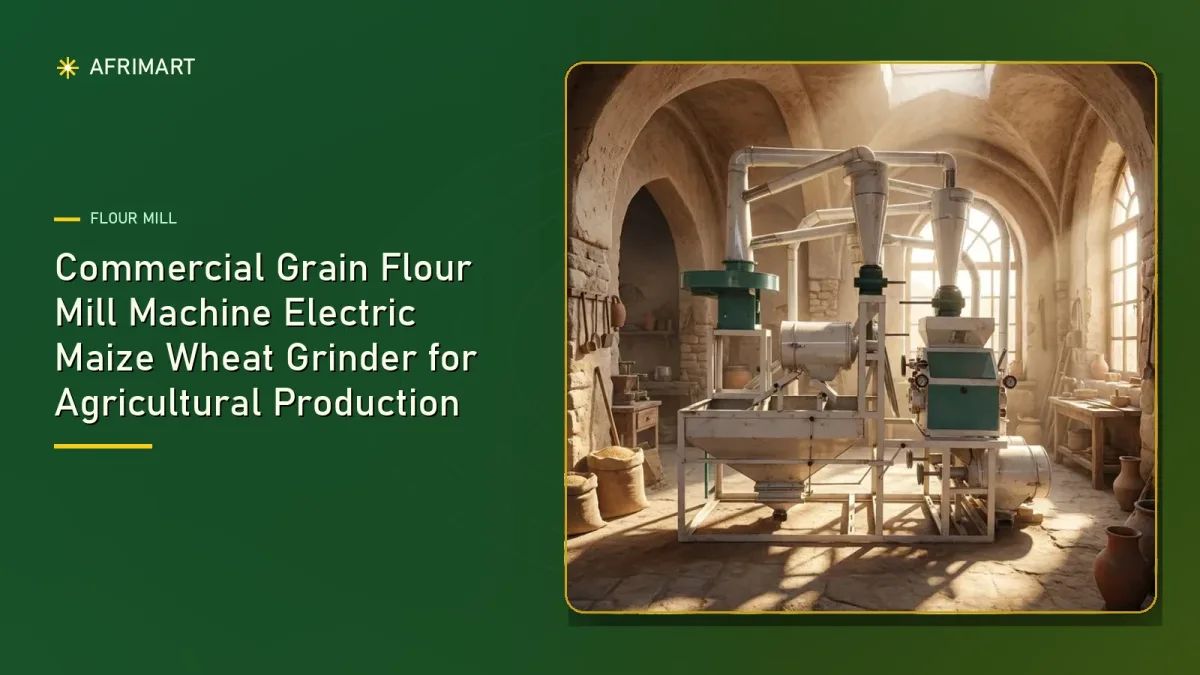
The Commercial Grain Flour Mill Machine Electric Maize Wheat Grinder for Agricultural Production is an electric flour mill designed to grind maize, wheat and other grains into fine flour for agricultural and commercial processing. It is suited to farmers, millers and production businesses that need a rated capacity of 300 kg/h, with pneumatic automatic suction feeding to reduce manual handling.
At a glance
Best suited to: Farm processors, commercial millers and grain-based production businesses
Input material: Maize, wheat and other grains
Final product: Fine flour
Feeding method: Pneumatic automatic suction
Rated capacity: 300 kg/h
Motor power: 11 kW
What is Commercial Grain Flour Mill Machine Electric Maize Wheat Grinder for Agricultural Production?
This product is a commercial grain flour mill machine that processes grains into flour. In practical terms, it takes maize, wheat and other grains as input, feeds them into a grinding section, reduces them through rollers, and separates the ground material through an automatic sifting mechanism to produce fine flour.
It is important to read the category correctly. This machine is for milling grain into flour; it does not grow, dry, clean or package grain, and the published product information does not state that upstream grain cleaning or downstream packing equipment is included. Buyers planning a complete flour line should therefore confirm the full equipment scope before ordering.
The verified construction and core component details are clear. The machine is described as having a strong cast iron frame, a shock-absorbing base, 2 grinding rollers arranged as 1 pair, high-hardness centrifugal duplex alloy steel rollers, a high-strength tooth-belt and gear transmission system, and an automatic round sifter. The feeding method is a pneumatic automatic suction system, which means grain is pulled into the mill rather than fed manually.
How does Commercial Grain Flour Mill Machine Electric Maize Wheat Grinder for Agricultural Production work?
The machine works by automatically feeding grain into a roller-based grinding system and then separating the milled product through a sifter.
Automatic grain intake
Grain such as maize or wheat is drawn into the machine by the pneumatic automatic suction feeding system. This reduces the need for hand-feeding and helps maintain a more continuous flow into the mill.
Roller grinding
Once fed into the machine, the grain passes through 2 grinding rollers, listed as 1 pair. These rollers are made from high-hardness centrifugal duplex alloy steel, which is the key verified wear component in the milling section.
Power transmission
The grinding assembly is driven by an 11 kW electric power system through a high-strength tooth-belt and gear transmission. This transmission arrangement is intended to transfer power reliably from the motor to the milling components.
Sifting and flour separation
After grinding, the product moves to the automatic round sifter. This sifting mechanism separates the milled material so that the output is fine flour rather than an unsorted ground mix.
Continuous production output
In the published configuration, the machine is rated at 300 kg/h production capacity. Actual flour quality and throughput can depend on the grain being processed and the final fineness required, so buyers should request confirmation for their intended application.
The product listing does not specify whether grain cleaning equipment, aspiration ducting beyond the feeding system, collection bins, discharge conveyors, dust control accessories or packing equipment are supplied with the machine. Buyers should confirm the complete line configuration before ordering.
Where is Commercial Grain Flour Mill Machine Electric Maize Wheat Grinder for Agricultural Production used?
This commercial grain flour mill machine is used where businesses need to convert grain into flour on a repeatable, commercial basis.
Small and mid-scale commercial flour mills
Independent millers can use the machine where maize or wheat flour is produced for local sale. The rated capacity of 300 kg/h makes it relevant to operations that need more than small workshop output but do not require a large industrial milling line.
Farm-based grain processing
Large farms, farmer cooperatives and agricultural enterprises can process harvested grain closer to the source. That can support local value addition by turning raw maize or wheat into a marketable flour product instead of moving all material out as unprocessed grain.
Rural and peri-urban milling businesses
In many African markets, demand for staple flour is decentralised. A machine with pneumatic automatic suction feeding can suit businesses serving local communities where operators want a more practical workflow than constant manual feeding.
Agro-processing centres and shared production facilities
Community processing hubs and contract milling facilities can use the machine to serve multiple growers or grain traders. The combination of roller grinding and automatic round sifting supports a more structured milling process than simple crushing or hammer-style reduction equipment.
Food ingredient preparation for secondary processors
Businesses producing grain-based food products may use the machine to prepare flour as an internal ingredient stream. This can be relevant where a processor wants direct control over part of the milling stage rather than buying all flour externally.
Maize milling operations
The product description specifically names maize as an input. For buyers focused on maize, the machine offers a defined commercial capacity and an automatic feeding method that can support routine daily milling work.
Wheat grinding applications
The listing also specifically names wheat as an input. For operations producing wheat flour or mixed grain flour products, the machine provides a verified roller-and-sifter arrangement rather than an unspecified grinding method.
Labour-conscious processing environments
Because the machine uses pneumatic automatic suction feeding, it fits operations trying to reduce repeated hand-feeding. That matters in plants where labour efficiency, operator fatigue and more even material intake affect day-to-day production control.
Technical specifications
The following specifications are verified from the Afrimart product page for Afrimart SKU 1601850861223.
| Specification | Verified value | Buyer note |
|---|---|---|
| Afrimart SKU | 1601850861223 | Use this reference when requesting a quotation or comparing documents. |
| Product name | Commercial Grain Flour Mill Machine Electric Maize Wheat Grinder for Agricultural Production | Quote the exact product name to avoid confusion with smaller or larger grain mills. |
| Brand name | LH-Shuangluo | Useful for model identification and spare-parts discussions. |
| Category | Flour Mill | Confirms the equipment is a flour milling machine rather than a feed crusher or grain cleaner. |
| Production capacity | 300 kg/h | Treat this as the published rated capacity; request confirmation for the actual grain and flour fineness required. |
| Power | 11 kW | Confirm motor data, starting current and site power compatibility before installation planning. |
| Voltage | 220V / 380V | Buyers should confirm which voltage configuration applies to the unit being quoted. |
| Dimensions (L × W × H) | 2.5 m × 1.8 m × 3.2 m | Use these as operating dimensions for layout planning and verify service clearance requirements. |
| Weight | 500 kg | The listing states 500 kg but does not clarify whether this is net or shipping weight. |
| Grinding roller quantity | 2 rollers (1 pair) | Confirms a roller-based milling arrangement; request the roller dimensions if needed for process comparison. |
| Feeding method | Pneumatic automatic suction | Important for labour planning and for confirming any ducting or feed accessories included. |
| Roller material | High-hardness centrifugal duplex alloy steel | This is a key wear-part specification and should be carried into spare-parts planning. |
| Transmission type | High-strength tooth-belt & gear transmission | Ask for the maintenance schedule and replacement parts list for belts and gear-related components. |
| Sifting mechanism | Automatic round sifter | Confirm sifter screens, flour grades and any supplied mesh options for the intended product. |
| Frame construction | Cast iron frame | Relevant to rigidity, vibration behaviour and installation handling. |
| Base design | Shock-absorbing base | Supports reduced noise and shaking, but buyers should still assess the site floor and anchoring requirements. |
Specifications may vary according to configuration and must be confirmed in Afrimart's current written quotation.
What are the main operational benefits?
Reduced manual feeding effort
The pneumatic automatic suction feeding system pulls grain into the mill automatically. For operators, that can reduce repeated hand-feeding and support a steadier milling workflow.
Commercial-scale output from a compact footprint
The published production capacity is 300 kg/h, while the machine dimensions are 2.5 m × 1.8 m × 3.2 m. This gives buyers a defined basis for assessing whether the unit fits a small to mid-scale production room.
Roller-based milling for flour production
The machine uses 2 grinding rollers rather than an unspecified grinding assembly. For buyers comparing equipment types, that verified roller arrangement is important because roller milling and simple crushing equipment serve different product expectations.
Wear-focused roller construction
The rollers are made from high-hardness centrifugal duplex alloy steel. That matters operationally because roller material affects service life, maintenance planning and the consistency of milling under regular production use.
Combined grinding and sifting in one machine setup
The inclusion of an automatic round sifter means the machine is designed not only to grind grain but also to separate the milled product. This can simplify process flow compared with setups where grinding and sifting must be arranged as separate standalone stages.
More stable running characteristics
The machine is described as having a cast iron frame and a shock-absorbing base. Together, these features are intended to reduce shaking and noise, which can improve operating stability in daily use.
Flexible electrical selection for different sites
The published voltage is 220V / 380V. In African markets where utility supply varies by site and by country, this gives buyers a basis to request the configuration that matches their available electrical service.
Why does this equipment matter for African industry?
This commercial grain flour mill machine matters because grain processing is central to food value chains across many African markets, and local milling capacity often determines how much value is retained near the point of production. A commercial grain flour mill machine can support the move from selling raw grain to selling a processed food input with wider local commercial use.
The relevance, however, varies by market and operating model. In some areas, the key driver is decentralised processing for local consumption. In others, the focus is commercial supply to bakeries, traders, institutions or food manufacturers. A 300 kg/h flour mill can fit between very small village-scale processing and larger industrial flour plants, which makes it relevant to growing enterprises, cooperatives and regional agro-processing hubs.
The machine's pneumatic feeding system also matters in practical terms. Labour availability differs widely across Africa, but reducing repetitive manual feeding can still improve shop-floor organisation and make daily operation more manageable. That is particularly useful where one team is expected to handle receiving, milling, sifting and packing in the same facility.
Local value addition is another important consideration. Maize and wheat are staple grains in many parts of the continent, and milling closer to farms, aggregation centres or local markets can help businesses build supply chains around processed output rather than shipping only raw grain. The machine does not solve storage, cleaning or packaging by itself, but it can be a core processing step within a broader grain value chain.
Finally, equipment with a clear power rating, footprint and weight helps buyers plan more realistically. Many African projects succeed or fail on site readiness: available voltage, room height, floor loading, handling access and spare-parts planning. Because this machine publishes 11 kW power, 220V / 380V voltage, 2.5 m × 1.8 m × 3.2 m dimensions and 500 kg weight, buyers have a starting point for practical project evaluation.
What should buyers confirm before ordering?
Before ordering, buyers should verify the machine against the intended flour process, site conditions and support requirements.
- Required hourly flour output
- Grain type: maize, wheat or other grains
- Expected flour fineness and grade
- Actual capacity on the intended grain
- Moisture condition of incoming grain
- Need for pre-cleaning equipment
- Voltage selection: 220V or 380V
- Available motor starting arrangement
- Site power stability and protection
- Installation area for 2.5 m × 1.8 m × 3.2 m equipment
- Building height and lifting access
- Floor strength for 500 kg machine weight
- Anchoring and vibration control requirements
- Included scope of pneumatic feeding components
- Included scope of sifting screens or meshes
- Flour discharge and collection method
- Dust management requirements
- Operator safety guards and emergency controls
- Wear parts for rollers, belts and sifter components
- Preventive maintenance schedule
- Installation, commissioning and training scope
- Warranty terms and spare-parts support
- Delivery destination and unloading arrangements
- Applicable electrical and workplace safety requirements
The most consequential unstated figure in the source is the actual output performance by grain type and flour fineness. Buyers should request a written technical quotation or datasheet confirming capacity, included accessories and the exact electrical configuration for the unit being offered.
How to source Commercial Grain Flour Mill Machine Electric Maize Wheat Grinder for Agricultural Production through Afrimart
Afrimart can help buyers confirm whether this flour mill matches the intended application and whether the quoted configuration includes the right feeding, sifting and supporting components. That matters because grain type, required flour quality and site utilities can all affect the correct purchase decision.
To obtain a project-specific quotation, buyers should provide:
- Required capacity
- Intended application
- Input materials
- Project location and country
- Available utilities
- Required accessories
- Installation and training requirements
- Target project date
Request a quotation for Commercial Grain Flour Mill Machine Electric Maize Wheat Grinder for Agricultural Production through Afrimart. If you prefer to start by email, you can also contact [email protected].
Frequently asked questions
What does this commercial grain flour mill machine do?
It is designed to grind maize, wheat and other grains into fine flour. The machine uses pneumatic automatic suction feeding, 2 grinding rollers and an automatic round sifter, so it handles intake, milling and product separation within the published machine configuration.
What is the rated capacity of this maize and wheat grinder?
The verified production capacity is 300 kg/h. Buyers should treat that as the published rated figure and request confirmation for their specific grain type and target flour fineness, because throughput can vary depending on the material and the required output quality.
Can this machine process both maize and wheat?
Yes. The Afrimart product information specifically states that the machine is used to turn maize, wheat and other grains into fine flour. If you plan to run additional grain types, it is sensible to confirm suitability, expected output and any screen or setup requirements in the quotation stage.
What electrical supply does the machine require?
The published voltage is 220V / 380V, and the power rating is 11 kW. Before ordering, buyers should confirm which voltage version is being offered, along with motor data and site power requirements, so that installation planning matches the actual machine configuration.
How much installation space is needed for this flour mill?
The published dimensions are 2.5 m × 1.8 m × 3.2 m. These figures help with room layout and handling planning, but buyers should also allow for working clearance, maintenance access, raw material movement and flour collection space around the machine.
Does the machine include automatic feeding?
Yes. The verified feeding method is pneumatic automatic suction. This means the machine is designed to pull grain into the mill automatically rather than relying entirely on manual hand-feeding, which can support smoother routine operation.
What are the main wear and maintenance points to check?
The key verified wear-related components are the grinding rollers, which are made from high-hardness centrifugal duplex alloy steel, and the high-strength tooth-belt and gear transmission system. Buyers should request the recommended maintenance schedule and a spare-parts list covering rollers, belts, sifter parts and any feeding-system consumables.
How do I request a quotation for this flour mill through Afrimart?
Requesting a quotation is straightforward. Send Afrimart your required capacity, grain type, intended use, project location, available voltage, any accessory needs, and whether you require installation or training. Using the exact product name and Afrimart SKU 1601850861223 will help Afrimart prepare a more accurate written quotation.
Sources and technical review
- Afrimart product page: https://afrimart.co.za/product/commercial-grain-flour-mill-machine-electric-maize-wheat-grinder-for-agricultural-production
- International Labour Organization, occupational safety and health overview for machinery-related workplace risk context: https://www.ilo.org/global/topics/safety-and-health-at-work/lang--en/index.htm