B21, China Town Mall, Midrand

Browse categoriesView all categories
Appliances
View all products →


Beauty & Personal Care
View all products →


Car Parts
View all products →


Computers
View all products →


Construction Material
View all products → Building Boards & Insulation
Coated & Treated Products
Decorative Building Materials
EPDM/PVC/TPO Membrane
Building Boards & Insulation
Coated & Treated Products
Decorative Building Materials
EPDM/PVC/TPO Membrane
 Flat Products (Sheets, Plates & Coils)
Gabion mesh
Geocell
Geogrid
Geomembrane Welding machine
HDPE Geomembrane
HDPE Geomembrane
Hdpe/Pvc Pipe
Industrial Hardware & Fasteners
LDPE LLDPE Geomembrane
Luxury Wall Panels
Nonwoven Geotextile
Other Geosynthetics
Pipe Floater
Pipeline & Fluid Systems
Pipes & Hollow Sections
PVC Ceilings
PVC Cornices
PVC Suspended Ceilings
PVC Wall Panels
Roofing & Cladding
Roofing & Corrugated Sheets
Rubber Hose
SPC Flooring
Strips & Bars
Structural Steel & Profiles
Flat Products (Sheets, Plates & Coils)
Gabion mesh
Geocell
Geogrid
Geomembrane Welding machine
HDPE Geomembrane
HDPE Geomembrane
Hdpe/Pvc Pipe
Industrial Hardware & Fasteners
LDPE LLDPE Geomembrane
Luxury Wall Panels
Nonwoven Geotextile
Other Geosynthetics
Pipe Floater
Pipeline & Fluid Systems
Pipes & Hollow Sections
PVC Ceilings
PVC Cornices
PVC Suspended Ceilings
PVC Wall Panels
Roofing & Cladding
Roofing & Corrugated Sheets
Rubber Hose
SPC Flooring
Strips & Bars
Structural Steel & Profiles


Consumer Electronics
View all products → Camera & Photo
 Chargers, Batteries & Power Supplies
 Commercial Equipment
 Home Audio & Video
 Portable Audio
 Printing Equipment
 Professional Audio
 Security & Protection
 Testing Equipment


Commercial Equipment
 Advertising Boards
 Advertising Inflatables
 Advertising Light Boxes
 Commercial Fryers
 Computer Hardware & Software
 Digital Signage and Displays
 Display Racks
 Food Trucks
 Ice Cream Machines
 Interactive Boards
 Photo Booths
 Projectors & Presentation Equipments
 Refrigeration Equipment
 Supermarket Shelves
 Vending Machines


Electrical & Tools
View all products →


Renewable Energy
 Energy Storage System
 Flexible Solar Panels
 Home Energy Storage
 Lead Acid Batteries
 Lithium Ion Batteries
 Portable Power Stations
 Renewable Energy Accessories
 Solar Charge Controller
 Solar Energy System
 Solar Inverters
 Solar Light
 Solar Mounting System
 Solar Panels
 Solar Production Lines
 Solar Water Pump
 Uninterruptible Power Supplies
 Wind Generators
 Wind Power Generation System


Furniture
View all products → Bedroom Furniture
 Commercial Furniture
 Decorations
 Dining Room Furniture
 Kitchen Furniture
 Living Room Furniture
 Office Furniture


Kids & Toys
View all products →


Machinery
View all products →
Aftersales
 Agriculture Machinery
 Apparel Machinery
 Chemical Machinery
 Cleaning Equipment
 Construction Machinery
 Environmental Machinery
 Food & Beverage Machinery
 Industrial Machinery
 Machine Tool Equipment
 Machinery Accessories
 Material Handling
 Packaging Machines
Agriculture Machinery
Apparel Machinery
Chemical Machinery
Cleaning Equipment
Construction Machinery
Environmental Machinery
Food & Beverage Machinery
Industrial Machinery
Machine Tool Equipment
Machinery Accessories
Material Handling
Packaging Machines


Construction Machinery
 Brick Making Machinery
 Concrete Mixers
 Concrete Pumps
 Crushers
 Drilling Rigs
 Engineering & Construction Machinery
 Excavators
 Gas Generation Equipment
 Loaders
 Mineral Separators
 Mining Machinery
 Mortar Spray Machines
 Other Construction Machinery
 Road Machinery
 Stone Machinery
 Tile Making Machinery
 Truck Cranes


Food & Beverage Machinery
 Baking Equipments
 Beverage & Wine Machines
 Cake machine
 Donut machines
 Fermenting Equipment
 Fish Processing Machines
 Flour & Rice Mills
 Flour Mill
 Food Sterilizers
 Fruit & Vegetable Processing Machines
 Fruit & Vegetable Processing Machines
 Fryers
 Ice Cream Machines
 Juice Extractors
 Meat Processing Machinery
 Meat Slicers
 Other Food Processing Machinery
 Popcorn machine
 Snack Machines
 Vegetable Cutters
 Vegetable Washing Equipments
Industrial Machinery
 Apparel & Textile Machinery
 CNC industrial Machinery
 Industrial Compressors & Parts
 Industrial Robots
 Industry Laser Equipment
 Machine Tool Equipment
 Manufacturing Machinery
 Metal & Metallurgy Machinery
 Paper Production Machinery
 Plastic & Rubber Processing Machinery
 Welding Equipment
 Woodworking Machinery


Medical Supplies
View all products → Animal & Veterinary
 Household Medical Devices
 Medical Consumables
 Professional Medical Devices
 Testing Instrument


Professional Medical Devices
 Bone Surgical Instruments
 Burns Surgery Instruments
 Clinical Analytical Instruments
 Clinics Apparatuses
 Dental Chair
 Dental Consumables
 Dental Equipments
 Dental Handpiece
 Diagnostic Apparatuses
 Emergency & Clinics Apparatuses
 General Assay & Diagnostic Apparatuses
 Hospital Beds
 Hospital Chairs
 Hospital Trolley
 Implants & Interventional Materials
 Medical Cryogenic Equipments
 Medical Imaging Equipment
 Medical Optical Instruments
 Medical Ultrasound Instruments
 Medical X-ray Equipments
 Obstetrics & Gynecology Equipments
 Oral Therapy Equipments
 Physical Therapy Equipment
 Radiology Equipment & Accessories
 Rehabilitation Equipment
 Stethoscope
 Surgical Instruments
 Transfusion, Dialysis & Circulation Machines
 Vacuum Suction Devices
 Visual Acuity Examination Supplies


Pet Supplies
View all products →


Phones & Accessories
View all products → Featured Accessories
 Mobile Phones
 Phone Accessories
 Screen Protector Machines
 Tablets
 Telecommunications


Telecommunications
 Broadcast Intercom Systems
 Camera Modules
 Communication Antennas
 Corded Telephones
 Development Boards, Kits
 Enterprise Firewalls
 Enterprise Switches
 Fiber Optic Equipment
 Fixed Wireless Terminals
 Other Telecommunications Products
 PBX
PBX
 Signal conversion Boards
 Telecom Parts
 Wireless Infrastructure Equipment
Production Lines
View all products →

Metal Components
Custom fabricated metal assemblies
Flanges, couplings, and joints
Machined metal parts and forgings
Metal brackets, connectors, and fasteners
Metal frames and chassis components
Metal plates, sheets, and coils
Metal stampings and pressings
Pipes, tubes, and fittings (steel, copper, aluminum)
Steel beams, angles, channels, and structural sections
Wire mesh and expanded metal
Raw Inputs
Ceramic powders and compounds
Composite material components
Glass sheets and raw glass materials
Plastic resins and polymers (pellets, granules, powder)
Raw minerals and aggregates
Raw rubber and elastomer compounds
Raw steel, aluminum, copper, and other metal stock materials
Textile fibers and fabrics
Wood lumber and timber sheets
Sports & Entertainment
View all products →


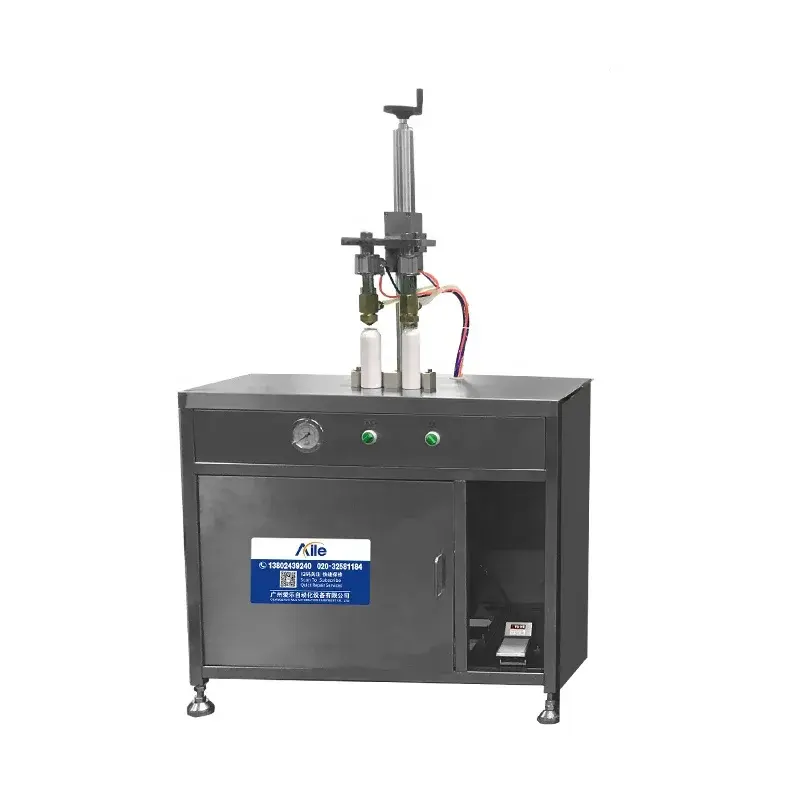
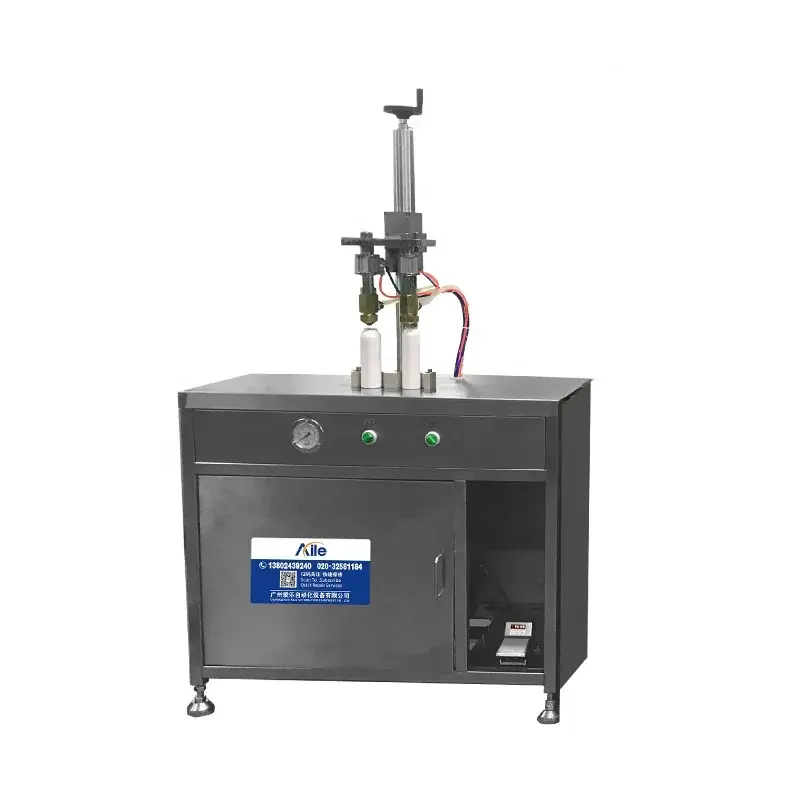
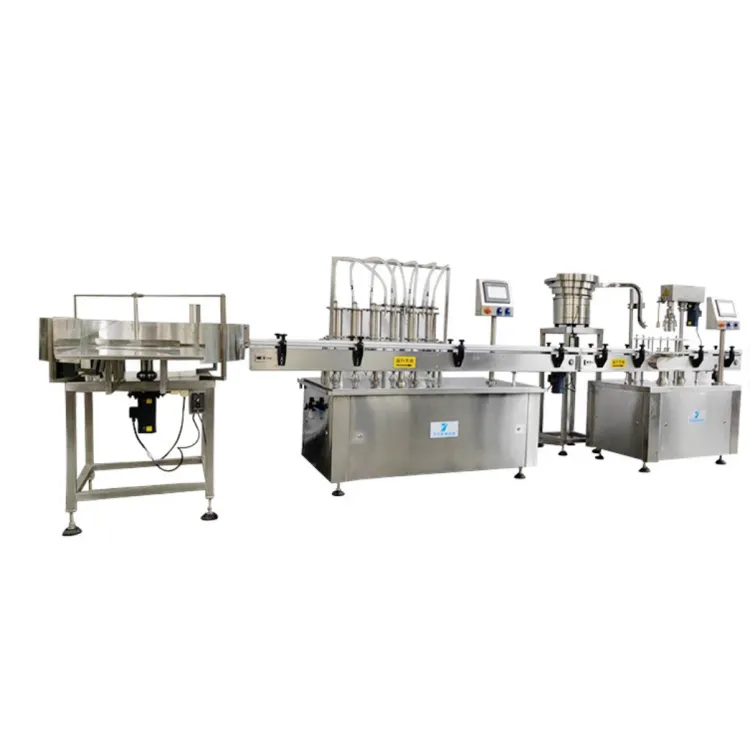
Semi Automatic 2 heads Air Cleaner Spray Liquid Filling Machine
Asset finance available
Do you want funding for this equipment?
Afrimart can connect you with trusted funding partners who specialise in asset finance for businesses like yours. Compare options and apply in minutes — final approval is subject to provider review.
Check funding options
Secure & no obligation

- Section : Machinery
- Category : Filling Machines
- SKU : 1600337536589

- Shipping Timeframes: All orders are processed within 2-5 business days (excluding weekends and holidays). After your order has been processed, the estimated delivery time is before 14 Dec, 2026, depending on customs, Please note that due to high demand, some items may experience longer shipping times, which will be communicated at order confirmation email.
- Order Processing Time: Please allow 2-5 business days for us to process your order before it is shipped . Orders placed after 16:00 on Fridays, or during weekends and public holidays, will begin processing on the next business day. Processing times may be extended during peak seasons or sales events.
- Manufacturing Time: Some products needs manufacturing time, the manufacturing process will take approximately 10-30 business days depending on the product. This timeframe may vary depending on the complexity of the product and current demand. but this will be communicated with you during order confirmation.
- Returns and Exchanges: We offer a 30-day return policy for most items. If you are not completely satisfied with your purchase, you may return it within 30 days of receipt for a refund or exchange. Items must be unused, in their original packaging, and accompanied by proof of purchase. Return shipping costs are the responsibility of the customer, unless the item was damaged or defective upon arrival.
1. What is the Semi Automatic 2 heads Air Cleaner Spray Liquid Filling Machine used for?
It is a semi-automatic aerosol filling machine with two filling heads designed to fill air-cleaner spray (aerosol) cans. It automates the filling process to save labor and increase production capacity and is part of a larger aerosol filling line.
2. What are the main technical specifications?
Key specs include: two filling heads, filling capacity 30–500 ml, production capacity 800–1200 cans/hour, filling accuracy ≤±1%, bottle height 80–250 mm, diameter 35–65 mm, applicable valve 1" (25.4 mm), working pressure 0.50–0.70 MPa. Machine body uses stainless steel 304/316.
3. Is the machine fully automatic?
No — it is semi-automatic. Filling is automatic with two heads, but tasks such as manual loading/unloading or valve placement may be required depending on the configuration. Some functions can be customized.
4. What kinds of cans and sizes does it accept?
It supports cans with heights from 80 to 250 mm and diameters from 35 to 65 mm. Valve size should be 1" (25.4 mm).
5. What is the filling accuracy?
Filling accuracy is ≤±1% under normal operating conditions and with proper calibration and stable product viscosity.
6. What is the machine's production capacity?
Typical production capacity is 800–1200 cans per hour, depending on product viscosity, operator speed, and optional configuration.
7. What materials are used for parts in contact with the product?
Parts in contact with the product are made from stainless steel 304 and 316 to minimize chemical reactions and corrosion.
8. What are the compressed air requirements?
Working pressure required is 0.50–0.70 MPa. Clean, dry compressed air is recommended; actual air consumption depends on your operating cycle and should be confirmed with the supplier.
9. Can this machine be integrated into a full aerosol production line?
Yes. It is designed as part of an aerosol filling production line and can be integrated with upstream and downstream stations (e.g., can feeding, valve fitting, crimping, labeling) — integration may require customization.
10. How easy is it to changeover between different can sizes or filling volumes?
The machine supports a range of sizes (80–250 mm height, 35–65 mm diameter) and adjustable filling volumes (30–500 ml). Changeovers typically require adjusting guides, nozzles or fixtures and may need simple tooling — exact time depends on chosen options and customization.
11. What cleaning and maintenance are required?
Regular cleaning of product-contact parts, periodic inspection/replacement of seals and gaskets, lubrication of moving parts, and checks of air lines and fittings are recommended. Use compatible cleaning agents for stainless steel and follow the supplier's maintenance schedule.
12. What safety features does the machine have?
Standard safety features typically include emergency stop buttons, protective guards, and pressure control. Specific safety and certification options (e.g., CE, explosion-proof) depend on configuration and should be confirmed with the manufacturer.
13. Is customization available?
Yes. The machine can be customized to meet specific production, valve types, automation level, and material compatibility requirements. Contact the supplier with your product details for a tailored solution.
14. What after-sales support and spare parts are provided?
Manufacturers usually offer technical support, spare parts, and optional operator training. Exact warranty terms, lead times for parts, and support packages vary — request details from the seller.
15. How can I get a quote or more information?
Provide the supplier with your product specifications (product type and viscosity, can dimensions, valve type, required output, and any desired automation or certification). The supplier can then provide pricing, lead time, and optional features.
Latest Order Arrivals
Discover our latest orders

12 Heads Embroidery Machine

Toilet Paper Machine Machine

Order Collection

Cross Border Clients

Order cros border countries Collected

Industrial Machine Cllection

Agriculture Processing Machines

Ready for collection

Water Pump Equipment

Packaging Machine and accessories

Fabrics Manufacturing Equipment

Mining Equipments

Food Processing Machine

Batch of Orders

Batch of Orders

Latest Orders Labelled

wheel alignment machines

new arrivals

Pre Orders Offloading

Latest Arrivals

Latest Arrivals

Latest Arrivals

Loading

Toilet paper making machine

Toilet paper making machine

Toilet paper Rewinding Machine

latest arrivals

offloading

order success

order collection

order offloading