B21, China Town Mall, Midrand

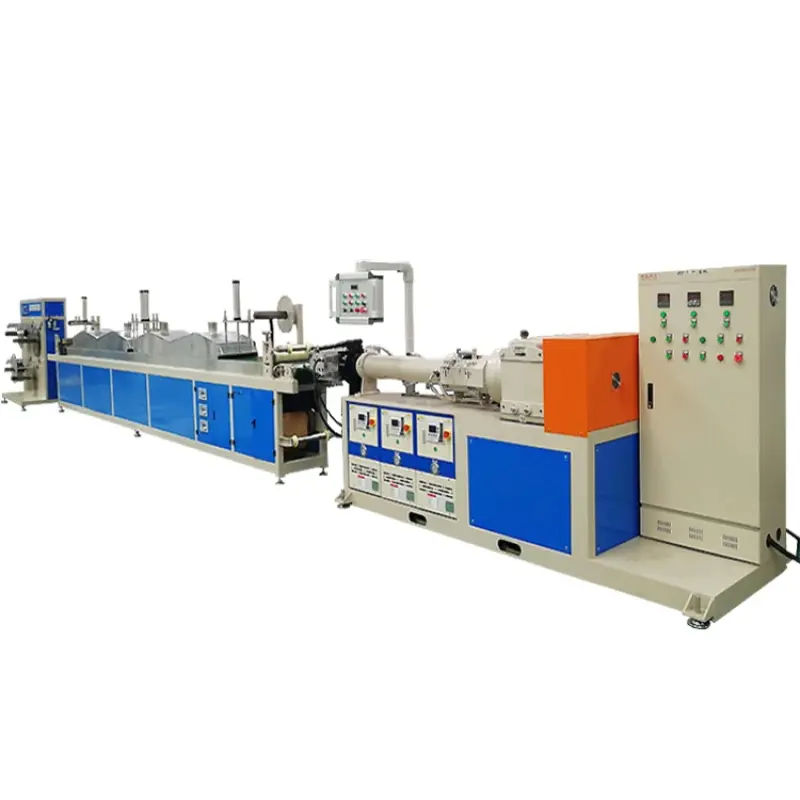
Butyl Rubber Extruder Machine for Sheet and Tape Production Line
Asset finance available
Do you want funding for this equipment?
Afrimart can connect you with trusted funding partners who specialise in asset finance for businesses like yours. Compare options and apply in minutes — final approval is subject to provider review.
Check funding options
Secure & no obligation
- Section : Production Lines
- Category : Production Lines
- SKU : 1601011404324

Product Description
Butyl Rubber tape production line:
Introduce: Butyl rubber extruder use to produce adhesive tapes, sealing tapes, sound insulation materials, damping materials,
automobile door, window and chassis butyl rubber adhesive tapes, hollow glass butyl adhesive tapes, non-woven fabric butyl
adhesive tapes, release paper butyl adhesive tapes, aluminum foil butyl adhesive tapes, waterproof coiled materials,and chewing
gum base material (food),etc. Usage: Water swelling strip for highway, sealing and waterproof treatment of construction joints of
underground tunnel structure Features: Water-swellable butyl rubber strips swell with water.


Specification
| Model | SJ-75 | SJ-90 | ||
| Dia of Screw | 75 | 90 | ||
| L:D | 20:1 | 20:1 | ||
| motor power | 30 | 37 |
- Shipping Timeframes: All orders are processed within 2-5 business days (excluding weekends and holidays). After your order has been processed, the estimated delivery time is before 05 Dec, 2026, depending on customs, Please note that due to high demand, some items may experience longer shipping times, which will be communicated at order confirmation email.
- Order Processing Time: Please allow 2-5 business days for us to process your order before it is shipped . Orders placed after 16:00 on Fridays, or during weekends and public holidays, will begin processing on the next business day. Processing times may be extended during peak seasons or sales events.
- Manufacturing Time: Some products needs manufacturing time, the manufacturing process will take approximately 10-30 business days depending on the product. This timeframe may vary depending on the complexity of the product and current demand. but this will be communicated with you during order confirmation.
- Returns and Exchanges: We offer a 30-day return policy for most items. If you are not completely satisfied with your purchase, you may return it within 30 days of receipt for a refund or exchange. Items must be unused, in their original packaging, and accompanied by proof of purchase. Return shipping costs are the responsibility of the customer, unless the item was damaged or defective upon arrival.
1. What is the Butyl Rubber Extruder Machine for Sheet and Tape Production Line used for?
It is an extrusion line designed to produce butyl rubber sheets and tapes used as adhesive/sealing tapes, sound insulation and damping materials, automotive door/window/chassis butyl tapes, hollow glass butyl tapes, non-woven and release-paper backed butyl tapes, aluminum foil butyl tapes, waterproof coiled materials, water-swellable strips for tunnels, and (with food-grade specification) chewing-gum base.
2. Which raw materials can this extruder process?
Primarily butyl rubber compounds and formulated adhesive blends. It can handle non-woven, release paper, aluminum foil substrates and co-extrude with backing materials. For food applications (chewing-gum base) the machine must be supplied in a food-grade configuration.
3. What are the key technical specifications of the machine?
Typical specifications include twin or single-screw extruder variants with screw diameters of 75 mm (SJ-75) and 90 mm (SJ-90), L:D ratio 20:1, and motor powers of 30 kW (SJ-75) and 37 kW (SJ-90). Exact line configuration (calendaring, cooling, take-up, slitting) is selectable per application.
4. What production output (capacity) can I expect?
Output depends on screw size, die configuration, material formulation and line speed. Rather than a single number, capacity should be estimated from your target tape width/thickness and material density — contact the supplier with product specs for an accurate kg/hr or m/min estimate.
5. Can this machine produce water-swellable butyl rubber strips for tunnel and joint sealing?
Yes. The line is suitable for water-swellable butyl rubber products used for highway expansion joints and tunnel waterproofing. Formulation and die design are adjusted to ensure the correct cross-section and swelling performance.
6. Is the machine suitable for producing food-grade chewing gum base?
It can be adapted for chewing-gum base production, but this requires a food-grade configuration (food-contact stainless steel, appropriate seals, sanitary design) and validation to meet relevant food safety standards. Discuss required certifications with the vendor.
7. What die types and downstream equipment are available for sheet and tape production?
Available options typically include flat-sheet dies, single-lane tape dies, multi-lane tape dies, calendering rolls, cooling tables, embossers, laminators (for foil/non-woven backing), slitters, rewinders, and coating or adhesive application stations. Choice depends on final product format.
8. What customization options are available?
Customization can include screw geometry and length, die design and width, heating/cooling systems, line speed, backing/lamination modules (foil, non-woven, release paper), food-grade materials, automation level, and instrumentation for process control or quality inspection.
9. What are typical installation, commissioning and training arrangements?
Manufacturers commonly offer on-site installation and commissioning plus operator and maintenance training. Remote commissioning or factory acceptance testing (FAT) may also be available. Confirm scope, duration and costs with the supplier prior to purchase.
10. What routine maintenance is required?
Routine maintenance includes regular cleaning and purging of the screw and barrel to prevent build-up, inspection and replacement of wear parts (screws, barrels, seals), heater and thermocouple checks, gearbox and motor lubrication per schedule, and checking alignment of downstream units. Follow the supplier's maintenance manual for intervals and procedures.
11. What common extrusion problems should I expect and how can they be resolved?
Common issues include inconsistent thickness (check die and roll parallelism, material feed), excessive stickiness or blocking (adjust temperature profile, formulation, and die-clearance; consider release agents), surging or fluctuating output (verify feeder consistency and screw condition), and surface defects (check cooling, die condition and contamination). The supplier can help with detailed troubleshooting.
12. Are spare parts and wear parts available?
Yes. Wear parts such as screws, barrels, seals, heater bands, thermocouples and cutting/slitting knives are normally available. It is recommended to keep critical spare parts in stock and order directly from the manufacturer or authorized distributor.
13. What safety features should the machine include?
Safety measures typically include emergency stop buttons, guarded moving parts, thermal overload protection for motors and heaters, proper electrical grounding, safety interlocks on access doors, and clear operator controls and labeling. Compliance with local machinery safety regulations is recommended.
14. What certifications, warranty and lead time can I expect?
Certifications (CE, UL, etc.), warranty terms and lead times vary by manufacturer and order configuration. Typical lead times depend on customization; standard units are faster than fully bespoke lines. Request the vendor's specification sheet for confirmed certification, warranty period and current lead time estimates.
15. How do I get a quote or technical evaluation for my product requirements?
Provide desired end-product specifications (tape/sheet width and thickness, backing type, production rate, material formulation, required certifications). The supplier will use these details to recommend a machine model, line configuration and provide a tailored quotation and expected performance metrics.
Latest Order Arrivals
Discover our latest orders

12 Heads Embroidery Machine

Toilet Paper Machine Machine

Order Collection

Cross Border Clients

Order cros border countries Collected

Industrial Machine Cllection

Agriculture Processing Machines

Ready for collection

Water Pump Equipment

Packaging Machine and accessories

Fabrics Manufacturing Equipment

Mining Equipments

Food Processing Machine

Batch of Orders

Batch of Orders

Latest Orders Labelled

wheel alignment machines

new arrivals

Pre Orders Offloading

Latest Arrivals

Latest Arrivals

Latest Arrivals

Loading

Toilet paper making machine

Toilet paper making machine

Toilet paper Rewinding Machine

latest arrivals

offloading

order success

order collection

order offloading