Production lines in Africa help businesses convert raw materials into consistent, market-ready products at commercial scale. Available solutions cover food processing, beverages, animal feed, construction materials, plastics and packaging. Choosing the right line requires careful assessment of production capacity, raw materials, utilities, automation, quality control, factory layout, maintenance and operator skills.
Production Lines in Africa at a Glance
A production line combines several machines and processes into a coordinated manufacturing system. Instead of completing every operation separately, materials move through defined stages such as preparation, forming, processing, inspection, filling, packaging and storage.
The Afrimart production-lines category covers a broad range of applications. Listed solutions include potato-chip processing, block production, pasta manufacturing, bottled-water processing, poultry operations, bakery production, animal-feed pelletising, tomato-paste processing, snack-food manufacturing, coffee processing and plastic pelletising.
Because these lines serve very different industries, there is no universal configuration. A bakery line cannot be evaluated using the same criteria as a concrete-block plant, pharmaceutical filling system or plastic recycling line.
Every project should begin with a defined manufacturing brief covering:
- Product to be manufactured
- Raw-material composition and condition
- Finished-product dimensions or recipe
- Required production capacity
- Number of operating shifts
- Packaging format
- Quality and hygiene requirements
- Available factory space
- Electrical supply and frequency
- Water, steam, gas and compressed-air requirements
- Operator and maintenance skills
- Expansion plans
- Applicable product and workplace regulations
The objective is not simply to purchase individual machines. It is to establish a balanced process in which every stage can support the required output.
What Is a Complete Production Line?
A complete production line is an integrated sequence of machines, controls, conveyors and supporting systems that transforms defined inputs into finished or partly finished products.
Depending on the industry, a line may include:
- Raw-material receiving and storage
- Sorting, weighing or dosing
- Washing, crushing, grinding or mixing
- Heating, cooling, drying or fermentation
- Forming, moulding, extruding or pressing
- Cutting or portioning
- Inspection and quality testing
- Filling or assembly
- Sealing, coding and labelling
- Secondary packaging and pallet preparation
Some lines are supplied as compact systems with only a few machines. Others extend across a factory and require boilers, chillers, compressors, water-treatment systems, ventilation, laboratories and material-handling equipment.
The word “complete” should therefore be tested carefully. A complete mechanical line might exclude electrical distribution, steam generation, installation materials, laboratory instruments, packaging consumables or civil works. Buyers should request an itemised scope showing precisely what is included.
Which Industries Use Production Lines?
Food and snack manufacturing
Food-processing lines can produce potato chips, pasta, bread, biscuits, confectionery, popcorn, corn snacks, tomato paste and other packaged foods. The design must account for food-contact materials, recipe control, hygienic cleaning, moisture, cooking temperature and contamination risks.
A snack line, for example, may include washing, peeling, slicing, blanching, frying, oil removal, seasoning, cooling and packing. Capacity must be assessed at each stage rather than only at the fryer or forming machine.
Beverage and bottled-water production
A bottled-water line may include water treatment, bottle blowing, rinsing, filling, capping, labelling and shrink wrapping. The plant also requires suitable water storage, hygienic piping, bottle-preform handling and finished-product inspection.
The filling machine’s nominal capacity will not represent the factory’s actual output if the bottle blower, labeller or packing section operates more slowly.
Animal-feed production
Animal-feed lines commonly combine crushing, dosing, mixing, conditioning, pelletising, cooling, screening and bagging. The correct configuration depends on the animal species, formulation, ingredient density, pellet diameter and desired hourly output.
Accurate dosing and uniform mixing are important because inconsistent formulations can affect nutritional quality. Dust collection, fire prevention and raw-material storage also require careful planning.
Construction-material manufacturing
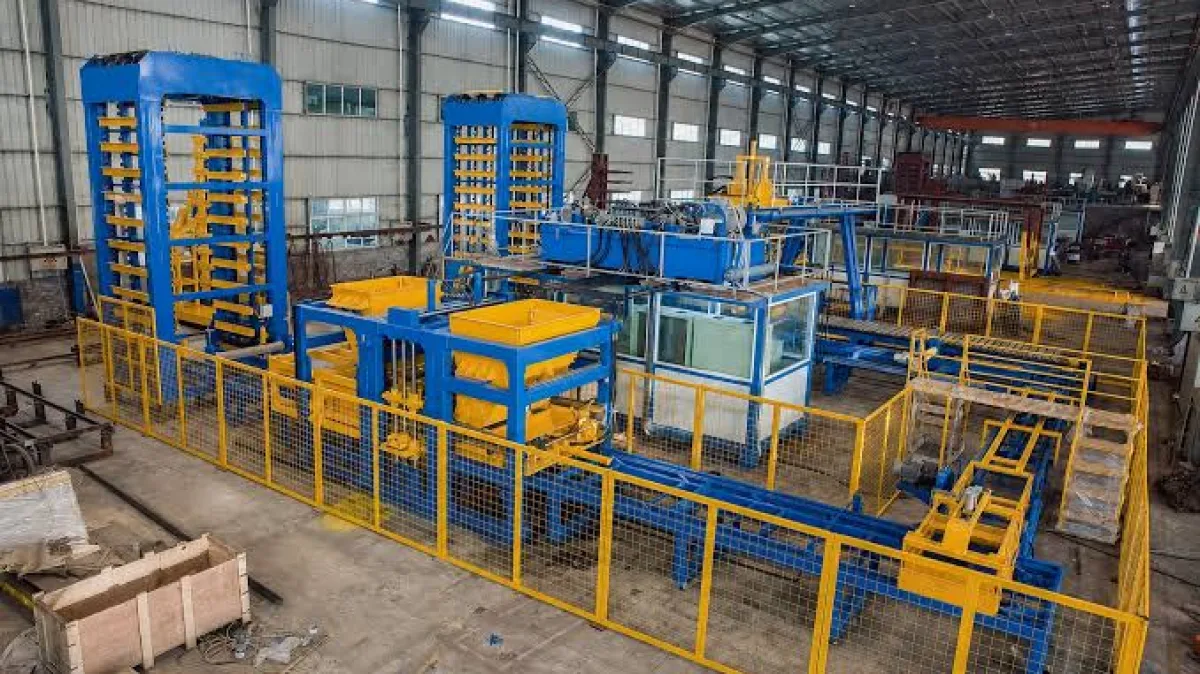
Production lines for concrete blocks, paving products and related materials may include aggregate batching, mixing, moulding, vibration, pallet handling and curing.
Daily output depends on the mould, cycle time, product size, curing arrangement and material supply. A machine’s maximum cycles per hour should not be treated as guaranteed saleable output without considering stoppages, changeovers and rejected products.
Plastics processing and recycling
Plastic lines may wash, shred, dry, extrude, pelletise or form thermoplastic materials. Buyers must match the equipment to the exact polymer and contamination level.
PVC, polyethylene, polypropylene and other materials behave differently under heat and pressure. Incorrect feedstock or temperature control can reduce product quality, increase fumes or damage equipment.
Agricultural and agro-processing
Production systems can add value to locally available crops by converting them into flour, paste, oil, animal feed, dried products or packaged foods. The line should accommodate seasonal supply, variable moisture, storage limitations and differences in raw-material quality.
Pharmaceutical and controlled-product manufacturing
Medical and pharmaceutical production demands specialised validation, traceability and contamination controls. Equipment selection must align with the regulations applying to the product and destination market.
A production line alone does not establish regulatory compliance. The building, utilities, documentation, trained personnel, quality system and validated processes must work together.
How Does a Production Line Work?
A production line works by dividing manufacturing into connected stages. Each machine performs a specific task and passes its output to the next process.
The first stage prepares or meters the input. Food materials may be washed and sorted, while construction materials may be weighed and batched. Sensors, pumps, conveyors or manual operators transfer the material to the processing section.
The main transformation then occurs. Depending on the product, this may involve grinding, mixing, heating, pressing, extrusion, moulding, cutting or chemical treatment.
After processing, the product may require cooling, drying, inspection or stabilisation. Packaging equipment then portions, fills, seals, labels or wraps the final product.
A control system coordinates these activities. On automated lines, sensors monitor speed, temperature, pressure, level, position or weight. The controller can start and stop connected equipment, regulate operating parameters and alert operators to faults.
However, automation does not eliminate human responsibility. Trained personnel must inspect materials, verify settings, respond to alarms, conduct quality checks and maintain the machinery.
Capacity, Throughput and Production-Line Balancing
Published line capacity is usually expressed in units per hour, kilograms per hour, tonnes per hour, litres per hour or containers per hour. The number is useful only when its operating assumptions are understood.
Three capacity concepts should be separated:
- Rated capacity: The output claimed under defined conditions
- Practical capacity: Sustainable output after routine stops and operating losses
- Saleable output: Products that pass inspection and can be sold
A 1,000-unit-per-hour filling machine does not automatically produce 1,000 packaged units every hour. Production can be reduced by bottle supply, filling accuracy, cap feeding, labelling faults, changeovers, cleaning, maintenance and rejected packs.
Line balancing ensures that connected machines have compatible throughput. If an upstream machine supplies 500 kilograms per hour but the packaging section handles only 350 kilograms, inventory will accumulate between the stages. Conversely, an oversized packing machine may frequently wait for product.
Buyers should request a process-flow diagram and capacity calculation covering:
- Input rate
- Output rate at every stage
- Expected yield
- Product loss
- Changeover time
- Cleaning time
- Planned maintenance
- Number of operators
- Required buffer storage
- Anticipated utilisation
- Expected finished-product rejection rate
Factory planning should be based on practical saleable output rather than the fastest machine’s nominal rating.
Technical Specification Comparison
The following table identifies the principal requirements to confirm for common production-line categories.
| Production-line category | Main process stages | Capacity measure | Critical utilities | Key specification to confirm |
|---|---|---|---|---|
| Potato-chip line | Washing, peeling, slicing, frying, seasoning and packing | Kilograms per hour | Electricity, water and heating energy | Raw-to-finished yield and fryer capacity |
| Pasta line | Mixing, extrusion, drying, cooling and packing | Kilograms per hour | Electricity, water and controlled heat | Product shape, drying time and moisture control |
| Bottled-water line | Treatment, blowing, rinsing, filling, capping and labelling | Bottles per hour | Electricity, water and compressed air | Bottle size and capacity at that format |
| Concrete-block line | Batching, mixing, moulding, vibration and handling | Blocks per hour or shift | Electricity, water and compressed air | Block size, cycle time and mould configuration |
| Animal-feed line | Crushing, dosing, mixing, conditioning, pelletising and cooling | Tonnes per hour | Electricity, steam and compressed air | Formula density and pellet diameter |
| Bakery line | Mixing, dividing, forming, proofing, baking and cooling | Pieces or kilograms per hour | Electricity, gas or diesel and water | Product weight and oven throughput |
| Tomato-processing line | Washing, sorting, crushing, heating, refining and filling | Kilograms or tonnes per hour | Electricity, water and steam | Input quality, extraction yield and filling format |
| Plastic-pelletising line | Sorting, crushing, washing, drying, extrusion and cutting | Kilograms per hour | Electricity, water and ventilation | Polymer type, contamination and final moisture |
| Snack-extrusion line | Mixing, extrusion, drying, flavouring and packing | Kilograms per hour | Electricity, water and heating energy | Feed formulation and finished-product density |
| Coffee-processing line | Roasting, cooling, grinding and packing | Kilograms per hour | Electricity, gas and ventilation | Roast profile, grind range and pack type |
These values should be confirmed for the exact product recipe and machine configuration. Equipment may perform differently when raw-material moisture, product dimensions, packaging sizes or environmental conditions change.
Automation Levels and Control Systems
Production lines can be manual, semi-automatic or fully automatic.
A manual line relies heavily on workers for feeding, transferring, measuring and packing. It may require less initial complexity but can create inconsistent output, higher handling requirements and greater dependence on operator technique.
Semi-automatic lines mechanise the main processing stages while retaining manual loading, inspection, transfer or packing. This arrangement may suit developing operations that need flexibility across different products.
Fully automatic lines connect machinery through sensors, conveyors and programmable controls. They can improve consistency and data collection, but they require stable utilities, trained technicians and disciplined maintenance.
Buyers should not choose automation level from labour cost alone. They should also consider:
- Required consistency
- Product hygiene
- Traceability
- Shift pattern
- Frequency of format changes
- Technician availability
- Spare-parts accessibility
- Power reliability
- Future capacity
- Integration with existing equipment
The control panel should provide clearly labelled operating modes, emergency stops, fault messages and access levels. Ask whether the programmable logic controller, touchscreen and variable-frequency drives use components that can be maintained locally.
For connected systems, confirm how production data, remote access and software backups are protected. Digital convenience should not introduce unmanaged operational or cybersecurity risks.
Raw Materials, Recipes and Product Testing
A production line can only perform consistently when its inputs remain within the design range. Raw materials that differ in moisture, density, size, viscosity or composition may affect capacity and finished-product quality.
Before final machine selection, buyers should provide representative samples or detailed input specifications. Food projects should include recipes, ingredient ratios, expected cooking conditions and target shelf life. Block plants should define cement, aggregate grading, water ratio and product strength. Plastic lines should identify polymer types and contamination levels.
A proper acceptance test should use the buyer’s intended materials wherever practical. The test should measure:
- Hourly input
- Hourly saleable output
- Product dimensions
- Weight variation
- Temperature or moisture
- Energy consumption
- Waste or loss
- Downtime
- Cleaning requirements
- Labour allocation
Product testing continues after commissioning. The factory may require weighing equipment, moisture meters, temperature instruments, pressure gauges, laboratory tools or other quality-control systems.
Factory Layout and Utility Requirements
A suitable building is essential for safe and efficient production. Buyers should obtain machine dimensions, service clearances and a recommended layout before preparing the site.
The layout must allow raw materials to enter without crossing finished-product routes. Personnel, forklifts, waste and maintenance teams should move through clearly defined areas.
Confirm the following site requirements:
- Total floor area
- Machine footprints
- Working and maintenance clearances
- Floor-loading capacity
- Foundation and anchoring details
- Ceiling and door heights
- Electrical voltage, phase and frequency
- Installed and operating power
- Water quality, pressure and consumption
- Steam pressure and boiler capacity
- Compressed-air pressure and flow
- Gas or diesel consumption
- Drainage and wastewater treatment
- Ventilation and extraction
- Temperature and humidity limits
- Fire-protection systems
- Raw-material and finished-goods storage
Electrical capacity deserves particular attention. The sum of individual motor ratings is not always the same as typical running demand, but the distribution system must safely accommodate starting currents, protection devices and future expansion.
Where grid supply is unstable, backup generation, voltage control or energy storage may be required. These systems must be sized using a professional load assessment.
Benefits of an Integrated Production Line
More consistent products
Controlled processes can improve uniformity in dimensions, weight, cooking, mixing, filling and packaging. Consistency supports quality control and customer confidence.
Higher practical output
Mechanised transfer and coordinated operations can reduce delays between production stages. Output improves when the entire line is correctly balanced.
Reduced manual handling
Conveyors, pumps, feeders and lifting systems can limit repetitive carrying and direct product contact. Workers are still required for supervision, inspection and safe intervention.
Better traceability
Digital controls and production records can help teams track batches, operating conditions, stoppages and quality results.
Improved use of local raw materials
Appropriate processing equipment can convert agricultural crops, minerals, recycled plastics and other local inputs into higher-value products.
Scalable industrial development
A properly planned line can provide a foundation for additional shifts, more packaging formats or future capacity expansion.
Stronger process control
Integrated sensors and controls make it easier to maintain temperature, pressure, weight, speed and timing within defined limits.
Lower avoidable waste
Accurate cutting, dosing, filling and process control can reduce off-specification products and material losses. Actual savings depend on maintenance, recipes and operator performance.
Installation, Commissioning and Operator Training
Delivery is not the final stage of a production-line project. Installation and commissioning determine whether the machines work together under site conditions.
The commissioning plan should identify responsibility for:
- Machine positioning
- Foundations and anchoring
- Mechanical assembly
- Electrical installation
- Utility connections
- Lubrication and fluid filling
- Control-system configuration
- Dry testing
- Product trials
- Safety inspection
- Performance testing
- Operator instruction
- Maintenance training
- Final acceptance
Training should include start-up, shutdown, cleaning, changeover, fault response, emergency procedures and routine maintenance. Maintenance technicians may require separate instruction covering electrical controls, sensors, drives, pneumatics and hydraulics.
Documentation should include operating manuals, electrical drawings, process diagrams, parts lists, maintenance schedules and troubleshooting instructions. Language, measurement units and electrical standards should be confirmed before delivery.
Production-Line Safety and Compliance
Production lines can expose workers to rotating equipment, conveyors, blades, heated surfaces, pressure, electricity, steam, chemicals and unexpected machine movement. Risk controls must be incorporated into the design and operating procedures.
The International Labour Organization’s machinery-safety guidance addresses machinery suitability, guarding, control systems, information and responsibilities for safe use. The UNIDO industrial safety handbook also highlights risk management, inspections, safety culture and organisational resilience.
A production-line safety review should cover:
- Fixed and interlocked guards
- Emergency-stop positions
- Safe conveyor access
- Lockout and isolation points
- Electrical protection and earthing
- Pressure-relief systems
- Hot-surface protection
- Dust, fumes and ventilation
- Noise exposure
- Slips and drainage
- Manual handling
- Fire and explosion risks
- Cleaning and sanitation chemicals
- Safe access for maintenance
- Restart warnings and procedures
Emergency-stop buttons do not replace proper guarding. Machines should also be prevented from restarting unexpectedly after a power interruption or safety-device activation.
Food, pharmaceutical, construction and chemical products may be governed by different national standards. Buyers should identify applicable health, product, environmental and workplace requirements before selecting equipment.
Maintenance, Spare Parts and Downtime Planning
A production line stops when a critical machine stops. Preventive maintenance must therefore address the complete system rather than isolated components.
Routine maintenance may include:
- Cleaning and sanitation
- Bearing lubrication
- Belt and chain inspection
- Fastener checks
- Sensor cleaning and calibration
- Seal and gasket replacement
- Blade or die inspection
- Hydraulic-fluid monitoring
- Pneumatic leak detection
- Electrical-terminal inspection
- Motor and gearbox checks
- Guard and emergency-stop testing
Buyers should identify critical components whose failure would stop the entire line. A start-up spare-parts package may include sensors, switches, heaters, thermocouples, seals, bearings, belts, chains, contactors, relays and product-specific wear parts.
The correct stock depends on operating hours, process conditions and expected replenishment time. A maintenance plan should also specify which work can be completed by factory personnel and which tasks require specialised technical support.
Buyer Checklist for Production Lines
Use this checklist when preparing a production-line enquiry:
- Define the exact finished product.
- Provide the product recipe or technical standard.
- Describe every principal raw material.
- State the desired hourly and daily output.
- Specify the expected number of shifts.
- Define package size and packaging material.
- Confirm the required automation level.
- Request a complete process-flow diagram.
- Review capacity at every production stage.
- Confirm expected yield and product loss.
- Identify all machinery included in the line.
- Separate standard equipment from optional equipment.
- Confirm installed and running electrical load.
- Verify voltage, phase and frequency.
- Establish water, air, steam and fuel requirements.
- Obtain machine dimensions and a layout drawing.
- Verify floor loads and foundation requirements.
- Confirm food-contact or product-contact materials.
- Review guards, interlocks and emergency stops.
- Define installation and commissioning responsibilities.
- Request a performance-acceptance procedure.
- Arrange operator and maintenance training.
- Obtain manuals, drawings and a parts catalogue.
- Identify consumables and wear components.
- Request recommended start-up spare parts.
- Confirm cleaning and changeover procedures.
- Check local product and environmental regulations.
- Plan raw-material and finished-goods storage.
- Calculate working capital for inputs and packaging.
- Assess future expansion requirements.
How to Evaluate Production-Line Economics
Machine capacity alone does not establish whether a project is commercially viable. Buyers should develop a cost model based on realistic local conditions.
The model should include:
- Raw materials
- Packaging
- Direct labour
- Electricity and fuel
- Water and wastewater treatment
- Cleaning materials
- Quality testing
- Maintenance
- Spare parts
- Building costs
- Storage
- Product losses
- Distribution
- Regulatory compliance
- Working capital
Calculate costs using practical saleable output rather than uninterrupted nameplate capacity. Include planned cleaning, maintenance, shift changes and product changeovers.
Demand should also be tested. A large line may produce a low unit cost only when enough of its capacity is used. If market demand is still developing, a smaller modular line can sometimes offer better utilisation and lower operating risk.
The strongest proposal connects technical capacity with raw-material supply, product standards, packaging availability and a credible route to market.
How to Request Production Lines Through Afrimart
Businesses can explore available equipment through the Afrimart production-lines category.
A useful request should specify the intended product, recipe or standard, raw materials, required capacity, packaging format, available factory space and site utilities. It should also state whether the project requires installation, commissioning, training, laboratory equipment, packaging machinery or supporting utility systems.
For example, a request for a potato-chip line should include the potato variety or approximate dry-matter content, input capacity, slice style, heating method, seasoning system and packet sizes. A concrete-block enquiry should identify block dimensions, material formulation, desired strength, mould requirements and planned curing method.
Detailed project information makes it easier to compare technically suitable configurations and reduces the risk of missing equipment.
Frequently Asked Questions
What is included in a complete production line?
It depends on the stated scope. Processing machines may be included while utility systems, packaging equipment, laboratory tools, installation materials and civil works remain separate. Request an itemised equipment list and battery-limit document.
How should production-line capacity be selected?
Begin with forecast saleable demand, operating shifts and realistic utilisation. Then verify that every machine can support the target throughput. Avoid sizing the project from one machine’s maximum capacity.
Is a fully automatic line always better?
No. Full automation can improve consistency and reduce handling, but it requires stable utilities, skilled technicians and stronger maintenance systems. A semi-automatic configuration may offer useful flexibility for smaller or changing markets.
What utilities can a production line require?
Depending on the process, requirements may include electricity, water, compressed air, steam, gas, diesel, cooling water, ventilation and wastewater treatment. Obtain consumption figures for normal production and peak demand.
How much factory space is required?
The answer depends on machine footprints, conveyors, maintenance clearance, utility rooms, storage and safe movement routes. Use a detailed layout rather than adding only the individual machine dimensions.
How can buyers verify performance before acceptance?
Agree on measurable criteria covering input, saleable output, product quality, utility consumption, waste, operating duration and permitted downtime. Where practical, test with representative raw materials and packaging.
Which spare parts should be purchased initially?
Prioritise parts that wear regularly, are unique to the line or would cause extended downtime if they failed. The list may include seals, bearings, sensors, heaters, belts, chains, blades and product-specific tooling.
Sources and Technical Review
This guide was developed using the Afrimart production-lines category, the International Labour Organization’s guidance on machinery safety and the UNIDO handbook on industrial safety and security.
Production capacity, utility consumption and included equipment can vary by configuration, recipe and raw-material condition. Final specifications, factory requirements, safety measures and regulatory obligations should be confirmed for the buyer’s project before an order is placed.