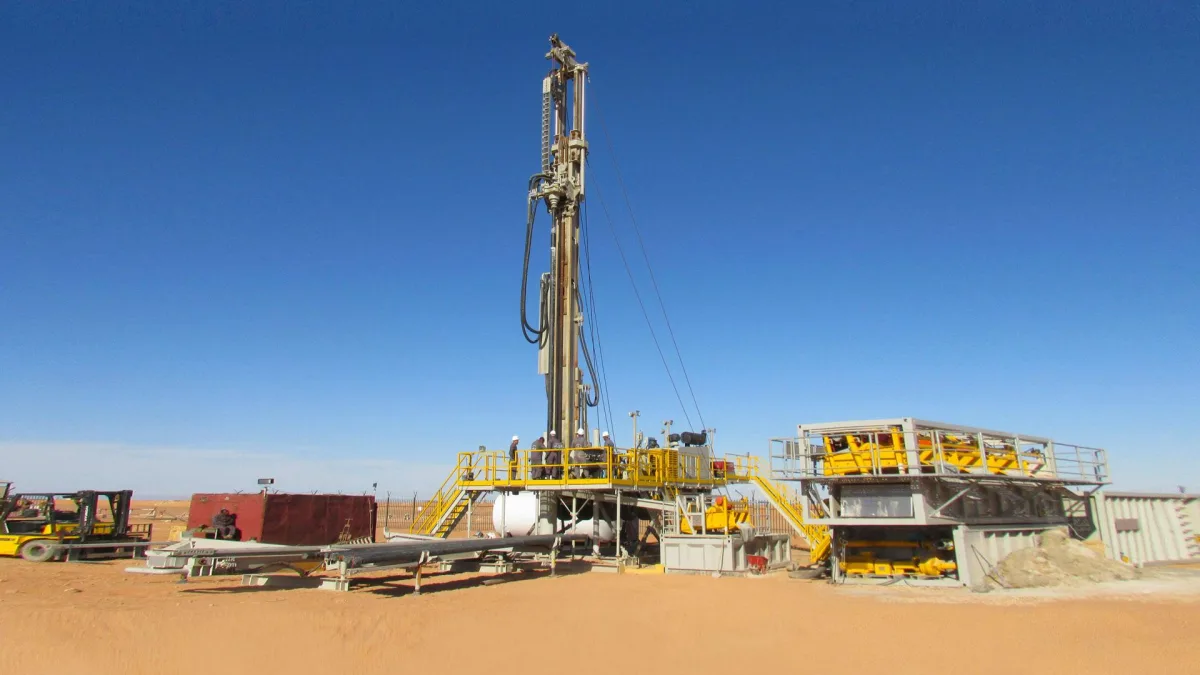
Drilling rigs in Africa support borehole development, mining exploration, quarrying, geotechnical investigation and infrastructure construction. Choosing the correct rig requires more than comparing maximum depth. Buyers must evaluate geology, bore diameter, drilling method, compressor or mud-pump capacity, mobility, tooling, safety systems and local operating conditions before requesting quotations.
Drilling Rigs in Africa at a Glance
Drilling equipment ranges from compact portable machines for shallow water wells to crawler-mounted hydraulic rigs designed for demanding rock formations. The Afrimart drilling-rigs category includes water-well rigs, down-the-hole machines, exploration rigs, blast-hole equipment, horizontal directional drilling machines, concrete coring machines and related construction equipment.
The best machine is the one configured for a clearly defined application. A rig advertised for a particular maximum depth will not necessarily reach that depth in every geological formation or with every bore diameter. Its real performance depends on the drilling technique, drill-string weight, formation hardness, casing programme and supporting equipment.
Before comparing machines, buyers should define:
- Intended application
- Expected geological formation
- Target drilling depth
- Required finished bore diameter
- Casing size and material
- Preferred drilling method
- Site accessibility and ground conditions
- Available diesel, electricity, compressed air and water
- Transport restrictions
- Operator experience
- Maintenance and spare-parts requirements
- Applicable licences, permits and environmental controls
These details allow equipment specifications to be evaluated against the actual project rather than an advertised headline figure.
What Is a Drilling Rig?
A drilling rig is a machine that creates a hole in soil, rock, concrete or another material by applying rotation, impact, downward force or a combination of these actions to a drill bit. Depending on the application, the machine may also circulate compressed air, water or drilling fluid to cool the bit, remove cuttings and stabilise the bore.
A typical rig incorporates several major systems:
- A mast or feed frame that guides the drill string
- A rotary head that turns the drill rods and bit
- A feed system that applies downward force
- Pullback capacity for retrieving rods and tooling
- A diesel engine, electric motor or hydraulic power unit
- Controls for rotation, feed pressure and auxiliary functions
- Levelling equipment or stabilisers
- A crawler, wheeled chassis, trailer or skid-mounted structure
- Rod-handling and breakout equipment on larger machines
The supporting package can be just as important as the rig. Depending on the method, the operation may require an air compressor, mud pump, water tank, settling pits, drill rods, casing, hammers, bits, reamers, foam systems, welding equipment and lifting accessories.
Which Types of Drilling Rigs in Africa Suit Different Projects?
The broad range of drilling rigs in Africa reflects the continent’s varied groundwater, mining, construction and geological requirements. Buyers should distinguish the following equipment categories before selecting a model.
Water-well drilling rigs
Water-well rigs are used to construct boreholes for homes, farms, communities, commercial facilities and industrial operations. Compact machines may be suitable for shallow wells and restricted sites, while larger crawler-mounted rigs can accommodate heavier drill strings, wider casing and deeper targets.
Neither the presence nor the depth of groundwater can be guaranteed by the rig. Borehole positioning should be informed by appropriate hydrogeological investigation, local records and any legally required authorisation.
Down-the-hole drilling rigs
A down-the-hole, or DTH, rig uses a pneumatic hammer positioned immediately behind the drill bit. Compressed air activates the hammer while the rotary head turns the drill string. The method can deliver effective penetration in competent hard rock and simultaneously lift cuttings from the hole.
DTH performance depends heavily on the external compressor. Airflow and working pressure must match the hammer, bit diameter, depth and expected groundwater conditions. A powerful rig paired with an undersized compressor may drill slowly or fail to clear cuttings effectively.
Rotary mud drilling rigs
Rotary mud drilling turns a bit while circulating drilling fluid through the bore. The fluid cools and lubricates the bit, transports cuttings and helps support the bore wall. It is commonly considered for unconsolidated formations where an open hole may otherwise collapse.
The complete system can require a mud pump, hoses, tanks or lined pits, mixing equipment and a controlled fluid-disposal plan. Water availability and environmental management must therefore be assessed before mobilisation.
Core and exploration rigs
Core rigs retrieve cylindrical samples that preserve the sequence of underground formations. Geologists use these samples for mineral exploration, geotechnical analysis and resource evaluation.
Core drilling has different priorities from production borehole drilling. Sample recovery, core-barrel compatibility, hole deviation, rotation control and depth accuracy may be more important than creating a large-diameter opening.
Blast-hole rigs
Blast-hole machines drill defined patterns in mines, quarries and large civil projects. The diameter, depth and orientation of each hole must correspond with an engineered blast design.
The drilling rig produces the holes; it does not remove the need for separate explosives controls. Charging and blasting should only be conducted by authorised personnel under the applicable national laws, mine rules and site procedures.
Horizontal directional drilling rigs
Horizontal directional drilling, or HDD, installs pipes and services beneath roads, rivers and developed areas without excavating a continuous open trench. A pilot bore is steered along a planned path, enlarged with reamers and used to pull the product pipe into position.
HDD selection depends on required pullback, torque, pilot distance, soil conditions and final pipe diameter. A compatible locating system, drilling-fluid package, reamers and mixing equipment are also essential.
Concrete coring machines
Concrete coring machines cut accurate circular openings in slabs, walls and structural elements. Although they may appear in a broad drilling category, they are not interchangeable with water-well or mineral-exploration rigs.
The buyer must confirm core-bit diameter, drilling orientation, anchoring method, water control and the structure’s condition. Structural drilling should be approved and supervised by suitably qualified personnel.
Piling and rock-bolting equipment
Piling rigs create foundation holes or install piles, while bolting rigs drill holes for rock-support systems in mines, tunnels and cut slopes. Both applications depend on specialised tooling, site engineering and ground-support designs.
These machines should be evaluated against the required hole angle, diameter, depth, reach, mast movement and project-specific engineering standards.
How Does a Drilling Rig Work?
Although operating sequences vary, a typical borehole process follows several controlled stages.
- Investigate the site. Confirm the target, geology, access route, overhead services, buried utilities, environmental constraints and legal requirements.
- Position and stabilise the rig. Place the machine on ground with adequate bearing capacity. Deploy stabilisers, level the mast and establish a controlled work zone.
- Select the drilling method. Choose DTH, rotary mud, air rotary, coring or another technique based on the formation and required result.
- Install compatible tooling. Fit the specified drill rods, bit, hammer, core barrel or starter casing. Check threads, guards and connections.
- Begin drilling. Apply controlled rotation, feed and flushing pressure. Operators monitor penetration rate, cuttings, vibration, fluid return and machine loading.
- Add drill rods. Stop and secure the system before connecting each additional rod. Correct handling procedures reduce dropped-object and entanglement risks.
- Manage cuttings and bore stability. Use air or drilling fluid to clear cuttings. Install temporary or permanent casing where unstable formations require support.
- Reach and verify the target. Record depth and relevant geological or water information. A water-well project may require development, yield testing and water-quality sampling.
- Withdraw the drill string. Retrieve rods under controlled conditions and inspect the tools for wear or damage.
- Complete and rehabilitate the site. Install the specified casing, screens, sanitary seals or project components, then manage waste and restore disturbed ground.
Operating procedures must follow the machine manual, local legislation and a project-specific risk assessment.
What Determines Drilling Depth and Bore Diameter?
Maximum depth and maximum diameter are not independent specifications. As a bore becomes deeper or wider, the machine must manage more drill-string weight, greater friction and larger volumes of cuttings.
Important performance factors include:
- Rotary-head torque
- Rotation-speed range
- Feed force and pullback force
- Mast travel and rod length
- Winch or rod-handling capacity
- Compressor airflow and pressure
- Mud-pump flow and pressure
- Drill-rod diameter and thread type
- Bit or hammer compatibility
- Formation hardness and abrasiveness
- Bore inclination and expected deviation
- Casing outside diameter
- Water inflow and hole-cleaning conditions
- Elevation and ambient temperature
For example, a rig’s quoted 200-metre capability may apply to a defined formation, rod size and bore diameter. A large-diameter hole through difficult ground may reduce practical depth. Buyers should request a written performance configuration tied to their anticipated geology and finished bore requirements.
Technical Specification Comparison
The following table shows the principal specifications that should be confirmed for each rig type. These are procurement criteria rather than universal ratings.
| Rig category | Typical application | Critical capacity to confirm | Supporting system | Essential tooling |
|---|---|---|---|---|
| Water-well rig | Domestic, agricultural, community and industrial boreholes | Depth, finished diameter, torque, feed and pullback | Compressor or mud pump selected for the method | Drill rods, bits, hammer, casing tools |
| DTH rig | Hard-rock boreholes, quarrying and construction | Hole diameter, hammer size, air pressure and airflow | Diesel or electric air compressor | DTH hammer, button bits, rods |
| Rotary mud rig | Sand, clay and unstable formations | Torque, mud flow, depth and casing capacity | Mud pump, tanks or pits and mixing system | Rotary bits, rods, casing equipment |
| Core exploration rig | Mineral and geotechnical sampling | Core size, depth, rotation range and pullback | Water pump and core-handling facilities | Core barrel, diamond bit, drill rods |
| Blast-hole rig | Mining and quarry blast patterns | Hole diameter, penetration rate and mast reach | Compressor and dust-control equipment | Hammer, bit and drill rods |
| HDD rig | Trenchless pipe and utility installation | Thrust, pullback, torque and pilot distance | Mud mixer, pump and locating system | Pilot head, rods, reamers, swivels |
| Concrete coring machine | Openings in concrete walls and slabs | Core diameter, power and drilling orientation | Water supply and slurry collection | Diamond core bits and mounting system |
| Piling or bolting rig | Foundations, slope support and underground support | Hole angle, reach, torque and feed force | Hydraulic power and project-specific support | Augers, casing, bits or bolt tools |
A quotation should identify the exact machine configuration. Generic model descriptions can omit optional compressors, pumps, rods, hammers or accessories that are necessary for productive operation.
Verified Reference Specifications for a Compact Crawler Rig
One example listed on Afrimart is the Crawler Household Small Water Well Drilling Rig. Its published information provides a useful reference for a compact water-well configuration, but buyers should reconfirm every specification and the included equipment before ordering.
| Specification | Published detail |
|---|---|
| Rig type | Rotary drilling rig |
| Intended use | Water-well drilling |
| Power source | Diesel |
| Maximum stated depth | 200 m |
| Listed drilling diameters | 100 mm, 300 mm and 350 mm |
| Mobility | Caterpillar crawler |
| Machine weight | 900 kg |
| Available drill-rod lengths | 1.5 m, 2.0 m and 3.0 m |
| Listed applications | Residential wells, irrigation, community water supply and monitoring wells |
These values should not be interpreted as guaranteed performance in every formation. Buyers should establish whether the advertised diameter options apply throughout the full stated depth and whether the necessary compressor, pump, rods and drilling tools are included.
Compressor, Mud-Pump and Tooling Requirements
A rig cannot be evaluated in isolation from the equipment that removes cuttings and keeps the bore under control.
For DTH drilling, ask for the hammer’s required operating pressure and air consumption. The compressor must maintain sufficient airflow at working pressure after accounting for hose losses, elevation and expected water ingress. Confirm whether an auxiliary booster is required for deep drilling.
For rotary mud drilling, evaluate:
- Pump flow and pressure
- Maximum solids-handling capability
- Suction and delivery-hose sizes
- Tank or pit volume
- Mixing and viscosity-control equipment
- Fluid-cleaning arrangements
- Water availability
- Waste-fluid containment and disposal
Tooling compatibility should be documented. Check drill-rod outside diameter, length, thread standard and wall thickness. Confirm bit range, hammer size, breakout system and the availability of wear parts such as seals, shanks, subs and thread protectors.
Using mismatched tooling can cause inefficient drilling, damaged threads, stuck equipment or unsafe handling. Initial quotations should therefore distinguish between the base machine, the operational drilling package and optional accessories.
Main Benefits of Selecting the Correct Rig
A properly matched drilling system can provide several operational benefits.
Better penetration performance
The right combination of torque, feed, bit and flushing system helps the machine penetrate the expected formation without excessive loading or repeated tool changes.
Improved hole quality
Controlled rotation, adequate cuttings removal and suitable casing practices can reduce deviation, instability and unwanted enlargement of the bore.
More predictable mobilisation
Selecting an appropriate crawler, trailer, truck or skid arrangement makes it easier to plan transport, offloading and movement between drilling points.
Lower avoidable wear
Correct tooling and operating parameters reduce unnecessary stress on the rotary head, drill rods, hammer, hydraulic components and mast.
Greater application flexibility
A rig with suitable speed, torque and accessory options may handle several compatible bit sizes or drilling methods. Any conversion capability should nevertheless be verified in writing.
Safer material handling
Rod loaders, breakout devices, guards and well-positioned controls can reduce manual handling and exposure to rotating components.
More reliable project planning
When depth, diameter and geology are matched to a documented configuration, managers can estimate fuel, labour, tooling and supporting-equipment requirements more realistically.
Site Preparation, Transport and Utility Planning
The work site must accommodate the complete drilling package, not only the rig. Space may be needed for the compressor, mud system, rods, casing, service vehicle, cuttings containment and safe access.
Before delivery, confirm:
- Road width and bridge restrictions
- Machine shipping dimensions and mass
- Offloading method
- Ground-bearing capacity
- Maximum working slope
- Mast height and overhead clearance
- Proximity to electrical lines
- Location of buried pipes and cables
- Fuel-storage controls
- Water availability
- Cuttings or slurry containment
- Emergency access
- Security and overnight storage
Crawler machines can provide useful traction and manoeuvrability, but a crawler undercarriage does not make every surface safe. Soft ground, trenches, steep slopes and unsupported edges may still create rollover, subsidence or recovery hazards.
Remote operations should include appropriate fuel filtration, lubrication, critical spare parts and communication arrangements. Equipment should also be checked for suitability at the site’s altitude, temperature and dust conditions.
Safety and Environmental Controls
Drilling exposes workers to rotating rods, pinch points, suspended loads, pressurised air or fluid, noise, dust and unstable ground. Safe operation requires trained personnel, controlled access and documented procedures.
The International Labour Organization’s guidance on safety and health in the use of machinery emphasises that machinery should be fit for its purpose and suitable for its operating environment. It also addresses guarding, controls, mechanical hazards and responsibilities for safe use.
A drilling risk assessment should cover:
- Machine stability and safe levelling
- Guards around rotating and moving components
- Emergency-stop function and accessibility
- Isolation of hydraulic, pneumatic and mechanical energy
- Safe rod connection and breakout procedures
- Hose inspection and restraint
- Lifting plans for rods, casing and tools
- Exclusion zones
- Dust and noise exposure
- Personal protective equipment
- Fire prevention and fuel handling
- Contact with overhead or underground services
- Borehole guarding when unattended
- Slurry, cuttings and contaminated-water management
Operators should never wrap clothing, hands or tools around a rotating rod. Maintenance must not begin until stored energy is released and the machine is isolated according to the manufacturer’s procedure.
Environmental requirements vary by country and project. Water abstraction, borehole construction, drilling-fluid use, mine work and waste disposal may each require separate authorisation.
Maintenance and Spare-Parts Planning
Maintenance quality directly influences availability and operating cost. Daily inspections should generally include fluid levels, leaks, hoses, fasteners, guards, tracks, lubrication points and visible structural damage.
A planned programme should address:
- Engine oil, fuel and air filters
- Hydraulic fluid and return filters
- Rotary-head lubrication
- Feed chains, cables or cylinders
- Mast guides and wear pads
- Track tension and undercarriage wear
- Compressor servicing
- Mud-pump valves, liners and seals
- Rod threads and tool joints
- Hammer lubrication
- Electrical connections and safety controls
Ask for a model-specific maintenance schedule and parts catalogue. A recommended start-up kit might include filters, seals, O-rings, hoses, sensors, lubricants and selected tooling wear parts. The actual kit should reflect expected monthly drilling hours and the distance from technical support.
Training should cover routine service as well as correct drilling practice. Poor operating technique can cause failures that scheduled maintenance alone will not prevent.
Buyer Checklist for Drilling Rigs
Use this checklist when comparing quotations:
- Define the primary drilling application.
- Obtain geological or hydrogeological information.
- State the target depth and finished bore diameter.
- Identify the required drilling method.
- Confirm rated torque, speed, feed and pullback.
- Confirm drill-rod dimensions and thread standard.
- Match the compressor to the DTH hammer and hole size.
- Match the mud pump to depth and circulation requirements.
- Verify casing capacity and handling arrangements.
- Request the rig’s working and transport dimensions.
- Check total operating and shipping weight.
- Confirm acceptable slope and ground conditions.
- List every included drill rod, bit, hammer and accessory.
- Separate standard equipment from optional equipment.
- Confirm engine, hydraulic and electrical specifications.
- Check diesel quality and electrical compatibility locally.
- Review guards, interlocks and emergency stops.
- Request manuals in a language understood by the team.
- Determine commissioning and operator-training needs.
- Obtain preventive-maintenance intervals.
- Request consumables and recommended start-up spares.
- Confirm packing, unloading and assembly responsibilities.
- Investigate permits, water rights and environmental rules.
- Define inspection and acceptance-test criteria.
- Obtain written confirmation for performance assumptions.
How to Request Drilling Equipment Through Afrimart
Buyers can review available equipment on the Afrimart drilling rigs category page. The category covers different drilling applications, so an enquiry should describe the project rather than simply request “a drilling machine.”
A useful request for quotation should include the country and site location, intended use, geological conditions, target depth, finished hole diameter, expected casing, drilling method and anticipated operating hours. It should also state whether the buyer requires a compressor, pump, rods, hammer, bits, training, commissioning and spare parts.
Providing this information helps narrow the available options and supports a more meaningful technical comparison.
Frequently Asked Questions
Which drilling rig is best for water wells?
The answer depends on the geology, target depth and bore diameter. DTH equipment is often considered for competent hard rock, while rotary mud systems can be more suitable for loose or unstable formations. Some projects require a combination of techniques and casing systems.
Can a 200-metre rig always drill to 200 metres?
No. Maximum depth is conditional on formation, diameter, drill-string configuration, flushing capacity, machine pullback and operating technique. Ask for the assumptions behind the rating and request confirmation against your specific project.
Does a drilling rig include an air compressor?
Not necessarily. The compressor may be a separate item, particularly with DTH equipment. Confirm whether it is included and verify its pressure and airflow against the hammer manufacturer’s requirements.
What is the difference between DTH and rotary mud drilling?
DTH drilling uses compressed air to drive a hammer behind the bit and is commonly associated with hard rock. Rotary mud drilling circulates fluid to remove cuttings and support the bore, making it useful in many softer or unstable formations.
Is a crawler drilling rig suitable for every site?
No. Crawler mobility can improve traction and movement on prepared ground, but machine weight, slope, soil strength, drainage and edge stability still require assessment. Transport dimensions and offloading arrangements must also be considered.
What tooling should be ordered with a rig?
The package may require drill rods, bits, a DTH hammer, casing tools, adapters, breakout tools, reamers or core barrels. The correct selection depends on the method, formation, depth and diameter. Include suitable wear parts and thread protection.
What information should be supplied with a quotation request?
Provide the application, country, geology, target depth, finished diameter, casing plan, preferred drilling method, site accessibility and available utilities. State whether supporting equipment, tooling, training, commissioning and spare parts are required.