













































































































































































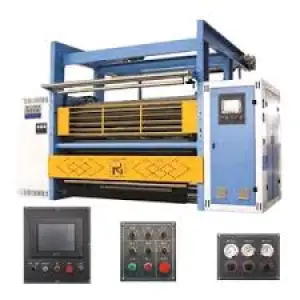








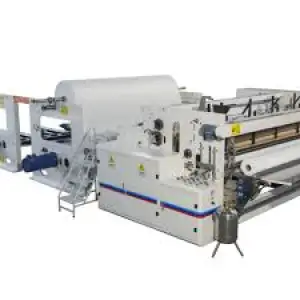

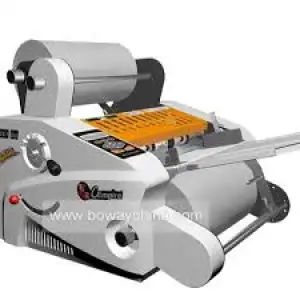
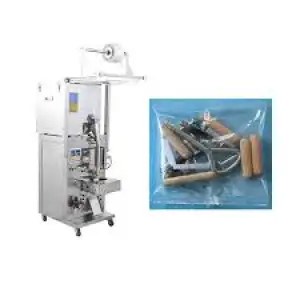
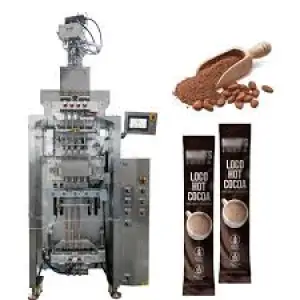
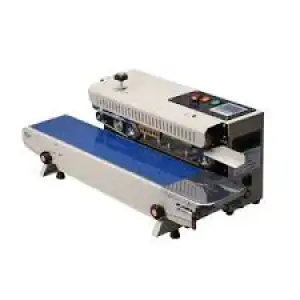






























































































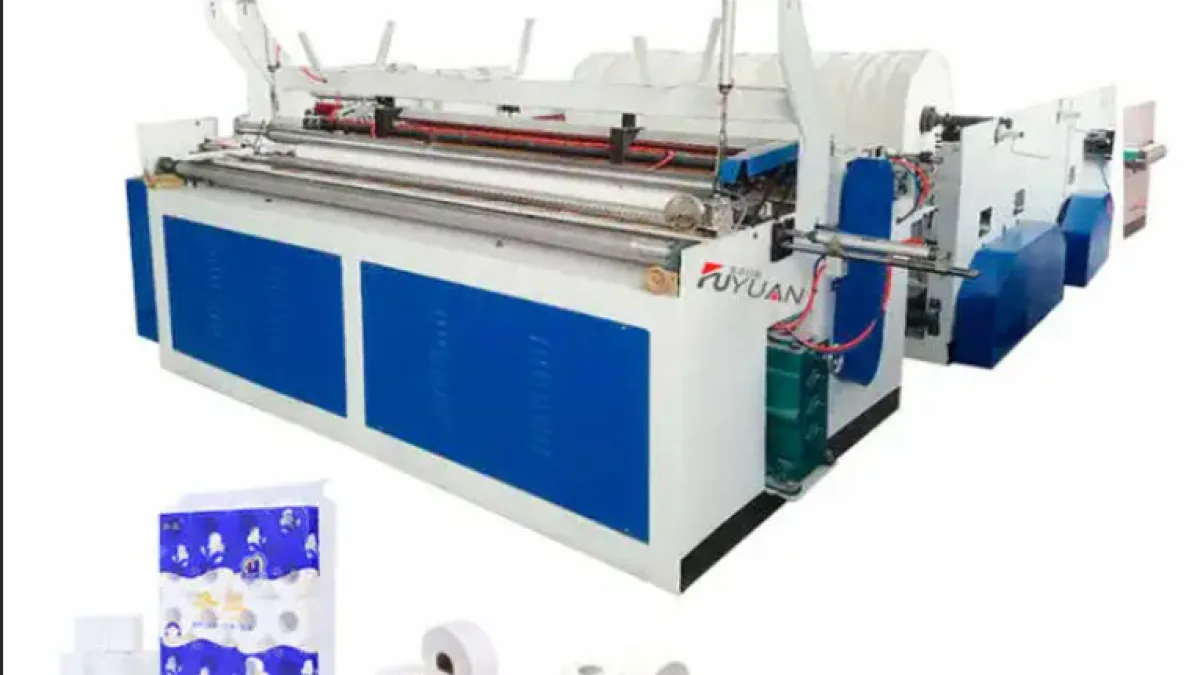
The Afrimart semi-automatic toilet paper making machine complete set converts jumbo tissue rolls into consumer-size toilet rolls. With PLC control, frequency regulation, touch-screen operation and optional embossing, the line is intended for entrepreneurs and manufacturers supplying retail, hospitality, institutional and wholesale tissue markets.
At a Glance
- Machine type
- Semi-automatic toilet tissue converting line
- Raw material
- Jumbo tissue paper rolls
- Electrical supply
- 380 V, 50 Hz
- Listed power
- 7.5 kW
- Control system
- PLC, frequency control and touch screen
- Listed dimensions
- 6,500–7,500 × 2,600–3,200 × 1,750 mm
- Embossing
- Customisable option
- Certification
- Listed as CE and ISO
- Available configurations
- Full set, assembled line and versions excluding selected modules
- Typical products
- Cored or coreless household and commercial toilet rolls, subject to configuration
- Suitable buyers
- Start-ups, tissue converters, wholesalers and established paper-product businesses
View the Afrimart semi-automatic toilet paper making machine complete set and request a configuration matched to the required roll size, output and packaging format.
What Is a Semi-Automatic Toilet Paper Production Line?
A semi-automatic toilet paper line processes ready-made jumbo tissue paper into smaller finished rolls. It is a converting line, not a paper mill.
This distinction is important. The machine does not normally manufacture tissue paper from wood pulp, recycled paper or wastepaper. Instead, the business purchases jumbo tissue rolls and converts them into retail or institutional products.
The main converting operations can include:
- Jumbo-roll unwinding
- Ply combination
- Embossing
- Perforating
- Rewinding
- Core feeding
- Tail gluing or sealing
- Log cutting
- Individual or multi-roll packaging
The term “semi-automatic” means certain operations still require manual handling. Depending on the ordered configuration, workers may need to transfer completed logs, operate a bandsaw cutter, load cores, count rolls or seal packages.
A semi-automatic line is often considered by businesses that want more production consistency than basic manual equipment without immediately investing in a fully automated, high-speed plant.
How the Toilet Paper Making Machine Works
The process begins with one or more jumbo tissue rolls mounted on an unwinding stand. The tissue passes through the converting machine under controlled tension.
A typical production sequence is:
- Load the jumbo tissue roll onto the unwinding stand.
- Thread the tissue through the guide and tension rollers.
- Combine the required number of plies.
- Pass the tissue through the embossing unit, if included.
- Create tear lines using the perforation system.
- Rewind the tissue around a paper core or into a coreless roll.
- Apply the specified tail-sealing method.
- Discharge the completed long tissue log.
- Cut the log into individual toilet rolls.
- Inspect the rolls for width, diameter and perforation quality.
- Count and package the finished products.
- Seal, label and prepare the packs for distribution.
PLC and frequency control can automate or regulate much of the rewinding process. However, the precise automation level depends on which options are selected.
The product page offers multiple choices, including:
- Full set
- Excluding the packaging machine
- Excluding the core-feeding machine
- Excluding embossing
- Assembled production line
These choices materially affect the workflow, labour requirement and finished product. The phrase “complete set” should therefore be supported by an itemised equipment schedule in the quotation.
What Should a Complete Semi-Automatic Set Include?
A practical semi-automatic toilet paper line generally needs three primary production stages.
Rewinding and Perforating Machine
This is the core of the line. It converts jumbo tissue into long finished logs and may include:
- Unwinding stands
- Web-tension controls
- Embossing rollers
- Perforating blades
- Rewinding shafts
- Core-feeding mechanism
- Tail-sealing arrangement
- Edge trimming
- PLC and touch-screen controls
Log-Cutting Machine
The rewinder produces a long roll matching the machine’s working width. This log must be divided into consumer-size rolls.
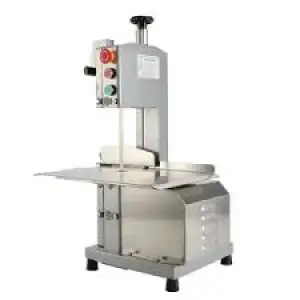
A semi-automatic set may use a manual or operator-controlled bandsaw cutter. More automated installations may use a reciprocating or circular log saw.
Packaging Machine
Finished rolls need protection from dust, moisture and handling. The packaging stage may include:
- Manual bagging and heat sealing
- Semi-automatic sealing
- Shrink wrapping
- Automatic bag packing
- Bundling
- Multi-roll pack forming
The Afrimart page allows buyers to select a configuration excluding the packaging machine, so packaging should not be assumed to be included in every quoted version.
Supporting Equipment
Other equipment may be required even when a line is described as complete:
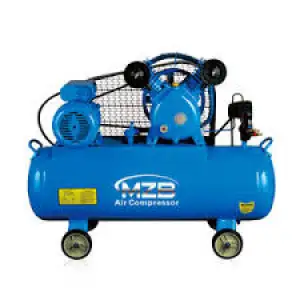
- Air compressor
- Paper-core machine
- Core-cutting machine
- Glue application equipment
- Edge-trim extraction
- Date or batch coder
- Weighing scale
- Worktables and conveyors
- Spare blades
- Backup rewinding shafts
Request a diagram showing every included and excluded item.
Technical Specifications
| Specification | Available information |
|---|---|
| Product name | Toilet Paper Making Machine Complete Set |
| Automation level | Semi-automatic |
| Product type | Toilet tissue converting equipment |
| Raw material | Jumbo roll tissue paper |
| Electrical supply | 380 V, 50 Hz |
| Listed power | 7.5 kW |
| Control system | PLC, frequency control and touch-screen operation |
| Listed dimensions | 6,500–7,500 × 2,600–3,200 × 1,750 mm |
| Embossing | Customisable option |
| Core-feeding module | Optional configuration; verify whether included |
| Packaging machine | Optional configuration; verify whether included |
| Certifications | Listed as CE and ISO |
| Parent-roll width | Confirm before ordering |
| Maximum parent-roll diameter | Confirm before ordering |
| Rewinding speed | Confirm in metres per minute |
| Finished-roll output | Confirm in rolls per minute or shift |
| Number of unwinding stands | Confirm according to required plies |
| Finished-roll diameter | Confirm adjustable range |
| Finished-roll width | Confirm adjustable range |
| Perforation pitch | Confirm adjustable range |
| Core diameter | Confirm supported sizes |
| Cored production | Confirm |
| Coreless production | Confirm |
| Embossing pattern | Confirm available patterns |
| Edge trimming | Confirm whether included |
| Tail sealing | Confirm method |
| Pneumatic requirement | Confirm pressure and airflow |
| Machine weight | Confirm before installation |
| Warranty | Confirm applicable terms in writing |
The page lists “50 sets per month” as production capacity. This appears to describe equipment supply or manufacturing capacity—not the number of toilet rolls the line produces. It should not be used for factory output calculations.
Buyers must request a verified output expressed as:
- Rolls per minute
- Logs per hour
- Finished rolls per eight-hour shift
- Kilograms of tissue converted per shift
Raw Materials Required
Jumbo Tissue Rolls
The line requires large rolls of pre-manufactured tissue. Important jumbo-roll specifications include:
- Roll width
- Roll diameter
- Core diameter
- Basis weight in grams per square metre
- Number of plies
- Virgin or recycled fibre composition
- Tensile strength
- Softness
- Moisture level
- Whiteness
- Dust or lint generation
Machine performance depends heavily on the consistency of the jumbo tissue. Weak tissue may break repeatedly, while excessive variation in moisture or thickness can affect rewinding tension and finished-roll diameter.
Paper Cores
Cored toilet rolls require cardboard tubes. The core must match the rewinding mandrel and target product.
The business can either purchase pre-cut cores or manufacture them using separate core-winding and core-cutting equipment.
Adhesive
Some configurations use adhesive for:
- Securing tissue to the core
- Closing the final sheet or tail
- Manufacturing paper cores
- Sealing certain packages
Only an appropriate adhesive should be used. It must not mark, stiffen or contaminate the product.
Packaging Film or Bags
Packaging materials may include printed polyethylene bags, plain bags, shrink film or paper wrapping. Their dimensions must match the roll diameter, roll count and pack arrangement.
Labels and Coding Materials
Retail products may require:
- Brand identification
- Roll count
- Ply information
- Batch code
- Manufacturer or distributor details
- Barcode
- Product description
- Applicable consumer information
Packaging and labelling rules depend on the destination market.
Toilet Roll Specifications to Decide Before Buying
The production line should be selected around a defined finished product.
Buyers should decide:
- Number of plies
- Roll width
- Roll diameter
- Sheet length
- Perforation distance
- Number of sheets per roll
- Core diameter
- Cored or coreless format
- Embossed or unembossed tissue
- Roll firmness
- Pack size
- Total tissue weight per roll
A “standard toilet roll” is not a sufficiently precise specification. Products vary significantly across household, commercial and institutional markets.
For example, a low-cost retail roll may use fewer sheets or a lower basis weight, while a premium roll may use multiple plies, deeper embossing and more sheets.
The rewinder’s controls can adjust certain characteristics, but the jumbo tissue must also support the intended product.
Embossing, Perforation and Rewinding Quality
Embossing
Embossing presses a pattern into the tissue. It can improve appearance, perceived softness, bulk and ply bonding.
The Afrimart line offers customisable embossing options. Before ordering, confirm:
- Whether embossing is included
- Steel-to-rubber or steel-to-steel configuration
- Number of embossing stations
- Pattern choices
- Edge embossing availability
- Ply-bonding method
- Replacement roller availability
Embossing does not automatically improve every tissue product. Excessive pressure can reduce strength or damage lightweight paper.
Perforation
Perforation creates the tear lines between sheets. It should allow the user to separate sheets easily without causing premature breaks during rewinding.
Quality depends on:
- Perforation pitch
- Blade sharpness
- Blade alignment
- Paper strength
- Web tension
- Machine speed
ISO maintains a family of tissue paper and tissue product test standards, including methods addressing properties such as perforated-line tensile strength, absorption and burst strength.
Rewinding
Rewinding determines the finished roll’s diameter, density and appearance. A roll that is wound too loosely may deform in packaging, while one wound too tightly may feel hard and contain less apparent bulk.
The operator should be able to reproduce approved settings for each product type.
Production Capacity and Line Balancing
Actual output depends on more than rewinder speed. The slowest production stage determines the effective capacity of the complete line.
Potential bottlenecks include:
- Jumbo-roll loading
- Paper breaks
- Manual core insertion
- Log transfer
- Bandsaw cutting
- Roll counting
- Manual packaging
- Film sealing
- Quality inspection
- Product stacking
A rewinder may produce logs faster than operators can cut and package them. In that case, increasing rewinder speed will not increase the number of saleable packs leaving the factory.
Ask Afrimart to provide an output study for the intended product, stating:
- Jumbo-roll width and basis weight
- Number of plies
- Finished-roll width and diameter
- Sheets per roll
- Perforation pitch
- Rewinder speed
- Cutting time per log
- Packaging configuration
- Number of operators
- Shift length
- Expected waste percentage
A trial using the intended jumbo tissue provides more useful information than a theoretical maximum speed.
Benefits of the Semi-Automatic Production Set
Lower Entry Point Into Tissue Converting
A semi-automatic line can allow a smaller business to enter toilet tissue production without immediately installing a fully automated converting and packaging plant.
PLC-Controlled Rewinding
PLC operation can improve repeatability by controlling machine sequences and selected production parameters.
Frequency-Controlled Speed
Frequency control allows operating speed to be adjusted according to the tissue grade, product specification and operator experience.
Touch-Screen Operation
A touch-screen interface can simplify parameter entry, fault display and production changeovers.
Configurable Equipment Package
Buyers can select or exclude core feeding, embossing and packaging based on the intended product and available budget.
Multiple Customer Markets
Finished products can be configured for retail, hospitality, schools, offices, public facilities and wholesale distribution.
Potential for Future Expansion
A semi-automatic operation may later add faster cutting, core manufacturing or automatic packaging equipment as sales increase.
Factory Space and Utility Requirements
The listed equipment dimensions range from 6.5 to 7.5 metres long and 2.6 to 3.2 metres wide. The actual factory space must be substantially larger than the machine footprint.
Provide areas for:
- Incoming jumbo-roll storage
- Rewinding
- Log accumulation
- Cutting
- Packaging
- Finished-product storage
- Waste collection
- Maintenance access
- Electrical panels
- Air compressor
- Operator walkways
- Fire exits
Tissue paper is bulky and combustible. Storage planning and fire protection are therefore important.
Electrical Supply
The line is listed for 380 V, 50 Hz and 7.5 kW. Confirm whether this power figure covers:
- Rewinder only
- Cutter
- Packaging machine
- Air compressor
- Glue system
- Trim extraction
- All supplied modules
A qualified electrician should determine the cable size, protection, isolation, earthing and startup requirements.
Compressed Air
Pneumatic functions may operate roll loading, core feeding, log discharge or cutting components. Confirm the required:
- Pressure
- Airflow
- Compressor power
- Receiver size
- Air quality
- Connection size
The air compressor may not be included.
Staffing and Skills
A semi-automatic line may require workers for:
- Jumbo-roll loading
- Rewinder supervision
- Log transfer
- Cutting
- Quality inspection
- Counting
- Packaging
- Material movement
- Maintenance
The exact staffing level depends on automation and output.
Training should cover:
- Paper threading
- PLC operation
- Tension adjustment
- Perforation setting
- Embossing pressure
- Core loading
- Safe log cutting
- Packaging setup
- Fault response
- Waste reduction
- Routine maintenance
A beginner-friendly control screen does not eliminate the need for technical training. Incorrect tension, dull blades or poor alignment can produce substantial waste.
Quality Control
Finished rolls should be checked for:
- Roll width
- Roll diameter
- Core alignment
- Net tissue weight
- Sheet count
- Perforation spacing
- Tear quality
- Embossing consistency
- Ply separation
- Roll firmness
- Tail adhesion
- Edge quality
- Packaging seals
- Pack count
- Visible contamination
Keep approved reference samples for each product specification. Operators can compare production rolls with these samples during a shift.
Waste should be recorded by cause, including:
- Paper breaks
- Poor cores
- Perforation faults
- Cutting damage
- Loose winding
- Packaging defects
- Changeover waste
This information helps identify whether losses originate from raw materials, machine settings or operator practices.
Safety and Maintenance
The line contains rotating rollers, nip points, perforation blades, shafts and cutting equipment. Guards and emergency stops must remain functional.
OSHA’s general machine-guarding requirements identify hazards including ingoing nip points, rotating parts, power saws and forming rolls. Local workplace legislation and the machine manufacturer’s instructions must govern the actual installation.
Important precautions include:
- Securely anchor fixed machines.
- Guard rollers, gears, belts and chains.
- Fit and test emergency-stop controls.
- Never bypass interlocks.
- Isolate power before clearing jams.
- Apply a documented lockout procedure for maintenance.
- Guard the bandsaw blade and cutting area.
- Use push tools or supports where specified.
- Keep hands away from moving logs.
- Train operators before independent work.
- Control paper dust and remove waste regularly.
- Keep ignition sources away from tissue storage.
- Provide appropriate fire detection and extinguishing equipment.
Routine maintenance may include:
- Cleaning paper dust
- Lubricating specified points
- Sharpening or replacing perforation blades
- Replacing bandsaw blades
- Checking belts and chains
- Inspecting bearings
- Aligning embossing rollers
- Testing sensors
- Checking pneumatic hoses
- Tightening electrical connections
- Backing up PLC settings
- Inspecting emergency stops and guards
Buyer Checklist
Complete-Set Scope
- Which individual machines are included?
- Is the cutter included?
- Is the packaging machine included?
- Is core feeding included?
- Is embossing included?
- Is an air compressor included?
- Is trim extraction included?
- Is installation included?
Production Capability
- What is the maximum parent-roll width?
- What is the maximum parent-roll diameter?
- What is the verified rewinding speed?
- How many finished rolls can be produced per shift?
- Which finished-roll dimensions are supported?
- Can it produce cored and coreless rolls?
- How many plies can be processed?
- What waste percentage should be expected?
Electrical and Pneumatic Requirements
- Does 7.5 kW cover the entire set?
- What is the total connected load?
- Is three-phase electricity mandatory?
- What air pressure and flow are required?
- What cable and breaker sizes are recommended?
- Is a voltage stabiliser required?
Cutting and Packaging
- Is cutting manual or automatic?
- What safety features protect the cutter?
- What roll widths can it cut?
- Which pack arrangements can the packaging machine produce?
- Can printed packaging film be used?
- What packaging speed is achievable?
Documentation and Support
- Is an itemised quotation supplied?
- Are electrical and pneumatic diagrams included?
- Are CE and ISO documents model-specific?
- What warranty applies to each machine?
- Is operator training included?
- Which spare parts are supplied?
- Is remote technical support available?
- Can a test-production video using the required roll specification be provided?
Request the Afrimart Toilet Paper Making Machine
The Afrimart semi-automatic toilet paper making machine complete set can provide a practical entry into tissue converting when it is configured around a clear product and production plan.
Before ordering, define the jumbo-roll width, ply count, finished-roll dimensions, sheets per roll, core size, embossing pattern, pack arrangement and required shift output. Afrimart should then confirm every included machine and the complete electrical, pneumatic and staffing requirements.
View the Afrimart semi-automatic toilet paper production set and request an engineered quotation with a production-flow diagram and itemised equipment list.
Frequently Asked Questions
Does this machine manufacture tissue from wastepaper or pulp?
No. It is a tissue converting line that uses ready-made jumbo tissue paper rolls.
What does semi-automatic mean?
Some processes are controlled automatically, while activities such as log transfer, cutting, core handling or packaging may require operators.
What is included in the complete set?
The available configurations differ. Buyers must confirm whether the rewinder, cutter, core feeder, embossing equipment and packaging machine are included.
Is the stated capacity 50 toilet paper sets per month?
The “50 sets per month” figure appears to relate to equipment supply capacity, not toilet roll output. Request production capacity in rolls per minute or per shift.
What raw material does the line use?
It uses jumbo tissue rolls made from virgin, recycled or blended fibre, provided the paper meets the machine and product requirements.
Can the machine produce two-ply toilet paper?
Potentially, if it is configured with enough unwinding stands to combine the required plies. Confirm the number of stands supplied.
Can it produce coreless toilet rolls?
Coreless capability depends on the rewinding mechanism and ordered options. It must be confirmed on the final specification.
Is embossing included?
Embossing is customisable, and the page offers a configuration excluding it. Do not assume it is included in every package.
Is the packaging machine included?
Only in the applicable full-set configuration. The product page also offers a version excluding packaging equipment.
Does the machine require an air compressor?
Pneumatic components may require compressed air. Ask for the pressure and airflow specification and confirm whether the compressor is included.
How many workers are required?
Staffing depends on the automation level, cutter and packaging arrangement. Request a labour estimate for the required output.
Is 7.5 kW the total production-line load?
Not necessarily. It may apply primarily to the converting machine. Obtain the connected load for every supplied module.
What factory space is needed?
The machine occupies up to approximately 7.5 × 3.2 metres, but additional space is required for raw materials, cutting, packaging, storage, maintenance and safe walkways.
What information should accompany a quotation request?
Provide the jumbo-roll width, roll diameter, basis weight, ply count, finished-roll dimensions, core size, sheets per roll, embossing requirement, packaging format and daily output target.