






































































































































































































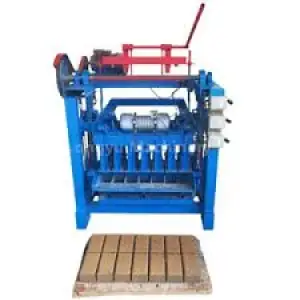











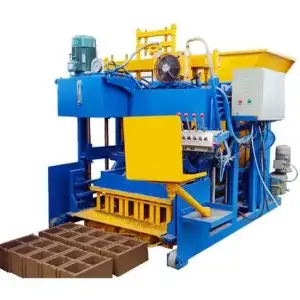




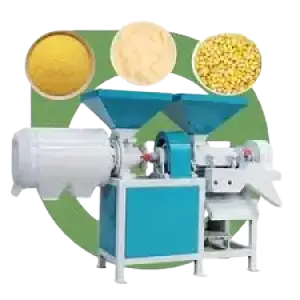
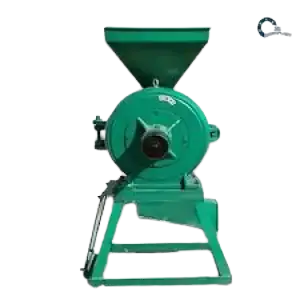









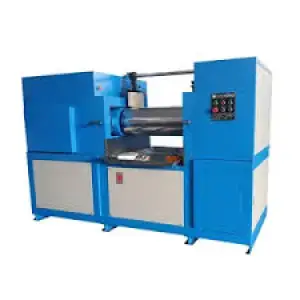





















































































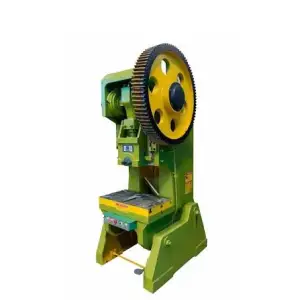

























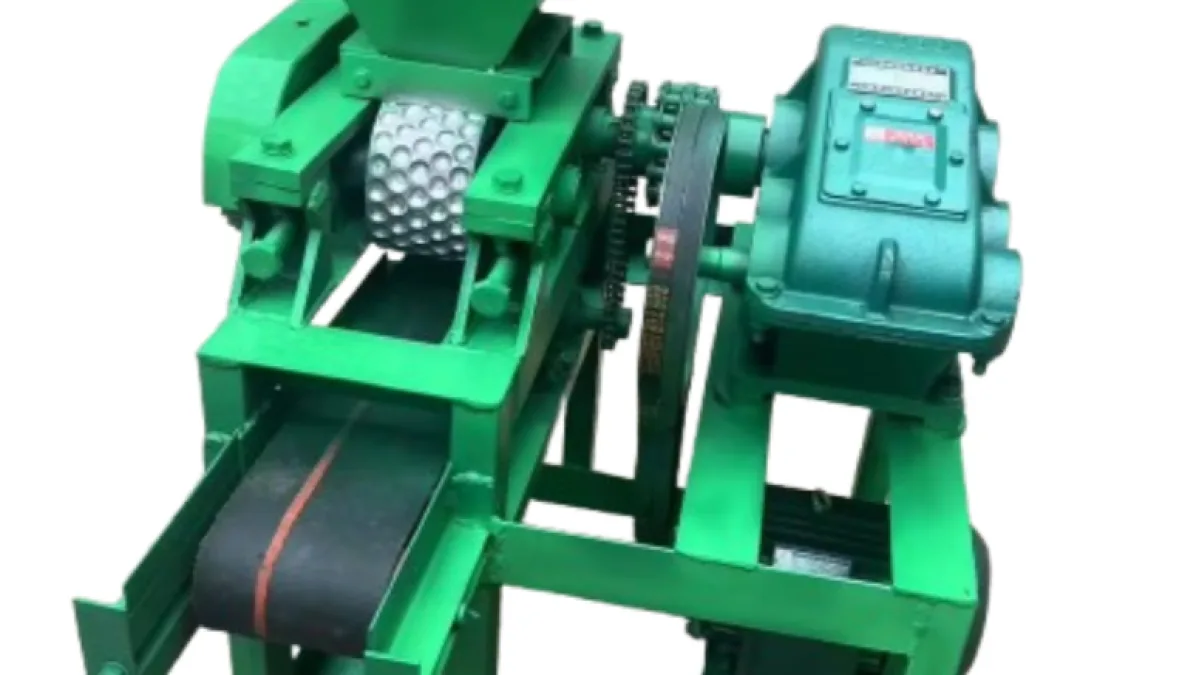
The Afrimart HG300 Coal Ball Briquetting Press Machine is designed to compress prepared coal or charcoal powder into consistent briquettes. Positioned after crushing, screening and mixing, the roller-press machine can support fuel-processing and industrial material-recovery projects where loose powder must be converted into denser, easier-to-handle products.
At a glance
- Product
- Coal Ball Briquetting Press Machine
- Model
- HG300
- Principal function
- Compresses prepared powder into shaped briquettes
- Primary materials
- Coal or charcoal powder, subject to formulation testing
- Forming method
- Mechanical briquetting
- Production position
- After crushing and mixing
- Typical downstream stages
- Drying, cooling, screening and packing
- Target users
- Briquette manufacturers, coal processors and industrial material-recovery operations
What is the HG300 Coal Ball Briquetting Press Machine?
The HG300 is a briquetting machine intended to transform loose powdered material into compact pieces of a consistent shape and size.
Loose coal or charcoal powder can be difficult to transport, package and use. It may generate dust, separate during handling or pass through equipment intended for larger fuel pieces.
A briquetting press addresses this problem by applying mechanical pressure to a prepared mixture. The material enters shaped cavities in the machine’s forming rollers and is compressed into briquettes.
Depending on the installed roller mould, finished products may be formed as:
- Balls
- Ovals
- Pillow shapes
- Rounded rectangles
- Other moulded shapes confirmed for the machine
The term “coal ball” refers to the briquette’s formed shape rather than a requirement that every output must be perfectly spherical.
The HG300 does not complete every stage of coal or charcoal production. Raw materials normally require preparation before pressing, and newly formed briquettes may need drying or cooling before packaging.
How does a coal ball briquetting press work?
A roller briquetting press uses two opposing moulded rollers to compress material.
The raw material is prepared
Coal, charcoal or another approved material is reduced to a suitable particle size. Oversized material may prevent the mould cavities from filling evenly or cause premature component wear.
The powder is screened
Screening can remove oversized particles and contaminants before mixing. The required particle-size range must be established for the HG300 and the selected briquette formulation.
Moisture and binder are added where required
Some materials cannot form durable briquettes under pressure alone. A binder and controlled quantity of water may be needed to hold the particles together.
The mixture is blended
A mixer distributes moisture and binder throughout the powder. Poor mixing can produce briquettes with inconsistent strength, density and drying behaviour.
The mixture enters the press
Prepared material is fed through the hopper towards the forming rollers. Feed rate must remain sufficiently stable to fill the mould cavities without overloading the machine.
Opposing rollers apply pressure
The rollers turn towards one another, capturing the material between matched cavities. Pressure increases as the material moves towards the narrowest point between them.
The briquettes are released
After passing through the point of maximum compression, the formed briquettes leave the roller cavities and fall from the discharge area.
Fines are separated
Loose powder and broken pieces may be screened from the finished product. Depending on the process, suitable fines can be returned to the mixer.
Briquettes are dried or cured
Wet-binder formulations generally need time or controlled drying before the briquettes are strong enough for packaging and transport.
The machine’s forming performance depends on the complete process. A suitable press cannot compensate for uncontrolled particle size, incorrect moisture or poor binder distribution.
What materials can the HG300 process?
The product is identified as a coal ball briquetting press, making prepared coal powder its principal application. Charcoal powder may also be a relevant input, but buyers should confirm compatibility through material trials.
Potential materials for briquetting equipment can include:
- Coal fines
- Coal dust
- Charcoal powder
- Carbonised biomass powder
- Coke fines
- Selected mineral powders
- Other compressible industrial fines
This list describes possible briquetting applications, not confirmed compatibility with every material.
Different powders behave differently under pressure. A machine that forms coal successfully may require a different binder, moisture level, roller pressure or mould design for charcoal or mineral fines.
Before ordering, provide Afrimart with:
- Material name
- Particle-size distribution
- Bulk density
- Moisture content
- Ash content where relevant
- Binder type
- Binder percentage
- Desired briquette shape
- Required briquette dimensions
- Target briquette strength
- Intended final use
A representative sample test is preferable to selecting the machine from the material name alone.
What input preparation does briquetting require?
Input preparation is one of the most important parts of a briquette project.
Crushing
Larger coal, charcoal or carbonised material may need to be crushed before pressing. The crusher should produce particles within the range required by the briquetting process.
Screening
A screen can separate oversized particles and contaminants. Consistent particle size generally supports more predictable mould filling.
Drying or moisture adjustment
Material that is too wet may stick to the rollers, deform after pressing or require excessive drying. Material that is too dry may fail to bind.
The correct moisture content depends on the powder and binder formulation and must be established through testing.
Binder preparation
Some materials require starch, molasses, clay or another binding agent. Binder selection affects strength, combustion characteristics, ash and production costs.
No particular binder is confirmed for the HG300. The intended formula should be assessed against the briquette’s final application.
Mixing
The powder, binder and water must be distributed evenly. A suitable mixer is therefore commonly required before the briquetting machine.
Controlled feeding
The prepared mixture should enter the press at a controlled rate. Too little material may leave cavities partly filled, while excessive feeding can increase load or cause blockages.
Where can the HG300 briquetting machine be used?
Coal-processing operations
Coal fines generated during handling, screening or processing may be assessed for conversion into shaped fuel or industrial briquettes.
Charcoal-production businesses
Charcoal powder and fragments that are too small for direct sale may be crushed, formulated and pressed into briquettes where the material and binder are suitable.
Biomass-charcoal projects
Carbonised agricultural residues, wood waste or other biomass may produce charcoal powder that can potentially be briquetted after appropriate preparation.
The HG300’s suitability for a particular carbonised biomass must be verified through testing.
Industrial material recovery
Some industrial fines may be returned to a process or sold in a more manageable form after briquetting.
Compatibility depends on the material’s chemistry, moisture, particle size and intended downstream use.
Fuel-processing enterprises
Businesses producing household, cooking or industrial fuel briquettes may use the press as the central forming machine within a broader line.
Combustion performance and indoor use should never be assumed from the machine alone. The raw material, binder, emissions and intended appliance determine safe use.
Technical specifications
The following information can be confirmed from the supplied Afrimart product reference. Exact operating specifications require the current HG300 data sheet.
| Specification | Verified value | Buyer note |
|---|---|---|
| Product name | Coal Ball Briquetting Press Machine | Roller-type powder-forming equipment |
| Model | HG300 | Use this model reference in the enquiry |
| Principal process | Briquetting | Compresses prepared powder into shaped pieces |
| Principal application | Coal-powder briquetting | Other materials require compatibility testing |
| Input form | Prepared powder mixture | Particle size, moisture and binder must be controlled |
| Output form | Moulded briquettes | Shape and dimensions depend on the roller mould |
| Production stage | Forming | Crushing, mixing and drying may require separate equipment |
| Afrimart sales format | Project-specific quotation | Confirm the complete technical and auxiliary-equipment scope |
Before ordering, obtain written confirmation of:
- Rated capacity
- Motor power
- Voltage, phase and frequency
- Roller diameter
- Roller width
- Roller speed
- Forming pressure
- Briquette shape
- Briquette dimensions
- Mould-cavity quantity
- Maximum input particle size
- Recommended input moisture
- Machine dimensions
- Net weight
- Feeder configuration
- Gearbox specification
- Included electrical controls
- Warranty coverage
Specifications may vary according to configuration and must be confirmed in Afrimart’s current written quotation.
What are the main operational benefits?
Loose powder is converted into a more manageable product
Briquetting combines small particles into larger pieces. This can make the material easier to convey, screen, pack and handle.
The result depends on whether the briquettes develop sufficient strength for the intended handling process.
Formed briquettes can have more consistent dimensions
Matched roller cavities create repeating shapes. Consistent dimensions can support more predictable packaging and feeding into compatible downstream equipment.
Powder and fines may be recovered
Where technically and commercially viable, fines that would otherwise be difficult to sell or use may become an input to briquette production.
The material must still be suitable for the intended final application.
Roller moulds determine product shape
The briquette’s shape and size can potentially be selected through the roller mould configuration.
Buyers should approve a drawing or physical sample before the mould is manufactured.
The press can form part of a modular production line
A briquetting project can be developed around separate crushing, screening, mixing, pressing, drying and packaging stages.
This allows each machine to be selected according to the material and target capacity.
Recovered fines may be recirculated
Powder separated after pressing may potentially be returned to the mixing process, subject to quality controls.
Recirculation should not allow binder, moisture or degraded material to accumulate outside the approved formulation.
What auxiliary equipment may be required?
The HG300 press is one part of a complete briquette-production process.
A project may also require:
- Raw-material crusher
- Hammer mill or pulveriser
- Vibrating screen
- Binder preparation tank
- Binder dosing equipment
- Water dosing system
- Paddle mixer
- Wheel-grinding mixer
- Storage hopper
- Controlled feeder
- Belt or screw conveyor
- Briquette screen
- Fines-return conveyor
- Drying racks
- Continuous dryer
- Cooling conveyor
- Weighing equipment
- Bagging or packing machine
- Dust-control system
- Electrical control panel
The required equipment depends on the starting material.
For example, purchased coal powder with controlled particle size may require less crushing than irregular charcoal pieces. A wet-binder formulation may require more drying capacity than a process using a low-moisture mixture.
Buyers should request a process-flow diagram showing every machine, its capacity and how material moves between stages.
How should the briquette formulation be developed?
A briquette is a combination of material preparation, pressure and formulation. Selecting the machine without developing the mixture can lead to weak or misshapen products.
The formulation trial should examine:
- Powder particle size
- Fine-to-coarse particle ratio
- Starting moisture
- Binder type
- Binder percentage
- Added water
- Mixing time
- Time between mixing and pressing
- Mould pressure
- Drying conditions
- Finished moisture
- Drop strength
- Crushing strength
- Abrasion resistance
- Combustion performance where applicable
- Ash behaviour
The preferred formulation should produce briquettes that release from the mould, retain their shape and survive the intended handling process.
Too much binder may increase cost or change the fuel’s ash and burning characteristics. Too little may produce fragile briquettes.
Material trials should be performed with representative raw material rather than a laboratory substitute that differs from the future production supply.
How should capacity be evaluated?
Rated machine capacity is only one part of overall line output.
A briquetting line may be constrained by:
- Crushing capacity
- Screening capacity
- Mixing time
- Binder preparation
- Material feeding
- Press operating rate
- Dryer capacity
- Cooling time
- Packaging speed
- Planned maintenance
- Material availability
Capacity should be assessed in both kilograms or tonnes per hour and saleable briquettes per shift.
The calculation should allow for:
- Start-up time
- Changeovers
- Blockages
- Roller cleaning
- Broken briquettes
- Fines recirculation
- Drying losses
- Operator breaks
- Power interruptions
- Maintenance
- Rejected product
The HG300 should be matched to upstream and downstream equipment. An oversized press will not increase final output if the mixer cannot prepare enough material or the dryer cannot receive the formed briquettes.
What affects briquette quality?
Particle size
Oversized particles may prevent complete cavity filling. Material consisting only of extremely fine powder may also behave differently during mixing and pressing.
Moisture
Incorrect moisture can cause weak briquettes, sticking, deformation or excessive drying requirements.
Binder distribution
Uneven binder creates sections with different strength. Proper mixing is essential.
Feed consistency
Irregular feeding can create partially formed briquettes and variations in density.
Roller alignment
The cavities on opposing rollers must align correctly. Misalignment may create malformed products or accelerated wear.
Forming pressure
The pressure must suit the material. Insufficient pressure may produce fragile briquettes, while unsuitable settings may overload components.
Roller condition
Worn cavities can change briquette shape and reduce consistency. The rollers and mould surfaces should be inspected regularly.
Drying
Fresh briquettes can be vulnerable to breakage. Drying rate and handling should suit the binder and formulation.
How should safety and dust control be planned?
Coal and charcoal powder can create significant dust during crushing, mixing, transfer and pressing.
Buyers should assess:
- Dust extraction
- Enclosed transfer points
- Ventilation
- Housekeeping
- Electrical classification where applicable
- Static control
- Fire prevention
- Hot-work restrictions
- Emergency procedures
- Personal protective equipment
- Material safety information
The press also contains:
- Rotating rollers
- Gear drives
- Nip points
- Conveyors
- Electrical equipment
- Heavy components
Safety provisions should include appropriate guards, emergency stops, electrical isolation and lockout procedures.
Operators should never reach into the hopper, roller area or discharge point while the machine is energised. Blockages must be cleared using the approved isolation procedure.
Local occupational-safety, environmental, emissions and fuel-product requirements should be reviewed before commissioning.
How should the HG300 be maintained?
Preventive maintenance should focus on the components exposed to continuous pressure, dust and abrasive material.
Typical inspection areas include:
- Forming rollers
- Roller cavities
- Bearings
- Gearbox
- Couplings
- Drive motor
- Feeder
- Hopper
- Guards
- Fasteners
- Electrical connections
- Lubrication points
- Conveyors
- Emergency stops
Roller wear is particularly important because it can affect briquette shape, density and release.
Buyers should ask for:
- Lubrication schedule
- Approved lubricant
- Gearbox oil specification
- Roller service-life guidance
- Replacement mould availability
- Bearing specifications
- Recommended wear parts
- Maintenance tools
- Electrical drawings
- Fault-finding manual
A start-up spares package can reduce downtime, particularly where replacement components must travel across borders.
What should buyers confirm before ordering?
Raw material
- Coal, charcoal or other powder
- Particle-size distribution
- Moisture content
- Bulk density
- Ash content
- Binder type
- Binder percentage
- Abrasiveness
- Material sample availability
Finished briquette
- Shape
- Length
- Width
- Thickness
- Weight
- Density
- Required strength
- Required moisture
- Final application
- Packaging format
Machine
- HG300 rated output
- Motor power
- Forming pressure
- Roller dimensions
- Mould pattern
- Feeder type
- Voltage and frequency
- Machine dimensions
- Net weight
- Control-panel scope
- Safety guarding
Complete line
- Crusher
- Screen
- Mixer
- Binder system
- Feeder
- Conveyors
- Dryer
- Cooling
- Fines recovery
- Packing equipment
- Dust control
Project requirements
- Installation location
- Available electricity
- Factory space
- Foundations
- Operator training
- Commissioning
- Spare parts
- Warranty
- Target project date
How to source the HG300 Briquetting Press through Afrimart
Afrimart can help buyers confirm whether the HG300 is suitable for their material, capacity and finished-briquette requirements.
Provide:
- Raw-material description
- Particle size
- Moisture content
- Available binder
- Required briquette shape and dimensions
- Required output per hour or shift
- Intended final application
- Project country and location
- Available electricity
- Required auxiliary equipment
- Installation and training requirements
- Target commissioning date
Where possible, provide representative material samples for briquetting tests.
Request a quotation for the HG300 Coal Ball Briquetting Press Machine through Afrimart.
Frequently asked questions
What does the HG300 briquetting machine do?
The HG300 compresses a prepared coal or charcoal powder mixture into shaped briquettes. It is a forming machine rather than a complete charcoal or coal-processing plant. Crushing, screening, mixing, drying and packaging equipment may be required around it.
Can the HG300 process charcoal powder?
Charcoal powder may be suitable for roller briquetting, but compatibility with this exact HG300 configuration must be confirmed. Buyers should provide the charcoal’s particle size, moisture and composition and conduct a forming trial with the intended binder.
Does coal powder require a binder?
Some coal formulations can form under pressure, while others require a binder to produce briquettes with sufficient handling strength. The need for binder depends on the coal, particle size, moisture, pressure and finished-product requirements. Testing is necessary.
What size briquettes does the HG300 produce?
The confirmed briquette dimensions are not available from the accessible product information. Shape and size generally depend on the installed roller mould. Buyers should specify the required dimensions and approve the mould drawing before ordering.
Is a dryer required after pressing?
A dryer may be required when water or a wet binder is added during mixing. The correct drying method depends on the briquette size, formulation, climate and required output. Buyers should test natural and mechanical drying before selecting capacity.
Can the machine form briquettes from raw biomass?
A coal-ball press normally requires prepared powder. Raw agricultural or woody biomass may first need drying, crushing and, for charcoal briquettes, carbonisation. Buyers should not feed untreated bulky biomass into the HG300 without written technical approval.
What information is required for a quotation?
Provide the material, particle size, moisture, binder, desired briquette shape, required capacity, electrical supply, project location and auxiliary-equipment needs. A representative material sample can help determine whether the proposed process is technically suitable.