








































































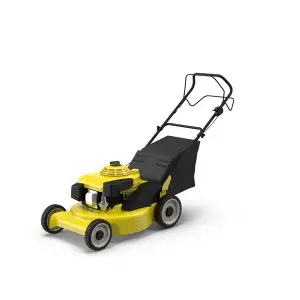




























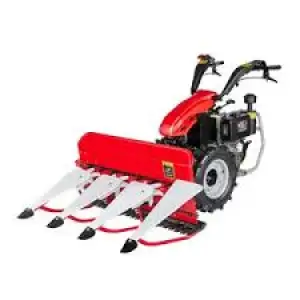

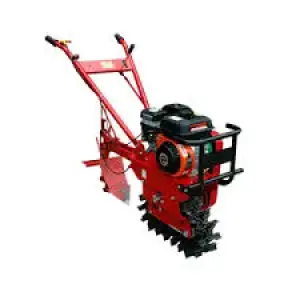
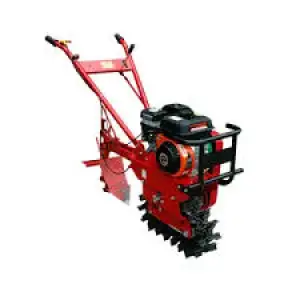


























































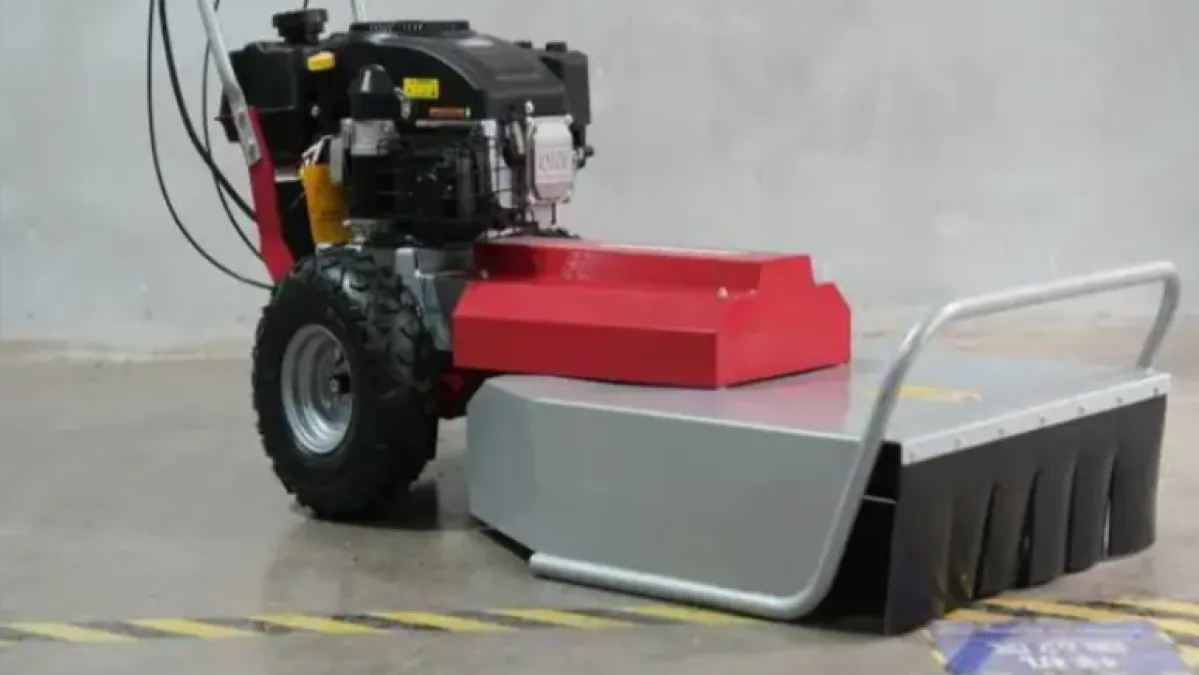
The Afrimart professional walk-behind brush cutter is a petrol-powered vegetation-management machine designed for groundskeeping crews, farms, estates and commercial landscaping operations. Its 452 cc engine, hydraulic drive and heavy-duty cutting configuration make it suitable for clearing dense grass, weeds and overgrown areas where a conventional lawn mower may be inadequate.
At a Glance
- Machine type
- Professional walk-behind brush cutter
- Model reference
- DR-BC-14
- Engine
- Loncin 452 cc petrol engine
- Rated output
- Listed as 14 hp
- Starting system
- Electric start with pull-start backup
- Drive system
- Hydraulic
- Listed cutting widths
- 20.5 inches and 26 inches
- Machine dimensions
- 1,682 × 603 × 1,023 mm
- Net weight
- 112 kg
- Gross packed weight
- 138 kg
- Certification
- Listed as TÜV and CE certified
- Best suited to
- Landscaping, groundskeeping, farms, fields, parks, estates and property maintenance
The machine is available through the Afrimart professional walk-behind hydraulic brush cutter listing.
What Is a Walk-Behind Brush Cutter?
A walk-behind brush cutter is a self-propelled vegetation-management machine designed to cut material that may be too tall, thick or uneven for a standard finishing mower.
While a lawn mower is primarily intended to produce an even finish on maintained grass, a brush cutter focuses on clearing overgrown vegetation. Its construction, cutting system and drive arrangement are designed for more demanding work.
Typical vegetation may include:
- Tall grass
- Dense weeds
- Light scrub
- Overgrown field edges
- Tough roadside vegetation
- Unmanaged property perimeters
- Seasonal growth around agricultural buildings
- Vegetation between scheduled land-maintenance cycles
The operator walks behind the machine and controls its direction, forward movement and cutting operation from the handlebar. This provides more mechanical cutting capacity than a handheld brush cutter while remaining more compact than a tractor-mounted rotary mower.
The Afrimart machine is therefore positioned between light handheld equipment and larger tractor-operated clearing machinery. It may be particularly useful where the site is too large for handheld cutting but too narrow, irregular or restricted for a tractor.
How the Afrimart Hydraulic Brush Cutter Works
The 452 cc petrol engine provides power for the cutting mechanism and the machine’s drive system. The operator starts the engine, engages the appropriate controls and guides the cutter into the vegetation at a speed that matches the material and terrain.
The product is described as having a hydraulic drive. A hydraulic transmission can help the operator manage the movement of a relatively heavy walk-behind machine without relying entirely on manual pushing.
The product page also refers to a 360-degree shift output system intended to improve manoeuvrability or cutting-head positioning. Buyers should request a demonstration or control diagram showing exactly how this function operates. The wording does not by itself establish whether the feature rotates the discharge position, changes the cutting orientation or controls another part of the hydraulic system.
A normal clearing sequence may include:
- Inspecting the area for rocks, wire, glass and hidden debris.
- Checking the engine oil, fuel and hydraulic-fluid levels.
- Inspecting the blade, guards, wheels and fasteners.
- Confirming that all controls are in a safe starting position.
- Starting the engine in an open, well-ventilated area.
- Selecting a low operating speed for the first pass.
- Engaging the cutting mechanism.
- Moving gradually into the vegetation.
- Reducing speed when cutting thicker growth.
- Disengaging the cutter before crossing gravel or paved surfaces.
- Shutting down the machine before clearing obstructions.
- Cleaning and inspecting it after operation.
The machine should not be forced rapidly into vegetation simply because it has a large engine. Controlled travel helps maintain cutting performance, protects the drive system and reduces the risk of striking concealed objects.
Engine and Starting System
The Afrimart listing identifies a Loncin 452 cc petrol engine and refers to approximately 14 hp of output. An optional Rato engine is also mentioned, so the final engine brand and model should be recorded on the quotation.
The standard configuration is described as having both:
- Electric start
- Pull-start backup
Electric starting can reduce operator effort, particularly when the machine is used repeatedly during a working day. However, it also introduces a battery and electrical starting system that must be inspected and maintained.
The pull-start system provides an alternative if the battery is discharged or the electric-start circuit cannot be used. It should still be maintained even if operators normally rely on the key or electric starter.
Before purchasing, confirm:
- Final engine manufacturer
- Exact engine model
- Continuous and maximum power ratings
- Recommended petrol grade
- Engine-oil grade and capacity
- Fuel-tank capacity
- Expected fuel consumption
- Battery type and capacity
- Air-filter part number
- Spark-plug specification
- Local availability of engine-service parts
Engine displacement should not be used as the only measure of field performance. Cutting efficiency also depends on the blade system, drive ratios, traction, machine balance, vegetation density and operator travel speed.
Cutting Width and Vegetation Capacity
The Afrimart listing refers to 20.5-inch and 26-inch cutting widths. However, the product FAQ specifically describes the 20.5-inch version as approximately 520.7 mm wide.
Buyers should confirm whether:
- The machine includes interchangeable cutting decks.
- The widths represent two separate model options.
- The quoted price covers only one cutting width.
- Different blade assemblies are needed for each width.
- The machine dimensions change with the wider configuration.
A wider cutter can cover more ground during each pass, but cutting width should not be evaluated in isolation.
A narrower machine may be better for:
- Confined pathways
- Orchard rows
- Areas between structures
- Restricted entrances
- Uneven ground
- Work around landscaping features
A wider machine may improve productivity on:
- Open fields
- Large estates
- Parks
- Road verges
- Broad property perimeters
- Regular commercial clearing contracts
Vegetation capacity must also be confirmed. The product is described for dense grass, weeds and overgrown vegetation, but the listing does not provide a verified maximum stem or sapling diameter.
Do not assume the word “brush” means the machine can safely cut mature saplings, wire-like vines or woody stems of any diameter. Request the manufacturer’s maximum cutting-capacity specification and test the machine on vegetation representative of the intended job.
Technical Specifications
| Specification | Available information |
|---|---|
| Product category | Professional walk-behind brush cutter |
| Model reference | DR-BC-14 |
| Engine brand | Loncin |
| Optional engine | Rato option mentioned |
| Engine displacement | 452 cc |
| Listed engine output | 14 hp |
| Fuel type | Petrol |
| Starting system | Electric start and pull start |
| Drive configuration | Hydraulic drive |
| Cutting-width options | 20.5 inches and 26 inches |
| Confirmed metric width for 20.5-inch option | Approximately 520.7 mm |
| Machine dimensions | 1,682 × 603 × 1,023 mm |
| Net weight | 112 kg |
| Packed gross weight | 138 kg |
| Crate dimensions | 1,420 × 670 × 795 mm |
| Emergency control | Urgent-stop lever listed |
| Certification | Listed as TÜV and CE certified |
| Inspection documentation | Video outgoing inspection and machinery test report listed |
| Maximum vegetation diameter | Confirm before ordering |
| Cutting-height range | Confirm before ordering |
| Forward and reverse speeds | Confirm before ordering |
| Fuel-tank capacity | Confirm before ordering |
| Hydraulic-fluid capacity | Confirm before ordering |
| Blade type and quantity | Confirm before ordering |
| Wheel and tyre specification | Confirm before ordering |
| Maximum operating slope | Confirm before ordering |
| Noise and vibration data | Confirm before ordering |
| Warranty | Confirm applicable terms in writing |
The certification references should be supported by documents identifying the exact model supplied. A generic mark, photograph or certificate for a related machine should not be treated as confirmation for the ordered configuration.
Suitable Applications
Commercial Landscaping
Landscaping contractors can use the cutter for initial clearing before more detailed mowing, trimming or planting begins. It may reduce the amount of time employees spend using handheld equipment on heavily overgrown sites.
Groundskeeping Crews
Municipal, institutional and private groundskeeping teams may use it to maintain parks, undeveloped areas, property boundaries and less frequently cut sections of large sites.
Agricultural Properties
The machine can help control vegetation around farm buildings, fences, storage areas, access routes and sections where a tractor-mounted cutter cannot easily operate.
It should not be used where vegetation hides fencing wire, irrigation equipment or other objects that could become entangled in the cutting assembly.
Estates and Large Properties
Schools, resorts, lodges, residential estates, industrial facilities and warehouses may need to control growth around unused land, drainage zones and boundaries. A walk-behind unit can provide more cutting capability than a household mower while remaining easier to transport than a tractor.
Field and Perimeter Clearing
The brush cutter may be suitable for reclaiming sections of neglected land before routine maintenance begins. Extremely dense or woody land may still require heavier mulching, forestry or earthmoving equipment.
Solar and Infrastructure Sites
Walk-behind equipment can be considered for controlling vegetation around selected solar installations, pipelines, utility facilities and fenced infrastructure. Operators must follow site-specific restrictions and maintain safe clearance from cables, supports and sensitive equipment.
Benefits for Professional Groundskeeping
More Capacity Than Handheld Cutting
A powered walk-behind machine can reduce the amount of physical trimming required when clearing large overgrown areas. The cutter carries its own cutting assembly and is designed to move through vegetation under engine power.
Hydraulic Assistance
The hydraulic drive can help operators control a 112 kg machine on demanding ground. The exact forward, reverse and steering controls should be assessed during a demonstration.
Flexible Cutting Widths
The listed 20.5-inch and 26-inch configurations give buyers the opportunity to select a width for confined or open-area work. The final supplied width must be stated on the quotation.
Electric Starting
Electric start can improve convenience for crews that stop and restart machinery frequently. The pull-start backup provides an alternative starting method.
Compact Alternative to Tractor Equipment
At 1,682 mm long and 603 mm wide in the listed configuration, the cutter may access areas that cannot accommodate agricultural tractors or larger ride-on machines. Confirm whether the width changes with the 26-inch cutting option.
Transportable Between Work Sites
The machine can potentially be moved on a suitable trailer or commercial vehicle. Its 112 kg net weight means safe ramps, restraints and loading procedures will be required.
Emergency Stop Control
The urgent-stop lever provides a way to stop the engine or hydraulic operation during an emergency. Buyers should confirm what functions it stops and whether the blade also disengages automatically when the operator releases the normal operating control.
Terrain, Access and Productivity Planning
Before selecting this cutter, inspect the type of terrain on which it will operate.
Important site factors include:
- Slope angle
- Surface moisture
- Holes and drainage channels
- Loose rocks
- Sand or soft soil
- Tree roots
- Narrow gates
- Curbs and steps
- Maximum transport distance
- Vegetation type and density
The product listing does not provide a verified maximum safe slope. Do not establish a slope limit through guesswork. Hydraulic drive may assist traction and control, but it does not remove the risk of sliding, overturning or losing control.
Productivity should be estimated from a field trial rather than cutting width alone. A 26-inch cutter will not necessarily clear a site faster if the vegetation repeatedly overloads the cutting deck or if obstacles require frequent manoeuvring.
For a realistic estimate, measure:
- Area cleared per hour
- Fuel used per hour
- Number of operators required
- Time spent removing debris
- Blade inspection and replacement frequency
- Transport and setup time
- Downtime for cleaning
- Performance on slopes and wet ground
This information helps businesses calculate labour savings and determine whether the machine suits their commercial contracts.
Safety Requirements
Rotating brush-cutting equipment can throw rocks, wire and other debris at high speed. The site should be cleared and bystanders kept well away from the operating area.
The NIOSH powered-lawnmower inspection checklist highlights essential principles for walk-behind rotary equipment, including guarded drives, a shutoff device, identified controls, blade enclosures and disengagement controls. The exact legal requirements applicable to the Afrimart machine will depend on where and how it is used.
Recommended precautions include:
- Read the complete operating manual before use.
- Train and authorise each operator.
- Inspect the site before starting.
- Remove rocks, bottles, wire and loose metal.
- Keep people and animals outside the hazard area.
- Never operate without the blade guard or discharge protection.
- Wear eye and face protection.
- Use hearing protection.
- Wear long trousers, gloves and safety footwear.
- Avoid loose clothing that could catch on controls.
- Never place hands or feet beneath the cutting deck.
- Stop the engine before clearing tangled material.
- Allow blades to stop completely before approaching them.
- Do not refuel a hot or running engine.
- Avoid indoor operation because petrol engines produce carbon monoxide.
- Use additional caution near roads, vehicles and windows.
- Do not use the machine on an unapproved slope.
Ohio State University Extension also advises operators to remove litter before mowing, maintain a safe distance from bystanders and inspect blades, guards and loose components regularly when using rotary brush-cutting equipment.
Maintenance and Operating Costs
Professional vegetation equipment requires planned maintenance. Neglecting the engine, hydraulics or cutting assembly can reduce performance and create serious safety risks.
Before Every Shift
Check:
- Engine-oil level
- Fuel level and fuel leaks
- Hydraulic-fluid level and visible leaks
- Blade condition
- Blade fasteners
- Guards and shields
- Emergency-stop control
- Drive controls
- Tyres and wheels
- Handlebar attachment
- Air-filter condition
Routine Servicing
Maintenance may include:
- Changing engine oil
- Cleaning or replacing the air filter
- Inspecting the spark plug
- Servicing the fuel system
- Replacing hydraulic fluid and filters
- Inspecting hoses and fittings
- Sharpening or replacing blades
- Checking belts and bearings
- Tightening fasteners
- Lubricating specified points
- Maintaining the electric-start battery
Use the engine and machine manuals to set service intervals. Dusty operating conditions may require more frequent air-filter maintenance than the standard schedule.
Parts to Price Before Purchasing
Ask for the costs and availability of:
- Replacement blades
- Blade bolts and hardware
- Drive belts
- Hydraulic hoses
- Hydraulic filters
- Air filters
- Oil filters, if fitted
- Spark plugs
- Control cables
- Wheels and tyres
- Starter battery
- Electric-start components
- Bearings and seals
A low equipment purchase cost can be offset by long downtime if common service parts are difficult to obtain.
Buyer Checklist
Performance
- Is the engine definitely 452 cc and 14 hp?
- Will the supplied machine have a Loncin or Rato engine?
- What is the maximum stem or sapling diameter?
- What vegetation types are approved?
- What is the adjustable cutting-height range?
- What is the practical clearing rate per hour?
- Can the machine operate in wet vegetation?
Cutting System
- Is the cutting width 20.5 or 26 inches?
- Are the widths separate models or interchangeable assemblies?
- What blade type is fitted?
- How many blades are used?
- Are replacement blades included?
- Can blades be sharpened locally?
- How quickly does the blade stop after disengagement?
Hydraulic Drive
- What functions are hydraulically powered?
- Does the machine have forward and reverse?
- How many travel speeds are available?
- What does the 360-degree shift system control?
- What hydraulic-fluid grade is required?
- Are replacement hydraulic components available?
Safety
- Is an operator-presence control fitted?
- Does releasing the control stop the blade and drive?
- What does the urgent-stop lever shut down?
- Are all belts, chains and rotating components guarded?
- What is the maximum approved operating slope?
- Are noise and vibration figures available?
- Is a complete English operating manual supplied?
Delivery and Support
- What is the exact machine model?
- What warranty applies to the engine and complete machine?
- Are commissioning and operator training available?
- Which spare parts are stocked?
- Is a machinery test report included?
- Can a pre-dispatch operating video be supplied?
- What are the assembled and packed transport dimensions?
- What must the customer assemble after delivery?
Request the Afrimart Walk-Behind Brush Cutter
The Afrimart professional hydraulic walk-behind brush cutter may be a strong option for landscaping companies, groundskeeping crews, farms and large-property operators that regularly manage dense grass and overgrown vegetation.
Its 452 cc engine, electric starting system and hydraulic drive distinguish it from lightweight household mowing equipment. However, buyers should confirm the cutting-width configuration, blade design, maximum vegetation capacity, slope limit, hydraulic controls and safety systems before ordering.
View the Afrimart walk-behind brush cutter product page and request a quotation based on the vegetation, terrain and area that must be maintained.
Frequently Asked Questions
What is this walk-behind brush cutter designed to cut?
It is designed for dense grass, weeds and overgrown vegetation. The maximum woody-stem or sapling diameter is not specified and should be confirmed before purchase.
What engine does the machine use?
The listing identifies a 452 cc Loncin petrol engine with an output described as 14 hp. A Rato engine option is also mentioned, so the final engine must be recorded on the quotation.
Does it have electric start?
Yes. The product information lists electric start and a pull-start backup.
Is the machine self-propelled?
It is described as having a hydraulic drive system. Buyers should confirm its forward and reverse functions, number of speeds and steering arrangement.
What is the cutting width?
The listing refers to 20.5-inch and 26-inch widths. Confirm whether these are interchangeable decks or separate configurations.
Is it suitable for a maintained lawn?
It is primarily intended for rougher vegetation-clearing work. A finishing mower may produce a more even result on frequently maintained lawns.
Can it be used on slopes?
Only within the manufacturer’s approved slope limit. That figure is not published in the available specifications and must be confirmed.
What does the 360-degree shift system do?
The listing describes it as supporting versatile cutting angles or positions. A control diagram or video demonstration should be requested to establish its precise function.
How heavy is the cutter?
Its listed net weight is 112 kg. The gross packed weight is 138 kg.
What PPE should the operator wear?
Recommended equipment includes eye or face protection, hearing protection, gloves, long trousers and safety footwear. Site conditions may require additional protection.
Can one person load it into a vehicle?
Manual loading by one person would be unsafe at 112 kg. Use rated ramps, a winch, a lifting device or another approved loading method, and secure the machine properly during transport.
What information should be sent with a quotation request?
Provide the vegetation type, approximate stem thickness, total area, terrain, maximum slope, access width, required cutting width and expected operating hours per day.