



















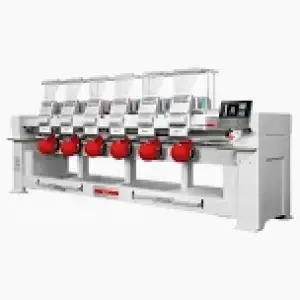





















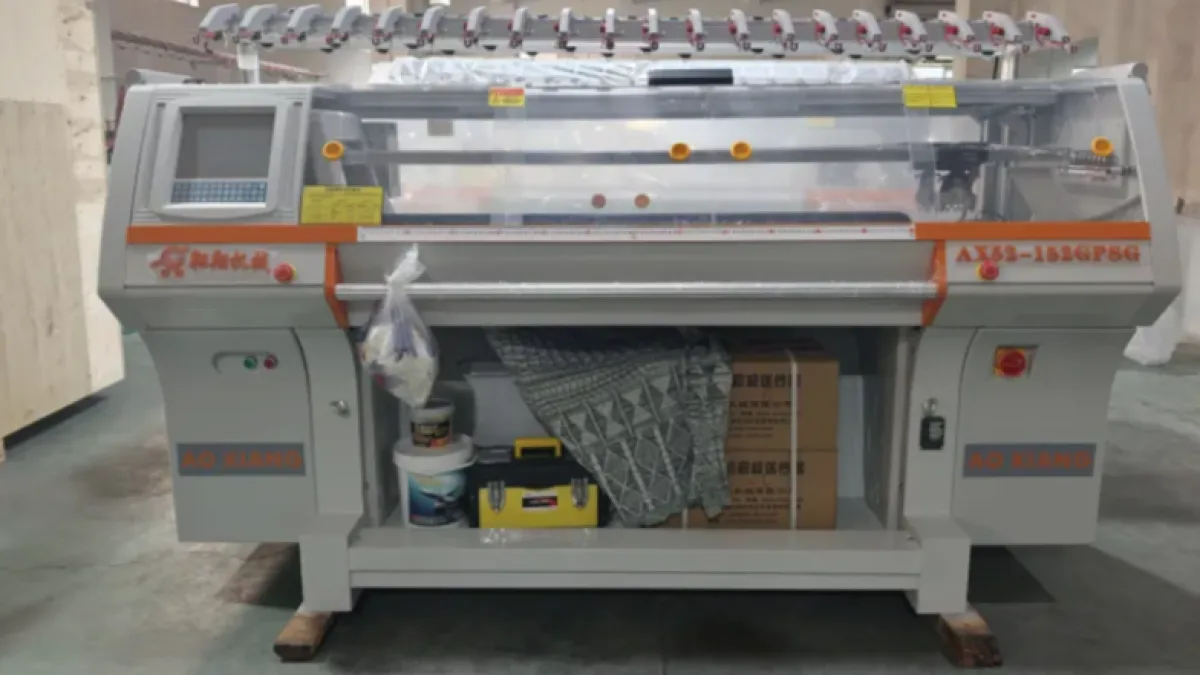
The Afrimart AS522S double-system flat knitting machine is a computer-controlled industrial machine intended for producing sweaters, scarves, hats, schoolwear, knitted panels and related apparel. Its double-system carriage is designed to complete more knitting actions per carriage movement than a basic single-system machine, supporting productive, repeatable garment manufacturing.
At a Glance
- Machine model
- AS522S
- Machine category
- Computerised flat knitting machine
- Knitting configuration
- Single carriage with double system
- Typical working width
- 52 inches, subject to final configuration
- Available gauges
- Multiple gauge options
- Maximum listed carriage speed
- Up to 1.6 m/s on comparable AS52S-2 configurations
- Knitting capabilities
- Knit, tuck, miss, transfer, jacquard, intarsia, pointelle and shaping
- Electrical supply
- Commonly configured for 220 V or 380 V
- Typical products
- Sweaters, cardigans, scarves, hats, school jerseys, cuffs and knitted panels
- Best suited to
- Garment factories, knitwear businesses, fashion brands and textile-production facilities
View the Afrimart AS522S double-system flat knitting machine and request a configuration matched to the intended garments and yarns.
What Is a Double-System Flat Knitting Machine?
A flat knitting machine forms fabric across one or two flat needle beds. Unlike a circular knitting machine, which normally produces continuous tubular fabric, a computerised flat knitting machine can create shaped panels and specialised knitted structures.
The machine can be programmed to select needles, control stitch density, move yarn carriers and transfer stitches between needle beds. These functions allow a business to produce garment components with necklines, armholes, ribs, patterns and shaped edges.
“Double system” describes the knitting systems fitted to the carriage. A double-system carriage can generally perform two knitting operations during a pass, depending on the programmed design. This can improve productivity compared with a similar single-system machine.
However, double system does not mean double carriage. Buyers should distinguish between:
- Single carriage with one knitting system
- Single carriage with two knitting systems
- Single carriage with three systems
- Double carriage with separate systems on each carriage
The AS522S is presented as a double-system machine. The final quotation should specify its carriage arrangement clearly.
How the AS522S Knitting Machine Works
The production process begins with a digital knitting programme. A designer or technician prepares the pattern according to the selected gauge, yarn, dimensions and required knitted structure.
A typical workflow includes:
- Developing the garment or panel measurements.
- Selecting the appropriate machine gauge.
- Preparing the knitting programme.
- Loading the programme through the machine’s supported interface.
- Installing and threading the required yarns.
- Setting stitch density and yarn tension.
- Testing the design with a sample piece.
- Adjusting dimensions, tension and carriage speed.
- Running the approved production programme.
- Inspecting knitted pieces for faults.
- Linking, sewing or assembling the garment.
- Washing, steaming, pressing and finishing the product.
During knitting, the carriage travels across the needle beds. The control system selects individual needles and instructs them to knit, tuck, miss or transfer stitches according to the programme.
Yarn carriers present the required yarn to the selected needles. The take-down mechanism applies controlled tension to the knitted fabric as it forms below the needle bed.
Sensors monitor conditions such as yarn breakage, knots, needle problems, fabric accumulation and programming errors. When a fault is detected, the machine can stop and alert the operator.
What Can the AS522S Produce?
The machine’s actual product range depends on the ordered gauge, working width, yarns, programming software and operator skills.
Potential products include:
- Sweaters
- Cardigans
- School jerseys
- Scarves
- Knitted hats
- Beanies
- Baby clothing
- Knitted trousers
- Shawls
- Blanket panels
- Gloves
- Cuffs
- Waistbands
- Pockets
- Polo-shirt collars
- Ribbed garment components
- Decorative jacquard panels
- Fashion-knitwear components
A flat knitting machine normally produces the knitted components rather than a completely packaged garment. Businesses may still require linking, sewing, overlocking, washing, steaming, pressing, inspection and packaging equipment.
Buyers should map the complete production process before investing. A high-output knitting machine can create a bottleneck if the factory does not have enough finishing capacity.
Understanding Gauge Selection
Gauge is one of the most important specifications when purchasing a flat knitting machine. It describes needle density and influences the yarn thickness, fabric appearance and type of garment that can be produced.
In general:
- Lower gauges use thicker yarns and create heavier knitted fabric.
- Medium gauges are used for many mainstream sweaters and schoolwear products.
- Higher gauges work with finer yarns and can produce lighter, more refined fabric.
Commonly documented options for this machine class include:
- 1.5G
- 2G
- 3G
- 3.5G
- 5G
- 7G
- 8G
- 9G
- 10G
- 12G
- 14G
- 16G
- Multi-gauge configurations
These options should not be interpreted as meaning one machine automatically covers every listed gauge. In most cases, the gauge is selected when the machine is ordered.
Lower-Gauge Applications
A 3G or 3.5G machine may be considered for chunky sweaters, heavy scarves, blankets and thicker yarns.
Medium-Gauge Applications
A 5G, 7G or 8G machine may suit school jerseys, general sweaters, cardigans, hats and many commercial knitwear products.
Higher-Gauge Applications
A 12G, 14G or 16G machine may be used for finer garments and lighter yarns. Fine-gauge production usually requires more controlled yarn preparation, suitable needles and careful tension management.
Before selecting a gauge, provide Afrimart with physical yarn samples and examples of the intended garments. The machine should be configured around the actual product plan rather than a broad future possibility.
Knitting Functions and Pattern Capabilities
A computerised double-system machine can support several knitting functions, depending on its software and mechanical configuration.
Knit
This is the normal formation of a knitted stitch. The selected needle receives yarn and forms a new loop through the previous loop.
Tuck
A tuck stitch holds an existing loop while receiving an additional yarn. Tuck structures can be used to create texture, volume and specialised designs.
Miss
The selected needle does not form a stitch during that course. Miss stitches can be used in shaping, pattern creation and yarn movement.
Stitch Transfer
Transfer moves a stitch between the front and rear needle beds or between selected needle positions. It is important for ribs, cables, shaping and other structures.
Jacquard
Computerised needle selection allows the machine to create patterns using multiple colours or structures. The number of colours that can be used effectively depends on the yarn-feeder arrangement and programme.
Intarsia
Intarsia creates blocks or areas of colour without carrying every yarn across the full width of the fabric. It requires accurate yarn-carrier control and suitable programming.
Pointelle
Pointelle uses transferred stitches to create decorative openings in the knitted fabric.
Shaping
The machine may increase, decrease or transfer stitches to create necklines, armholes and shaped garment components. This can reduce cutting waste compared with producing rectangular fabric and cutting the required shape afterwards.
Double-System Production Benefits
Increased Knitting Efficiency
A double-system carriage can perform additional knitting operations during a carriage pass. Depending on the pattern, this can reduce the number of carriage movements required to complete a piece.
The actual improvement will vary. Complicated jacquard, transfers, shaping and yarn changes may prevent the machine from operating at its maximum linear speed.
Flexible Product Development
Computer control allows manufacturers to change designs without mechanically reconfiguring the entire machine. Once tested and stored, successful programmes can be reused for repeat orders.
Repeatable Stitch Control
Motor-controlled stitch settings can help maintain consistency between garments when yarn condition, tension and machine setup remain stable.
Reduced Cutting Waste
Shaped knitting can produce garment panels closer to their final dimensions. This may reduce offcuts compared with cutting panels from large sheets of knitted fabric.
Multi-Colour Capability
Multiple yarn feeders allow the machine to work with different yarns or colours during a programme. Buyers should confirm how many yarn carriers are supplied with the selected configuration.
Automated Fault Detection
Computerised machines can monitor several production conditions and stop when a fault occurs. Early stoppage may limit the amount of defective fabric produced after a yarn break or needle problem.
Production Data Visibility
An industrial display can show operating parameters such as speed, stitch settings, piece count, roller operation and yarn-feeder information. Available monitoring and reporting functions should be demonstrated before purchase.
Technical Specifications
Some AS522S details can vary by gauge, working width, control system and ordered options. The final signed quotation should supersede general machine-family information.
| Specification | Available or typical AS522S information |
|---|---|
| Product model | AS522S |
| Machine type | Automatic computerised flat knitting machine |
| Knitting style | Flat knitting |
| Carriage configuration | Single carriage with double system |
| Standard working width | Commonly 52 inches |
| Other working widths | Confirm available options before ordering |
| Gauge options | Multiple low-, medium- and high-gauge configurations |
| Maximum listed carriage speed | Up to 1.6 m/s on comparable configurations |
| Knitting functions | Knit, tuck, miss, transfer, jacquard, intarsia, pointelle and shaping |
| Needle selection | Computer-controlled individual needle selection |
| Stitch-density control | Motor-controlled |
| Racking | Motor-controlled |
| Take-down system | Computer-controlled roller system |
| Yarn carriers | Multiple carriers; exact number must be confirmed |
| User interface | Industrial display with multilingual control |
| Programme transfer | Confirm USB, network and supported file formats |
| Drive system | AC servo drive commonly specified |
| Electrical supply | Common options include 220 V or 380 V |
| Frequency | Commonly 50/60 Hz; confirm ordered version |
| Rated power | Confirm the exact Afrimart configuration |
| Safety enclosure | Confirm full guarding and interlocks |
| Emergency stop | Confirm number and location |
| Machine dimensions | Confirm for selected width and gauge |
| Net weight | Confirm on the final configuration |
| Compressed-air requirement | Confirm before installation |
| Automatic lubrication | Confirm whether included |
| Design software | Confirm name, licence and computer requirements |
| Warranty | Confirm in writing |
| Installation and training | Confirm scope and location |
Production figures should be requested for a representative garment. Maximum carriage speed is not the same as completed garments per hour.
Yarn Compatibility and Preparation
The machine class may be configured to work with materials such as:
- Wool
- Cotton
- Acrylic
- Cashmere
- Polyester
- Viscose
- Synthetic fibres
- Silk blends
- Wool blends
- Cotton blends
Compatibility depends on yarn count, twist, strength, elasticity, surface friction and the selected machine gauge. A yarn that can pass through the feeder is not automatically suitable for stable production.
Poorly prepared yarn may cause:
- Repeated yarn breaks
- Uneven stitch formation
- Knots in visible areas
- Variations in garment dimensions
- Needle damage
- Excess lint
- Production stoppages
- Inconsistent colour appearance
A yarn-winding or rewinding machine may be needed to prepare packages with reliable tension. Other supporting equipment can include waxers, yarn-storage devices, air splicers and humidity-control systems.
The buyer should arrange a knitting test with the intended yarn before approving the configuration. Samples should be washed and finished because many yarns shrink or relax after leaving the machine.
Factory and Utility Requirements
The AS522S should be installed on a stable, level floor with enough room for operation, servicing and material handling.
The installation plan should provide:
- Correct electrical voltage and phase
- Proper earthing
- Suitable circuit protection
- Stable power quality
- Surge or voltage protection where required
- Adequate lighting
- Clean working conditions
- Temperature and humidity management
- Space for yarn storage
- Safe access around the machine
- Computer access for programme development
- Suitable ventilation
- Fire-safety equipment
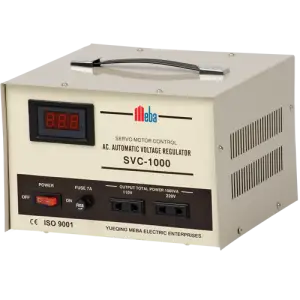
Voltage fluctuations or unplanned power failures can interrupt production and may damage sensitive control components. Buyers should discuss stabilisers, surge protection or an appropriate backup-power strategy with a qualified electrician and the machine technician.
If compressed air is required, confirm:
- Required pressure
- Air consumption
- Compressor capacity
- Air quality
- Filtration requirements
- Hose and connector sizes
Do not order a compressor solely from a generic flat-knitting specification. Obtain the exact utility schedule for the selected machine.
Staffing and Skills Requirements
Computerised knitting is not a completely operator-free process. Businesses need people who understand yarn behaviour, machine setup, fault diagnosis and garment construction.
A practical staffing structure may include:
- Knitting programmer or designer
- Machine operator
- Knitting technician
- Quality-control inspector
- Linking or sewing operators
- Finishing and pressing staff
- Production supervisor
- Maintenance technician
Training should cover:
- Machine starting and shutdown
- Yarn threading
- Programme loading
- Stitch-density adjustment
- Tension control
- Sample development
- Fault-code interpretation
- Needle replacement
- Routine cleaning
- Lubrication
- Safe maintenance
- Quality inspection
Programming capability is particularly important. Buying an advanced knitting machine without building design and programme-development skills can leave the business dependent on a limited library of existing patterns.
Quality Control for Knitted Products
Quality should be checked during sampling, knitting and finishing.
Inspect for:
- Dropped stitches
- Broken yarn
- Holes
- Needle lines
- Incorrect colour placement
- Uneven tension
- Oil marks
- Incorrect panel dimensions
- Pattern misalignment
- Loose or tight edges
- Inconsistent stitch density
- Excessive shrinkage
- Shade differences between yarn batches
A recommended development process is:
- Produce a trial panel.
- Measure it before washing.
- Wash or finish it using the intended production process.
- Allow it to relax.
- Measure it again.
- Calculate shrinkage or growth.
- Adjust the programme.
- Produce a complete sample garment.
- Approve the sample before bulk production.
Machine settings alone cannot guarantee finished-garment dimensions. Yarn behaviour, washing, steam, linking and pressing all affect the final product.
Safety and Maintenance
Computerised flat knitting machines contain rapidly moving carriages, needle beds, yarn carriers, rollers, electrical drives and automatic controls.
The STOLL safe-operation guidance for flat knitting machines reinforces the need for trained operators, functioning protective devices and controlled access to moving machine areas. The precise instructions supplied with the Afrimart AS522S must take priority for the purchased configuration.
Important safety precautions include:
- Keep all guards and covers closed during production.
- Test emergency-stop controls regularly.
- Never bypass door or cover interlocks.
- Keep hands away from the moving carriage.
- Stop and isolate the machine before replacing needles.
- Do not reach into the take-down rollers while they are operating.
- Use the slow maintenance mode only as instructed.
- Keep loose clothing and hair away from moving parts.
- Keep the floor clear of yarn and packaging.
- Isolate electrical power before internal maintenance.
- Allow only trained technicians to access control cabinets.
- Follow the manufacturer’s lubrication instructions.
- Do not use compressed air in a way that drives lint into electronics.
Routine maintenance may include:
- Cleaning the needle beds
- Removing lint and yarn fragments
- Checking needles and selectors
- Inspecting yarn carriers
- Cleaning sensors
- Checking the take-down rollers
- Testing stop motions
- Inspecting drive belts
- Checking lubrication
- Backing up programmes
- Inspecting electrical connections
- Monitoring servo-drive alarms
An automatic lubrication system, where fitted, still requires inspection and correct oil. It does not eliminate all manual maintenance.
Buyer Checklist
Product and Gauge
- Which exact AS522S version is being quoted?
- What gauge is required for the intended yarn?
- Is it a fixed-gauge or multi-gauge machine?
- What is the usable knitting width?
- Can the intended garments be produced within that width?
- Is a sample made with the buyer’s yarn available?
Knitting Configuration
- Is it a single carriage with two systems?
- What is the maximum practical knitting speed?
- How many yarn carriers are included?
- Which knitting structures are supported?
- Can it perform independent front and rear transfer?
- Does it support intarsia and shaped knitting?
- Is a comb or waste-yarn-free starting system included?
Control and Software
- What control system is installed?
- Which languages are available?
- What design software is supplied?
- Is the software licence permanent?
- Are future upgrades included?
- Which pattern file formats are supported?
- Can programmes be transferred by USB and network?
- Is remote diagnostic support available?
- What computer specifications are required?
Utilities and Installation
- Is the machine 220 V or 380 V?
- Does it require single-phase or three-phase electricity?
- What is its rated electrical load?
- Is compressed air required?
- What are the assembled dimensions and weight?
- What floor preparation is required?
- Is a voltage stabiliser recommended?
Training and Support
- Is installation included?
- How many days of operator training are provided?
- Does training include programme development?
- Is remote technical support available?
- Are English manuals included?
- What warranty covers the controls, motors and mechanical parts?
- Which critical spare parts should be purchased with the machine?
Production Planning
- How long does the target garment take to knit?
- What is the output per shift for the approved pattern?
- How much setup time is required between designs?
- What percentage of waste should be expected?
- Which linking and finishing machines are needed?
- How many operators are recommended per machine?
Request the Afrimart AS522S Flat Knitting Machine
The Afrimart AS522S double-system flat knitting machine may provide an industrial platform for businesses producing sweaters, schoolwear, scarves, hats and other shaped knitted products.
The correct investment decision depends on the gauge, yarn, garment design and required output—not simply the number of systems or maximum carriage speed. Buyers should send Afrimart their intended products, yarn specifications, sample designs and daily production targets.
View the Afrimart AS522S double-system flat knitting machine and request a complete configuration covering the machine, software, installation, training, spares and supporting equipment.
Frequently Asked Questions
What does double system mean on a flat knitting machine?
It means the carriage contains two knitting systems. Depending on the programme, the machine can perform more knitting work during each pass than a comparable single-system machine.
Is double system the same as double carriage?
No. A double-system machine may have one carriage containing two systems. Double carriage refers to two separate carriage assemblies.
What products can the AS522S make?
Depending on its configuration, it may produce sweaters, school jerseys, scarves, hats, cardigans, cuffs, pockets, blanket panels and other knitted apparel components.
Does the machine produce finished garments?
It normally produces knitted pieces or shaped panels. Linking, sewing, washing, steaming, pressing, inspection and packaging may still be required.
What gauge should a buyer select?
Gauge should be based on the yarn thickness and desired fabric. Lower gauges suit thicker yarns, while higher gauges are used for finer knitwear.
Can one machine knit every yarn thickness?
No. Even when multiple gauge options are advertised, the purchased machine is generally built or configured for a defined gauge or gauge range.
How fast is the machine?
Comparable AS52S-2 configurations list maximum carriage speeds of up to 1.6 m/s. Actual garment output depends on the pattern, transfers, shaping, yarn changes and carriage travel.
Does it support jacquard patterns?
Computerised needle selection can support jacquard production. Confirm the number of yarn carriers, available pattern functions and software supplied.
Can it knit school jerseys?
A correctly configured medium-gauge machine may be suitable for school jerseys. The yarn, gauge, sizing programme and finishing process should be tested before production.
Does it require compressed air?
This depends on the ordered configuration. Obtain a complete utility schedule before purchasing a compressor.
Is special design software required?
Yes. Computerised flat knitting requires software for developing or converting knitting programmes. Confirm the software name, licence, training and file compatibility.
How many operators are needed?
One trained operator may monitor more than one machine under stable production conditions, but sampling, threading, maintenance, programme changes and fault recovery affect staffing requirements.
What spare parts should be ordered with the machine?
Consider knitting needles, selectors, yarn carriers, sensors, belts, lubricants, fuses and other high-use components recommended for the chosen gauge and control system.
What should be supplied when requesting a quotation?
Provide garment photographs, measurements, yarn type, yarn count, required gauge, number of colours, daily output target, available electricity and the required working width.