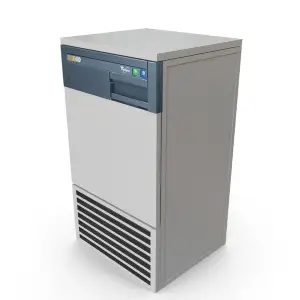
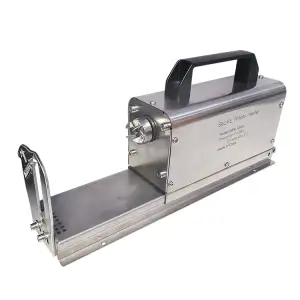



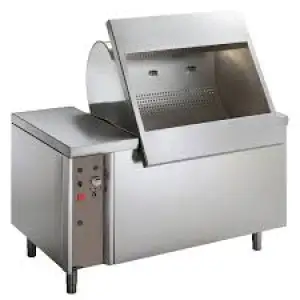



























































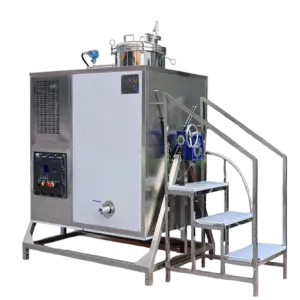



























































































































































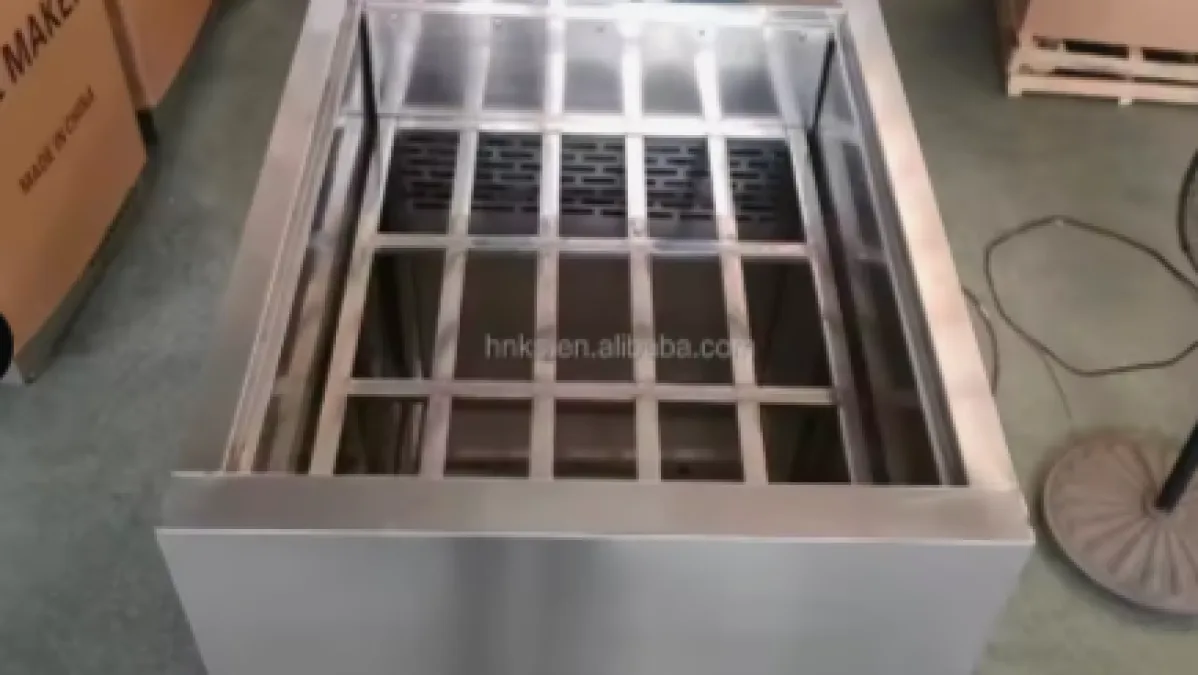
The Afrimart CYBZJ-1 one-ton ice block making machine is designed to produce up to 1,000 kg of block ice per 24 hours. With 35 moulds, 5 kg blocks, four-hour production cycles and a 6 kW refrigeration system, it can support commercial ice sales, fisheries, food distribution and cold-chain operations.
At a Glance
- Model
- CYBZJ-1
- Machine type
- Commercial block ice maker
- Nominal production capacity
- 1,000 kg per 24 hours
- Ice-block weight
- 5 kg
- Ice-block dimensions
- 150 × 72 × 600 mm
- Number of moulds
- 35
- Listed production cycle
- Four hours per batch
- Electrical supply
- 380 V, 50 Hz, three-phase
- Power consumption
- 6 kW
- Compressor
- Listed as 6P GMCC or Panasonic
- Refrigerant options
- R22 or R410
- Net weight
- 367 kg
- Typical customers
- Ice retailers, fish businesses, food distributors and cold-chain operators
View the Afrimart CYBZJ-1 one-ton ice block making machine and request a configuration suitable for the intended location and production conditions.
What Is a One-Ton Ice Block Machine?
A one-ton block ice machine is a refrigeration system designed to freeze approximately 1,000 kg of water into solid blocks during a 24-hour operating period.
The “one-ton” description refers to daily ice-production capacity, not the machine’s physical weight. The CYBZJ-1 itself has a listed net weight of 367 kg and a packed gross weight of 463 kg.
Block ice differs from cubes, flakes and tubes because it forms a relatively large, solid mass. Its lower surface-area-to-volume ratio allows it to melt more slowly than many smaller ice formats under similar conditions.
This makes block ice useful for:
- Transporting fish and produce
- Commercial ice resale
- Cold-box applications
- Beverage chilling
- Outdoor events
- Food distribution
- Temporary cooling
- Cold-chain support
- Agricultural produce handling
The machine produces 5 kg blocks. Businesses should confirm that this format matches their customers because block dimensions and weight affect handling, packaging, storage and selling price.
How the CYBZJ-1 Ice Block Machine Works
The ice-making process removes heat from water held inside moulds. The refrigeration system circulates refrigerant through an evaporator, absorbing heat from the water until it freezes.
A typical production sequence is:
- Inspect and sanitise the machine and moulds.
- Confirm that the water supply meets the required quality.
- Fill each mould to the specified level.
- Start the refrigeration cycle.
- Allow approximately four hours for the blocks to freeze.
- Activate or apply the specified ice-release method.
- Remove the frozen blocks hygienically.
- Transfer them immediately to cold storage.
- Refill the moulds.
- Begin the next batch.
The precise harvesting method should be confirmed. Some machines briefly apply heat or warm water to the mould surface, while others use another release arrangement. Excessive heating during harvesting increases melt loss and lengthens the following production cycle.
The Afrimart listing does not clearly state whether this configuration uses direct cooling or a brine tank. The final technical schedule should identify the freezing system because it affects installation, maintenance, harvesting and consumables.
Understanding the One-Ton Daily Capacity
The CYBZJ-1 is listed with:
- 35 moulds
- 5 kg per block
- Four hours per batch
One completed batch would therefore produce approximately:
35 blocks × 5 kg = 175 kg per batch
If six complete four-hour cycles were achieved in 24 hours, the theoretical total would be:
175 kg × 6 cycles = 1,050 kg
The advertised 1,000 kg daily rating is therefore a reasonable nominal capacity, allowing for harvesting, refilling and operating variation. However, real production may be lower when water or ambient temperatures are high.
Daily output can be affected by:
- Incoming water temperature
- Ambient temperature
- Ventilation
- Condenser cleanliness
- Refrigerant charge
- Voltage stability
- Mould filling time
- Ice-harvesting time
- Operator efficiency
- Scaling inside the system
- Compressor condition
- Frequency of door or cold-room opening
Buyers in hot climates should request a performance table showing expected output at the highest anticipated ambient and inlet-water temperatures.
Ice-Block Size and Customer Requirements
Each block is listed as weighing 5 kg and measuring approximately 150 × 72 × 600 mm.
Five-kilogram blocks can be easier to handle than very large commercial blocks. One person can move them without specialised lifting equipment, although repeated handling still requires safe working methods.
Before choosing this block size, investigate what local customers prefer.
Fisheries
Fishing operations may want blocks that can be transported whole or crushed before being mixed with fish. A crusher may be needed when smaller pieces are required.
Food Markets
Fresh-produce, poultry and seafood businesses may prefer manageable block sizes that can be distributed across insulated containers.
Events and Catering
Catering customers may require crushed block ice or smaller pieces. Block ice should not be represented as ready-to-use beverage ice unless it is produced from potable water under hygienic conditions and processed appropriately.
Ice Resellers
Resellers need consistent weight, clean packaging and predictable melting behaviour. A 5 kg product can be sold as a standard unit if the block reliably reaches its declared weight.
Cold-Chain Operations
Block ice can provide cooling inside insulated containers, but it does not automatically establish a validated cold chain. Temperature-sensitive products still require monitoring, suitable packaging and documented handling procedures.
Technical Specifications
| Specification | Details |
|---|---|
| Product name | One-ton ice block making machine |
| Model | CYBZJ-1 |
| Nominal production capacity | 1,000 kg per 24 hours |
| Ice type | Solid block ice |
| Block weight | 5 kg |
| Block dimensions | 150 × 72 × 600 mm |
| Number of moulds | 35 |
| Ice per batch | Approximately 175 kg |
| Listed cycle time | Four hours |
| Electrical supply | 380 V, 50 Hz, three-phase |
| Listed power consumption | 6 kW |
| Compressor | 6P GMCC or Panasonic |
| Refrigerant options | R22 or R410 |
| Net weight | 367 kg |
| Gross packed weight | 463 kg |
| Listed machine dimensions | 2,605 × 1,015 × 920 mm plus 250 mm |
| Packing dimensions | 2,760 × 1,160 × 1,240 mm |
| Cooling system | Confirm direct-cooling or brine configuration |
| Condenser type | Confirm air- or water-cooled configuration |
| Water consumption | Confirm per batch and per day |
| Water-inlet connection | Confirm before installation |
| Drain connection | Confirm before installation |
| Ice-release method | Confirm before ordering |
| Refrigerant charge | Confirm on the nameplate |
| Operating-temperature range | Confirm before ordering |
| Warranty | Confirm applicable terms in writing |
The machine dimension written as “2,605 × 1,015 × 920 + 250 mm” should be clarified. The additional 250 mm may relate to a projecting component, control section or installed clearance rather than the main body.
Suitable Business Applications
Commercial Ice Production
Entrepreneurs can produce packaged 5 kg blocks for sale to retailers, markets, hospitality businesses and the public.
A successful ice business needs more than the ice machine. It also needs clean water, reliable electricity, cold storage, hygienic packaging and an organised delivery system.
Fisheries and Seafood Handling
Block ice can help cool fish after harvesting and during transport. The block may need to be crushed or flaked before use to provide better contact with the product.
Ice used directly with food must be produced and handled hygienically. Contaminated ice can transfer microorganisms or foreign material to the fish.
Butcheries and Food Distribution
Food businesses may use block ice for selected transport or temporary cooling applications. It should complement—not replace—proper refrigeration and temperature monitoring.
Agricultural Produce
Ice can support the cooling of selected vegetables and other produce. Direct contact may not suit every crop, and excessive water exposure can damage some products.
Events and Hospitality
The machine may supply ice for outdoor events, beverage cooling and catering logistics. If ice will enter drinks, the complete water, production and packaging process must meet potable-ice requirements.
Emergency and Temporary Cooling
Block ice can support temporary cooling during power interruptions or field operations. It should not be relied upon for medicines, vaccines or other regulated products without a validated temperature-control system.
Benefits of the CYBZJ-1 Ice Machine
Commercial Daily Capacity
A nominal output of one ton per day can support a dedicated ice-selling operation or an organisation with substantial internal demand.
Manageable Five-Kilogram Blocks
Five-kilogram blocks may be easier to lift, package and distribute than traditional large industrial blocks.
Multiple Batches Per Day
The listed four-hour freezing cycle allows several production runs in a 24-hour period. This can help businesses stagger production and harvesting.
Compact Production Layout
The machine has a relatively compact listed footprint for its daily capacity. The complete installation will still need working clearance, ventilation, drainage and ice-handling space.
Moderate Listed Power
The machine’s listed consumption is 6 kW. Actual daily electricity use depends on compressor run time, ambient conditions, harvesting and auxiliary equipment.
Established Compressor Configuration
The listing identifies a 6P compressor with GMCC or Panasonic options. Buyers should confirm the exact model, refrigerating capacity and local spare-parts support.
Repeatable Block Format
The 35 fixed moulds can produce standardised blocks, supporting consistent packaging and resale.
Water Quality and Food Safety
Ice is food when it is intended for human consumption or will contact food. The water supply and production area should therefore be managed to an appropriate hygienic standard.
The water should be:
- Potable
- Free from harmful microorganisms
- Free from objectionable odours
- Acceptable in colour and taste
- Properly filtered where required
- Stored in a clean, covered system
- Protected from cross-contamination
Poor water quality can cause:
- Cloudy ice
- Unpleasant taste
- Mineral scaling
- Slow freezing
- Reduced heat transfer
- Mould deposits
- Premature component failure
Depending on the source water, treatment may include:
- Sediment filtration
- Activated-carbon filtration
- Water softening
- Ultraviolet disinfection
- Reverse osmosis
- Chlorination under controlled conditions
Water treatment should be selected from a laboratory water analysis. Reverse osmosis should not be added automatically, as it creates wastewater and may be unnecessary for an acceptable municipal supply.
The production area should use washable surfaces, controlled drainage and hygienic handling equipment. Ice should not be placed directly on an untreated floor.
Electrical and Installation Requirements
The CYBZJ-1 requires 380 V, 50 Hz, three-phase electricity. A qualified electrician should verify:
- Available supply voltage
- Phase sequence
- Frequency
- Full-load current
- Starting current
- Circuit-breaker rating
- Cable size
- Earthing
- Local isolation switch
- Surge protection
- Voltage-stabilisation needs
A 6 kW operating-power figure does not provide all information required for circuit sizing. Compressor startup may create a higher short-duration current.
Installation Area
The room should provide:
- A level, load-bearing floor
- Adequate condenser ventilation
- Sufficient service clearance
- Potable-water connection
- Hygienic drainage
- Good lighting
- Washable surfaces
- Space for filling and harvesting
- Safe electrical isolation
- Access for maintenance
If the condenser is air-cooled, recirculating hot discharge air can increase cycle times and reduce production. The condenser inlet should receive the coolest practical clean air.
If the machine is water-cooled, confirm the condenser-water consumption, temperature, pressure and treatment requirements.
Cold Storage and Ice Handling
The machine makes ice, but it does not necessarily provide long-term frozen storage. A cold room or commercial freezer should be sized for the planned inventory.
Storage capacity should cover:
- Ice awaiting packaging
- Packaged finished stock
- Unsold production
- Demand peaks
- Delivery delays
- Cleaning downtime
Ice removed from the moulds will begin absorbing heat immediately. Slow harvesting, warm packaging areas and delayed cold-room transfer reduce saleable weight.
Use:
- Clean food-grade trolleys
- Approved ice-handling tools
- Hygienic gloves where required
- Food-grade packaging
- Calibrated scales
- Sealed storage
- Batch identification
- Documented cleaning schedules
For commercial packs, the declared net weight should still be achieved after normal handling and anticipated surface melt.
Refrigerant Selection and Compliance
The listing offers R22 or R410 refrigerant configurations. The buyer should not allow refrigerant selection to be made only on initial cost.
R22 is an HCFC controlled under the Montreal Protocol. UNEP states that many developing countries are entering the final stages of plans intended to complete the phase-out of HCFCs by 2030.
Before accepting an R22 configuration, confirm:
- Whether new R22 equipment may be imported locally
- Long-term refrigerant availability
- Refrigerant cost
- Technician availability
- Recovery and handling requirements
- Future servicing risk
R410A does not deplete the ozone layer, but it has a high global-warming impact and is subject to the wider international transition away from high-GWP refrigerants. Ask whether a current lower-GWP configuration is available and properly engineered for the machine.
Refrigerants must never be substituted without manufacturer approval. Different refrigerants have different pressures, oils, controls and safety requirements.
Production and Operating-Cost Planning
A business should calculate production cost per kilogram rather than relying only on the machine’s purchase price.
Include:
- Electricity
- Water
- Water treatment
- Packaging
- Labour
- Refrigeration servicing
- Cold-room electricity
- Delivery
- Melt loss
- Cleaning
- Rent
- Insurance
- Maintenance
- Business downtime
If the machine drew 6 kW continuously for 24 hours, the theoretical consumption would be 144 kWh per day. This should not be presented as the actual figure because compressor cycling and site conditions affect consumption.
Request measured energy consumption for a complete 24-hour production test under stated ambient and water temperatures.
The same applies to water. Producing 1,000 kg of ice requires at least approximately 1,000 litres of water in the blocks, plus additional water for cleaning, harvesting and any water-cooled condenser.
Maintenance and Cleaning
Daily Tasks
- Clean and sanitise mould-contact areas.
- Inspect the water supply.
- Check for refrigerant or oil leakage.
- Examine electrical controls.
- Keep the condenser air path clear.
- Clean spills and drainage channels.
- Inspect harvested ice for contamination.
- Record cycle times and output.
Scheduled Maintenance
- Clean the condenser.
- Inspect the evaporator.
- Check refrigerant pressures.
- Inspect compressor current.
- Clean or replace water filters.
- Remove mineral scale.
- Test safety controls.
- Tighten electrical connections.
- Inspect contactors and relays.
- Check fans and pumps.
- Examine moulds for corrosion or damage.
Only trained refrigeration technicians should open the refrigerant circuit. Refrigerant should be recovered rather than released.
A gradual increase in freezing time can indicate condenser fouling, scale, low refrigerant charge, poor ventilation, warmer inlet water or declining compressor performance.
Buyer Checklist
Production
- Is the guaranteed output 1,000 kg in 24 hours?
- At what ambient and water temperatures was it tested?
- Does the four-hour cycle include harvesting and refilling?
- Is each block consistently 5 kg?
- Are 35 moulds included?
- Can other block weights be ordered?
Refrigeration
- Is the machine direct cooling or brine based?
- Is the condenser air cooled or water cooled?
- What compressor model is supplied?
- What is the compressor’s refrigerating capacity?
- Which refrigerant will be charged?
- Is a lower-GWP option available?
- What safety controls protect the compressor?
Utilities
- What is the full-load current?
- What is the compressor starting current?
- What circuit protection is required?
- How much water is needed per day?
- What water pressure is required?
- What drain size is needed?
- What maximum ambient temperature is approved?
Installation and Storage
- What do the additional 250 mm in the dimensions represent?
- What maintenance clearances are required?
- Is installation included?
- What cold-room capacity is recommended?
- Is an ice-crushing machine required?
- Which components require assembly after delivery?
Support
- What warranty applies?
- Are compressor parts available locally?
- Is remote commissioning available?
- Is operator training included?
- Are electrical and refrigeration diagrams supplied?
- Which spare parts should be ordered with the machine?
- Can a 24-hour production test report be provided?
Request the Afrimart CYBZJ-1 Ice Block Machine
The Afrimart CYBZJ-1 one-ton ice block making machine may be suitable for entrepreneurs and established businesses requiring regular production of standardised 5 kg blocks.
Before ordering, confirm the cooling configuration, selected refrigerant, guaranteed capacity at local temperatures, electrical current, water requirements and harvesting method. The investment plan should also include water treatment, cold storage, packaging and distribution.
View the Afrimart CYBZJ-1 one-ton block ice machine and provide the required block size, operating location, ambient temperature, water source and daily sales target.
Frequently Asked Questions
Does one ton refer to each production batch?
No. It refers to the nominal production capacity over 24 hours. Each batch produces approximately 175 kg from 35 five-kilogram moulds.
How long does one batch take?
The listed freezing time is four hours. Confirm whether that includes mould filling and ice harvesting.
How many blocks can it produce per batch?
It has 35 moulds, so one complete batch produces 35 blocks.
How many blocks can it produce per day?
At 5 kg per block, a nominal one-ton output equals approximately 200 blocks per day.
What electricity does it require?
The machine requires 380 V, 50 Hz, three-phase electricity and has a listed power consumption of 6 kW.
Does it need a cold room?
A cold room or suitable commercial freezer is strongly recommended if ice will not be sold or used immediately.
Can the ice be put directly into drinks?
Only if it is produced from potable water, handled hygienically and complies with applicable food-safety requirements.
Does it use a brine tank?
The product specification does not clearly establish whether it is direct cooling or brine based. Confirm this before ordering.
Which refrigerant should be selected?
Request a legally compliant and serviceable refrigerant suitable for long-term operation in the destination country. R22 presents significant phase-out and future-servicing concerns.
Can it operate from a generator?
Potentially, but the generator must handle the compressor’s starting current, voltage stability and three-phase load. Obtain written generator-sizing information first.
Will it always produce exactly 1,000 kg per day?
Actual production can change with ambient temperature, inlet-water temperature, ventilation, machine cleanliness and harvesting time.
Can the machine produce different block sizes?
Alternative moulds may be possible, but they can change freezing time and daily output. Request a separately engineered configuration.
What supporting equipment may be required?
Potential additions include water treatment, storage tanks, a cold room, an ice crusher, food-grade trolleys, packaging equipment, scales and backup electricity.
What should be sent with a quotation request?
Provide the required daily capacity, block weight, water analysis, ambient temperature, available electricity, cold-room plan, intended application and preferred refrigerant.