

























































































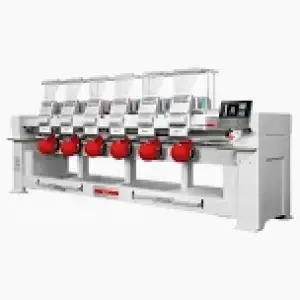
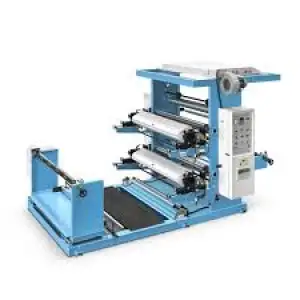




































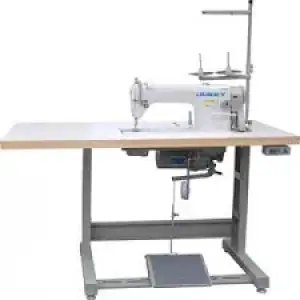
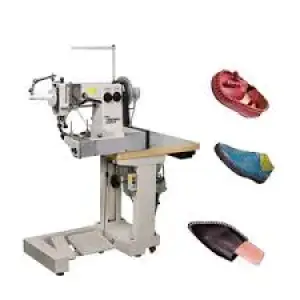
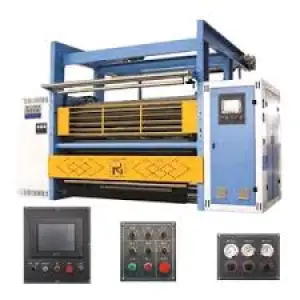



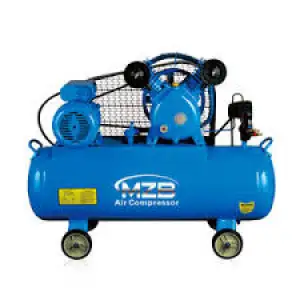
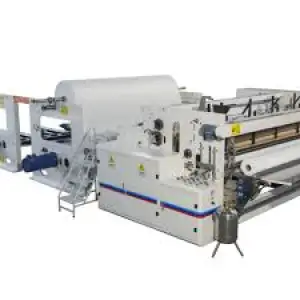
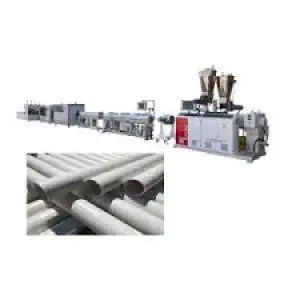
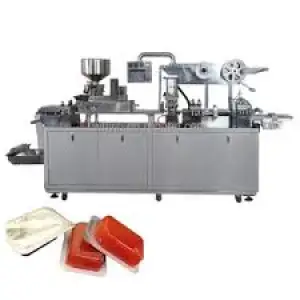

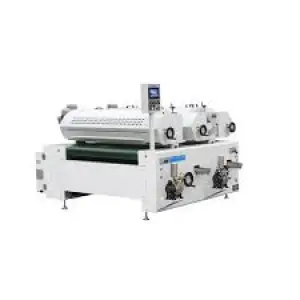
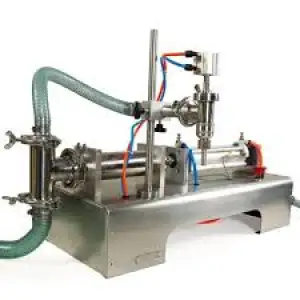
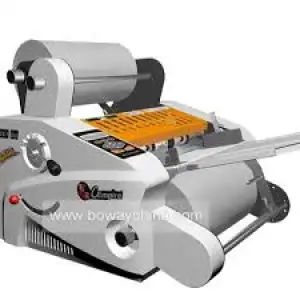
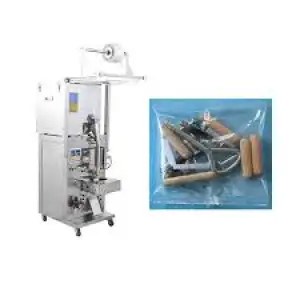











































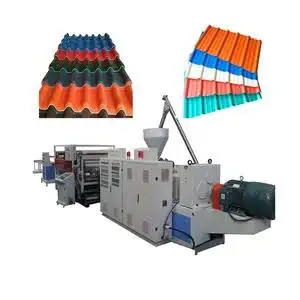




















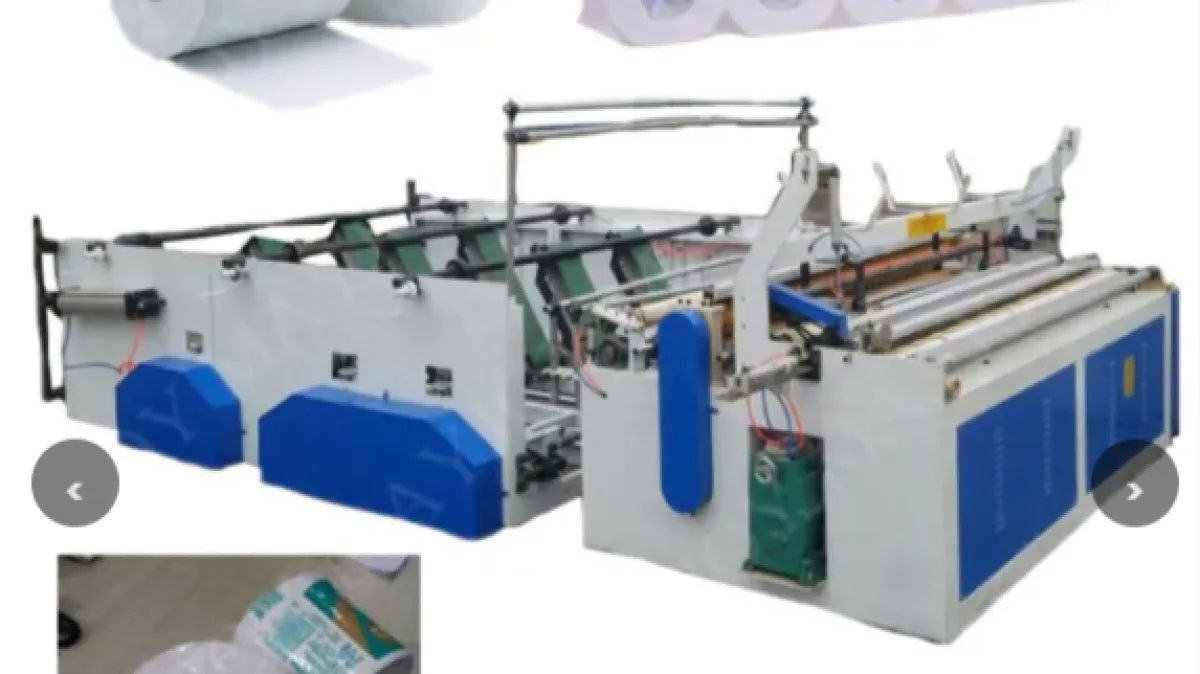
The Global Trade AfriMart Single Embossing Toilet Paper Production Line converts jumbo tissue rolls into embossed, perforated, cut and packaged toilet rolls. The fully automatic configuration combines a rewinding machine with an embedded steel-to-wool embossing unit, automatic cutting equipment, a toilet-paper packing machine and an air compressor.
At a glance
- Best suited to
- Commercial toilet-paper converters
- Input material
- Jumbo tissue rolls
- Finished product
- Embossed, perforated and packaged toilet rolls
- Listed production capacity
- 1.5 tonnes per day
- Working width
- 1,800 mm
- Production speed
- 150–200 metres per minute
- Electrical supply
- 380 V
- Control system
- Programmable logic controller
- Selected configuration
- Fully automatic
- Alternative configuration
- Semi-automatic
What is the Single Embossing Toilet Paper Production Line?
The Single Embossing Toilet Paper Production Line is an industrial tissue-converting system that processes jumbo tissue into individual toilet rolls.
It is a converting line rather than a paper mill. It does not manufacture tissue from wood pulp, recycled paper or another raw fibre. Instead, it receives ready-made jumbo tissue rolls and performs the downstream processes needed to create finished toilet rolls.
The fully automatic configuration includes:
- An automatic toilet-paper rewinding machine
- An embedded steel-to-wool embossing unit
- An automatic paper-cutting machine
- A toilet-paper packing machine
- An air compressor
This configuration is intended to connect rewinding, embossing, cutting and packing in a more automated production flow.
A separate semi-automatic option is also available. It uses a basic rewinding machine with one paper stand and automatic core feeding, a manual band-saw cutting machine, a step heat sealer, an air compressor and two manual sealers for individual-roll packaging.
Buyers should specify which configuration they require because the equipment, labour requirements and production flow differ substantially between the two options.
How does the fully automatic toilet-paper line work?
The fully automatic configuration converts jumbo tissue into packaged toilet rolls through several linked production stages.
Jumbo tissue is loaded
A compatible jumbo tissue roll is positioned on the rewinding machine. The product page lists a working width of 1,800 mm but does not state the maximum jumbo-roll diameter, weight or tissue grammage.
The tissue is unwound
The rewinder draws tissue from the parent roll and guides it through the converting section. Controlled feeding is important because thin tissue may stretch, wrinkle or tear when web tension is unstable.
Single embossing is applied
The tissue passes through an embedded steel-to-wool embossing unit. This creates a textured pattern on the tissue before it is rewound.
The tissue is perforated
Perforations are created at intervals so users can separate the finished toilet paper into individual sheets. The product description confirms perforation but does not state the available perforation distance.
The tissue is rewound
The processed tissue is wound into a long toilet-paper log. The required roll diameter, sheets per roll, number of plies and core dimensions must be confirmed for the selected configuration.
The log is cut automatically
The automatic cutting machine divides the long tissue log into individual toilet rolls. Cutting capacity and permitted roll widths are not stated separately.
The toilet rolls are packed
The included toilet-paper packing machine prepares the cut rolls for distribution. The product page does not specify whether it produces single-roll, multi-roll or both packaging formats.
Finished packs are discharged
The packed toilet rolls can proceed to inspection, secondary packaging, storage and dispatch.
The machines must operate at compatible capacities. A rewinder capable of running at 150–200 metres per minute will not achieve its intended line output if the cutter or packaging machine cannot process the resulting volume.
What is the purpose of single embossing?
Single embossing applies a textured pattern to the tissue using one embossing arrangement. In the fully automatic configuration, the listed system uses a steel-to-wool embossing unit.
Embossing can influence:
- Tissue appearance
- Surface texture
- Perceived softness
- Ply bonding
- Product differentiation
- Finished-roll presentation
The exact result depends on the tissue material, embossing pattern, roller pressure and machine settings.
Single embossing should be distinguished from double embossing or more complex lamination systems. Buyers should confirm:
- The standard embossing pattern
- Whether custom patterns are available
- Effective embossing width
- Roller material
- Adjustment method
- Recommended operating pressure
- Compatibility with the intended number of plies
- Whether the pattern can be changed
- Replacement or reconditioning requirements
The listing describes the fully automatic configuration as having an embedded steel-to-wool embossing unit. It does not verify lamination, colour printing or multiple embossing stations.
What materials and products can the line process?
The verified input is jumbo tissue paper suitable for toilet-roll conversion.
The product page does not identify the permitted:
- Tissue grammage
- Number of plies
- Fibre composition
- Tissue tensile strength
- Moisture range
- Parent-roll diameter
- Parent-roll weight
- Parent-roll core diameter
These properties must be matched to the machine. A jumbo roll may fall within the 1,800 mm working width but remain unsuitable because of its weight, core size, tissue strength or winding characteristics.
The verified output is embossed toilet paper. Depending on the confirmed machine settings and equipment configuration, buyers may need to establish whether the line can produce:
- Standard household toilet rolls
- Cored toilet rolls
- Coreless toilet rolls
- Institutional toilet rolls
- Different roll diameters
- Different sheet counts
- Different perforation lengths
- Single-ply or multi-ply products
- Single-roll packs
- Multi-roll packs
Only the configurations confirmed in Global Trade Mart’s written technical offer should be included in the production plan.
What is included in the fully automatic configuration?
The fully automatic production line contains several principal machines.
Automatic toilet-paper rewinding machine
The rewinder receives the jumbo tissue and performs the main converting stages. It is listed with an embedded embossing unit and programmable logic controller, commonly abbreviated as PLC.
The product page does not state whether automatic core feeding, tail-glue application and pneumatic parent-roll loading are included in the fully automatic rewinder. Those functions are expressly identified for the semi-automatic version but should be separately confirmed for the selected fully automatic line.
Embedded embossing unit
The fully automatic rewinder contains a steel-to-wool embossing system. This applies a surface pattern to the tissue during conversion.
Automatic paper-cutting machine
The cutting machine divides completed toilet-paper logs into individual rolls. Buyers should confirm its cutting method, capacity, permitted log diameter, roll-width range and blade requirements.
Toilet-paper packing machine
The packing machine handles the individual rolls after cutting. Buyers should establish the supported pack arrangements, wrapping material, sealing system and output rate.
Air compressor
An air compressor is included in the listed fully automatic configuration. Its motor rating, pressure, airflow and receiver capacity are not stated.
An air compressor rated at 7.5 kW and 0.9 MPa is expressly listed for the semi-automatic line. Buyers should not automatically apply that specification to the fully automatic package without written confirmation.
How does the fully automatic option differ from the semi-automatic line?
The two available configurations contain different equipment and require different levels of manual handling.
| Production stage | Semi-automatic configuration | Fully automatic configuration |
|---|---|---|
| Rewinding | Basic rewinder | Automatic rewinding machine |
| Parent-roll stands | One listed stand | Number of stands not stated |
| Core feeding | Automatic core feeding listed | Requires confirmation |
| Embossing | Not clearly specified in inclusion list | Embedded steel-to-wool unit |
| Perforation | Automatic | Expected within rewinder; confirm configuration |
| Glue spraying | Automatic | Requires confirmation |
| Paper loading | Pneumatic loading listed | Requires confirmation |
| Tissue-log cutting | Manual band-saw machine | Automatic paper-cutting machine |
| Packaging | Step heat sealer and two manual single-roll sealers | Toilet-paper packing machine |
| Air compressor | 7.5 kW, 0.9 MPa | Included; exact specification requires confirmation |
| PLC control | Listed | Listed |
| Manual handling | Greater | Reduced through automatic cutting and packing |
The fully automatic option is more suitable where the buyer requires linked production and reduced manual transfer between rewinding, cutting and packaging.
The semi-automatic version may be considered where production volumes, available skills, factory layout or investment plans favour a more manual process.
Neither option should be selected based only on its label. Buyers should request a machine-by-machine scope, production-flow diagram and confirmed labour requirement.
Technical specifications
The following specifications are presented on the Global Trade Mart product page for the Single Embossing Toilet Paper Complete Production Line.
| Specification | Verified value | Buyer note |
|---|---|---|
| Product name | Single Embossing Toilet Paper Complete Production Line | Listed toilet-paper converting system |
| Product type | Paper embossing machine | Product scope includes rewinding, cutting and packing |
| Available models | Semi-automatic and fully automatic | Buyer selected the fully automatic option |
| Production capacity | 1.5 tonnes/day | Confirm tissue specification and operating assumptions |
| Working width | 1,800 mm | Match to the intended jumbo tissue |
| Production speed | 150–200 m/min | Verify sustainable speed for the finished product |
| Electrical supply | 380 V | Phase, frequency and total load require confirmation |
| Listed machine weight | 2,000 kg | Confirm whether this applies to one machine or the complete line |
| Control system | PLC | Programmable logic controller |
| Embossing configuration | Single embossing | Fully automatic version uses steel-to-wool embossing |
| Rewinding equipment | Automatic rewinding machine | Included in the fully automatic configuration |
| Cutting equipment | Automatic paper-cutting machine | Included in the fully automatic configuration |
| Packaging equipment | Toilet-paper packing machine | Pack formats must be confirmed |
| Air system | Air compressor included | Exact rating requires confirmation |
| Semi-automatic compressor | 7.5 kW at 0.9 MPa | Listed specifically under the semi-automatic package |
| Semi-automatic roll stands | One jumbo-roll stand | Fully automatic stand count is not stated |
| Semi-automatic cutting | Manual band saw | Replaced by automatic cutting in the selected configuration |
| Semi-automatic sealing | Step heat sealer and two manual sealers | Fully automatic version includes a packing machine |
Specifications may vary according to the selected model and configuration and must be confirmed in Global Trade Mart’s current written quotation.
The 2,000 kg listed weight should be clarified. A complete production line containing a rewinder, automatic cutter, packing machine and compressor may consist of several separate machines, so buyers should obtain the weight and dimensions of every component.
What are the main operational benefits?
Rewinding, cutting and packing are combined
The fully automatic package links the principal toilet-paper converting stages in one production arrangement.
Integrating these machines can reduce the need to move tissue logs and individual rolls manually between independent processing stations.
Single embossing adds a defined tissue texture
The embedded steel-to-wool embossing unit applies a pattern during tissue conversion. This allows the manufacturer to produce embossed toilet paper without adding a separate offline embossing stage.
Automatic cutting reduces reliance on manual band-saw operation
The fully automatic configuration replaces the manual band-saw machine included in the semi-automatic package with an automatic cutter.
This may support more consistent roll widths and reduce repetitive manual handling, subject to correct machine setup and maintenance.
An integrated packing machine supports continuous production
The included toilet-paper packing machine allows cut rolls to proceed directly to packaging.
The benefit depends on whether the machine supports the buyer’s required pack sizes and can keep pace with the cutting equipment.
PLC control centralises machine operation
The product is listed with a computerised PLC control system. This enables production parameters and machine functions to be controlled electronically.
Operators still require training in tissue threading, machine setup, fault response, changeovers and safe isolation.
A 1,800 mm working width supports commercial production
The listed working width allows the line to process compatible wide jumbo tissue rolls.
Buyers should confirm the effective width after allowing for edge trimming and the layout of the intended finished rolls.
The listed speed supports industrial converting
The stated production speed of 150–200 metres per minute positions the machine for commercial toilet-paper production.
Actual saleable output depends on tissue properties, finished-roll dimensions, operating efficiency, log cutting and packaging.
How should the stated capacity be evaluated?
The product listing gives two capacity indicators:
- Production speed of 150–200 metres per minute
- Output of 1.5 tonnes per day
These values describe different aspects of production.
Metres per minute measures the speed at which tissue passes through the rewinder. Tonnes per day measure the weight of material converted during a production period.
Neither value directly states the number of finished rolls produced.
To calculate expected rolls per shift, buyers need:
- Tissue grammage
- Number of plies
- Tissue width
- Finished-roll diameter
- Core diameter
- Sheet length
- Sheets per roll
- Roll weight
- Operating hours
- Expected line efficiency
- Packaging format
The feasibility study should also account for:
- Parent-roll changes
- Tissue-web breaks
- Product changeovers
- Planned maintenance
- Blade changes
- Packaging-material replacement
- Operator breaks
- Power interruptions
- Rejected rolls
- Start-up and shutdown losses
Buyers should ask Global Trade Mart for a production calculation based on their intended toilet-roll specification rather than applying the maximum listed speed to every product.
Where can the line be used?
Toilet-paper converting factories
The line is designed for businesses that purchase jumbo tissue and convert it into finished toilet rolls.
Private-label manufacturing
Converters can produce embossed toilet paper for retailers, wholesalers, hospitality suppliers and institutional distributors, provided the machine supports each required product and pack format.
Institutional tissue production
The system may be used for toilet paper supplied to hotels, schools, healthcare establishments, offices, factories and public institutions.
Existing manufacturers expanding capacity
A manufacturer with established tissue supply and distribution may evaluate the line to add converting capacity or replace a more manual production process.
Regional hygiene-product manufacturing
The line may support production closer to customers where dependable jumbo-tissue supply, utilities, maintenance and distribution networks are available.
What utilities and installation conditions are required?
The product page lists a 380 V supply but does not specify:
- Electrical frequency
- Single-phase or three-phase supply
- Total connected power
- Individual machine loads
- Cable requirements
- Recommended circuit protection
- Earthing requirements
The fully automatic line also includes an air compressor, indicating that compressed air is required for at least part of the production process.
Before installation, buyers should obtain:
- Rewinder dimensions and weight
- Cutter dimensions and weight
- Packaging-machine dimensions and weight
- Compressor dimensions and weight
- Recommended machine arrangement
- Safe operating clearances
- Maintenance access requirements
- Foundation or anchoring instructions
- Parent-roll loading requirements
- Electrical connection points
- Compressed-air connection points
The production area must also provide space for:
- Jumbo-tissue storage
- Roll loading
- Packaging-material storage
- Finished-product inspection
- Finished-pack storage
- Operator movement
- Safe pedestrian routes
- Maintenance work
- Emergency exits
The quoted 2,000 kg weight should not be used for site planning until Global Trade Mart confirms which component or combination of components it represents.
How should safety and maintenance be planned?
A toilet-paper production line includes rotating rollers, nip points, cutting equipment, pneumatic systems, conveyors and sealing machinery.
Before commissioning, buyers should confirm:
- Fixed and interlocked guards
- Emergency-stop positions
- Main electrical isolation
- Lockout procedures
- Protection around embossing rollers
- Protection around perforation and cutting systems
- Safe tissue-threading procedures
- Automatic fault detection
- Compressor safety equipment
- Heat-sealing protection
- Operator and maintenance training
- Applicable local occupational-safety requirements
Preventive maintenance should cover:
- Embossing rollers
- Perforation components
- Rewinding drives
- Bearings
- Tension-control systems
- Cutting blades
- Conveyors
- Packaging-machine sealing components
- Sensors
- Pneumatic components
- PLC and electrical systems
- Compressor servicing
Buyers should request a recommended start-up spare-parts package. Items may include blades, perforation components, belts, bearings, sensors, pneumatic seals and packaging-machine wear parts.
The final maintenance intervals must be taken from the operating manuals supplied with the selected equipment.
What should buyers confirm before ordering?
Finished toilet-roll specification
- Roll outside diameter
- Core diameter
- Sheets per roll
- Sheet length
- Tissue grammage
- Number of plies
- Embossing pattern
- Roll width
- Pack size
- Packaging material
Jumbo-tissue specification
- Parent-roll width
- Parent-roll diameter
- Parent-roll weight
- Core dimensions
- Tissue strength
- Tissue moisture
- Fibre composition
- Winding direction
Fully automatic line scope
- Exact rewinder model
- Number of jumbo-roll stands
- Core-feeding system
- Glue-spraying system
- Pneumatic loading
- Embossing specifications
- Perforation range
- Automatic cutter model
- Packaging-machine model
- Supported pack arrangements
- Compressor rating
- Conveyors and transfer systems
Capacity
- Sustainable operating speed
- Rolls per minute
- Rolls per shift
- Tonnes per day
- Expected operating efficiency
- Changeover time
- Packaging capacity
- Number of required operators
Site and utilities
- Total electrical load
- Voltage, phase and frequency
- Compressed-air pressure and flow
- Machine dimensions and weights
- Floor-loading requirements
- Loading-door dimensions
- Required lifting equipment
- Installation layout
Support
- Installation and commissioning
- Operator training
- Maintenance training
- Manuals and electrical drawings
- Recommended spare parts
- Warranty coverage
- Technical-support process
- Target commissioning date
How to source the fully automatic line through Global Trade Mart
Global Trade Mart can help buyers confirm whether the fully automatic configuration matches their product, capacity and packaging requirements.
To prepare a project-specific quotation, provide:
- Intended toilet-roll specification
- Tissue grammage and number of plies
- Jumbo-roll dimensions
- Required output per shift
- Required embossing pattern
- Core or coreless requirements
- Pack size and packaging material
- Project location
- Available electrical supply
- Installation and training requirements
- Target production date
Frequently asked questions
Does this line manufacture tissue paper from pulp?
No. The Single Embossing Toilet Paper Production Line converts ready-made jumbo tissue into embossed, perforated, cut and packaged toilet rolls. It does not include the pulping, stock-preparation, sheet-forming, pressing or drying equipment required to manufacture tissue from raw fibre.
What is included in the fully automatic configuration?
The listed fully automatic package includes an automatic toilet-paper rewinding machine with embedded steel-to-wool embossing, an automatic paper-cutting machine, a toilet-paper packing machine and an air compressor. Buyers should request an itemised offer that identifies all conveyors, accessories and control systems.
What production capacity does the line provide?
The product page lists a production capacity of 1.5 tonnes per day and a converting speed of 150–200 metres per minute. Actual roll output depends on tissue grammage, number of plies, roll dimensions, operating efficiency and the capacity of the cutting and packaging machines.
What is the difference between the semi-automatic and fully automatic options?
The semi-automatic package uses a manual band-saw cutter, step heat sealer and manual individual-roll sealers. The fully automatic line includes automatic cutting and a toilet-paper packing machine. Its precise labour requirement and automation sequence should be confirmed in the technical offer.
What does single embossing mean?
Single embossing means that the tissue passes through one embossing arrangement to apply a surface pattern. The fully automatic configuration uses a steel-to-wool embossing unit. The standard pattern, effective width and availability of custom embossing rollers should be confirmed before ordering.
Does the line include toilet-paper packaging?
Yes. A toilet-paper packing machine is listed as part of the fully automatic configuration. The product page does not specify supported pack sizes, wrapping materials or packaging speed, so these details must be matched to the intended finished product.
What electrical supply is required?
The line is listed for 380 V operation. The electrical frequency, phase arrangement, total connected load and individual machine requirements are not stated. Buyers should obtain a complete electrical schedule before preparing the installation site.