B21, China Town Mall, Midrand

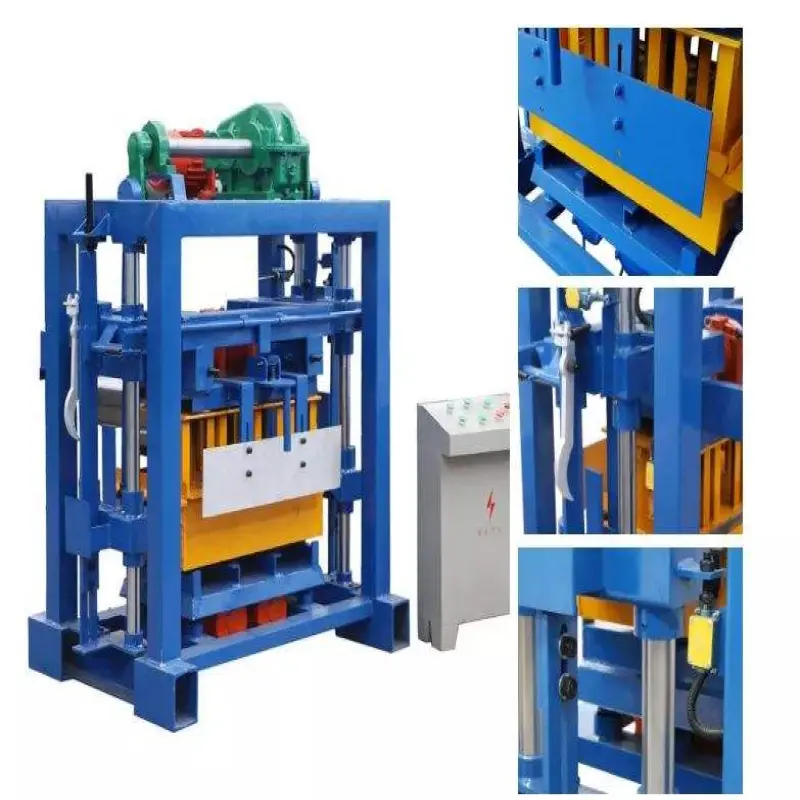
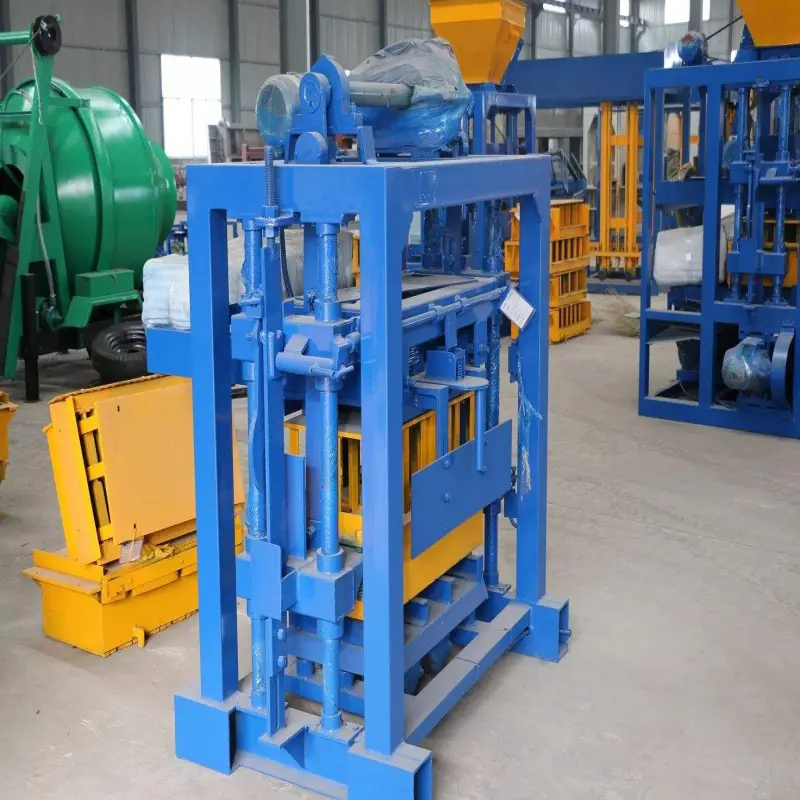
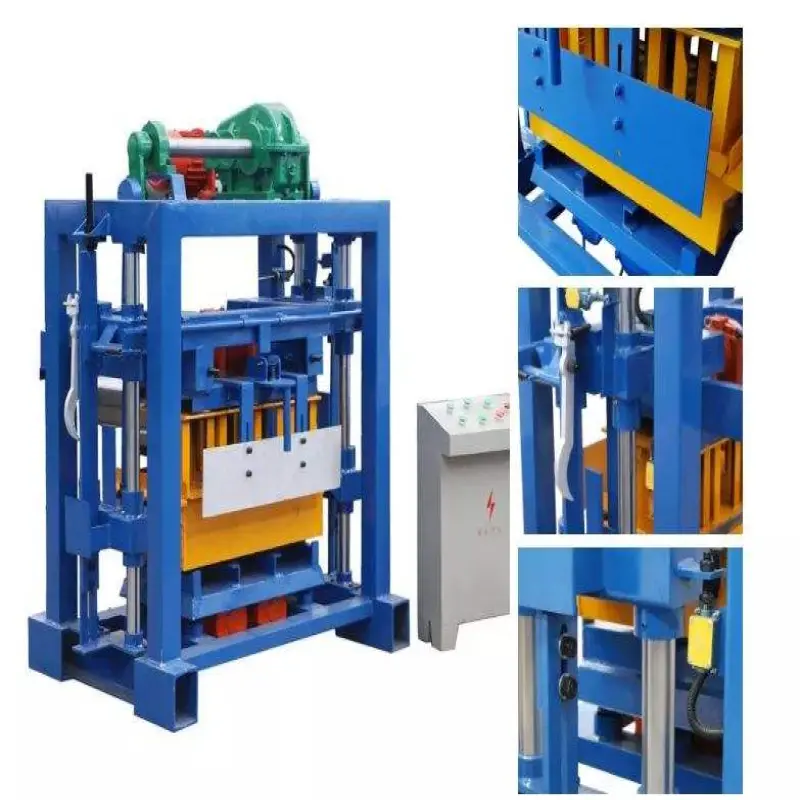
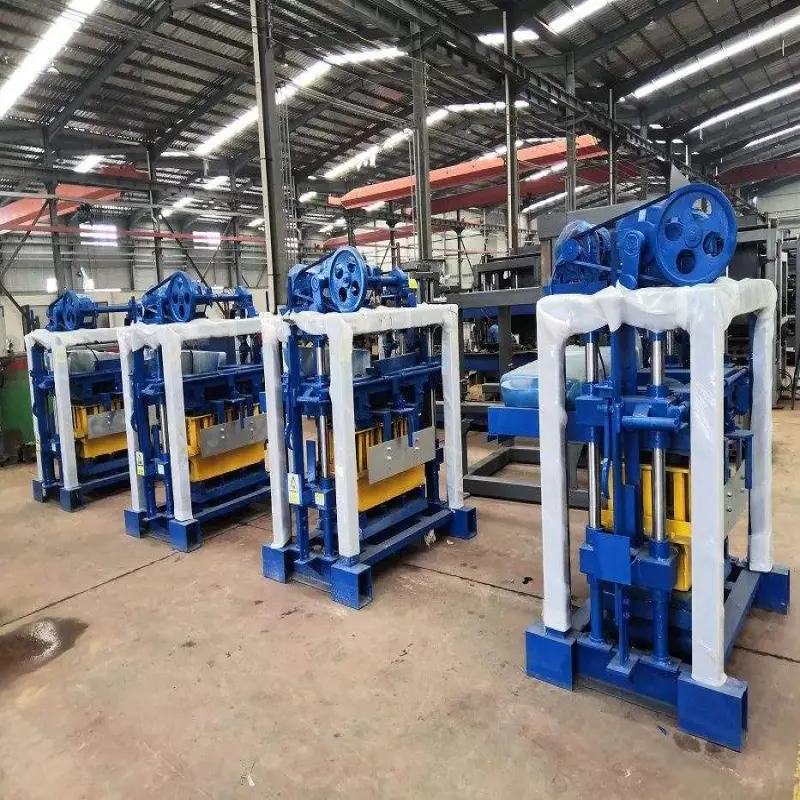
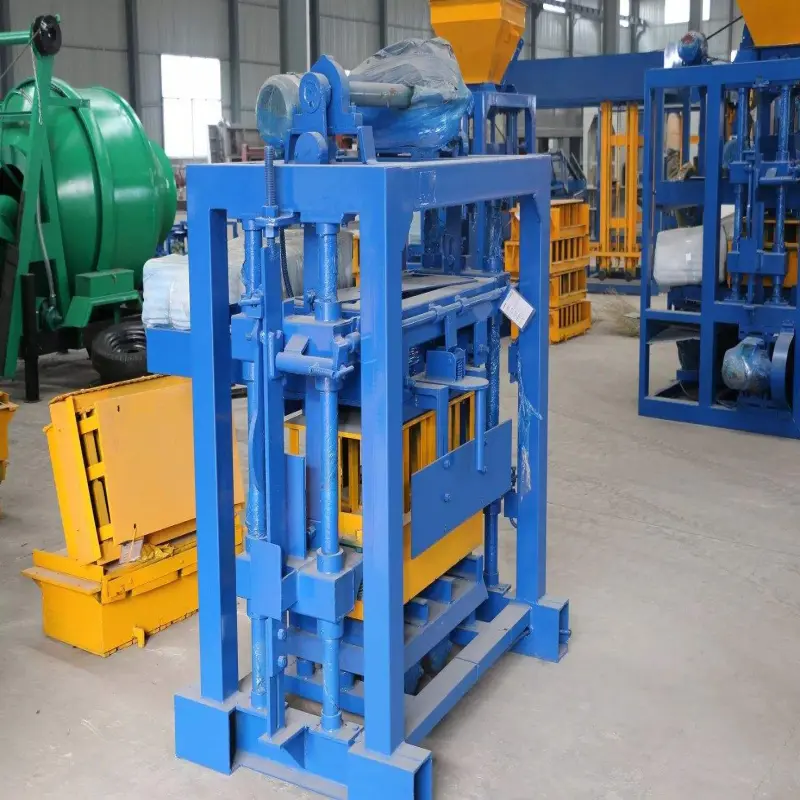
QT4-40 Brick Making Machine
Asset finance available
Do you want funding for this equipment?
Afrimart can connect you with trusted funding partners who specialise in asset finance for businesses like yours. Compare options and apply in minutes — final approval is subject to provider review.
Check funding options
Secure & no obligation

- Section : Machinery
- Category : Brick Making Machinery
- SKU : 1600733264113

- Best selling manual block machine QT4-40
2-3 workers for whole line


QT4-40 - Best selling semi-automatic model
The main advantage of QT4-40 semi auto block making machine.
1.QT4-40 block machine is one of our newly designed block making machine. With less power.
2.It adopts full automatic spiral material laying method, so the material in the mould is well-distributed. With simple operation and high productivity, when producing hollow blocks, it has an advantage over the large hydraulic block machines.
3.It uses Mode 350 speed reducer to raise and lower the mold, so it greatly increases the usage life of the speed reducer.
4.It combines pressure and super vibration. The lower vibration adopts two 3 KW vibrators and the upper vibration adopts two 1.5 KW vibrators, so the blocks made by this machine has high strength and accurate size.Its performance and product quality are comparable to the large equipment.
| MAIN TECHNICAL PARAMETER | |||
| Dimesion of host machine | 1350*1460*1800mm | Total machine power | 8.8KW |
| Mould period | 40S | vibration force | 30KN |
| Pallet size | 850x450x20mm | Mixer modle | JQ350 |
| Weight of host machine | 1060kg | Voltage | 220/380/415/440V |
| THEORETICAL PRODUCTION CAPACITY | |||
| Size (L*W*H) | Pcs/Cycle | Pcs/hour | Pcs /Shift (8 hours) |
| 400x200x200mm | 4 | 360 | 2880 |
| 400x250x200mm | 3 | 270 | 2160 |
| 400x150x200mm | 5 | 450 | 3200 |
| 400x100x200mm | 7 | 630 | 5040 |
| 400/500X250X200mm hourdis or slab | 3 | 270 | 2160 |
| 400/500X200X200mm hourdis or slab | 4 | 360 | 2880 |
| 400/500X160X200mm hourdis or slab | 4 | 360 | 2880 |
| 400/500X150X200mm hourdis or slab | 5 | 450 | 3200 |
| 230X110X70mm solid brick | 18 | 1620 | 12960 |
| 200x100x60mm paver block | 14 | 840 | 6720 |
| 200x163x60mm paver block | 8 | 480 | 3840 |
| 245X112.5X60mm S shape paver | 8 | 480 | 3840 |
| 800x80x200mm curbstone | 3 | 180 | 1440 |
Production process
Materials
Two options for reference1. 8%-10% cement, 30-40% sand, 50-60% crushed stone
2. 8-10% cement, 30% fly ash, 60% sand or stone powder
Other materials can also be used

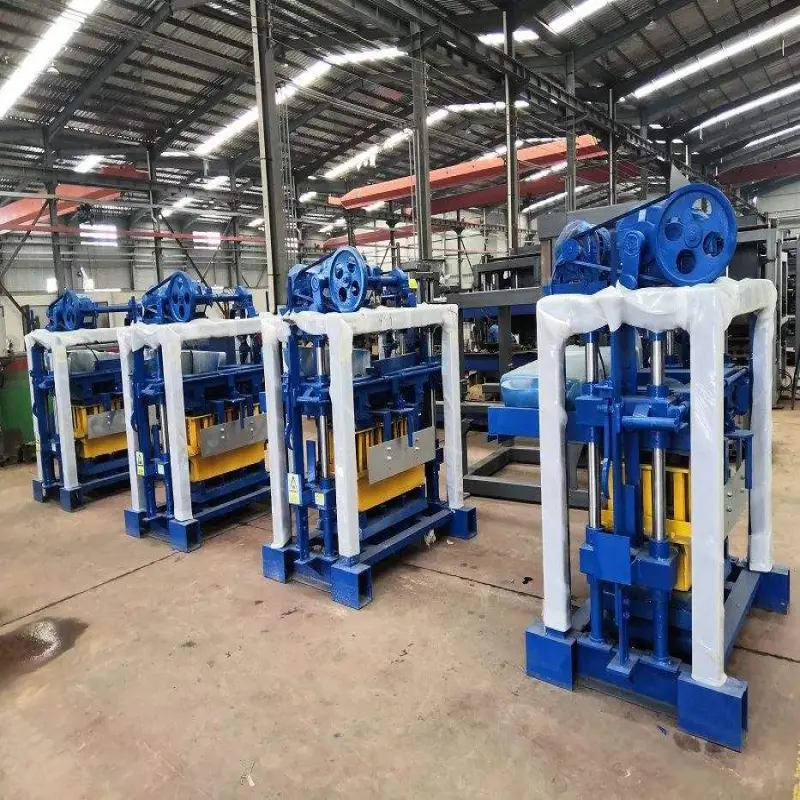
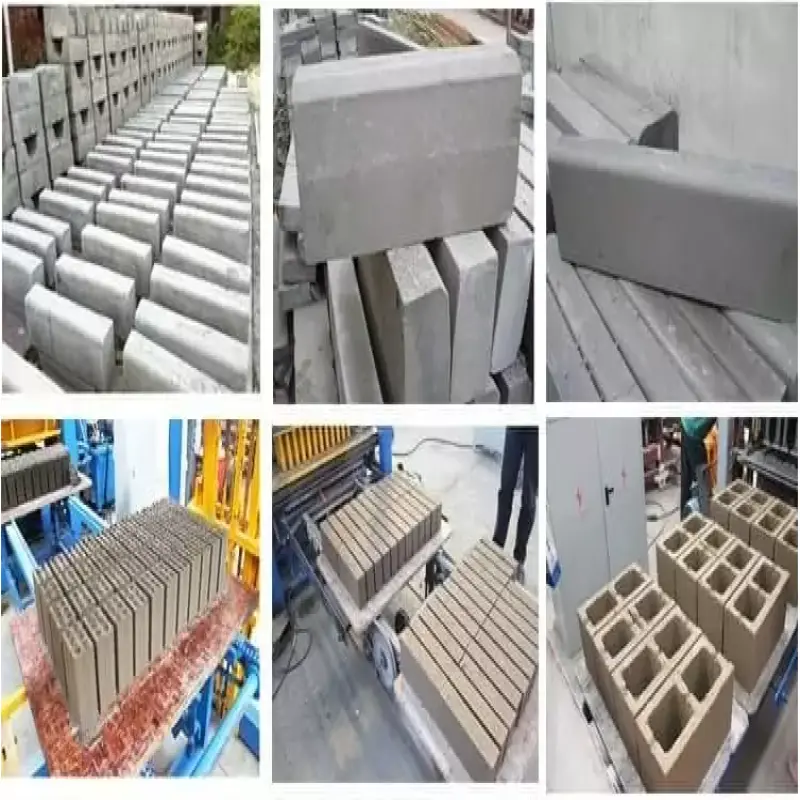
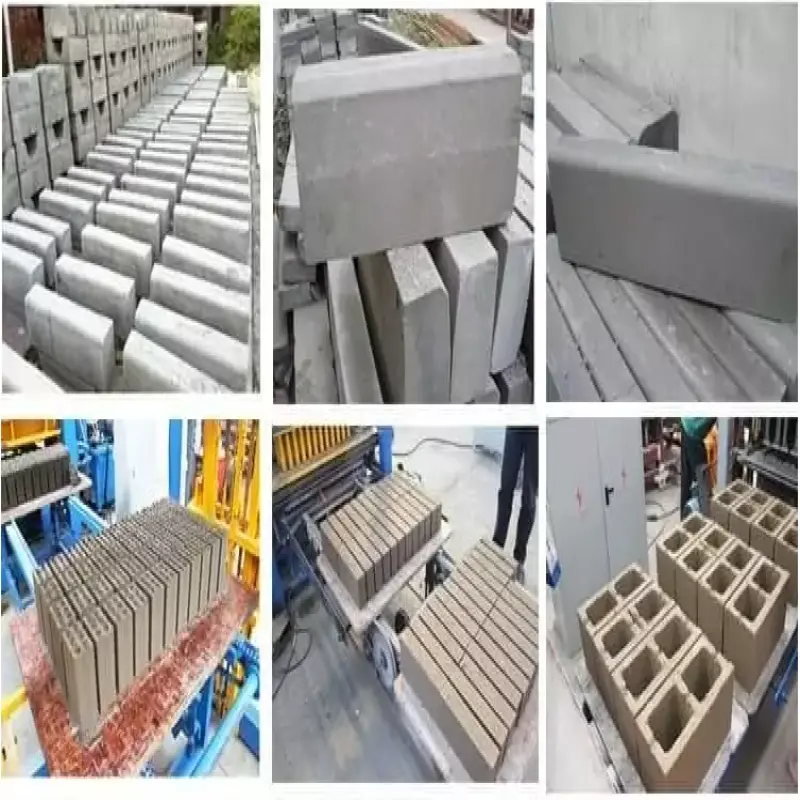
Finished blocks


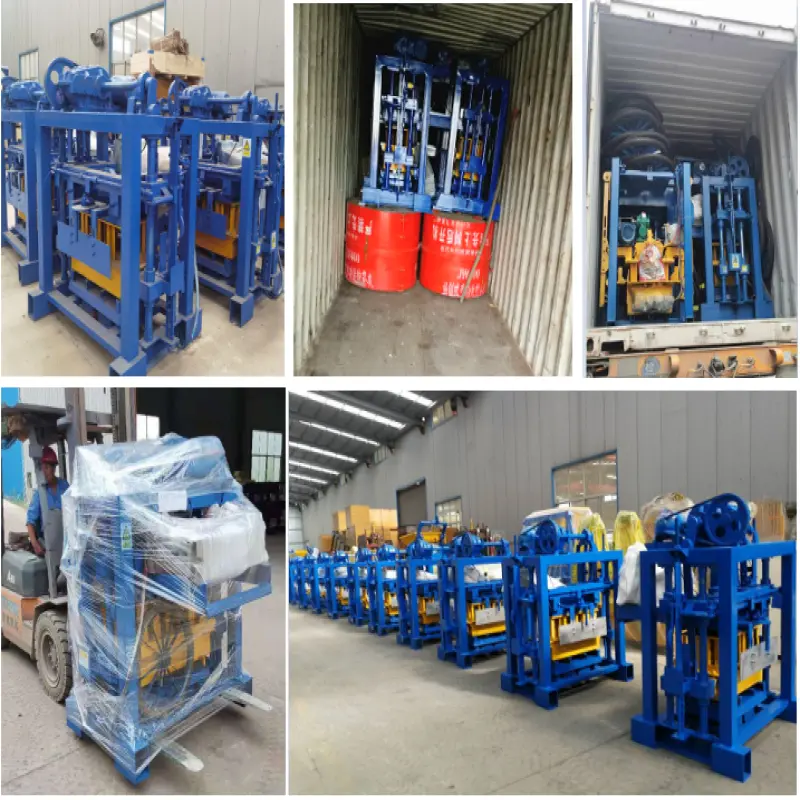
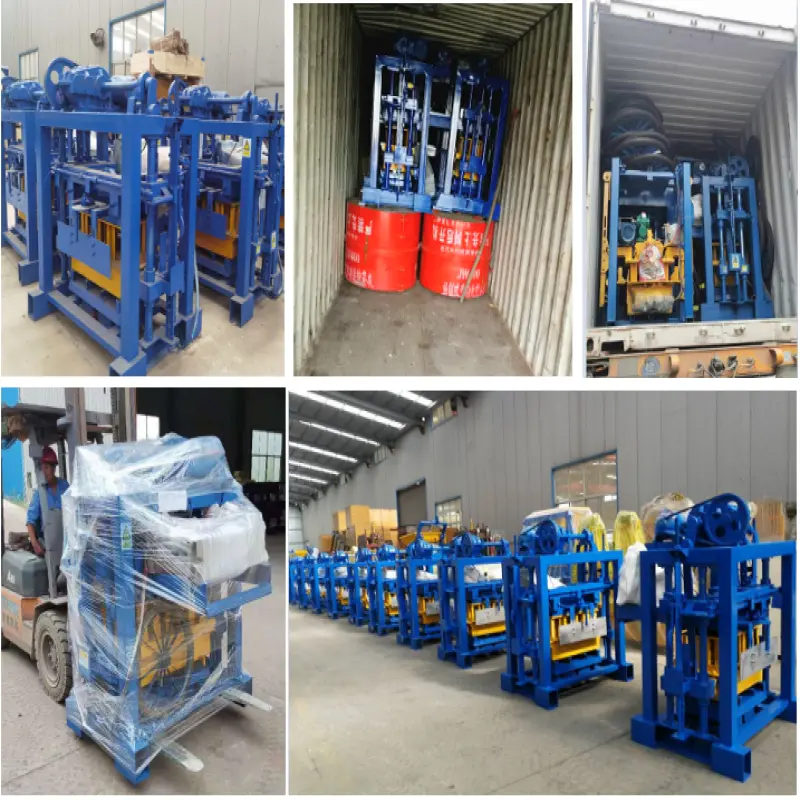
Packing & Delivery

- Shipping Timeframes: All orders are processed within 2-5 business days (excluding weekends and holidays). After your order has been processed, the estimated delivery time is before 06 Aug, 2026, depending on customs, Please note that due to high demand, some items may experience longer shipping times, which will be communicated at order confirmation email.
- Order Processing Time: Please allow 2-5 business days for us to process your order before it is shipped . Orders placed after 16:00 on Fridays, or during weekends and public holidays, will begin processing on the next business day. Processing times may be extended during peak seasons or sales events.
- Manufacturing Time: Some products needs manufacturing time, the manufacturing process will take approximately 10-30 business days depending on the product. This timeframe may vary depending on the complexity of the product and current demand. but this will be communicated with you during order confirmation.
- Returns and Exchanges: We offer a 30-day return policy for most items. If you are not completely satisfied with your purchase, you may return it within 30 days of receipt for a refund or exchange. Items must be unused, in their original packaging, and accompanied by proof of purchase. Return shipping costs are the responsibility of the customer, unless the item was damaged or defective upon arrival.
1. What is the QT4-40 Brick Making Machine?
The QT4-40 is a best-selling semi-automatic block/brick making machine designed for small-to-medium production lines. It uses a full automatic spiral material laying system, combines pressure with strong vibration, and produces hollow blocks, solid bricks, pavers, curbs and slabs with quality comparable to larger hydraulic machines.
2. Is the QT4-40 fully automatic or semi-automatic?
It is a semi-automatic machine. While material laying into the mould is done by a fully automatic spiral system, certain tasks (feeding aggregates, forklift/pallet handling and demoulding) are manual or semi-manual depending on your line setup.
3. What are the main technical specifications?
Host dimensions 1350×1460×1800 mm; total machine power 8.8 kW; mould cycle (period) 40 s; vibration force 30 kN; pallet size 850×450×20 mm; mixer model JQ350; host weight ≈1060 kg; available voltages 220/380/415/440 V. It uses a Mode 350 speed reducer for mould lifting/lowering.
4. What is the machine's production capacity?
Cycle time is 40 s (≈90 cycles/hour). Example outputs: 400×200×200 mm — 4 pcs/cycle → 360 pcs/hour → 2,880 pcs/8-hr shift; 400×250×200 mm — 3 pcs/cycle → 270/hr → 2,160/shift; 400×150×200 mm — 5 pcs/cycle → 450/hr → 3,200/shift; 400×100×200 mm — 7 pcs/cycle → 630/hr → 5,040/shift. For smaller pavers: 230×110×70 mm — 18 pcs/cycle → 1,620/hr → 12,960/shift. (Actual output depends on operator efficiency and curing/storage workflow.)
5. What block types and mold sizes can QT4-40 produce?
The machine can produce hollow blocks, solid bricks, various pavers (S-shape, interlocking), curbstones and slabs. It supports common mould sizes such as 400×200×200, 400×250×200, 400×150×200, 400×100×200, 230×110×70 (solid), and custom moulds can be fitted as required.
6. What raw material mixes are recommended?
Two typical mix options given: 1) 8–10% cement, 30–40% sand, 50–60% crushed stone; 2) 8–10% cement, 30% fly ash, 60% sand or stone powder. Other aggregates, additives or local recipes can be used provided they achieve required workability and strength.
7. How many workers are needed to run the QT4-40?
A typical semi-automatic setup usually requires 2–3 operators per machine (one for material feeding/mixer, one for machine operation/demoulding, one for pallet handling/stacking). Staffing depends on automation level of the rest of the line and desired throughput.
8. How do I change block size or moulds?
Block size is changed by swapping the mould and pallet. The QT4-40 uses a Mode 350 speed reducer to lift/lower the mould; moulds and pallets are standard interchangeable components. Ensure correct pallet/mould alignment and check the speed reducer and fastenings after each change.
9. What electrical supply and power consumption should I plan for?
Total installed power is 8.8 kW. Available voltage options include 220 V, 380 V, 415 V and 440 V — choose the option that matches your site. Energy consumption approximates the rated power while operating; actual consumption depends on working cycles and auxiliary equipment (mixer, curing ovens, conveyors).
10. What routine maintenance is required?
Regular maintenance includes: check and lubricate speed reducer and moving parts; inspect and tighten fasteners; check vibrators and electrical connections; maintain the mixer and clean moulds/pallets after production; replace worn mould liners and pallet boards as needed. Follow a daily/weekly/monthly checklist and keep spare wear parts on hand for minimal downtime.
11. Are spare parts and technical support available?
Yes — spare parts for common wear items (pallets, moulds, vibrators, belts, bearings, electrical components) are typically available. Many suppliers provide technical support, installation assistance and spare parts packages. Confirm specific parts availability and lead times with the supplier before purchase.
12. How long is delivery and what packing is used?
Packaging and delivery depend on supplier and order quantity. Machines are usually export packed and shipped by container or on a pallet. Lead time varies by stock and order size — contact the supplier for current lead time estimates for single units or full production lines.
13. What are the primary advantages of the QT4-40 compared with larger hydraulic machines?
Key advantages: lower power consumption, simpler operation, full automatic spiral material laying for even distribution, combined pressure and strong vibration for high-strength blocks, and comparable final product quality. It is particularly efficient for hollow block production with lower operating costs.
14. How can I estimate my expected output for a given block size?
Use: cycles/hour = 3,600 ÷ mould period. With a 40 s mould period, cycles/hour ≈ 90. Then output/hour = cycles/hour × pcs per cycle (depends on mould). Example: 4 pcs/cycle → 90×4 = 360 pcs/hour. Multiply by shifts or days for longer-term planning.
15. What warranty and after-sales services are provided?
Warranty terms and after-sales services vary by supplier. Typical offerings include a manufacturer warranty period, availability of spare parts, remote or on-site technical support and installation/training packages. Confirm exact warranty length and service terms with the seller at time of purchase.
Latest Order Arrivals
Discover our latest orders

12 Heads Embroidery Machine

Toilet Paper Machine Machine

Order Collection

Cross Border Clients

Order cros border countries Collected

Industrial Machine Cllection

Agriculture Processing Machines

Ready for collection

Water Pump Equipment

Packaging Machine and accessories

Fabrics Manufacturing Equipment

Mining Equipments

Food Processing Machine

Batch of Orders

Batch of Orders

Latest Orders Labelled

wheel alignment machines

new arrivals

Pre Orders Offloading

Latest Arrivals

Latest Arrivals

Latest Arrivals

Loading

Toilet paper making machine

Toilet paper making machine

Toilet paper Rewinding Machine

latest arrivals

offloading

order success

order collection

order offloading