B21, China Town Mall, Midrand


Portable Excimer Laser Phototherapy System UVB 308nm LED Laser Machine Vitiligo Psoriasis Laser Beauty Equipment

- Section : Beauty & Personal Care
- Category : Beauty Equipment
- SKU : 1601370605071

Portable Excimer Laser Phototherapy System UVB 308nm LED Laser Machine
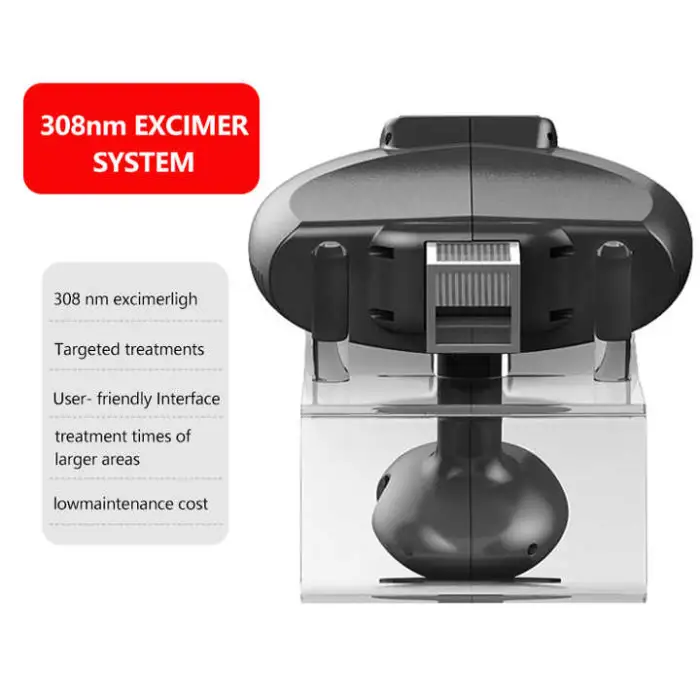
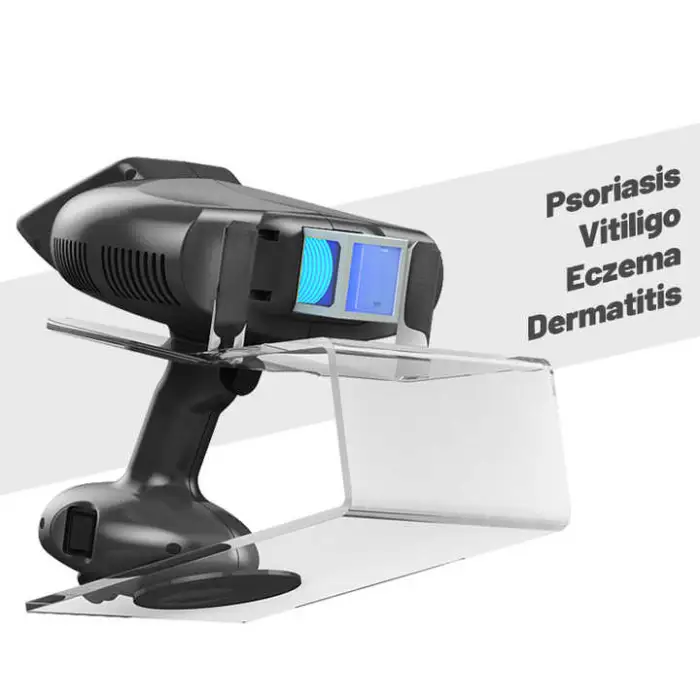
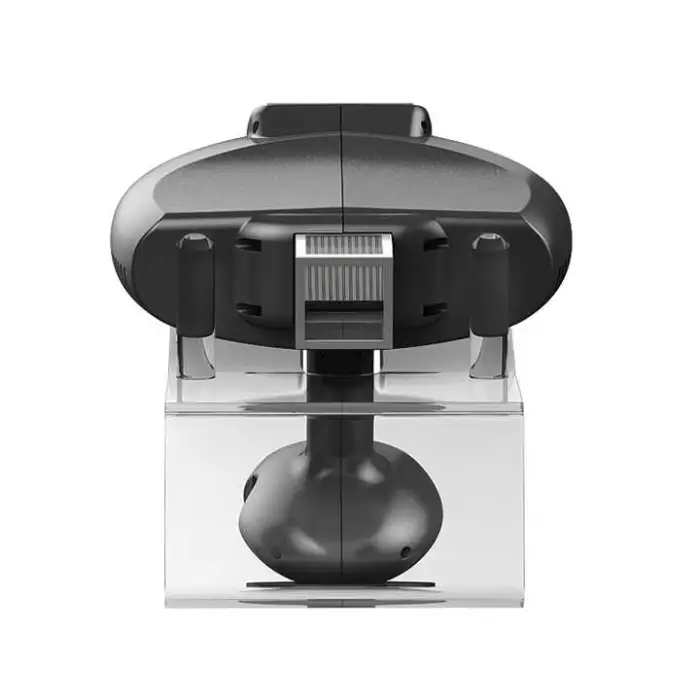
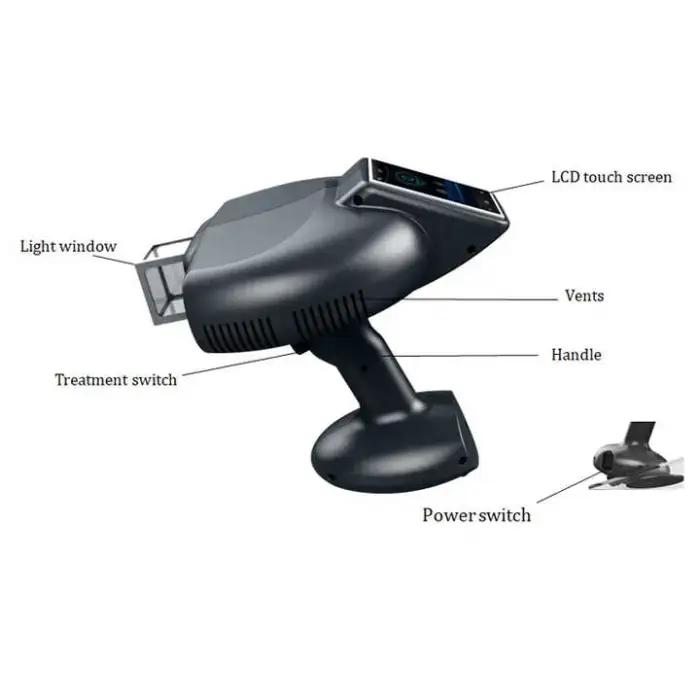
The Portable Excimer Laser Phototherapy System UVB 308nm LED Laser Machine is a state-of-the-art device designed for effective treatment of skin conditions such as vitiligo and psoriasis. This advanced laser machine uses a specific wavelength of 308nm to target affected areas with precision. It is compact and easy to use, making it ideal for both professional and home use. Experience the power of laser therapy with this innovative beauty equipment.
Specifications
| Attribute | Details |
|---|---|
| Model Number | P325 |
| Brand Name | OEM/ODM |
| Lamp Type | XeCI Lamp |
| Light Wavelength | 308nm |
| Optical Power Density | 30mW/cm² +20% |
| Fluence | 30-4200mJ/cm² |
| Spot Size | Max. 16cm² |
| Treatment Time | 1s~140s |
| Erythema Test Dose | 3s/6s/9s/12s/15s/18s |
| Work Mode | Continuous |
| Dimensions (LxWxH) | 27x24x26 cm |
| Selling Units | Single item |
| Single Package Size | 43x34x46 cm |
| Single Gross Weight | 9.000 KG |
Key Features
- Compact and portable design for easy handling.
- Effective 308nm UVB wavelength for targeted treatment.
- Adjustable treatment time for customized therapy.
- Continuous work mode for uninterrupted sessions.
- Easy to use for both professionals and home users.
Applications
- Treating vitiligo to restore skin color.
- Managing psoriasis symptoms effectively.
- Skin rejuvenation and beauty enhancement.
- Home therapy options for skin conditions.
- Professional treatment in clinics and spas.
Product Info Gallery
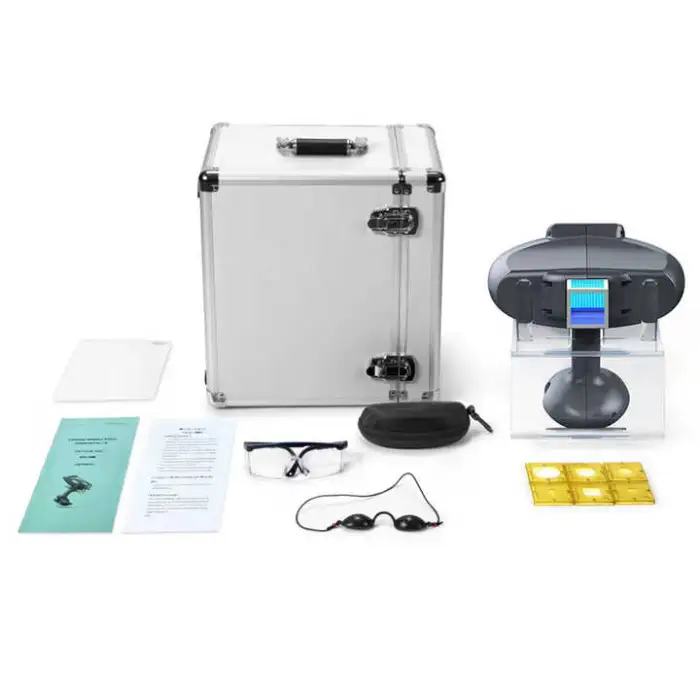
- Shipping Timeframes: All orders are processed within 2-5 business days (excluding weekends and holidays). After your order has been processed, the estimated delivery time is before 03 Aug, 2026, depending on customs, Please note that due to high demand, some items may experience longer shipping times, which will be communicated at order confirmation email.
- Order Processing Time: Please allow 2-5 business days for us to process your order before it is shipped . Orders placed after 16:00 on Fridays, or during weekends and public holidays, will begin processing on the next business day. Processing times may be extended during peak seasons or sales events.
- Manufacturing Time: Some products needs manufacturing time, the manufacturing process will take approximately 10-30 business days depending on the product. This timeframe may vary depending on the complexity of the product and current demand. but this will be communicated with you during order confirmation.
- Returns and Exchanges: We offer a 30-day return policy for most items. If you are not completely satisfied with your purchase, you may return it within 30 days of receipt for a refund or exchange. Items must be unused, in their original packaging, and accompanied by proof of purchase. Return shipping costs are the responsibility of the customer, unless the item was damaged or defective upon arrival.
1. What is the Portable Excimer Laser Phototherapy System UVB 308nm?
It is a compact excimer (XeCl) UVB 308nm laser device designed to deliver focused phototherapy for skin conditions such as vitiligo and psoriasis. It offers adjustable treatment time, continuous work mode and a maximum spot size of 16 cm².
2. How does the 308nm wavelength treat vitiligo and psoriasis?
The 308nm UVB excimer wavelength selectively targets affected skin to reduce local immune activity and stimulate repigmentation (in vitiligo) or reduce inflammation and scaling (in psoriasis). Treatments are delivered in controlled pulses or continuous mode to affected areas.
3. What are the key technical specifications I should know?
Key specs include: model P325, XeCl lamp, wavelength 308nm, optical power density 30 mW/cm² ±20%, fluence range 30–4200 mJ/cm², spot size up to 16 cm², treatment time 1–140 seconds, and preset erythema test doses (3s/6s/9s/12s/15s/18s).
4. Is this device suitable for home use?
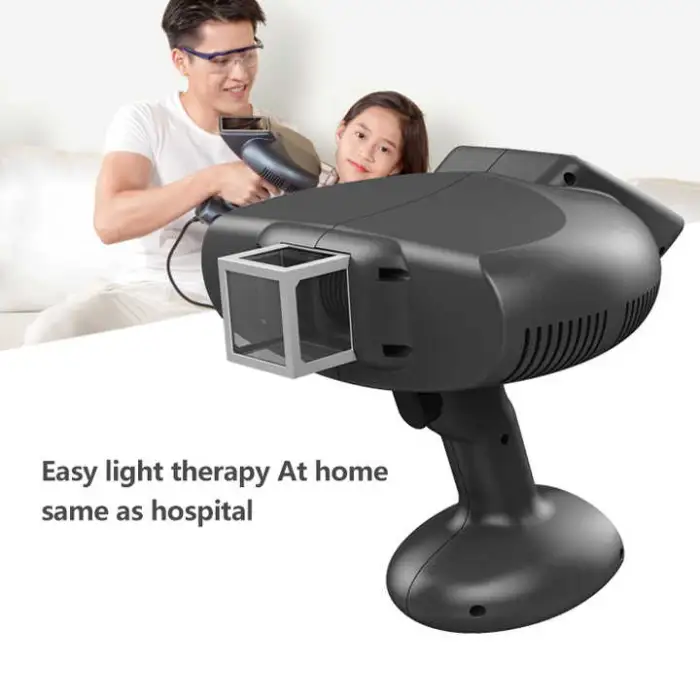
The device is compact and user-friendly, and it may be used at home by some patients. However, phototherapy should be used under a dermatologist's guidance, and users must be trained on settings, safety (including eye protection), and treatment protocols.
5. How often should treatments be performed and how soon will I see results?
Typical treatment frequency is commonly 2–3 times per week, but exact schedules and cumulative dose depend on the condition and skin response. Some patients see improvements within weeks; others require several months. Follow your clinician's protocol for best results.
6. What is an erythema test dose and why is it important?
The erythema test dose is a short, graded exposure used to determine the minimal skin reaction (sensitivity) to the device. It helps establish a safe starting dose and reduces the risk of burns or excessive redness.
7. What safety precautions are required during treatment?
Always use appropriate protective eyewear for patient and operator, avoid exposing uninvolved skin or eyes, do not treat over tattoos or suspicious lesions, and follow contraindication guidance. Ensure the treatment area is clean and avoid photosensitizing medications unless advised by a physician.
8. Who should not use this device (contraindications)?
Contraindications generally include active skin cancer or suspicious lesions in the treatment area, known photosensitivity disorders, use of systemic or topical photosensitizing medications without clearance, and pregnancy—consult a healthcare provider before use.
9. What side effects might occur?
Common short-term effects include mild erythema (redness), itching, or temporary discomfort at treated sites. Rarely, blistering or hyperpigmentation/hypopigmentation can occur if doses are too high. Report persistent or severe effects to a clinician.
10. How is the treatment area determined and how large is the spot?
The device provides a maximum spot size of 16 cm² and is used to treat discrete patches. Clinicians typically define borders of affected skin and move the applicator to cover targeted areas while avoiding healthy surrounding skin.
11. What maintenance is required for the machine?
Routine maintenance includes cleaning the applicator per the manual, inspecting for damage, ensuring vents are free of dust, and following manufacturer instructions for lamp checks and replacement. Refer to the product manual or supplier for lamp life and servicing schedules.
12. Is special training required to operate the device?
Basic training is recommended for safe and effective use, including understanding dose settings, performing erythema tests, safety protocols, and recognizing adverse reactions. Professional clinics typically have trained staff; home users should be instructed by a clinician or supplier.
13. Can the system be used for cosmetic/skin rejuvenation?
The device is marketed for skin rejuvenation and beauty enhancement in addition to medical indications. Results vary; discuss goals and expected outcomes with a qualified practitioner before cosmetic use.
14. What are the device dimensions and weight for portability?
The unit measures approximately 27 x 24 x 26 cm and the single package gross weight is about 9.0 kg, making it relatively compact and portable for clinic or home use.
15. Does the product come with warranty or certifications?
Warranty coverage and regulatory certifications may vary by supplier and region. Check with the vendor or manufacturer (OEM/ODM) for details on warranty, CE/FDA or other approvals, and local compliance before purchase.
Latest Order Arrivals
Discover our latest orders

12 Heads Embroidery Machine

Toilet Paper Machine Machine

Order Collection

Cross Border Clients

Order cros border countries Collected

Industrial Machine Cllection

Agriculture Processing Machines

Ready for collection

Water Pump Equipment

Packaging Machine and accessories

Fabrics Manufacturing Equipment

Mining Equipments

Food Processing Machine

Batch of Orders

Batch of Orders

Latest Orders Labelled

wheel alignment machines

new arrivals

Pre Orders Offloading

Latest Arrivals

Latest Arrivals

Latest Arrivals

Loading

Toilet paper making machine

Toilet paper making machine

Toilet paper Rewinding Machine

latest arrivals

offloading

order success

order collection

order offloading