B21, China Town Mall, Midrand

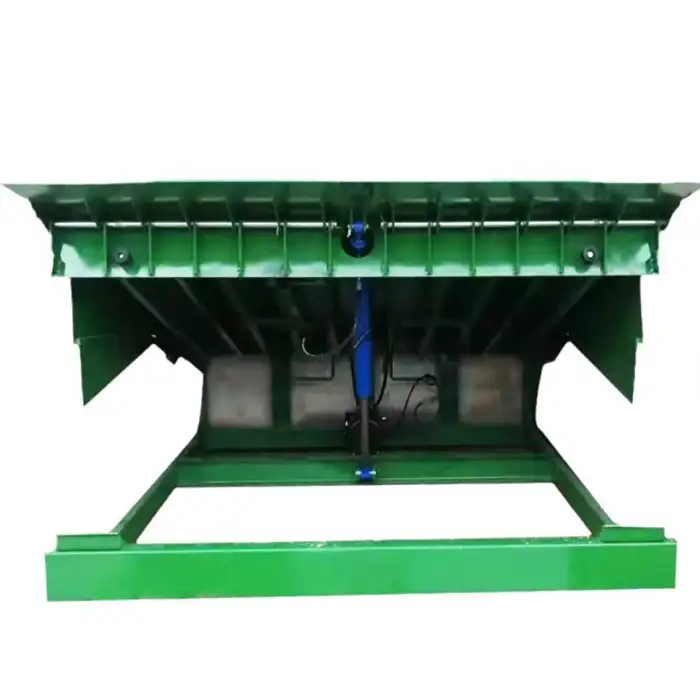
Industrial-Grade Steel Dock Leveler Air-Powered and Hydraulic for Efficient Loading and Unloading at Cargo Entry Ports

- Section : Machinery
- Category : Material Handling
- SKU : 1601446746731

Industrial-Grade Steel Dock Leveler Air-Powered and Hydraulic for Efficient Loading and Unloading at Cargo Entry Ports
The Industrial-Grade Steel Dock Leveler is designed to make loading and unloading goods at cargo entry ports quick and easy. This powerful dock leveler uses air power and hydraulic systems to provide seamless operation. It is built from high-quality steel, ensuring durability and reliability in busy commercial environments. With its modern design and practical features, this dock leveler is the perfect solution for efficient cargo handling.
Specifications
| Attribute | Details |
|---|---|
| Opening Method | Windproof |
| Project Solution Capability | Total solution for projects |
| Design Style | Modern |
| Door Type | Polymer |
| Main Material | Steel |
| Position | Commercial |
| Surface Finishing | Finished |
| Model Number | Loading Dock Ramp |
| Special Door Type | Air Powered Dock Leveler |
Key Features
- Air-powered and hydraulic operation for efficient use.
- Built from durable steel for long-lasting performance.
- Modern design fits well in any commercial space.
- Windproof opening method for safe operation.
- Total project solution capability for all your needs.
Applications
- Loading and unloading goods at cargo entry ports.
- Commercial warehouses for efficient shipping and receiving.
- Distribution centers needing robust dock solutions.
- Any facility requiring heavy-duty loading ramps.
- Ideal for operations that demand safety and efficiency.
Product Info Gallery
- Shipping Timeframes: All orders are processed within 2-5 business days (excluding weekends and holidays). After your order has been processed, the estimated delivery time is before 03 Aug, 2026, depending on customs, Please note that due to high demand, some items may experience longer shipping times, which will be communicated at order confirmation email.
- Order Processing Time: Please allow 2-5 business days for us to process your order before it is shipped . Orders placed after 16:00 on Fridays, or during weekends and public holidays, will begin processing on the next business day. Processing times may be extended during peak seasons or sales events.
- Manufacturing Time: Some products needs manufacturing time, the manufacturing process will take approximately 10-30 business days depending on the product. This timeframe may vary depending on the complexity of the product and current demand. but this will be communicated with you during order confirmation.
- Returns and Exchanges: We offer a 30-day return policy for most items. If you are not completely satisfied with your purchase, you may return it within 30 days of receipt for a refund or exchange. Items must be unused, in their original packaging, and accompanied by proof of purchase. Return shipping costs are the responsibility of the customer, unless the item was damaged or defective upon arrival.
1. What is the Industrial-Grade Steel Dock Leveler and what is it used for?
This is a heavy-duty steel dock leveler that uses a combined air-powered and hydraulic system to bridge the gap between dock and vehicle, enabling safe, efficient loading and unloading at cargo entry ports, warehouses, and distribution centers.
2. How does the air-powered and hydraulic operation work?
Compressed air initiates the leveler’s deployment while the hydraulic system controls smooth, controlled movement and load-bearing. The combination delivers fast response (air) with precise, powerful positioning (hydraulics).
3. What kind of loads can this dock leveler handle?
Load capacity depends on the specific model and configuration. The product is designed for heavy-duty commercial use. For exact working load limits and recommended vehicle types, request the model datasheet or provide your application details to the supplier.
4. Is this dock leveler compatible with different truck types and dock heights?
Yes. The leveler is designed to accommodate standard commercial dock heights and most truck/trailer types. Custom sizes, lip lengths, and height ranges are available—provide your dock height and typical trailer specifications when ordering.
5. What are the installation requirements?
Installation typically requires a suitable reinforced concrete pit or above-grade approach, proper anchoring, access to compressed air, hydraulic power (integrated or external power pack), and electrical supply for controls. A qualified installer should handle site preparation and final commissioning.
6. What does the 'windproof' opening method mean?
Windproof opening indicates the leveler includes design and control features that prevent uncontrolled or sudden movement due to wind or pressure differentials—typically via controlled actuation, latching, and hydraulic damping for safe operation in exposed locations.
7. What materials and surface finishes are used?
The primary construction is high-quality steel with a finished surface for durability. Protective coatings, galvanizing, or specialized finishes are often available as options for corrosive or marine environments—specify environmental conditions to select the best finish.
8. What safety features are included?
Common safety features include non-slip deck surfaces, safety legs or support stands, toe guards, automatic lip lock or restraining device, emergency stop controls, and interlocks to prevent operation when unsafe. Additional safety accessories can be supplied on request.
9. How often should the dock leveler be maintained and what does maintenance include?
Perform daily visual checks (deck, lip, pins, and controls), monthly lubrication and inspection of moving parts, and an annual comprehensive inspection by a qualified technician (hydraulic lines, seals, fasteners, safety devices). Follow the manufacturer’s maintenance manual for exact intervals and procedures.
10. What troubleshooting steps should I take if the leveler won't operate?
Check compressed air supply and pressure, verify electrical power to the control panel, inspect hydraulic fluid levels and for leaks, ensure valves and fittings are secure, and consult error indicators in the control unit. If the problem persists, contact authorized service.
11. Can the dock leveler be customized for specific project needs?
Yes. The product supports project-level customization such as deck size, lip length and style, load capacity rating, surface treatment, control types, integration with dock seals/levelers, and additional safety features. Consult the supplier for a total project solution.
12. Are certifications and compliance documentation available?
Certifications (for example CE, ISO, and regional safety standards) and compliance documentation are typically available upon request. Verify required local standards and ask the manufacturer to provide relevant certificates for your jurisdiction.
13. What are typical lead times and shipping considerations?
Lead time varies by configuration, certification, and order volume. Because dock levelers are heavy equipment, they are usually shipped via freight and may require special handling. Contact the sales team with your configuration and delivery site for an estimated lead time and freight plan.
14. What warranty and spare parts support are offered?
Warranty terms vary by supplier and configuration. Most manufacturers offer a limited warranty covering defects in materials and workmanship and provide spare parts and service contracts. Ask the supplier for warranty details, parts availability, and recommended service plans.
15. How do I get a quote or more technical information (drawings, electrical/air specs)?
Provide your dock dimensions, desired load capacity, operating environment, and any special requirements to the supplier. They will supply model options, technical datasheets, CAD drawings, pneumatic and hydraulic specifications, and a tailored quote or project solution.
Latest Order Arrivals
Discover our latest orders

12 Heads Embroidery Machine

Toilet Paper Machine Machine

Order Collection

Cross Border Clients

Order cros border countries Collected

Industrial Machine Cllection

Agriculture Processing Machines

Ready for collection

Water Pump Equipment

Packaging Machine and accessories

Fabrics Manufacturing Equipment

Mining Equipments

Food Processing Machine

Batch of Orders

Batch of Orders

Latest Orders Labelled

wheel alignment machines

new arrivals

Pre Orders Offloading

Latest Arrivals

Latest Arrivals

Latest Arrivals

Loading

Toilet paper making machine

Toilet paper making machine

Toilet paper Rewinding Machine

latest arrivals

offloading

order success

order collection

order offloading