B21, China Town Mall, Midrand

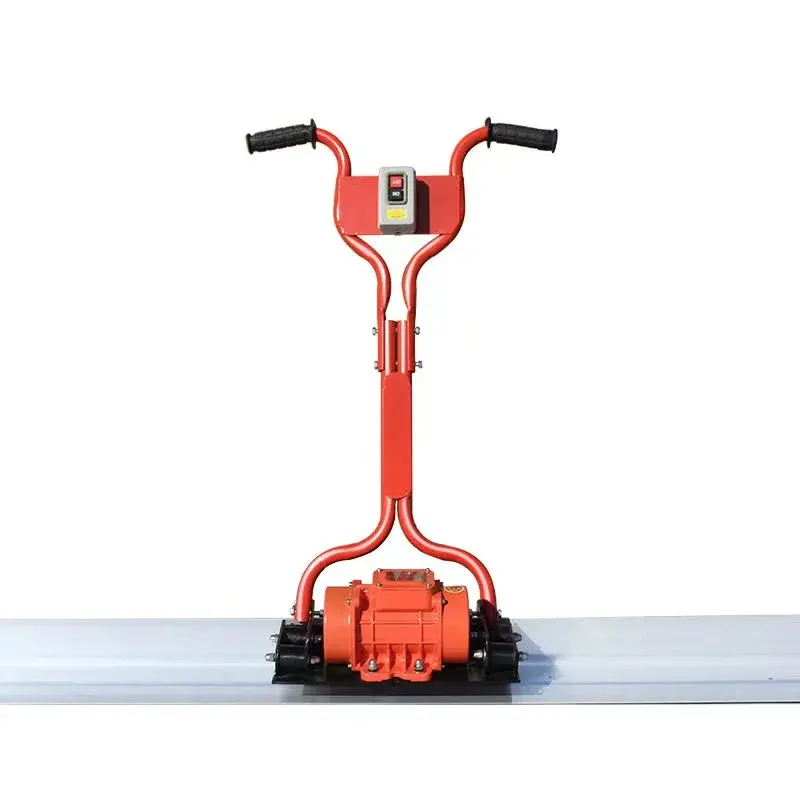
Vibratory Floor Screed Electric Concrete Vibration Ruler Concrete Vibrating Screeds Concrete Vibrating Ruler For Sell

- Section : Machinery
- Category : Construction Machinery
- SKU : 1600601048350

Products Description
Concrete Vibration Ruler Screed Machine Road Construction Machinery
Concrete screed ruler could be easily operated and greatly increases work efficiency for reducing air voids and enhancing concrete compaction. Mainly be used for scraping of concrete ground surface, improve the density of concrete, suitable for leveling hardening of the ground. High speed and efficiency, easy for take. Strickling and vibrating finish together. Operator can adjust the impact force at any moment, manual accelerator controls vibrating frequency.Concrete surface after vibration, no need to sprinkle dry cement when press polish. It reduce the construction cost and repair frequency greatly.


Application


Power screed concrete is an efficient construction equipment for the concrete ground, suitable for the construction of roads, workshops and squares, and realizes slurry lifting, compaction and leveling
Structure

Product Paramenters
| Engine | Gasoline | Electric |
| Weight(kg) | 25KG/28KG | 25KG |
| Dimension(mm) | 2000*1400*960 | 2000*1400*900 |
| Drive System | Flexible shaft drive | Electric drive |
| Type | Air-cooled ,4-cycle | 380V,three phase electricity/220V,single phase electricity |
| Max. output kw(hp) | 1.2KW/1.4KW | 200W |
| Max. speed (rpm) | 5200rpm | 2800rpm |
| Ruler Dimension | (1-6m)*18cm | (1-6m)*18cm |
Details Images

Honda Gasoline Engine GX35
Brand power, guaranteed quality, high temperature without flameout, high work efficiency, low fuel consumption.

Soft Shaft and Axis
Enclose shaft and axis,Aluminum material make it more soild.reduce maintenance costs.Ensure machine's longer service life

Natural Damping Block
Equipped with high quality shock absorber,good flexibility.

Aluminum Alloy Blade
Aluminum alloy blade abrasion resistant,high flatness,durable and light weight.1-6m Length for option.can meet the needs of different customer
Products Show

| Model | Stainless steel vibrating ruler |
| Frame Material | stainless steel |
| Output Power | 1.4KW |
| Oil tank | 0.65L |
| Max.speed | 5200rpm |
| Vibration Force | 10KN |
| Weight | 25KG |
| Driving System | Carbon structure drive shaft |
| Dimension | 720*400*420mm |

| Model | Aluminum alloy vibrating ruler |
| Frame Material | Aluminum alloy |
| Output Power | 1.2KW |
| Oil tank | 0.65L |
| Max.speed | 5200rpm |
| Vibration Force | 8KN |
| Weight | 25KG |
| Driving System | Totally enclosed shaft |
| Dimension | 620*380*350mm |

| Model | Iron vibrating ruler |
| Frame Material | Iron |
| Output Power | 1.0KW |
| Oil tank | 0.65L |
| Max.speed | 5200rpm |
| Vibration Force | 5KN |
| Weight | 25KG |
| Driving System | Flexible shaft drive |
| Dimension | 620*380*350mm |

| Model | Electric concrete vibration leveling ruler |
| Frame Material | Iron |
| Output Power | 200W |
| Operating Voltage | 380V/220V |
| Max.speed | 2800rpm |
| Vibration Force | 1KN |
| Weight | 25KG |
| Driving System | Electric motor drive |
| Dimension | 580*580*330mm |


- Shipping Timeframes: All orders are processed within 2-5 business days (excluding weekends and holidays). After your order has been processed, the estimated delivery time is before 03 Aug, 2026, depending on customs, Please note that due to high demand, some items may experience longer shipping times, which will be communicated at order confirmation email.
- Order Processing Time: Please allow 2-5 business days for us to process your order before it is shipped . Orders placed after 16:00 on Fridays, or during weekends and public holidays, will begin processing on the next business day. Processing times may be extended during peak seasons or sales events.
- Manufacturing Time: Some products needs manufacturing time, the manufacturing process will take approximately 10-30 business days depending on the product. This timeframe may vary depending on the complexity of the product and current demand. but this will be communicated with you during order confirmation.
- Returns and Exchanges: We offer a 30-day return policy for most items. If you are not completely satisfied with your purchase, you may return it within 30 days of receipt for a refund or exchange. Items must be unused, in their original packaging, and accompanied by proof of purchase. Return shipping costs are the responsibility of the customer, unless the item was damaged or defective upon arrival.
1. What is a Vibratory Floor Screed?
A Vibratory Floor Screed is a machine used in construction to level and compact concrete surfaces. It helps reduce air voids and enhances the density of the concrete.
2. What are the main applications of the Concrete Vibration Ruler?
It is primarily used for scraping and leveling concrete ground surfaces, making it suitable for the construction of roads, workshops, and squares.
3. How does the vibrating function improve concrete compaction?
The vibrating function helps to eliminate air pockets in the concrete mix, leading to better compaction and a denser, stronger final surface.
4. Can the impact force of the screed be adjusted?
Yes, the operator can manually adjust the impact force and control the vibrating frequency at any moment during operation.
5. What are the differences between the gasoline and electric models?
The gasoline models typically have higher output power and speed compared to the electric models, which are more suitable for indoor use due to no emissions.
6. What is the weight of the Vibratory Floor Screed?
The weight varies by model, with gasoline models weighing approximately 25KG and electric models around 28KG.
7. What materials are used for the frame of the screed?
The frame can be made from aluminum alloy, stainless steel, or iron, depending on the specific model chosen.
8. What is the maximum speed of the vibrating ruler?
The maximum speed can reach up to 5200 RPM for gasoline models and 2800 RPM for electric models.
9. Is there a need to sprinkle dry cement after using the screed?
No, after using the screed and vibrating the surface, there is no need to sprinkle dry cement before pressing or polishing.
10. What are the dimensions of the vibrating ruler?
The vibrating ruler dimensions can vary but generally range from 1 to 6 meters in length and 18 cm in width.
11. What type of drive system is used in the screed?
The screed uses either a flexible shaft drive for gasoline models or an electric motor drive for electric models.
12. What is the vibration force of the different models?
Vibration force varies by model, with gasoline models providing up to 10KN and electric models offering up to 1KN.
13. How does the design of the aluminum alloy blade contribute to performance?
The aluminum alloy blade is abrasion resistant, lightweight, and provides high flatness, contributing to a smoother finish and durability.
14. What are the power options for the electric model?
The electric model can operate on 380V three-phase electricity or 220V single-phase electricity.
15. What maintenance is required for the Vibratory Floor Screed?
Routine maintenance includes checking the engine oil, ensuring the blades are sharp, and inspecting the drive system for wear and tear.
Latest Order Arrivals
Discover our latest orders

12 Heads Embroidery Machine

Toilet Paper Machine Machine

Order Collection

Cross Border Clients

Order cros border countries Collected

Industrial Machine Cllection

Agriculture Processing Machines

Ready for collection

Water Pump Equipment

Packaging Machine and accessories

Fabrics Manufacturing Equipment

Mining Equipments

Food Processing Machine

Batch of Orders

Batch of Orders

Latest Orders Labelled

wheel alignment machines

new arrivals

Pre Orders Offloading

Latest Arrivals

Latest Arrivals

Latest Arrivals

Loading

Toilet paper making machine

Toilet paper making machine

Toilet paper Rewinding Machine

latest arrivals

offloading

order success

order collection

order offloading