B21, China Town Mall, Midrand

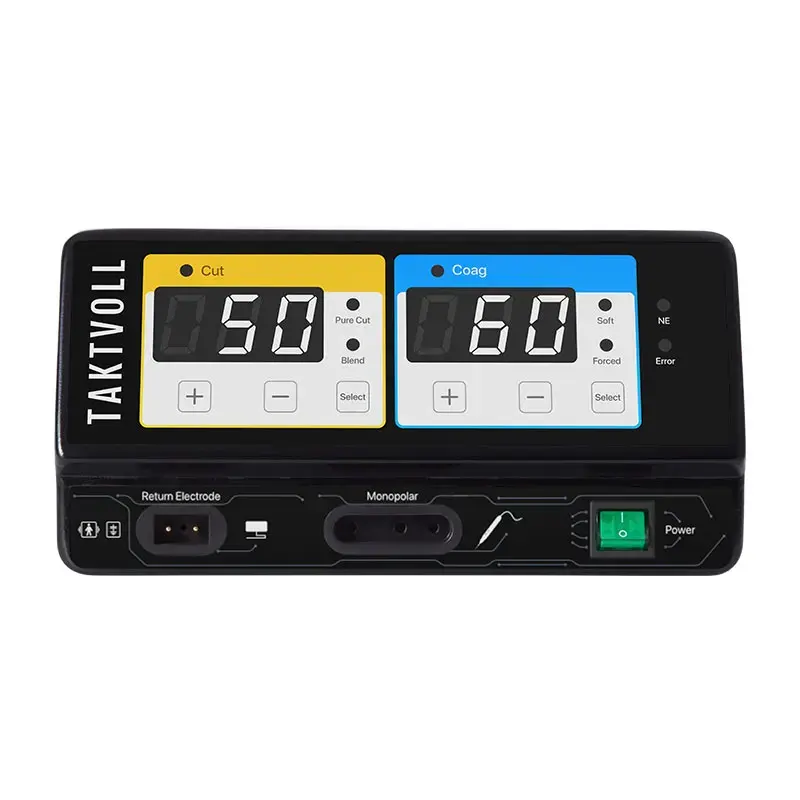
High Frequency Electrosurgery Unit: Monopolar Bipolar Cautery Device

- Section : Medical Supplies
- Category : Professional Medical Devices
- SKU : 1600912536293

High Frequency Electrosurgery Unit: Monopolar Bipolar Cautery Device
The High Frequency Electrosurgery Unit offers cutting-edge precision and versatility for clinical applications, ensuring minimal patient trauma, faster recovery times, and superior cosmetic outcomes. Designed to operate at 4.0 MHz in monopolar mode, it is ideal for monopolar incision, dissection, and resection, providing a reliable tool for modern surgical procedures.
Product Introduction
This High Frequency Electrosurgery Unit features a digital control panel for effortless operation and clear settings visibility. With unparalleled precision and a versatile design, it ensures that surgeries are completed with utmost safety. The unit incorporates an improved ventilation system and safety indicators that provide both visual and auditory alerts during procedures, contributing to enhanced safety and workflow efficiency.
Key Features and Benefits
- Monopolar and Bipolar Cautery: Can be used in both monopolar and bipolar modes, making it highly versatile for various surgical applications.
- Precision and Safety: Operates at 4.0 MHz for unparalleled precision, ensuring safe cutting and coagulation with minimal damage to surrounding tissues.
- Digital Control Panel: Features an intuitive, user-friendly digital control panel that simplifies the operation and ensures clear visibility of settings.
- Safety Indicators: Visual and auditory alerts provide real-time feedback, ensuring that the device operates safely throughout the procedure.
- Improved Ventilation System: The advanced ventilation system helps maintain optimal device performance and ensures safer, more effective operation during long procedures.
Clinical Outcomes for Your Patients
- Excellent Cosmetic Results: Minimizes scar tissue, ensuring aesthetically pleasing surgical outcomes.
- Quick Recovery: Less tissue destruction accelerates the healing process, allowing your patients to recover quickly and return to normal activities.
- Decreased Postoperative Pain: With high-frequency RF surgery, less trauma is caused, resulting in reduced pain for patients.
- Less Burning or Charring of Tissues: Unlike traditional electrosurgery or laser treatments, high-frequency RF surgery minimizes tissue burning, ensuring better patient outcomes.
- Minimal Heat Dissipation: Preserves histologic specimen quality, making it ideal for diagnostic purposes.
Product Info Gallery
Monopolar and Bipolar Modes: Choose the ideal mode for your surgery, ensuring precision and safety.
- Digital Control Panel: Easy-to-use interface with real-time visibility of settings.
- Precision Cutting: Operates at 4.0 MHz, delivering high-precision results while minimizing tissue damage.
- Safety Alerts: Provides clear visual and auditory feedback for added security during surgeries.
- Improved Ventilation: Enhances the longevity and performance of the device during extended procedures.
Get Your High Frequency Electrosurgery Unit Today!
For a safe, effective, and precision-driven surgical experience, trust the High Frequency Electrosurgery Unit to provide superior results and faster recovery times for your patients.
Click below to order your High Frequency Electrosurgery Unit now!


Product Paramenters

Product Testing


- Shipping Timeframes: All orders are processed within 2-5 business days (excluding weekends and holidays). After your order has been processed, the estimated delivery time is before 24 Jun, 2026, depending on customs, Please note that due to high demand, some items may experience longer shipping times, which will be communicated at order confirmation email.
- Order Processing Time: Please allow 2-5 business days for us to process your order before it is shipped . Orders placed after 16:00 on Fridays, or during weekends and public holidays, will begin processing on the next business day. Processing times may be extended during peak seasons or sales events.
- Manufacturing Time: Some products needs manufacturing time, the manufacturing process will take approximately 10-30 business days depending on the product. This timeframe may vary depending on the complexity of the product and current demand. but this will be communicated with you during order confirmation.
- Returns and Exchanges: We offer a 30-day return policy for most items. If you are not completely satisfied with your purchase, you may return it within 30 days of receipt for a refund or exchange. Items must be unused, in their original packaging, and accompanied by proof of purchase. Return shipping costs are the responsibility of the customer, unless the item was damaged or defective upon arrival.
1. What is this device and what surgical modes does it support?
This product is a High Frequency Electrosurgery Unit supporting both monopolar and bipolar cautery modes. It is designed for precise cutting, dissection and coagulation in a wide range of clinical procedures.
2. What frequency does the unit operate at?
The unit is designed to operate at high radio frequency; the monopolar mode operates at 4.0 MHz. Bipolar functionality uses appropriate high-frequency current for safe coagulation between bipolar tips.
3. What clinical benefits can be expected compared with conventional electrosurgery or lasers?
High-frequency RF operation minimizes lateral thermal spread, reducing tissue burning and charring. This typically leads to improved cosmetic results, faster healing, decreased postoperative pain and better preservation of histologic specimen quality.
4. Is a patient return (grounding) pad required?
Yes. When using monopolar mode a properly placed patient return electrode (grounding pad) is required to safely complete the circuit. Bipolar mode typically does not require a separate return pad because current flows between the bipolar instrument's tips.
5. What safety features are included?
The unit includes a digital control panel for clear setting visibility, visual and auditory safety indicators/alarms, and an improved ventilation system to help maintain safe operation during extended procedures. Alarms notify the operator of error conditions such as improper return electrode contact, overtemperature, or system faults.
6. What precautions should be taken for patients with implanted electronic devices (e.g., pacemakers)?
Electrosurgery can interfere with implanted electronic devices. Use only after consultation with the patient's cardiologist and according to institutional protocols. Consider using bipolar mode, minimizing power and activation time, and placing the return electrode so the current path does not cross the implanted device. Follow device-specific and clinical guidelines.
7. Are there recommended accessories and electrode types?
The unit is compatible with standard monopolar electrodes (needles, spatulas, blades) and bipolar forceps/instruments. Use accessories designated by the manufacturer or labelled as compatible. Some accessories may be reusable and autoclavable; others are single-use—follow the accessory labelling and instructions for use.
8. How do I switch between monopolar and bipolar modes and adjust settings?
Mode selection and power/settings adjustment are performed via the unit's digital control panel. The interface provides clear visibility of current mode, power level and waveform. Consult the user manual for step-by-step instructions and recommended settings for different tissue effects.
9. What basic maintenance is required to keep the unit operating safely?
Regular maintenance includes keeping ventilation ports free of dust and debris, inspecting power cords and connectors for damage, verifying footswitch and electrode connections, and following the manufacturer's recommended service intervals. Replace filters and have periodic performance checks and calibration performed by authorized service personnel.
10. How should I clean and sterilize handpieces or reusable electrodes?
Follow the cleaning and sterilization instructions provided with each accessory. Many reusable handpieces and bipolar forceps are autoclavable; disposable electrodes must be discarded after single use. Do not sterilize the main console—wipe with approved disinfectants and ensure it is powered off and disconnected before cleaning.
11. What should I do if an alarm sounds or a safety indicator activates during a procedure?
Stop activation immediately and assess the alarm message displayed. Common causes include poor return electrode contact, overtemperature, footswitch or cable faults, or internal system errors. Follow on-screen troubleshooting, check electrode placement and connections, and contact biomedical engineering or the manufacturer if the issue persists.
12. Is special training required to operate this electrosurgery unit?
Yes. Operators should be trained in electrosurgery principles, safe use of monopolar and bipolar techniques, device-specific operation, and institutional safety protocols. Training reduces the risk of burns, interference with implants, and other complications.
13. Does the device include smoke evacuation or should I use a separate system?
The unit features an improved ventilation system for internal cooling, but surgical plume/smoke should be managed with a dedicated smoke evacuator positioned near the operative site to protect staff and maintain a clear field.
14. How does this unit affect histologic specimens?
Because the unit minimizes lateral thermal damage and charring compared with some other modalities, it helps preserve tissue architecture and histologic specimen quality, which can be important for diagnostic pathology.
15. Where can I find product specifications, testing reports, warranty and regulatory information?
Refer to the product datasheet, user manual, and the manufacturer's documentation for detailed technical specifications, performance testing reports, warranty terms and regulatory/approval status. Contact the manufacturer or authorized distributor if you need copies of certification or compliance documents for your institution.
Latest Order Arrivals
Discover our latest orders

12 Heads Embroidery Machine

Toilet Paper Machine Machine

Order Collection

Cross Border Clients

Order cros border countries Collected

Industrial Machine Cllection

Agriculture Processing Machines

Ready for collection

Water Pump Equipment

Packaging Machine and accessories

Fabrics Manufacturing Equipment

Mining Equipments

Food Processing Machine

Batch of Orders

Batch of Orders

Latest Orders Labelled

wheel alignment machines

new arrivals

Pre Orders Offloading

Latest Arrivals

Latest Arrivals

Latest Arrivals

Loading

Toilet paper making machine

Toilet paper making machine

Toilet paper Rewinding Machine

latest arrivals

offloading

order success

order collection

order offloading