B21, China Town Mall, Midrand


Electric Wheelchair Aluminum Motorized Power Wheelchair For lightweight

- Section : Sports & Entertainment
- Category : Electric Wheelchairs
- SKU : 1600891720070

Product Description

- Shipping Timeframes: All orders are processed within 2-5 business days (excluding weekends and holidays). After your order has been processed, the estimated delivery time is before 03 Aug, 2026, depending on customs, Please note that due to high demand, some items may experience longer shipping times, which will be communicated at order confirmation email.
- Order Processing Time: Please allow 2-5 business days for us to process your order before it is shipped . Orders placed after 16:00 on Fridays, or during weekends and public holidays, will begin processing on the next business day. Processing times may be extended during peak seasons or sales events.
- Manufacturing Time: Some products needs manufacturing time, the manufacturing process will take approximately 10-30 business days depending on the product. This timeframe may vary depending on the complexity of the product and current demand. but this will be communicated with you during order confirmation.
- Returns and Exchanges: We offer a 30-day return policy for most items. If you are not completely satisfied with your purchase, you may return it within 30 days of receipt for a refund or exchange. Items must be unused, in their original packaging, and accompanied by proof of purchase. Return shipping costs are the responsibility of the customer, unless the item was damaged or defective upon arrival.
1. What is the weight of this electric wheelchair?
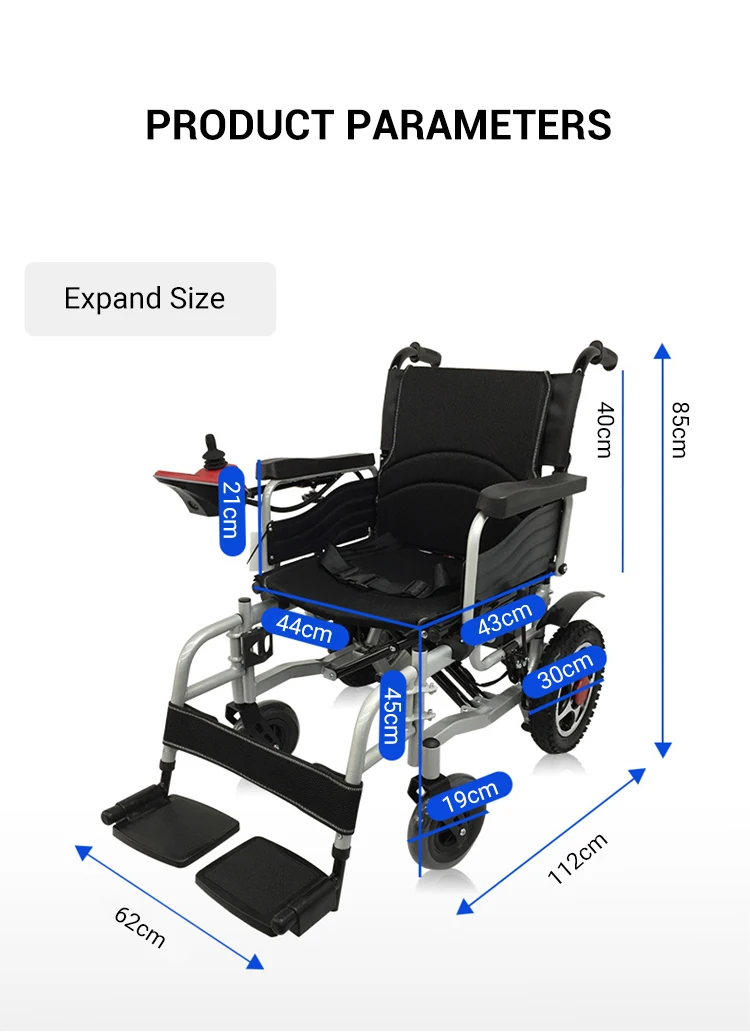
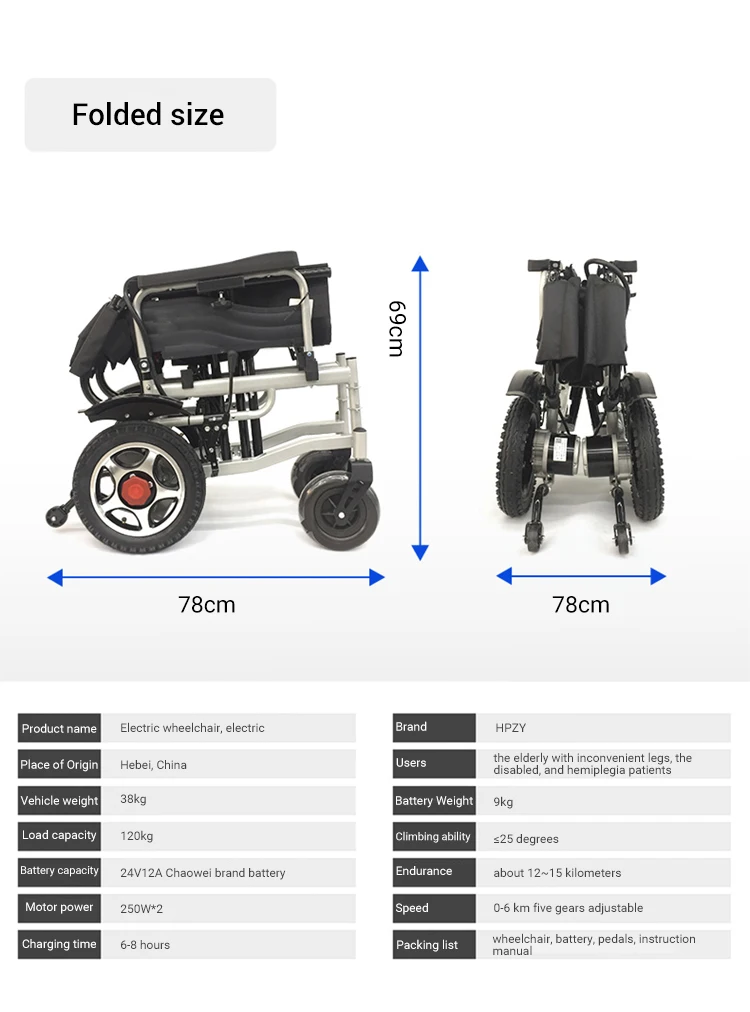
This model features a lightweight aluminum frame. Exact shipping and curb weights vary by configuration, but many lightweight aluminum motorized wheelchairs weigh approximately 25–35 kg (55–77 lbs) including the battery. Check the product specifications for the exact weight for the unit you are buying.
2. What is the maximum user weight (weight capacity)?
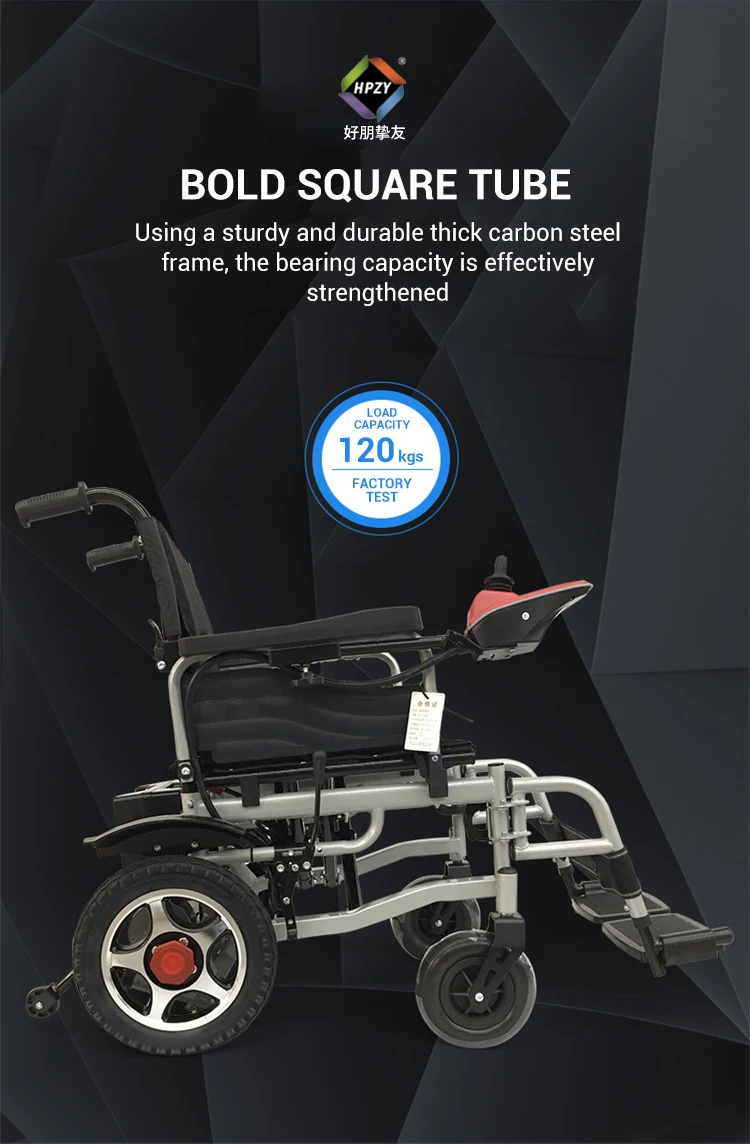
Typical lightweight motorized wheelchairs support a user weight of up to about 120 kg (265 lbs). Some variants may be rated higher or lower, so confirm the rated load capacity in the product specifications before purchase.
3. What type of battery does it use and how far can it travel on a single charge?
Most lightweight electric wheelchairs use a rechargeable lithium-ion battery. Range depends on battery size, terrain, rider weight and speed but is commonly between 10–25 miles (16–40 km) per charge. The product listing should state the specific battery capacity and estimated range.
4. How long does the battery take to fully charge?
Charging time depends on battery capacity and charger. Typical lithium batteries for these wheelchairs take about 4–8 hours for a full charge from empty. Refer to the included charger instructions for exact charging times and recommended charging practices.
5. What is the top speed of the wheelchair?
Top speed varies by model and local regulations, but most lightweight motorized wheelchairs have a maximum speed in the range of 6–8 km/h (3.7–5 mph). Some models allow adjustable speed settings for indoor and outdoor use.
6. Is the wheelchair foldable or easy to transport?
Many lightweight aluminum electric wheelchairs are designed to be portable and either fold or disassemble into smaller pieces for transport. Features vary—some have quick-release batteries and detachable footrests—so check the product description to confirm folding or disassembly options.
7. What safety features does it have?
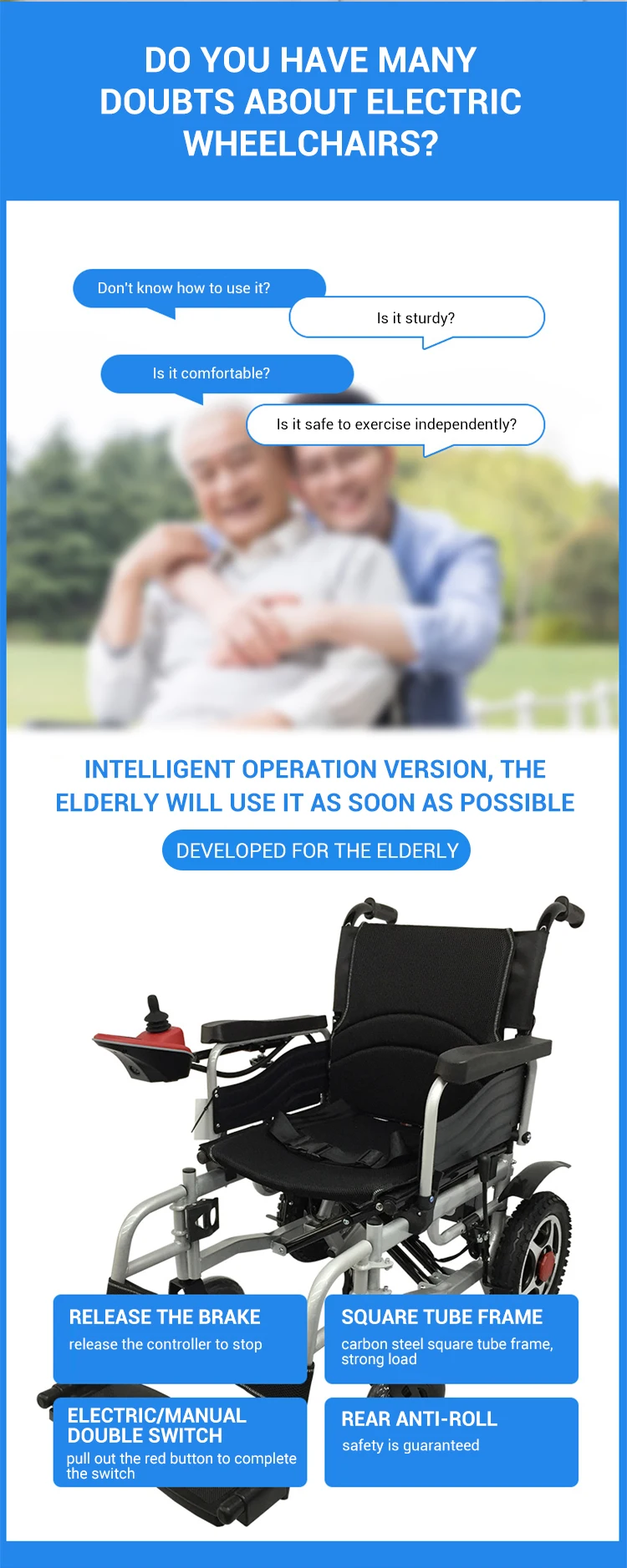
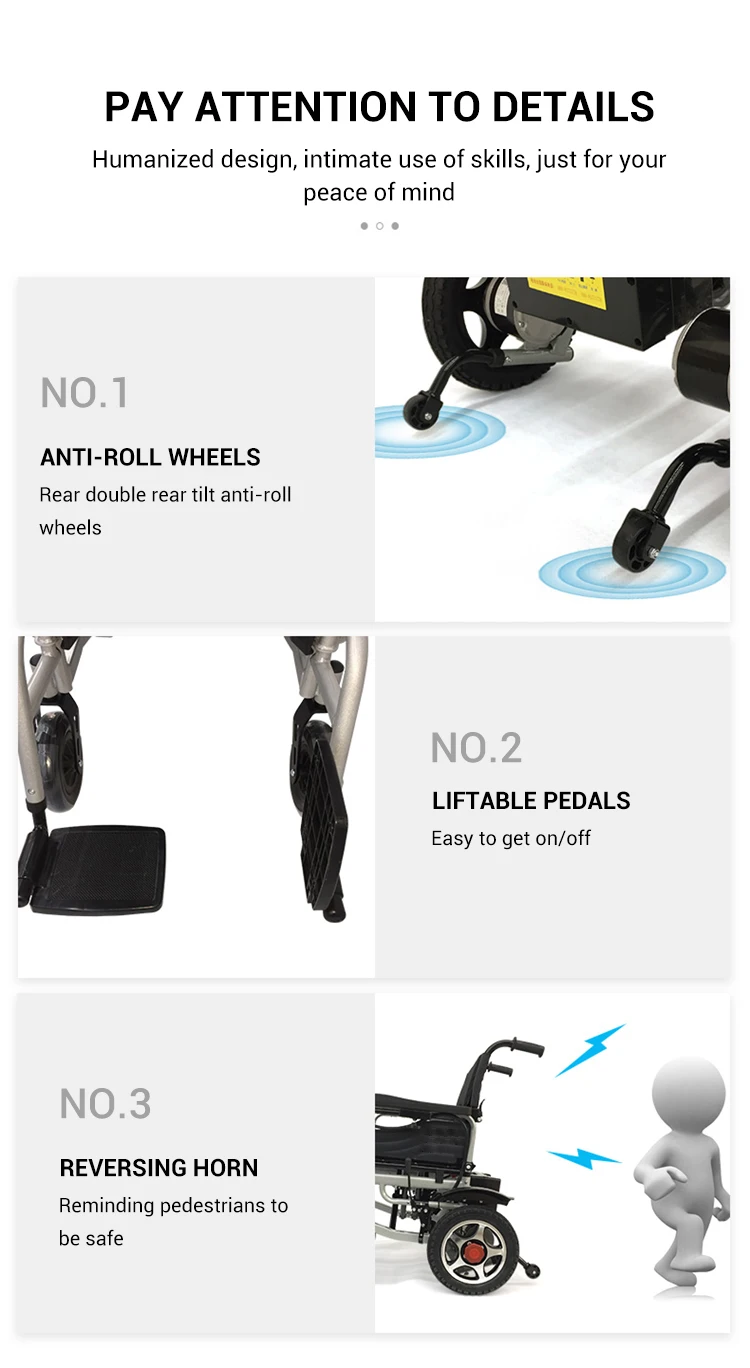
Common safety features include electromagnetic or regenerative braking, anti-tip wheels, seat belts, speed limit settings, and an easy-to-read controller. Specific safety equipment included with this model should be listed in the product details.
8. Can it be used outdoors and on slopes?
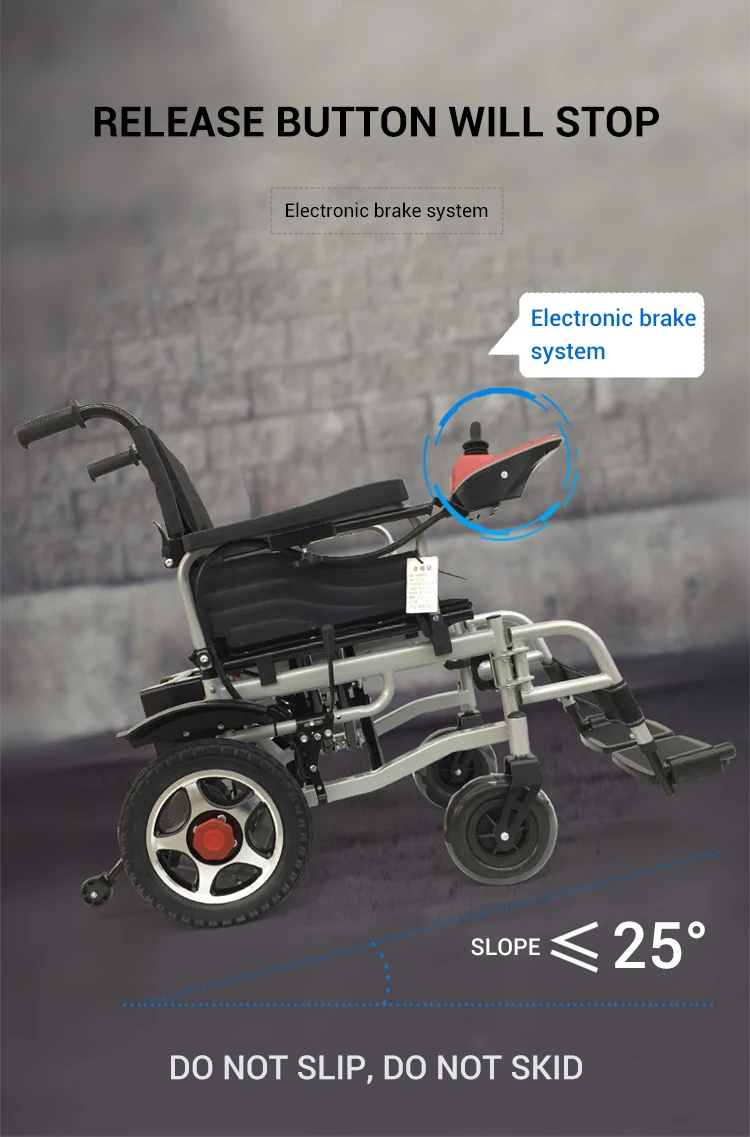
Yes, it is suitable for light outdoor use on sidewalks, paved paths and gentle slopes. It is not designed for heavy off-road use or very steep inclines. Check the product's maximum climb angle and wheel/tire specifications for more detail.
9. What kind of motor does it have and how powerful is it?
Lightweight motorized wheelchairs typically use brushless DC motors in the 250–500 W range. Motor power affects hill-climbing ability and responsiveness; the exact motor rating will be provided in the technical specifications.
10. Are the seat, armrests and footrests adjustable or removable?
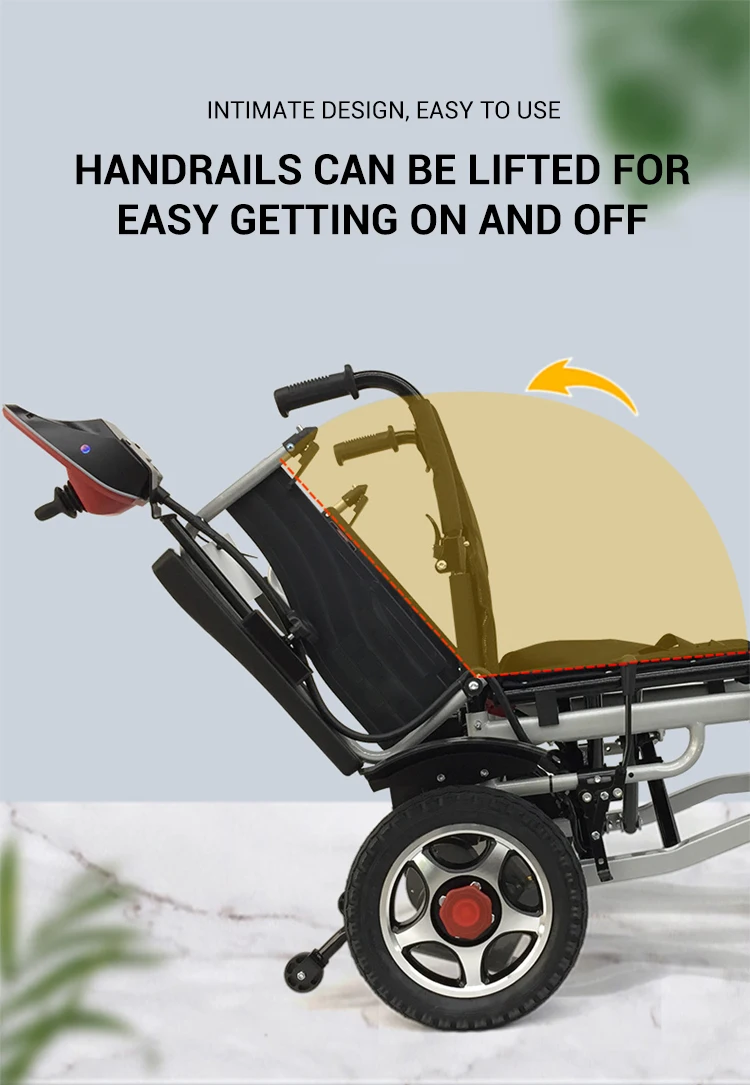
Most models offer adjustable or removable armrests and footrests and come in multiple seat widths or with removable cushions. The level of adjustability varies, so consult the product page for details on seat width, backrest type and accessory compatibility.
11. How much assembly is required on delivery?
Assembly is usually minimal—common tasks include attaching the footrests, armrests and connecting or inserting the battery. The wheelchair typically ships with a user manual and tools for basic assembly. Full assembly instructions should be included.
12. What maintenance does the wheelchair require?
Regular maintenance includes charging the battery according to the manufacturer’s recommendations, keeping the unit clean, checking tire pressure and wear, inspecting brakes and fasteners, and scheduling periodic professional servicing as recommended in the manual.
13. What warranty and customer support are provided?
Warranty terms vary by manufacturer and seller but commonly include at least a 12-month warranty on electronics and a frame warranty for a longer period. Check the product listing or contact the seller for full warranty details, service centers and after‑sales support.
14. What accessories are available for this wheelchair?
Common accessories include cushions, adjustable headrests, carry bags, trays, weather canopies, cup holders and cane or oxygen bottle holders. Availability depends on the manufacturer; check accessory compatibility on the product page.
Latest Order Arrivals
Discover our latest orders

12 Heads Embroidery Machine

Toilet Paper Machine Machine

Order Collection

Cross Border Clients

Order cros border countries Collected

Industrial Machine Cllection

Agriculture Processing Machines

Ready for collection

Water Pump Equipment

Packaging Machine and accessories

Fabrics Manufacturing Equipment

Mining Equipments

Food Processing Machine

Batch of Orders

Batch of Orders

Latest Orders Labelled

wheel alignment machines

new arrivals

Pre Orders Offloading

Latest Arrivals

Latest Arrivals

Latest Arrivals

Loading

Toilet paper making machine

Toilet paper making machine

Toilet paper Rewinding Machine

latest arrivals

offloading

order success

order collection

order offloading