B21, China Town Mall, Midrand

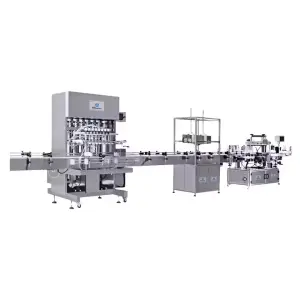
Automatic Liquid Machine for Cosmetics Cream Lipstick Juice Other Beverages Hot Gear for Engine Cans and Bottles
Asset finance available
Do you want funding for this equipment?
Afrimart can connect you with trusted funding partners who specialise in asset finance for businesses like yours. Compare options and apply in minutes — final approval is subject to provider review.
Check funding options
Secure & no obligation
- Section : Machinery
- Category : Filling Machines
- SKU : 1601433027523

- Shipping Timeframes: All orders are processed within 2-5 business days (excluding weekends and holidays). After your order has been processed, the estimated delivery time is before 03 Aug, 2026, depending on customs, Please note that due to high demand, some items may experience longer shipping times, which will be communicated at order confirmation email.
- Order Processing Time: Please allow 2-5 business days for us to process your order before it is shipped . Orders placed after 16:00 on Fridays, or during weekends and public holidays, will begin processing on the next business day. Processing times may be extended during peak seasons or sales events.
- Manufacturing Time: Some products needs manufacturing time, the manufacturing process will take approximately 10-30 business days depending on the product. This timeframe may vary depending on the complexity of the product and current demand. but this will be communicated with you during order confirmation.
- Returns and Exchanges: We offer a 30-day return policy for most items. If you are not completely satisfied with your purchase, you may return it within 30 days of receipt for a refund or exchange. Items must be unused, in their original packaging, and accompanied by proof of purchase. Return shipping costs are the responsibility of the customer, unless the item was damaged or defective upon arrival.
1. What is this Automatic Liquid Machine used for?
It's a versatile filling machine designed to accurately fill liquids and semi-liquids into cans and bottles — commonly used for cosmetics (creams, liquid lipstick), beverages (juice, other drinks) and other liquid products that may require hot or cold filling.
2. What types of liquids and viscosities can it handle?
It can handle a wide range from low-viscosity liquids (water-like juices) to medium- and high-viscosity products (creams, lotions, liquid lipsticks). Extremely thick pastes may require a specialized pump option (piston or progressive cavity).
3. Can the machine perform hot filling?
Yes — many configurations include heating jackets, insulated lines and temperature control for hot filling. Exact temperature ranges and hot-fill capability depend on the chosen model and should be confirmed with the supplier.
4. Which container types and sizes are supported?
It supports various cans and bottles (glass, PET, metal) with different diameters and heights. Changeover kits or adjustable guides are used to adapt to different container sizes; very small vials or unusual shapes may need customization.
5. What filling accuracy and production speed can I expect?
Filling accuracy varies by product and configuration but is typically high (commonly within ±0.5–1%). Production speed depends on viscosity, nozzle count and model — from a few dozen to several hundred or more units per minute. Provide your product details for a specific estimate.
6. What materials are used for product contact parts?
Product-contact parts are usually manufactured from food-grade stainless steel (SS304 or SS316) and sanitary fittings to meet hygiene requirements for cosmetics and food/beverage applications.
7. How does the machine handle product changeover and cleaning?
It supports quick-change nozzles and tool-less adjustments for fast product changeover. Many machines offer CIP-compatible designs or optional CIP systems for in-place cleaning; full disassembly is also possible for thorough cleaning when required.
8. Does the machine include capping or sealing functions?
Some models can be integrated with capping, sealing, or lid-placing modules as part of a production line. If you need an all-in-one filling plus capping solution, request the combined configuration from the supplier.
9. What kind of pump or dosing system is used?
The machine can be equipped with various dosing systems — piston pumps, gear pumps, peristaltic pumps or volumetric piston fillers — selected based on liquid properties and required accuracy. The right pump is chosen to match viscosity, shear sensitivity and fill volume.
10. What control and automation features are available?
Typical features include PLC control with touchscreen HMI, recipe storage, servo or stepper-driven axes, sensors for bottle presence and level detection, and safety interlocks. Options for remote monitoring or integration with factory SCADA can be provided.
11. What are the electrical and utility requirements?
Requirements depend on model and optional equipment. Commonly the machine needs mains power (single- or three-phase; e.g., 220–380 V), compressed air (for pneumatic components), and sometimes a steam or electrical heating source for hot filling. Exact specifications are provided by the manufacturer.
12. Is the machine suitable for food and cosmetic regulatory standards?
Machines can be built to meet food and cosmetic production standards (GMP, hygienic design). Certifications such as CE or others can be provided depending on the manufacturer and customer requirements — verify compliance before purchase.
13. What warranty, spare parts and after-sales support are provided?
Warranty terms vary by supplier but typically include a standard warranty period and availability of spare parts. Many manufacturers offer installation assistance, commissioning, operator training and ongoing technical support or maintenance contracts.
14. How long does it take to change from one product or container to another?
Changeover time depends on the degree of difference between products and container sizes and whether quick-change fixtures are used. Typical changeovers can take anywhere from a few minutes (with quick-change designs) to longer for major reconfigurations.
15. How do I order or request a quote and what information should I provide?
To get an accurate quote, provide details such as the product type and viscosity, required fill volumes and tolerances, container type and dimensions, target production speed, whether hot filling is needed, and any regulatory or certification requirements. Suppliers can then recommend the optimal model and options.
Latest Order Arrivals
Discover our latest orders

12 Heads Embroidery Machine

Toilet Paper Machine Machine

Order Collection

Cross Border Clients

Order cros border countries Collected

Industrial Machine Cllection

Agriculture Processing Machines

Ready for collection

Water Pump Equipment

Packaging Machine and accessories

Fabrics Manufacturing Equipment

Mining Equipments

Food Processing Machine

Batch of Orders

Batch of Orders

Latest Orders Labelled

wheel alignment machines

new arrivals

Pre Orders Offloading

Latest Arrivals

Latest Arrivals

Latest Arrivals

Loading

Toilet paper making machine

Toilet paper making machine

Toilet paper Rewinding Machine

latest arrivals

offloading

order success

order collection

order offloading