
























































































































































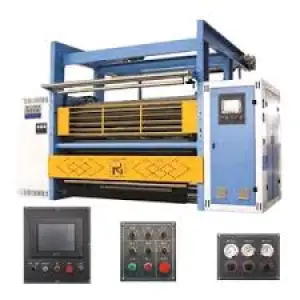





















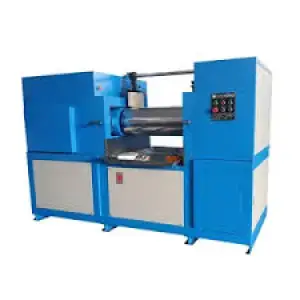












































































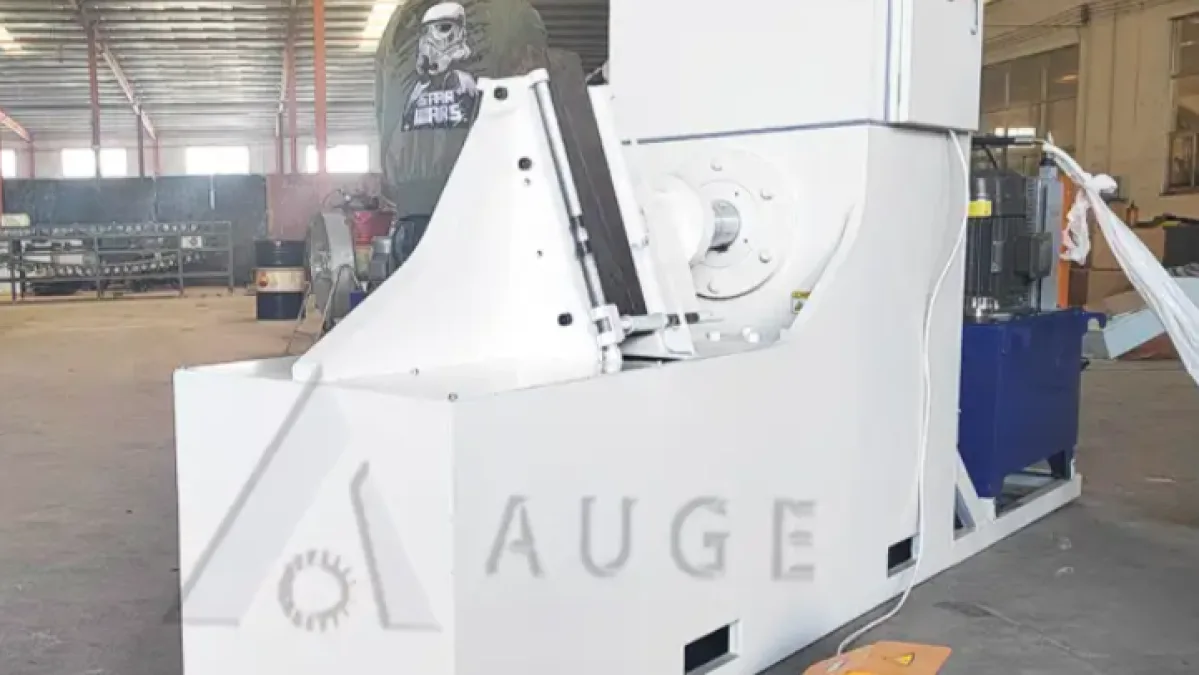
The Afrimart Screw Conveyor Helical Blade Making Machine cold-rolls steel strip into continuous helical flights for screw conveyors, augers and industrial mixing equipment. The referenced hydraulic configuration processes strips 2–8 mm thick and up to 150 mm wide, producing flights with outside diameters from 90 to 800 mm and inside diameters above 25 mm.
At a glance
- Best suited to
- Screw-conveyor, auger and spiral-blade manufacturers
- Forming method
- Continuous cold rolling
- Raw material
- High-carbon steel strip
- Strip thickness
- 2–8 mm
- Maximum strip width
- 150 mm
- Flight inside diameter
- Above 25 mm
- Flight outside diameter
- 90–800 mm
- Listed output
- 0.5–1.5 tonnes per day
- Cut-off system
- Hydraulic
- Total equipment power
- 34.7 kW
What is the Screw Conveyor Helical Blade Making Machine?
The Screw Conveyor Helical Blade Making Machine is an industrial cold-rolling system used to manufacture continuous spiral flights from flat steel strip.
Screw flights are the helical blades attached to a central shaft or pipe inside a screw conveyor or auger. As the shaft turns, the flights move powders, grains, aggregates and other bulk materials through a trough or enclosed tube.
The machine forms a continuous flight rather than producing individual sectional flight segments. It uses opposing conical rollers to progressively stretch and shape the strip into a helix.
Continuous flight production can reduce the number of joints required compared with building an auger from individually pressed sections. The finished flight still requires additional fabrication before it becomes a complete screw conveyor.
Downstream work may include:
- Cutting the flight to the required length
- Checking its diameter and pitch
- Fitting it around a central shaft or pipe
- Welding it to the shaft
- Joining flight lengths
- Straightening the finished screw
- Balancing rotating assemblies
- Applying the required surface finish
- Installing end shafts, bearings and drive components
The machine should not be confused with a spiral duct former or a sectional flight hydraulic press. Its principal function is continuously cold-rolling a flat steel strip into a helical blade.
How does the helical blade cold-rolling machine work?
The machine forms spiral blades through the controlled relative movement of two conical rollers.
The steel strip is prepared
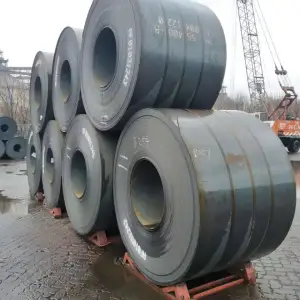
A strip of compatible material is cut to the required width and thickness. The referenced configuration accepts high-carbon steel from 2 to 8 mm thick and up to 150 mm wide.
The forming dimensions are established
The operator determines the required inside diameter, outside diameter and pitch of the screw flight. These dimensions must fall within the machine’s forming range.
The rollers are positioned
The conical forming rollers are adjusted according to the required flight dimensions and strip specification.
The strip is introduced
The leading end of the strip is fed carefully between the rollers. Appropriate loading and handling equipment may be required for heavy coils or long strip lengths.
The rollers form the helix
As the rollers rotate, their profile and relative position stretch the strip unevenly across its width. This creates the difference in circumference between the inner and outer edges, causing the flat strip to curve into a helix.
The continuous flight leaves the machine
The formed blade emerges continuously. It must be supported to prevent its weight from distorting the pitch or pulling against the forming section.
The flight is checked
Operators inspect the inside diameter, outside diameter, pitch, thickness and surface condition. Adjustments may be required during the first production piece.
The hydraulic system cuts the flight
The referenced configuration includes hydraulic cut-off for separating the continuous flight at the required length.
The process is performed without pre-heating the steel. Cold rolling changes the strip’s geometry through mechanical force at or near ambient temperature.
What is the difference between continuous and sectional screw flights?
Continuous and sectional flights are manufactured through different processes and suit different fabrication requirements.
| Comparison | Continuous cold-rolled flight | Sectional flight |
|---|---|---|
| Starting material | Steel strip or coil | Flat plate or cut ring |
| Forming method | Continuous rolling | Individual hydraulic pressing |
| Output | Long helical flight | Separate flight sections |
| Number of joints | Fewer joints along the blade | Sections must be joined |
| Typical thickness | Usually suited to thinner strip | May accommodate thicker plate |
| Production style | Continuous | Batch or piece-by-piece |
| Cut-off | Flight is cut to length | Each section is separately formed |
| Typical advantage | Longer uninterrupted flight | Flexibility for heavy sectional blades |
A continuous cold-rolling machine is generally appropriate where the manufacturer needs long screw flights within the machine’s thickness, strip-width and diameter range.
A sectional forming machine may be more appropriate for:
- Very thick flights
- Very large outside diameters
- Special pitches
- Tapered sections
- Short replacement flights
- Materials outside the continuous roller’s range
Buyers should select the forming method according to the actual flight drawings rather than assuming one process can manufacture every auger design.
What materials can the machine process?
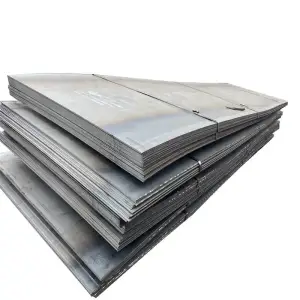
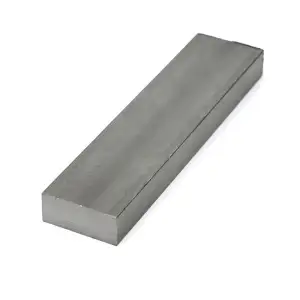
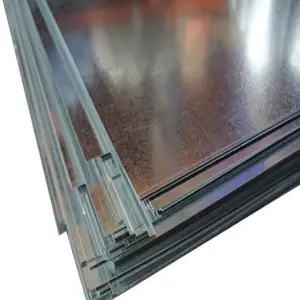
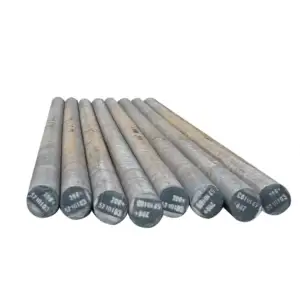
The referenced technical configuration identifies high-carbon steel as the machinable raw material.
The machine’s compatibility with other materials is not confirmed and must be established separately. Potential requests may involve:
- Mild steel
- Wear-resistant steel
- Stainless steel
- Galvanised steel
- Special alloy strip
Each material has different yield strength, work-hardening behaviour and surface characteristics. A machine that forms one high-carbon steel grade successfully may require different settings—or may not be suitable—for another grade.
Before ordering, provide Afrimart with:
- Exact steel grade
- Yield strength
- Tensile strength
- Strip thickness
- Strip width
- Surface condition
- Coil or straight-strip format
- Required inside diameter
- Required outside diameter
- Required pitch
- Direction of rotation
- Required flight length
Material samples or certificates should be used during technical confirmation.
What screw-flight dimensions can it produce?
The referenced configuration supports:
- Strip thicknesses from 2 to 8 mm
- Strip widths up to 150 mm
- Inside diameters above 25 mm
- Outside diameters from 90 to 800 mm
These dimensions describe different parts of the finished flight.
Inside diameter
The inside diameter is the opening through the centre of the formed flight. It should correspond to the shaft or pipe on which the flight will be installed, allowing for the selected welding and fitting method.
Outside diameter
The outside diameter is measured across the complete helical flight. It determines the screw’s relationship with the conveyor trough or tube.
Flight width
Flight width is approximately the radial distance between the inner and outer edges. It is related to—but not necessarily identical to—the width of the original flat strip after forming.
Pitch
Pitch is the axial distance between corresponding points on successive turns. The referenced specification does not publish a pitch range, so every required pitch should be submitted for technical confirmation.
Direction of rotation
Screw flights can be right-handed or left-handed. The machine’s support for each direction and the changeover procedure should be confirmed.
A production drawing should specify every critical dimension and tolerance. Describing a requirement only as a “300 mm auger,” for example, does not define the inside diameter, pitch, thickness, shaft or direction.
Where is the screw-flight machine used?
Screw-conveyor manufacturing
Fabricators can use continuous flights to manufacture conveyors for powders, grains, minerals, ash and other bulk materials.
The flight geometry must be engineered around the conveyed material, required capacity and conveyor orientation.
Agricultural machinery
Auger flights are used in grain conveyors, feed systems, combine harvesters, seed-handling equipment and other agricultural machines.
Mining and mineral processing
Screw conveyors can move selected ores, concentrates, additives and process residues. Abrasive service may require specialised material or wear protection.
Food-processing equipment
Screw conveyors and augers are used for flour, grain, spices and other products. Food-contact applications may require stainless steel and hygienic fabrication, which are not confirmed for this machine.
Cement and construction materials
Flights may be fabricated for conveying cement, fly ash, lime, sand and other suitable bulk materials.
Waste and recycling machinery
Spiral blades are used in selected waste-transfer, dewatering, screening and material-processing equipment.
Industrial mixers
Helical blades can form part of ribbon mixers, spiral mixers and other material-blending systems.
Drilling and earth-moving equipment
Auger flights are used in drilling tools and earth augers. These applications may require thicker or specialised steel outside the machine’s confirmed range.
Technical specifications
The following values apply to the referenced fully hydraulic continuous spiral-blade cold-rolling configuration. Afrimart should confirm that the offered machine matches this specification before ordering.
| Specification | Verified value | Buyer note |
|---|---|---|
| Product type | Continuous helical blade cold-rolling machine | Forms long screw flights from steel strip |
| Forming method | Cold rolling between conical rollers | No pre-heating is required for the forming process |
| Main motor power | 11 kW + 11 kW | Dual main-motor arrangement |
| Total equipment power | 34.7 kW | Use this value for preliminary electrical planning |
| Roller speed | 12 r/min | Actual production setting may vary by material |
| Main motor speed | 980 r/min | Variable-frequency regulation is referenced |
| Strip thickness | 2–8 mm | Confirm compatibility with the exact steel grade |
| Maximum strip width | 150 mm | Finished flight width depends on geometry |
| Minimum inside diameter | Above 25 mm | Confirm fit around the intended shaft |
| Outside-diameter range | 90–800 mm | Submit the required diameter and tolerance |
| Listed raw material | High-carbon steel | Other materials require written approval |
| Output | 0.5–1.5 tonnes/day | Depends on strip and flight specifications |
| Cut-off method | Hydraulic cut-off | Confirm length control and cutting tolerance |
| Machine weight | 8.2 tonnes | Requires suitable unloading and foundation planning |
| Drive control | Variable-frequency operation | Allows operating-speed adjustment |
| Forming tooling | Conical roller set | Confirm included roller range |
| Operating format | Continuous | Flight requires downstream fabrication |
Specifications may vary according to configuration and must be confirmed in Afrimart’s current written quotation.
What are the main operational benefits?
Continuous flights reduce sectional assembly
The machine forms long helical flights from a continuous strip. This can reduce the number of individual sections that must be positioned and joined during auger fabrication.
The finished flight still needs to be fitted and welded to its shaft.
One roller arrangement covers multiple diameters
The referenced configuration uses adjustable conical rollers to form different flight sizes within its stated range.
This can reduce the need for a separate mould for every diameter, although tooling and setup requirements must be confirmed.
Cold rolling avoids a separate heating stage
The strip is formed through mechanical pressure without pre-heating. This simplifies the forming sequence compared with a hot-forming operation.
The process still requires significant electrical and hydraulic power.
The process supports uniform continuous thickness
Controlled rolling is designed to create a continuous flight with consistent geometry. Quality depends on material consistency, roller condition and correct adjustment.
Variable-frequency control supports process adjustment
The machine’s operating speed can be adjusted to suit different strip dimensions and material behaviour.
Thicker or higher-strength material may require slower operation than thinner strip.
Hydraulic cut-off is integrated
The referenced system includes hydraulic cutting of the finished flight. This can eliminate a separate manual cutting stage.
Buyers should confirm cut length, tolerance and blade-maintenance requirements.
A single operator may supervise the forming process
The integrated electrical, hydraulic and mechanical arrangement is designed for centralised operation.
Additional personnel or handling equipment may still be required for coil loading, supporting the emerging flight and moving finished components.
What additional equipment is required?
A flight-rolling machine is one stage in screw-conveyor manufacturing.
The workshop may also require:
- Steel-strip coil or prepared flat strip
- Decoiler
- Straightener
- Strip-feeding equipment
- Entry guides
- Flight support system
- Cutting equipment
- Measuring tools
- Shaft or pipe preparation equipment
- Welding fixtures
- Welding machines
- Straightening equipment
- Grinding and finishing tools
- Balancing equipment
- Lifting equipment
- Surface-treatment equipment
- Inspection instruments
For complete conveyor manufacturing, further components include:
- Central shaft or tube
- End shafts
- Couplings
- Bearings
- Gearmotor
- Trough or casing
- Covers
- Inlet and discharge chutes
- Supports
- Safety guards
Buyers should define whether they need only flight-manufacturing equipment or a broader screw-conveyor fabrication setup.
How should a screw flight be specified?
Provide a dimensioned drawing containing:
- Inside diameter
- Outside diameter
- Pitch
- Material grade
- Material thickness
- Flight length
- Right-hand or left-hand direction
- Shaft diameter
- Welding arrangement
- Dimensional tolerances
- Surface finish
The product being conveyed should also be identified because it influences the flight design.
Relevant material characteristics include:
- Bulk density
- Particle size
- Moisture
- Abrasiveness
- Flowability
- Temperature
- Corrosiveness
- Tendency to compact
- Food-contact requirements
The machine forms the requested geometry, but conveyor performance depends on engineering the complete screw around its intended duty.
What utilities and installation conditions are required?
The referenced total equipment power is 34.7 kW, including two 11 kW main motors and supporting hydraulic and electrical systems.
Buyers should confirm:
- Supply voltage
- Electrical frequency
- Three-phase requirement
- Starting current
- Cable sizes
- Circuit protection
- Earthing
- Hydraulic oil specification
- Hydraulic-tank capacity
- Cooling requirements
- Ambient-temperature range
At 8.2 tonnes, the machine requires careful transport, unloading and foundation planning.
The site should provide:
- Suitable floor-loading capacity
- Level installation area
- Foundation drawings
- Anchor-bolt locations
- Crane or forklift access
- Space for steel-strip handling
- Space for the emerging spiral
- Operator clearance
- Maintenance access
- Safe material routes
The flight can extend well beyond the machine as it is formed. Installation planning must therefore consider the product’s length, not only the machine footprint.
How should quality be inspected?
Screw flights should be inspected before being welded to the central shaft.
Key checks include:
- Inside diameter
- Outside diameter
- Pitch
- Flight thickness
- Flight width
- Direction of rotation
- Surface condition
- Edge condition
- Cracks
- Twisting
- Dimensional consistency
- Fit around the shaft
A trial flight should be produced and approved before starting a large batch.
The inspection method may use:
- Steel rules
- Vernier callipers
- Diameter tapes
- Pitch templates
- Welding fixtures
- Profile gauges
- Material certificates
- Visual inspection
The machine supplier should state the dimensional tolerances achievable for the exact material and flight specification.
How should safety and maintenance be managed?
Cold rolling creates high forces at the roller nip. The machine also contains rotating drives, hydraulic pressure and heavy moving steel.
Safety provisions should include:
- Fixed and interlocked guards
- Emergency stops
- Electrical isolation
- Hydraulic-pressure isolation
- Protection around the roller nip
- Safe strip-feeding tools
- Guards around couplings and drives
- Controlled access to the cut-off system
- Safe lifting procedures
- Flight-support arrangements
- Appropriate personal protective equipment
Operators should never guide the strip by placing their hands near the forming rollers.
Preventive maintenance should cover:
- Forming rollers
- Roller bearings
- Gearboxes
- Drive motors
- Couplings
- Hydraulic pump
- Hydraulic hoses
- Seals
- Filters
- Cut-off blade
- Sensors
- Electrical connections
- Variable-frequency drives
- Frame fasteners
Roller wear or damage can affect flight diameter, pitch and surface quality. Buyers should obtain inspection criteria and replacement procedures.
What should buyers confirm before ordering?
Required flight
- Inside diameter
- Outside diameter
- Pitch
- Thickness
- Strip width
- Flight length
- Rotation direction
- Dimensional tolerance
- Production volume
Material
- Steel grade
- Yield strength
- Tensile strength
- Surface condition
- Coil dimensions
- Coil weight
- Material certificate
- Stainless or carbon-steel requirement
Machine specification
- Exact model
- Roller range
- Strip-thickness range
- Maximum strip width
- Supported pitch range
- Diameter range
- Production speed
- Hydraulic cut-off
- Left- and right-hand forming
- Dimensional accuracy
Installation
- Machine dimensions
- Machine weight
- Foundation
- Unloading equipment
- Total electrical load
- Voltage and frequency
- Hydraulic oil
- Cooling
- Product-support area
Support
- Installation and commissioning
- Operator training
- Maintenance training
- Operation manual
- Electrical and hydraulic drawings
- Recommended spare parts
- Replacement rollers
- Cut-off blades
- Warranty
- Technical support
How to source the Helical Blade Making Machine through Afrimart
Afrimart can help buyers confirm whether the cold-rolling machine’s forming range matches their screw-flight drawings and steel specifications.
Provide:
- Required flight drawings
- Inside and outside diameters
- Pitch
- Material grade
- Strip thickness and width
- Required flight length
- Left- or right-hand rotation
- Expected daily production
- Project country and location
- Available electrical supply
- Installation and training requirements
- Target commissioning date
Request a quotation for the Screw Conveyor Helical Blade Making Machine through Afrimart.
Frequently asked questions
What does a helical blade cold-rolling machine produce?
The machine converts flat steel strip into a continuous helical flight. That flight can be fitted and welded around a central shaft or tube to manufacture screw conveyors, augers, mixer blades and related spiral components.
What strip thickness can the machine process?
The referenced configuration processes high-carbon steel strip from 2 to 8 mm thick and up to 150 mm wide. Compatibility depends on the steel grade and strength, so buyers should provide a material certificate and flight drawing.
What flight diameters can it form?
The referenced forming range covers outside diameters from 90 to 800 mm and inside diameters above 25 mm. The required pitch, tolerances and material specification must also fall within the machine’s capabilities.
Can it manufacture stainless-steel screw flights?
Stainless-steel compatibility is not confirmed for the referenced continuous cold-rolling configuration, which identifies high-carbon steel as its raw material. Buyers should submit the exact stainless-steel grade, dimensions and production requirement for written approval and testing.
Does the machine produce a complete screw conveyor?
No. It produces the continuous helical flight. Additional fabrication is required to cut, fit and weld the flight to a shaft and manufacture the conveyor casing, bearings, drive, inlet, discharge and guards.
Can it produce both left- and right-hand flights?
The ability to form both rotation directions should be confirmed for the exact machine and roller setup. Buyers should clearly mark the required flight direction on the technical drawing submitted with the quotation request.
What information is needed for an accurate quotation?
Provide the flight’s inside diameter, outside diameter, pitch, thickness, length, rotation direction and steel grade. Also provide the required daily output, electrical supply, project location and installation or training needs.
Sources and technical review
- Afrimart: Screw Conveyor Helical Blade Making Machine
- Technical reference: Fully Hydraulic Continuous Helical Spiral Blade Cold Rolling Machine
The external technical reference describes the matching continuous cold-rolling configuration. Afrimart should confirm that the quoted machine carries the same specification before purchase.