























































































































At a Glance
- Machine type
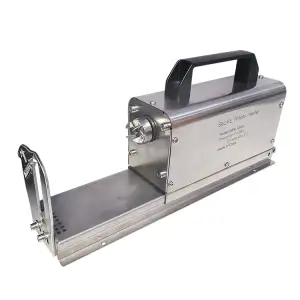
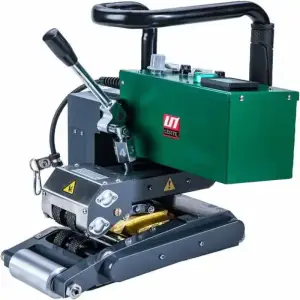
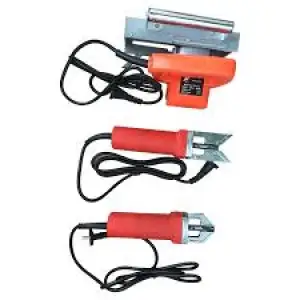
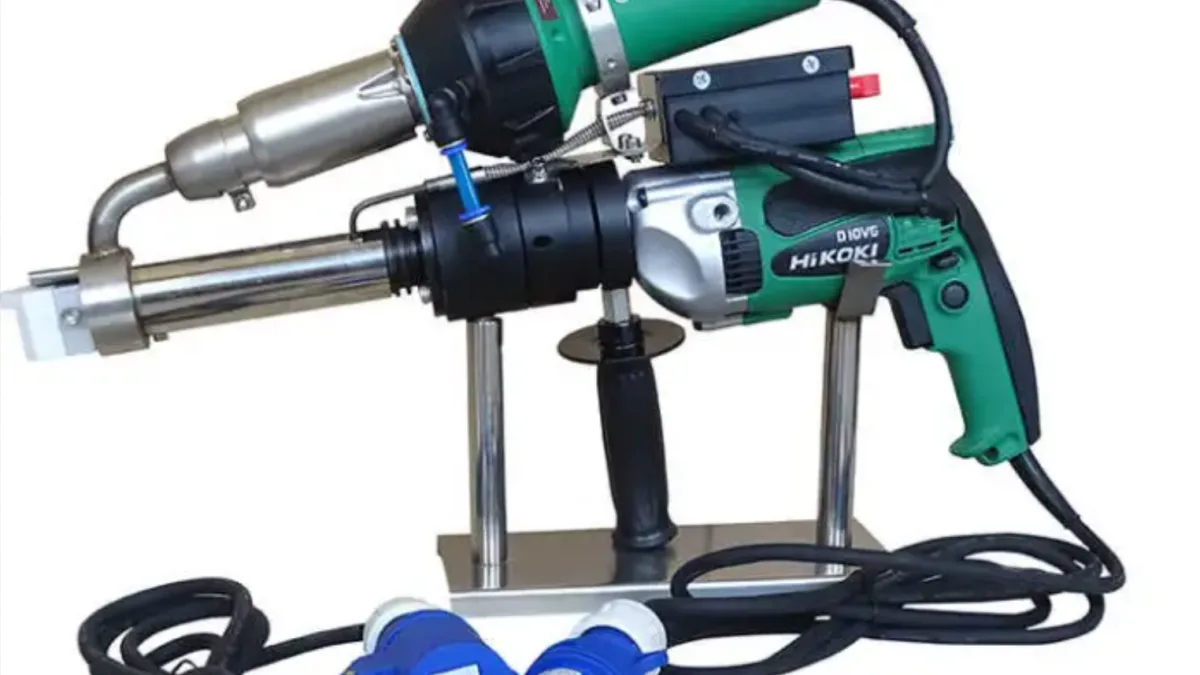
- Handheld plastic extrusion welding gun
- Rated power
- 3,600 W
- Heating configuration
- Described as double heating
- Listed materials
- PPR, PP and HDPE
- Primary process
- Hot-air preheating and filler-rod extrusion
- Typical users
- Plastic fabricators, tank builders, repair workshops and installation contractors
- Suitable work
- Plastic tanks, pipes, sheets, ducts, liners and fabricated assemblies
- Important limitation
- Voltage, welding-rod diameter, extrusion output and temperature range must be confirmed before ordering
The product is available through the Afrimart 3600W plastic extrusion welder listing.
What Is a Hand Plastic Extrusion Welder?
A hand extrusion welder is a portable machine that feeds thermoplastic welding rod into a heated extrusion chamber. The machine softens the rod and pushes the resulting plastic through a welding shoe onto a prepared joint.
At the same time, hot air heats the surfaces being joined. This surface preheating helps the extruded filler material bond with the parent plastic when the material, temperature, pressure and travel speed are correctly controlled.
Unlike a basic hot-air welding gun, an extrusion welder deposits a larger, more consistent volume of plastic. This makes the process useful for thicker sheets and demanding fabrication work where a small hot-air bead would be inefficient.
Hand extrusion welding is commonly considered for:
- Plastic storage and process tanks
- HDPE and PP pipe fabrication
- Thermoplastic ducting
- Aquaculture tanks and equipment
- Plastic sumps and containment systems
- Geomembrane detail work
- Plastic sheet assemblies
- Repairs to compatible moulded products
- Wastewater and chemical-handling installations
The machine should not automatically be treated as suitable for every plastic product. The workpiece, filler rod and welding procedure must be compatible.
How the Afrimart 3600W Plastic Extrusion Welder Works
The welding process begins with preparation rather than heating. Both sides of the joint must be correctly shaped, dry and free from oil, dust, moisture and degraded plastic.
A typical operating sequence is:
- Identify the workpiece material.
- Select a compatible welding rod from the same suitable polymer family.
- Prepare the joint using the required bevel, groove or overlap.
- Remove oxidation and contamination from the welding area.
- Fit a welding shoe suitable for the joint geometry.
- Set the preheating and extrusion temperatures for the plastic.
- Allow the machine to reach stable operating temperature.
- Feed the welding rod into the extrusion mechanism.
- Preheat the joint surfaces with the hot-air outlet.
- Guide the welding shoe along the joint at a controlled speed.
- Allow the completed bead to cool without disturbance.
- Inspect and test the weld according to the application.
The product is described as a double-heating model. In extrusion-welding equipment, this wording may indicate separate heating functions for the incoming air and the plasticising or extrusion section. Buyers should confirm whether the Afrimart model provides independently adjustable hot-air and extrusion temperatures.
Independent control is valuable because the parent material and welding rod have related but different heating requirements. Excessive heat can degrade the plastic, while insufficient heat can produce poor fusion even if the bead looks complete.
Compatible Plastics and Welding Rod Selection
The product title identifies PPR, PP and HDPE as its target plastics. These materials belong to the polyolefin family, but they should not be treated as interchangeable during welding.
HDPE
High-density polyethylene is widely used for tanks, pipes, liners, sheets, chemical-containment structures and water-management products. Extrusion welding is frequently used when fabricating thicker HDPE sheet or completing details that cannot easily be welded with large automated equipment.
PP
Polypropylene is used for chemical tanks, ventilation systems, laboratory equipment, plating tanks and industrial ducting. PP requires properly controlled heat and a compatible polypropylene welding rod.
PPR
PPR normally refers to polypropylene random copolymer. It is frequently associated with pressure-pipe systems. However, standard PPR plumbing joints are normally produced through approved socket or butt-fusion processes.
A handheld extrusion welder should not be assumed to replace the manufacturer-approved joining method for pressurised PPR pipe. It may be relevant to compatible fabrication or repair work, but the pipe-system manufacturer’s instructions and applicable standards remain decisive.
Matching the Welding Rod
The welding rod should be compatible with the parent material. For example:
- Use an appropriate HDPE or compatible PE rod for confirmed polyethylene work.
- Use an appropriate PP rod for polypropylene work.
- Use a filler specifically approved for the relevant PPR application.
- Do not use PE filler simply because it melts inside the machine when the workpiece is PP.
- Do not assume colour similarity means chemical compatibility.
Rod diameter is also important because the feed mechanism is designed around a defined size or size range. The Afrimart listing title does not establish that range, so buyers should confirm the accepted welding-rod diameters before purchasing consumables.
Applications for the Extrusion Welding Gun
Tank and Container Fabrication
A hand extrusion welder can be used to join compatible plastic sheets when manufacturing tanks, bins, sumps and process vessels. Joint design, sheet thickness and material grade must be appropriate for the intended load and contents.
A visually complete weld does not automatically make a tank pressure-rated or chemically resistant. Fabricated tanks may require documented procedures, qualified operators, structural calculations and leak testing.
Pipe and Duct Fabrication
Extrusion welding may be used on compatible non-pressure ducting, pipe fittings and fabricated transitions. It is particularly useful where the geometry cannot be reached by conventional butt-fusion equipment.
For pressure pipe, the approved pipe-joining method should be followed. An extrusion bead should not be added as an improvised substitute for a correctly completed fusion joint.
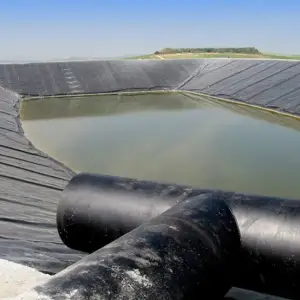
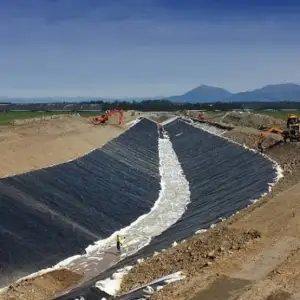
Geomembranes and Liners
Hand extrusion welders are often used for detailed work on compatible thermoplastic liners, including:
- Patches
- Pipe penetrations
- Corners
- T-joints
- Repairs
- Irregular shapes
- Termination details
Long, accessible liner seams are generally completed using the specified production-welding equipment. Extrusion welding is then used where the geometry or repair type requires it.
Geomembrane installations may also require trial welds, destructive or non-destructive testing, documented temperatures and qualified technicians.
Plastic Repairs
The machine may be useful for repairing compatible tanks, bins, sheets and industrial components. Before undertaking a repair, the operator should determine why the original part failed.
A repair is unlikely to last if the component remains overloaded, chemically attacked, incorrectly supported or repeatedly flexed. Cracks should be stopped and prepared correctly rather than simply covered with hot filler material.
Technical Specifications
The following table separates information visible in the product title from details that still require written confirmation.
| Specification | Available information |
|---|---|
| Product category | Hand plastic extrusion welding gun |
| Rated power | 3,600 W |
| Heating description | Double heating |
| Listed thermoplastics | PPR, PP and HDPE |
| Primary function | Plastic fabrication and repair by extrusion welding |
| Operating form | Handheld |
| Surface-heating method | Hot-air preheating |
| Filler application | Plastic welding rod plasticised and deposited through an extrusion shoe |
| Supply voltage | Confirm before ordering |
| Supply frequency | Confirm before ordering |
| Plug and socket type | Confirm before ordering |
| Rated current | Confirm against the final voltage |
| Welding-rod diameter | Confirm before ordering |
| Extrusion output | Confirm in kilograms per hour |
| Hot-air temperature range | Confirm before ordering |
| Extrusion temperature range | Confirm before ordering |
| Air-supply configuration | Confirm whether integrated or external |
| Temperature control | Confirm the number and type of controllers |
| Motor speed control | Confirm whether adjustable |
| Welding shoes included | Confirm quantity, shapes and sizes |
| Power-cable length | Confirm before ordering |
| Machine dimensions | Confirm before ordering |
| Net weight | Confirm before ordering |
| Warranty and parts support | Confirm in writing |
A 3,600 W nameplate rating alone is not enough to size the electrical connection. Current depends on the machine’s voltage, efficiency and electrical design. A qualified electrician should verify the final nameplate and local installation requirements.
Benefits of the 3600W Double-Heating Design
Higher Filler Deposition
Extrusion welding deposits more filler than manual hot-air welding with a small hand-fed rod. This can improve productivity on thick sheets, large grooves and fabrication work requiring substantial weld beads.
Portable Operation
A handheld design allows the machine to be taken to tanks, installed liners, ducting and other components that cannot be moved to a fixed welding station.
Portability does not necessarily mean lightweight. Machine weight, cable position and hose arrangement affect operator fatigue, particularly on vertical or overhead welds.
Controlled Surface Preheating
The hot-air system preheats the joint immediately before the softened filler is applied. When correctly adjusted, this supports fusion between the bead and the prepared workpiece.
Potentially Separate Heat Management
If “double heating” refers to independently controlled hot-air and extrusion zones, operators may be able to balance surface preheating with filler plasticisation more accurately. This feature should be confirmed rather than assumed from the product name alone.
Adaptable Welding Shoes
Extrusion welders can use differently shaped welding shoes for fillets, butt joints, corners and surface repairs. The correct shoe guides the softened plastic and applies consolidation pressure.
Buyers should verify which shoes are included and whether replacements can be obtained.
Suitable for Workshop and Site Work
The tool can support both workshop fabrication and field repair, subject to safe electricity, dry conditions, ventilation and correct material preparation.
Electrical Supply and Installation Requirements
Before commissioning the welder, confirm the full electrical nameplate. The installation must match the required voltage, frequency, plug, socket, current capacity and earthing arrangement.
The supply circuit should be able to handle the machine without excessive voltage drop. Long or undersized extension cables may overheat and reduce heater performance.
Buyers should establish:
- Whether the machine operates on single-phase or another supply
- Its exact operating voltage
- Full-load current
- Required socket and plug
- Recommended circuit protection
- Earthing requirements
- Maximum permissible extension-cable length
- Minimum extension-cable conductor size
- Whether a portable residual-current protection device is required
- Whether the site generator can provide stable power
The air supply must also be clarified. Some professional hand extruders have an integrated air blower, while other configurations depend on an external air source. The buyer should not assume that an air compressor is unnecessary until the product’s air system is confirmed.
A clean, organised work area is important. The operator needs enough space to guide the welding shoe without the cable, hose or welding rod snagging on the component.
Weld Preparation and Quality Control
Strong extrusion welds depend on preparation, heat and operator control. More power cannot compensate for incorrect joint design or contaminated plastic.
Identify the Plastic
Markings, fabrication records or material certificates should be used wherever possible. Unknown plastics can behave unpredictably, and mixed polymers may not form a reliable bond.
Remove the Oxidised Surface
Polyolefin surfaces can develop an oxidised layer that interferes with welding. The joint should be mechanically scraped or prepared according to the approved procedure shortly before welding.
Solvent cleaning alone may not remove this layer. Any cleaning product used must also be suitable for the plastic and allowed to evaporate completely.
Prepare the Joint Geometry
A crack or butt joint may need to be opened into a defined groove so the filler can reach and fuse with both sides. Corners and fillets need enough access for the preheating air and welding shoe.
Control Temperature and Travel Speed
Moving too quickly may prevent fusion. Moving too slowly can overheat or deform the parent material. The operator must also maintain the appropriate shoe pressure and working angle.
Complete Trial Welds
Trial welds on representative scrap material help establish temperatures, output and travel speed. They also allow the operator to assess bead shape and fusion before working on the final product.
Industry-grade extrusion welders normally publish critical parameters such as material compatibility, rod diameter and output. The Leister technical overview of handheld extrusion welding equipment illustrates why these parameters should be confirmed when evaluating any extrusion welder.
Safety and Maintenance
A plastic extrusion welder combines high electrical power, hot air, molten polymer and a motor-driven feed mechanism. Operators should be trained before using it.
Important precautions include:
- Wear heat-resistant gloves and suitable eye protection.
- Keep hands away from the hot-air nozzle, barrel and welding shoe.
- Place the machine on a heat-resistant stand when not welding.
- Keep combustible materials away from the hot-air stream.
- Provide adequate ventilation.
- Follow the material manufacturer’s safety information.
- Avoid welding unidentified or contaminated plastic.
- Do not use the tool in wet conditions unless the complete system is approved for them.
- Inspect the cable, plug, heater and earth connection regularly.
- Disconnect and cool the machine before changing shoes or cleaning it.
- Never block the cooling or air passages.
- Do not pull the machine by its power cable.
- Keep loose clothing away from the rod-feed mechanism.
During shutdown, the manufacturer’s cooling procedure should be followed. Abruptly disconnecting some hot-air equipment while its heater remains extremely hot may reduce element life.
Routine maintenance should include:
- Cleaning the air inlet
- Inspecting the nozzle and welding shoe
- Removing polymer residue using the approved method
- Checking feed rollers and guides
- Inspecting electrical connections
- Checking temperature sensors
- Examining the motor and gearbox for unusual noise
- Replacing worn shoes and nozzles
- Keeping air passages unobstructed
Maintenance should not involve scraping hot parts with tools that can damage coatings or sensors.
Buyer Checklist
Before ordering the Afrimart 3600W plastic extrusion welder, obtain written answers to the following questions.
Machine Configuration
- What is the exact model number?
- Is the rated input definitely 3,600 W?
- What are the voltage, frequency and phase?
- What plug is supplied?
- Is hot-air production integrated?
- Does the machine require a compressor?
- Are the hot-air and extrusion temperatures independently adjustable?
- What temperature ranges are available?
Production Capability
- Which plastics are approved by the manufacturer?
- What welding-rod diameters can be used?
- What is the output in kilograms per hour for each rod diameter?
- What material thickness range is recommended?
- Can output or feed speed be adjusted?
- Is the unit suitable for continuous production?
Included Equipment
- Which welding shoes are included?
- Is a machine stand supplied?
- Are cleaning tools included?
- Is a storage or transport case included?
- Is starter welding rod supplied?
- Is an English operating manual included?
Service and Ownership
- What warranty applies?
- Where can heating elements be obtained?
- Are motors, controllers and sensors available separately?
- Are welding shoes standard or model-specific?
- Is commissioning or operator training available?
- What maintenance intervals are recommended?
- What is the expected dispatch and delivery arrangement?
Project Information to Provide
For a more useful equipment recommendation, send Afrimart:
- The plastic type and grade
- Sheet or wall thickness
- Joint type
- Welding position
- Required bead dimensions
- Typical daily welding volume
- Available electrical supply
- Whether work is performed in a workshop or on site
- Any applicable quality or testing standard
Request the Afrimart 3600W Plastic Extrusion Welder
The Afrimart 3600W double-heating extrusion welder may be a practical option for businesses working with compatible PPR, PP and HDPE components. Its suitability, however, depends on more than nominal wattage.
Before placing an order, confirm the voltage, welding-rod range, extrusion output, approved materials, temperature controls, air-supply arrangement and included welding shoes. These details determine whether the machine matches the intended joints and production workload.
View the Afrimart product page and request confirmed specifications.
Frequently Asked Questions
What is the Afrimart 3600W extrusion welder used for?
It is intended to plasticise welding rod and deposit it onto preheated thermoplastic joints. Typical work can include compatible plastic tanks, sheets, pipes, ducts, liners and repairs.
Which plastics can it weld?
The product title lists PPR, PP and HDPE. Buyers should request a formal material-compatibility statement because the correct filler, temperature and procedure differ between polymers.
Can polyethylene welding rod be used on polypropylene?
It should not be assumed compatible. The filler normally needs to match or be formally approved for the parent plastic. PE and PP may both soften in the machine while still producing an unreliable joint when combined.
Does the welder need an air compressor?
The available product title does not confirm whether the hot-air supply is integrated or external. This must be checked before ordering.
What welding-rod diameter does it accept?
The accepted rod size is not established by the product title. Ask Afrimart to confirm every supported diameter and the corresponding extrusion output.
What does double heating mean?
It may refer to separate heating of the preheating air and the extrusion chamber. Buyers should confirm whether the two temperatures are independently controlled.
Can it repair a pressure-rated PPR pipe?
Do not assume so. Pressure-pipe systems normally require manufacturer-approved fusion equipment and procedures. An extrusion repair may be unsuitable unless it is specifically engineered and approved.
Is it suitable for geomembrane installation?
A handheld extruder can be useful for compatible patches, penetrations, corners and repair details. The machine, welding rod, operator and test procedure must meet the project requirements.
Can it weld PVC?
PVC should not be assumed compatible. The listed product materials are PPR, PP and HDPE. Obtain written confirmation before attempting any other polymer, and consider its different processing and ventilation requirements.
What details are needed when requesting a quotation?
Provide the plastic type, material thickness, rod size, joint design, daily workload, welding position and available electricity. Also request the machine’s output, voltage, included shoes, warranty and spares list.