






































































































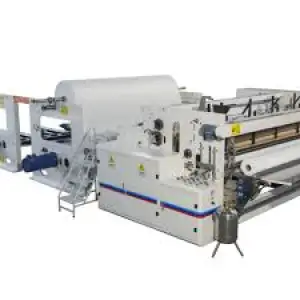
































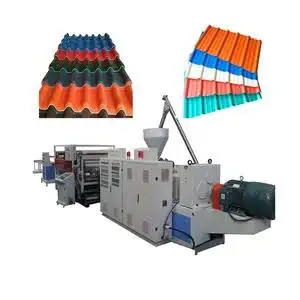




















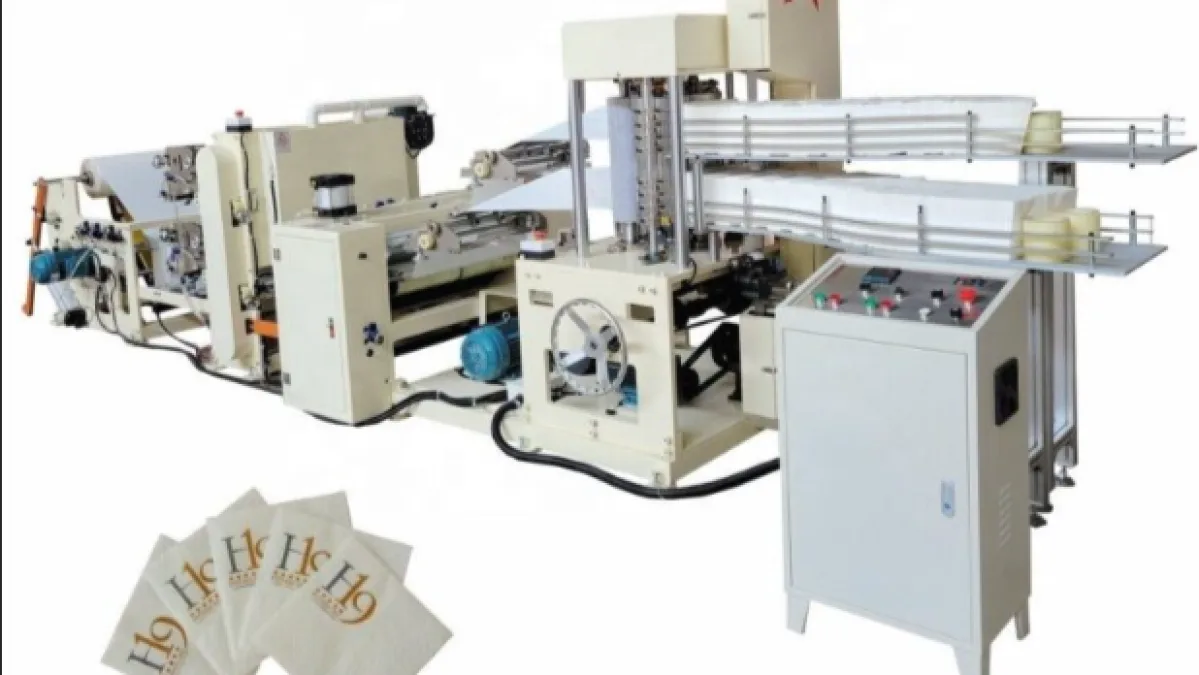
The Trade Market Afrimart Automatic Paper Napkin Machine converts large tissue-paper rolls into folded paper napkins at a stated speed of 1,000–2,000 sheets per minute. It supports unfolded sizes from 180 × 180 mm to 300 × 300 mm and corresponding folded sizes from 90 × 90 mm to 150 × 150 mm.
At a glance
- Best suited to
- Commercial paper-napkin manufacturers and tissue converters
- Input material
- Tissue-paper rolls up to 600 mm wide
- Final product
- Folded paper napkins
- Operating speed
- 1,000–2,000 sheets per minute
- Folded size range
- 90–150 × 90–150 mm
- Unfolded size range
- 180–300 × 180–300 mm
- Maximum parent-roll diameter
- 1,200 mm
- Listed electrical supply
- 380 V
- Product reference
- GTM-202503282018
What is the Automatic Paper Napkin Machine?
The Automatic Paper Napkin Machine is a high-speed tissue-converting machine that processes tissue from a parent roll into individual folded paper napkins.
It is described as a paper-folding machine rather than a paper mill. This means it processes previously manufactured tissue paper; it does not turn wood pulp, recycled fibre or other raw material into tissue.
The machine is designed to perform the converting stages needed to create folded napkins. Depending on its final configuration, these stages may include:
- Unwinding tissue from a parent roll
- Guiding and controlling the tissue web
- Folding the tissue
- Cutting or separating it into individual sheets
- Counting the finished napkins
- Delivering folded napkins for collection or packaging
The available product information does not identify every installed component or confirm whether embossing, colour printing, automatic counting and packaging are included. Buyers should therefore request a detailed machine configuration rather than assuming that every common napkin-converting function is standard.
How does the paper napkin machine work?
The machine uses a continuous tissue-feeding and folding process to manufacture individual paper napkins.
The parent roll is loaded
A compatible roll of tissue is mounted on the machine’s unwinding section. The listed raw-material width ranges from 360 to 600 mm, while the maximum listed roll diameter is 1,200 mm.
The tissue web is unwound
The tissue is fed from the parent roll into the processing section. Web alignment and stable tension are important because thin tissue can wrinkle, stretch or tear if it is not guided correctly.
The tissue is folded
The machine folds the tissue into the selected format. The listed unfolded-size range is 180–300 mm by 180–300 mm, producing folded dimensions from 90–150 mm by 90–150 mm.
The napkin is separated
The folded tissue is cut or separated into individual napkins. The product listing does not specify the cutting mechanism, blade arrangement or cutting tolerance.
Finished napkins are discharged
The completed napkins are delivered from the processing section for counting, inspection and packaging.
Napkins are packed
The listing does not confirm an integrated packaging system. A separate napkin-packing machine or manual packing process may therefore be required.
The precise operating sequence should be confirmed in the machine manual and technical offer. Buyers should establish whether the quoted equipment includes embossing, printing, counting, stacking, transferring and packaging systems.
What raw materials can the machine process?
The verified input is tissue paper supplied on a roll between 360 and 600 mm wide and with a maximum listed roll diameter of 1,200 mm.
The product page does not specify:
- Tissue grammage
- Number of plies
- Fibre composition
- Moisture range
- Parent-roll core diameter
- Maximum parent-roll weight
- Tissue tensile strength
- Compatible printed or laminated materials
- Required roll winding direction
These characteristics can affect web feeding, folding accuracy, cutting and finished-napkin quality. Buyers should submit the technical data sheet for their intended tissue material before ordering.
The machine should not be described as processing raw pulp merely because it makes paper napkins. It converts existing tissue rolls into folded products.
A buyer sourcing tissue should confirm:
- Tissue grammage in grams per square metre
- One-ply or multi-ply construction
- Parent-roll width
- Parent-roll diameter and weight
- Parent-roll core dimensions
- Tissue colour
- Embossed or plain material
- Printed or unprinted material
- Food-contact requirements where applicable
- Required finished-napkin strength and absorbency
The machine specification and tissue specification must be evaluated together. A parent roll may fit the machine physically but still be unsuitable for stable high-speed folding.
Which napkin sizes can the machine produce?
The machine supports a range of square napkin formats.
| Product format | Verified range | Buyer consideration |
|---|---|---|
| Unfolded napkin width | 180–300 mm | Confirm exact adjustment increments |
| Unfolded napkin length | 180–300 mm | Confirm compatibility with the cutting system |
| Folded napkin width | 90–150 mm | Corresponds to the listed unfolded range |
| Folded napkin length | 90–150 mm | Confirm the required fold configuration |
| Raw-material width | 360–600 mm | Must match the selected production format |
| Parent-roll diameter | Maximum 1,200 mm | Confirm roll weight and loading system |
These dimensions suggest that the tissue is folded to approximately half of its unfolded dimensions in each direction. However, the product page does not define whether this is a quarter-fold, book-fold, dispenser-fold or another commercial fold type.
Buyers should provide a physical sample or detailed drawing of the intended napkin. The drawing should show:
- Fully opened dimensions
- Final folded dimensions
- Number and direction of folds
- Number of tissue plies
- Embossed area
- Printed area
- Edge condition
- Sheets per pack
- Pack arrangement
This information is particularly important when the finished napkin must fit existing dispensers or meet a retailer’s private-label specification.
Where is the Automatic Paper Napkin Machine used?
Paper-napkin manufacturing plants
The equipment is suitable for manufacturers converting jumbo tissue into folded napkins for retail, hospitality or institutional markets.
Hospitality-supply businesses
Napkins are used by restaurants, hotels, caterers, cafés, takeaway businesses and event venues. A converter may manufacture different dimensions and pack quantities for these customers.
Private-label manufacturing
Contract manufacturers can produce napkins for retailers, distributors, hospitality suppliers and other brands. The machine configuration must support each customer’s required fold, dimensions, embossing and presentation.
Institutional hygiene supply
Schools, healthcare establishments, workplace canteens and public institutions may require paper napkins in larger commercial packs. Manufacturers can configure production around the required size and pack count.
Food-service packaging operations
Businesses supplying disposable food-service products may add napkin production to a broader range that includes cups, plates, containers and other consumable products.
Regional tissue conversion
The machine may support napkin production closer to local markets where suitable tissue parent rolls, utilities, technical support and distribution channels are available.
The commercial opportunity differs across markets. Buyers should evaluate demand, competing products, packaging expectations, raw-material availability and distribution costs before selecting a production capacity.
Technical specifications
The following values are taken from the Trade Market Afrimart product listing for the Automatic Paper Napkin Machine.
| Specification | Verified value | Buyer note |
|---|---|---|
| Product name | Automatic Paper Napkin Machine | High-speed tissue-folding equipment |
| Product reference | GTM-202503282018 | Use this reference in quotation enquiries |
| Product type | Paper napkin machine | Intended for folded napkin production |
| Processing type | Paper-folding machine | Converts prepared tissue rolls |
| Listed production capacity | 98% | The meaning and calculation basis must be clarified |
| Operating speed | 1,000–2,000 sheets/min | Actual speed may depend on material and configuration |
| Folded napkin size | 90–150 × 90–150 mm | Confirm exact supported formats |
| Unfolded napkin size | 180–300 × 180–300 mm | Confirm fold type and adjustment increments |
| Raw-material width | 360–600 mm | Must correspond to the selected napkin format |
| Maximum raw-material diameter | 1,200 mm | Confirm maximum roll weight |
| Electrical supply | 380 V | Phase, frequency and power are not stated |
| Automation | Automatic | Confirm which production and handling stages are automated |
| Input | Tissue-paper parent roll | Tissue grammage and ply range require confirmation |
| Output | Folded paper napkins | Packaging system is not confirmed |
Specifications may vary according to configuration and must be confirmed in Trade Market Afrimart’s current written quotation.
The listing’s “98% production capacity” figure is not a conventional capacity unit. It may refer to efficiency, yield, availability or another performance indicator. Buyers should not use it in a feasibility study until its definition, test conditions and calculation method are provided in writing.
What are the main operational benefits?
High-speed napkin production
The stated operating range of 1,000–2,000 sheets per minute positions the machine for commercial-volume napkin converting.
The practical output per shift will depend on tissue quality, product size, setup time, roll changes, stoppages, operator practice and packaging capacity.
Multiple napkin sizes can be produced
The folded-size range of 90–150 mm square and unfolded-size range of 180–300 mm square allow manufacturers to plan more than one napkin format.
Buyers should verify changeover procedures and whether tooling or folding components must be replaced when changing product dimensions.
Wide parent-roll compatibility
The machine accepts listed material widths from 360 to 600 mm. This range provides flexibility when matching raw material to different finished-napkin sizes.
It does not confirm compatibility with every tissue construction. Grammage, plies, tensile properties and core dimensions remain important.
Automatic operation may reduce repetitive manual handling
Automating the feeding, folding and separating process can reduce the amount of manual work required to produce each napkin.
The actual staffing requirement depends on roll loading, machine monitoring, finished-product collection, inspection, packing and material movement.
Compact conversion of tissue into a finished product
The machine allows tissue converters to manufacture napkins from parent rolls without installing an entire pulp-to-paper mill.
A complete business still requires tissue procurement, packaging, quality control, utilities, trained operators and distribution.
Flexible market applications
The supported size range may allow manufacturers to serve restaurants, retailers, wholesalers, caterers and institutional customers.
Each market may require different napkin sizes, colours, ply counts, embossing patterns, printing and pack quantities.
What additional equipment may be required?
The Automatic Paper Napkin Machine may be the principal converting machine, but it may not contain every system required for a complete production facility.
Depending on the chosen product, buyers may also need:
- Parent-roll lifting or loading equipment
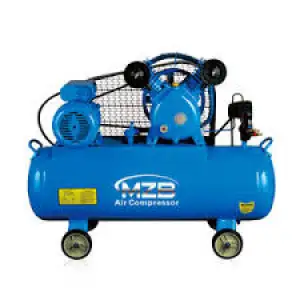
- Air compressor
- Embossing unit
- Colour-printing unit
- Automatic sheet-counting system
- Napkin stacking system
- Individual or multipack packaging machine
- Date or batch-coding equipment
- Conveyors and transfer tables
- Electrical protection and isolation equipment
- Quality-control instruments
- Spare cutting and folding components
- Finished-product storage
- Raw-material storage
- Dust-control and housekeeping equipment
The quotation should identify whether the machine is delivered as a standalone folder or as part of an integrated converting and packaging line.
Buyers should ask for a production-flow diagram showing:
- Parent-roll loading
- Tissue feeding
- Embossing or printing
- Folding
- Cutting or separation
- Counting
- Stacking
- Packaging
- Finished-product discharge
This helps identify missing equipment before the project reaches installation.
How should production capacity be calculated?
The listed speed of 1,000–2,000 sheets per minute is a mechanical production rating. Commercial output should be calculated after considering real operating conditions.
For example, the theoretical number of sheets produced during a shift will not equal the number of saleable napkins if production is interrupted by:
- Parent-roll changes
- Tissue-web breaks
- Machine setup
- Product-size changes
- Blade or folding-component maintenance
- Quality inspections
- Packaging delays
- Operator breaks
- Electrical interruptions
- Rejected sheets
Buyers should request output data for the exact napkin size, tissue material, ply configuration and machine setup they intend to use.
The feasibility study should calculate:
- Gross sheets per hour
- Expected operating efficiency
- Rejected-sheet percentage
- Saleable sheets per shift
- Napkins per pack
- Packs per shift
- Tissue consumed per pack
- Packaging-material consumption
- Labour per shift
- Electricity consumption
- Maintenance allowance
The packaging section must be able to receive the machine’s output. If sheets are produced faster than they can be counted, stacked and packed, the packaging process may become the line’s limiting stage.
What utilities and installation conditions should be confirmed?
The product page lists a 380 V electrical supply but does not provide the frequency, phase arrangement or total installed power.
Before preparing the site, buyers should confirm:
- Required voltage
- Electrical frequency
- Single-phase or three-phase supply
- Total connected load
- Recommended cable size
- Circuit protection
- Earthing requirements
- Compressed-air pressure and flow
- Ambient temperature and humidity limits
- Machine dimensions
- Machine weight
- Foundation or anchoring requirements
The production area must provide enough space for more than the machine itself. Additional room is needed for:
- Parent-roll loading
- Operator access
- Maintenance
- Electrical panels
- Finished-napkin discharge
- Packaging
- Material storage
- Safe walkways
- Emergency exits
Parent rolls can be heavy. Buyers should confirm the maximum roll weight and determine whether a hoist, trolley, forklift or integrated lifting system is required.
How should safety and maintenance be managed?
An automatic napkin machine contains moving rollers, drive systems, cutting components, folding mechanisms and tissue-web feeding points.
Before commissioning, buyers should verify:
- Fixed guards
- Interlocked access points
- Emergency-stop positions
- Electrical isolation
- Lockout procedures
- Protection around rollers and cutting components
- Safe tissue-threading procedures
- Parent-roll loading controls
- Warning labels
- Operator instructions
- Maintenance access
- Applicable local occupational-safety requirements
Operators should not reach into the machine to clear a tissue jam while moving components remain energised.
Preventive maintenance should cover:
- Drive components
- Bearings
- Folding mechanisms
- Cutting components
- Tissue guides
- Tension controls
- Sensors
- Electrical connections
- Pneumatic components where fitted
- Lubrication points
- Safety interlocks
The final maintenance schedule must come from the equipment manual. Buyers should also request a recommended start-up spare-parts package and identify which components are likely to require routine replacement.
Why does napkin manufacturing matter for African businesses?
Paper napkins are regularly used by restaurants, hotels, cafés, takeaway businesses, caterers, workplaces, schools and households.
Local converting allows businesses to turn tissue parent rolls into finished napkins designed for their customers. Depending on local conditions, this may support:
- Domestic tissue-product manufacturing
- Private-label napkin production
- Supply to hospitality and food-service businesses
- Institutional procurement
- Regional packaging activity
- Manufacturing and maintenance skills
- Production of different pack sizes
- Shorter finished-product distribution routes
The machine alone does not guarantee a successful business. Investors still need to evaluate:
- Availability and cost of tissue parent rolls
- Packaging requirements
- Customer demand
- Competing manufacturers and imports
- Electricity reliability
- Labour and technical skills
- Maintenance capability
- Distribution costs
- Working-capital requirements
- Applicable product and food-contact requirements
Buyers serving restaurants or other food-service customers should confirm whether their intended raw material and production environment must meet particular food-contact, hygiene or packaging requirements.
What should buyers confirm before ordering?
Finished product
- Required unfolded napkin size
- Required folded size
- Fold type
- Number of plies
- Tissue grammage
- Colour
- Embossing pattern
- Printing requirements
- Napkins per pack
- Intended customer market
Parent roll
- Material width
- Maximum diameter
- Roll weight
- Core diameter
- Tissue strength
- Winding direction
- Number of plies
- Moisture condition
Machine configuration
- Exact operating-speed range
- Supported folding formats
- Cutting mechanism
- Counting and stacking system
- Embossing equipment
- Colour-printing equipment
- Packaging integration
- Changeover requirements
- Number of operators
Utilities and installation
- Voltage, phase and frequency
- Total power requirement
- Compressed-air requirement
- Machine dimensions and weight
- Loading and unloading equipment
- Installation space
- Maintenance clearances
- Foundation requirements
Technical support
- Installation and commissioning
- Operator training
- Maintenance training
- Operating manuals
- Recommended spare parts
- Warranty coverage
- Technical-support arrangements
- Target delivery and commissioning date
How to source the Automatic Paper Napkin Machine
Trade Market Afrimart can help buyers confirm the appropriate napkin format, tissue compatibility, machine configuration and auxiliary equipment before preparing a project-specific quotation.
Provide:
- Required napkin dimensions
- Fold type
- Tissue grammage and number of plies
- Parent-roll dimensions
- Required output per shift
- Embossing or printing requirements
- Packaging requirements
- Project location
- Available electrical supply
- Installation and training requirements
- Target production date
Request a quotation for the Automatic Paper Napkin Machine through Trade Market Afrimart.
Frequently asked questions
Does this machine manufacture tissue paper from pulp?
No. The Automatic Paper Napkin Machine is a tissue-converting and folding machine. It processes tissue supplied on a parent roll into folded napkins. It does not include the pulping, sheet-forming, pressing or drying systems required to manufacture tissue paper from raw fibre.
How fast can the machine produce napkins?
The listed operating range is 1,000–2,000 sheets per minute. Actual output may depend on the napkin dimensions, tissue grammage, number of plies, parent-roll quality, machine setup, stoppages and packaging capacity. Buyers should request an output calculation for their exact product.
Which napkin sizes are supported?
The machine supports listed unfolded dimensions from 180 × 180 mm to 300 × 300 mm and folded sizes from 90 × 90 mm to 150 × 150 mm. Buyers should confirm the available adjustment increments and whether the machine supports the specific fold required by their customers.
What parent-roll sizes can be loaded?
The listed raw-material width is 360–600 mm, while the maximum parent-roll diameter is 1,200 mm. The product page does not state the maximum roll weight or core diameter. These must be confirmed before selecting loading and handling equipment.
Does the machine include printing and embossing?
The available product description does not verify whether printing or embossing systems are included as standard. Buyers requiring branded, patterned or ply-bonded napkins should specify the printing colours, embossing design and other finishing requirements in the quotation request.
Is packaging included with the machine?
Packaging is not confirmed as part of the listed configuration. Buyers should ask whether the offered system includes counting, stacking and packaging equipment or whether a separate packaging machine is required to produce sale-ready packs.
What electrical supply is required?
The listing specifies 380 V but does not state the electrical frequency, phase arrangement or total installed power. Buyers should obtain these details in writing and have the installation requirements reviewed by a qualified local electrical professional.